Tag Archives: fiction

Revision for Consistency

Revising, revision

Even the best laid plans often go awry. It’s true. No matter how much planning or plotting you might do for your work in progress (WIP), the characters soon develop minds of their own and take you to places you never thought you’d go. So you let them go wherever they want and say whatever they want to say, and your book is better for it, but the moment you let them go off-book, you are opening yourself up to a host of plot holes. This is where your first revision comes in.

Last week, I typed “The End” on my latest WIP, Phoenix Station. But it wasn’t the end. Last week only marked the beginning of my first editing pass: Revision.

I’m an editor, and I’m really good at finding inconsistencies in my clients’ plots. Now is the time to put away my author’s cap and don my developmental editor’s one for my own book. In keeping with that spirit, today’s post is all about revision.

Milanote for Outlining

I’m usually more of a pantser than a plotter, but at some point, I always wind up plotting the rest of the book out. Given its plot, I started writing Phoenix Station as a planner. I started out with handmade notes and ramblings, refined that into a word processed chapter summary, and broke that down even further when I stumbled upon Milanote.

revising, revision
Milanote column with notes

In the months since discovering Milanote, it’s become one of my staple tools for developmental editing. Milanote is similar to an endless bulletin board on which you can stick “columns” and add “notes” to layout your book. I like that everything is on the desktop in front of me. It becomes a living document of the progress of my writing.

Finding Plot holes

My first pass is to tie up all loose ends I might have created along the way, aka plot holes. As I revise, I catalogue each chapter in a separate “column.” I list plot events in a bulletted list and reserve a “notes” section for questions that need to be answered on my next pass through the document. I highlight terms, character names, and the names of places so I will be sure to use the same terminology throughout. Text messages are important in my story, so I also highlight each of the strategically placed cryptic messages my character received. This makes it easier to locate later, though Milanote’s search function helps.

Revise for Consistency

When revising your document, I recommend making several passes. The first pass should be devoted to consistency. This applies to descriptions of characters and places as well as the internal structure of the world you have built (especially important for sci-fi and fantasy). I also edit for grammar and word choice as I go. Each pass through polishes my work even more. Creating a separate document that functions as a “story bible” for your work will help. I’m using Milanote, but you could use Word if you prefer.

Next Steps

What happens next depends on what I find in my first pass. I might need another revision dedicated to plugging the holes in my first (and second) draft. I might need to look at diction, imagery, symbolism, foreshadowing or something else. The important thing to note is that I won’t know where to go next until I complete this draft.

Stay tuned to follow my journey as I take Phoenix Station from first draft through to published (fingers crossed) bestseller!

The best books made into series

Full confession: I watch a lot of television. Like, maybe too much television. I enjoy it most of the time, but I really enjoy revisiting my favourites by reading the books the series were based on. Most of the time, the books don’t disappoint.

Here are my favourite books from which series have been made, and I’ve thoroughly enjoyed both (if not the book more).

The Handmaid’s Tale

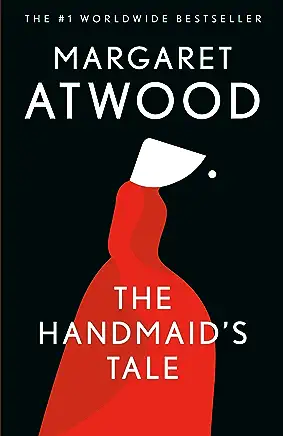
Best books made into series: The Handmaid's Tale by Margaret Atwood.

Margaret Atwood is, perhaps, one of my favourite authors. I actually read The Handmaid’s Tale in high school, quite a while before I became a fan of the series (and several more times over the years). Season one, especially, captures the flavour of the novel. Subsequent seasons have continued in the same style and world as the book, helping to build a richer world and flesh out the characters. Parallels to the world in the 2020s are made even more obvious in the series, drawing home the fact that, in addition to being a brilliant author, Atwood is also part visionary.

I should also note that I wasn’t crazy about the book’s sequel, The Testaments. I recommend that you watch the series, but most of all, read The Handmaid’s Tale.

Kindred

Best books made into series: Kindred by Octavia E. Butler

Octavia E. Butler’s Kindred was a fast, fascinating read, but the series was mesmerizing. Due to the format of a series with ten episodes and the possibility of several seasons, the narrative is slowed and we get to know the characters better. Kevin and Dana’s backstories are significantly different and Kevin is given more to do in the series, but it is worth both the watch and the read.

All Creatures Great and Small

Best books made into series: All Creatures Great and Small by James Herriot

James Herriot’s memoir has been fictionalized as a dramedy entitled All Creatures Great and Small. Though one is a memoir and the other a fiction, the flavour of Herriot’s writing is perfectly interpreted in the series. I thoroughly enjoyed reading this memoir, but discovered that three seasons weren’t enough. Luckily, season four is scheduled to debut in fall of 2023/sometime in 2024, and I can hardly wait.

The Midwife: A Memoir of Birth, Joy, and Hard Times

Best books made into series: The Midwife by Jennifer Worth

Another fictionalized memoir is The Midwife, made into the ten-season (so far) long Call the Midwife television series. Though I haven’t checked, I wouldn’t be surprised if the voiceover in the series (purporting to be Worth but played by Vanessa Redgrave) was taken directly from the novel.

The first book in the series made me feel as if I were re-watching the television series. I also read the second book, Call the Midwife, Shadows of the Workhouse, the stories of which were also dramatized in the early seasons of the series, but didn’t like it enough to venture into book three of the trilogy. The thing I like most about the television series, the characters and the theme of the way women’s rights–and specifically women’s reproductive rights–have evolved just wasn’t strong enough for me.

At any rate, I recommend watching the entire television series and reading at least book one of Jennifer Worth’s trilogy.

Outlander

Best books made into series: Outlander by Diana Gabaldon

Wow! Just…wow.

I am only a quarter of the way through the first Outlander book, and I know I’m going to love it as much as I do the series. The series has matched the characters so closely to the writing that I can see and hear Claire and Jamie as I read, as well as the other characters. I’m not usually one for re-watching a series as I find the process tedious when you know what’s going to happen next or where it’s going to end up, but for some reason, I absolutely love that feeling while reading. I will be reading more than one book in this series, for sure. The book is easy to read, whimsical in its narrative, and not as huge a bodice-ripper as the first few seasons of the television series was (which is a huge plus, in my opinion, as I much prefer character development and page-turning plots to graphic depictions of sex).

Watch Outlander on television. Read the books. You won’t be sorry.

You: A Novel

Best books made into series: You by Caroline Kepnes.

I almost didn’t watch the tv series You, as I was turned off by the point of view and found it unsettling. I’m glad I went back to watch more. I really enjoyed all three seasons of the Netflix series, but I gave up on the series of books after the second one, Hidden Bodies, as I found the narrative tedious.

Reading book one in the series is like revisiting the television series season one. Kudos to the screenwriters who were able to transfer the creepy-factor from the books to the small screen. The stories are no less compelling, no matter the medium you choose.

My recommendation is to watch the series, and read at least book one.

Pines

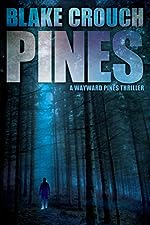
Best books made into series: Pines by Blake Crouch

Season one of the television series Wayward Pines was phenomenal. It kept me on the edge of my seat, questioning everything as I tried to figure out what, exactly, was going on. Once that secret of the town was exposed, the series jumped the shark. I read the entire trilogy of Wayward Pines books, which didn’t suffer the same glitch. By all means, watch the series, but be sure to read the entire trilogy. In this case, the books are so much better than the series.

The Magicians

Best books made into series: The Magicians by Lev Grossman

I absolutely love the entire television series of The Magicians and was sorry to see it end. There were some amazing story arcs, and I didn’t mind the fantasy aspect of the plot. Book one of the book series The Magicians was great. The series was very much like the book, and I enjoyed comparing how similar the two were. Unfortunately, book two began in Fillory, and based on Amazon’s the free sample, seemed too much fantasy for my liking, and I didn’t read any further.

My recommendation is to watch all five seasons of the tv series, and read as many of the books as you can when you’re feeling nostalgic.

Bonus Books

Other times I’ve written about books made into television series:

New Release!

Braelynn’s Birthright–Book 1: Wendigo

I am proud to have published Braelynn’s Birthright–Book 1: Wendigo. This is the first in what I hope will be a series of books featuring the same set of characters. Book1: Wendigo is a young adult supernatural/horror urban fantasy novel.

Book 2: Fallen Angel is near completion. This book is a new adult novel, taking place a few years after Book 1. It also unites characters from a number of my books including Phase Shift, The Revenant, and Revamped. Look for the release of Book 2: Fallen Angel in November of this year.

If you’re a fan of Supernatural, Nancy Drew (current TV series), or Legacies (Vampire Diaries spin-off) you will love the Braelynn’s Birthright series, as well as the other books mentioned here.

Here is a closer look at what Braelynn’s Birthright–Book 1: Wendigo is about:

Imagine a world where the creatures of nightmare are real. This becomes fifteen-year-old Braelynn Hanlon’s world once she inherits her birthright in the form of her grandmother’s ring and is tricked into putting it on. You see, the women in her family have been cursed, doomed to defend humanity from things that go bump in the night. On the upside, the ring comes with super-healing powers, but it also makes her a magnet for all things supernatural. Her mother has had years to come to terms with her fate, but Braelynn’s about to get a crash course on how to be a hunter of all things paranormal.

Her boyfriend, Seth, turns out to be a vampire. When Braelynn vanquishes him, the leader of Seth’s gang sends a bugbear to seek revenge. If that’s not bad enough, her best friend, Shannon, is a werewolf, and Shannon’s girl crush is enchanted. To make matters worse, the school’s activist, Winona, is an Ojibwe shaman in training, hot on the trail of a wendigo disguised as a local businessman who is threatening to destroy the local watershed. Braelynn and her friends agree to help Winona vanquish the wendigo, but will her ring and her new-found powers be enough to keep her safe?

Braelynn’s Birthright–Book 1: Wendigo is available at Amazon (paperback and eBook), B & NApple Books, and Rakuten Kobo.

Re-issues of Police Procedural Mystery Fiction Books

In 2012 I published my first book, Phase Shift, the adventures of Molly McBride and Palmer Richardson. Phase Shift was actually the second book I wrote with these characters, the (still) unpublished The Guardian being the first. Since then, I’ve written a number of short stories and novellas with these characters including Aliens’ Waltz–featuring Josef Schliemann; The Nexus–featuring Molly, Palmer, and Josef (both of which have now been published in The Nexus and Other Stories); The Mummy Wore Combat Boots–featuring Palmer and Michael Crestwood; and Throwaway Child-featuring Molly, Palmer, and Josef, with a nod to Clinton Johns from The Guardian.

This month, I’ve re-issued Throwaway Child and The Mummy Wore Combat Boots. Here’s what the two books are about, both of them reissues of police procedural mystery fictions involving forensic anthropology to solve the case:

Throwaway Child

A recent report written after a six-year investigation into residential schools for Canadian First Nations people stated that at least 3,201 student deaths occurred in these schools, with many more going unrecorded.

The report goes on to state that “many students who went to residential school never returned. They were lost to their families…No one took care to count how many died or to record where they were buried.”

Prime Minister Justin Trudeau, in a 2016 speech to the Assembly of First Nations Special Chiefs Assembly said, “We know all too well how residential schools and other decisions by governments were used as a deliberate tool to eliminate Indigenous languages and cultures.”

 Throwaway Child is the story of one of these children.

The skeleton of a young girl is found beneath the cement basement floor in an abandoned Victorian in Toronto. On duty is Detective Constable Michael Crestwood who contacts forensic anthropologist Dr. Palmer Richardson to assist in the investigation. What they uncover is the story of a six-year-old Cree girl, stolen from her family, warehoused in a government run facility and then forgotten.

In a story with ties to current headlines, Throwaway Child explores the injustice experienced by two girls imprisoned in a mid-twentieth century residential school, their families, and the tragedy that results from one girl’s need to find a home.

Buy Throwaway Child on Amazon and wherever eBooks are sold. 


mummy, archaeology, police procedural, toronto, gaming

The Mummy Wore Combat Boots

The Sandy Hook School shooting, the Colorado movie theatre massacre…was online gaming to blame?

Psychologists believe that engaging in violent virtual gaming desensitizes the player and dehumanizes opponents. When the division between what is real and what is virtual becomes unclear, the results can be catastrophic.

When forensic anthropologist Palmer Richardson is called to investigate an uncatalogued sarcophagus found in storage at the Royal Ontario Museum, he has his work cut out for him. Upon investigation, he discovers the mummy inside is that of a teenage boy and involves Detective Constable Michael Crestwood of the Metropolitan Toronto Police.

Their investigation delves into the world of online gaming, where losing health points in a skirmish could have serious implications for a player’s life in the real world.

Inspired by real-life headlines, The Mummy Wore Combat Boots highlights the growing divide between children who live their lives immersed in a digital culture and the adults tasked with raising them who live in the real world.

Buy The Mummy Wore Combat Boots on Amazon and wherever eBooks are sold. 

Revenants are Real!

On 19 June 15, the Ancient Origins website published an article by Mark Miller entitled “Ancient Greeks apparently feared zombies so much they weighed down the dead“.  In his article, Miller says ancient inhabitants of the island of Sicily feared zombies so much they used large boulders to weigh down the bodies of the newly buried dead. This, apparently, was the result of the fear of revenants held by the Ancient Greeks. Miller defines revenants as existing in a state between life and death, in which the undead would be able to “ris[e] from their graves to haunt the living.”

Both Miller and an article published by Richard Gray on Mail Online quote heavily from a Popular Archaeology article which confirms that “necrophobia, or fear of the dead…has been present in Greek culture from the Neolithic period to the present.”   These articles are the result of the excavation of a site in Sicily yielding close to 3,000 bodies. Two of the burials found were covered with heavy amphora fragments and rocks, presumably “to trap [the bodies] in the grave.”

In her article, Carrie L. Sulosky Weaver defines revenants as “reanimated corpses [who] rose from their graves, prowled the streets, and stalked unsuspecting victims, often to exact retribution denied to them in life.” She goes on to explain that  the Ancient Greeks believed that “even those who could not physically leave their tombs posed a threat, because mediums could easily invoke restless spirits and cajole them into committing heinous acts…[N]ecromancy, the purposeful invocation of the dead,” was another of their practices for which there is evidence in the archaeological record.

There are two revenants in The Revenant. Zulu is thrown from his horse on his way to elope with his sweetheart in nineteenth century Toronto. Raised from the dead by a necromancer, he has walked the earth for more than two centuries, searching for his beloved Alma. His lifelong companion has been Morgan, a seer with the gift of longevity. Together, they save the people Morgan sees in his dreams from certain death. Malchus, the other revenant in the story, also seeks closure, but in his relationship with his brother. Raised in spirit form and inhabiting the body of a local teen, Malchus believes his brother, Morgan, is responsible for his death, and he intends to exact retribution. The Revenant is a young adult paranormal thriller with zombies that pits brother against brother in the archetypal battle between good and evil. Will Zulu and Morgan survive, or will Malchus emerge victorious?

Buy The Revenant wherever eBooks are sold.

Announcing the release of THE REVENANT!

MP900384729Welcome to the party!


The wait is finally over! The Revenant is now available for purchase in hard copy on the Black Rose Writing (BRW)page, and online and in bookstores by the end of the month. I want to thank Reagan Rothe at BRW for helping to make my dream of being published a reality. Also thank you to Dave King, Design Lead at BRW for his amazing cover design and endless patience through the revision process.


Even though we’re taught not to judge a book by its cover, most readers will tell you cover art is key. I’ve had my front cover posted on my page for The Revenant for about a week now, but here is the complete cover:

Click to enlarge

Click to enlarge

Thank you to Dave King for his work on the cover art.

On with the festivities…

Here’s what the party agenda looks like so far. Keep checking back as more activities are added over the next two months!

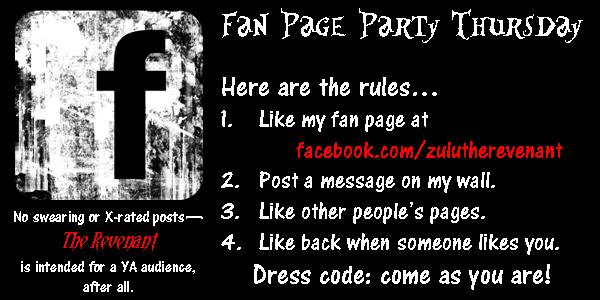
fan page party thursday


Join me on Facebook for a Fan Party meet and greet on my release date, this Thursday, July 10, 2014. Like people’s pages and get your page(s) liked as well.

new follow back friday


Join the party-hop as we move from Facebook to Twitter. I pledge to follow back everyone who follows me on Twitter on Friday, July 11, 2014 @eliseabram

going on tour


A number of really amazing bloggers and reviewers have opened up their blog sites so I can take The Revenant on tour in the month of August. Check back on my itinerary page for stops and updates as the tour takes shape.

giveaway


Use the form on my itinerary page to enter into a Rafflecopter draw for a chance to win one (1) of three (3) eCopies of The Revenant. The giveaway will run for the entire month of August. All you have to do for your chance to win is follow me on Twitter via the Rafflecopter form.

Also available as a giveaway, PDFs of The Revenant bookmarks and a study guide. Please request these via email at info @ eliseabram . com

A. Terry’s How-to Book for Blog Tours is a Recipe for Success!

promote-book-blog-tour 

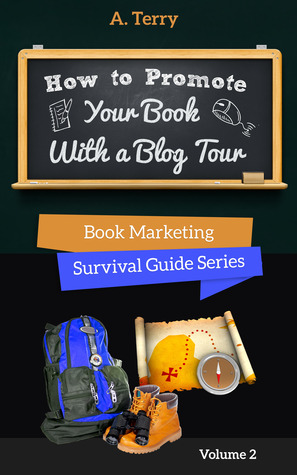
Just when I think I’m learning what it means to promote and publicize a book I’ve published, I’m thrown for a loop. I hadn’t heard about blog tours until recently. I’d always assumed that when the time came I’d find an affordable company to do it for me. Then I read How to Promote Your Book With A Blog Tour by A. Terry and I wondered why I shouldn’t be trying to do this on my own.

Terry’s How to Promote Your Book With A Blog Tour is an easy to follow step-by-step guide to planning, booking, tracking and wrapping up your blog tour. The book suggests materials you might collect prior to this endeavour, how to contact prospective bloggers, and alternatives to simple requests for reviews. Terry provides links to important sites and online exemplars. There is even a template for querying prospective blog tour hopefuls that I’ve used and find it works quite well, with a little modification.

I’m still in the process of organizing my tour.  At present, after approximately a week of sending out queries, I have four stops on my tour booked. Whether or not it works out will not be for lack of trying on my part.

Bottom line? A. Terry’s How to Promote Your Book With A Blog Tour is a recipe for success, sure to help ambitious, resourceful and persistent authors rise to the occasion of going it alone when it comes to planning and executing their book blog tours.

[Tweet “A. Terry’s “How to Promote Your Book with a Blog Tour” is a recipe for success.”]

How NOT to make a book trailer

For years I thought that if I were ever in a position to need a book trailer I’d be independently wealthy and could hire a professional to do it for me.

Barring that, I’d use Flash. I have a basic working knowledge of Flash. I’ve had to teach it to Travel and Tourism students for use in their end of semester presentations, and I’ve had occasion to teach entire semesters of Flash Action Script through eLearning courses. I never considered that when the time finally came, the proliferation of operating systems and browsers that do not support Flash would make that option all but obsolete.

The only other software I had was Windows Movie Maker. My kid made a movie with it while still in grade school–how hard could it be? Little did I know, the software would be the least of my worries.

Here are my three pearls of wisdom of what NOT to do, should you ever consider to go it alone when making a book trailer.

[Tweet “3 pearls of wisdom about what NOT to do when making a book trailer.”]

Pearl #1 – use royalty-free but not for commercial use graphics

I never considered that what I was embarking on was a commercial endeavour. All I wanted to do was get the word out about my book release; I wasn’t ready to start selling books yet. Nevertheless, all of those people I alerted to the release of my book were potential buyers which ultimately made my project a commercial one.

Back to the drawing board.

I eventually stumbled upon Flickr.com (make sure you click “Commercial use allowed” on the licence tab) and foter.com (make sure you click “Commercial Use” at the top of the page after doing a search).  Keep in mind you must still check the licence to ensure you have fulfilled your end of the use agreement. Most of the pictures will say to link back to the Creative Commons agreement as well as give the photographer credit, which you can do in the rolling credits at the end of your trailer.

For music, try FreeMusicArchive.org.

Pearl #2 – forget to record your titles, artists and URLs as you go

As someone who just wrote a post entitled “Just Cite the Damn Cite!” I don’t know what I was thinking. Too absorbed with ensuring I wasn’t breaking copyright to realize that if I didn’t have the credits right I was breaking copyright anyway.

Open a NotePad file (or create a file on similar software or go old school and do it on paper) and record the title of each photo, the artist, and the URL (Flickr and foter seem to want a link to the author on their site and not directly to the author) as well as a description so you’re sure you attribute the correct photo to the correct photographer. List your photos in order of appearance in the credits (and say you are doing this in your credits).

Pearl #3 – use Windows Movie Maker

I’m not sure if this should be a “pearl” or not, but like all Windows products, Movie Maker has its ups and downs.

On the up side is its ease of use. Movie Maker has the same drag and drop functionality of any other Windows product making it sort of intuitive to learn.

On the down side is just about everything else. Though the learning curve for any new app is steep, it seemed insurmountable at times for Movie Maker. Problems included how to coordinate the video with the title overlay (video should come first but since mine was a book, I started with the text), getting “slides” close enough to eliminate pauses between them (which made bang-on coordination with the audio file near impossible) and having to convert my MP3 file to a WAV file before I could even import it (I used Zamzar.com). I also could not holistically change the font, but had to do it piecemeal, one “slide” at a time, which was aggravating because it was super time consuming. Also, Movie Maker only creates WMV files, which meant I needed to do yet another conversion to the less proprietary MP4. And I couldn’t change the background of the file so my  background graphic is a different colour than the surrounding “stage” (which continues to miff me to no end).

In the end I have a passable book trailer for my new release (on 10 July 14), The Revenant, that I can display with pride. I pass this on to you now because forewarned is forearmed. You  can create a sort of professional-looking book trailer on the cheap (FREE!) with a bit of time invested (weekends for a month) and a lot of patience.

[Tweet “Making a book trailer? You’ve gotta read this!”]

Did you find this article useful? Still have questions about creating a book trailer?  Let me know in the comments below.


Literary Devices from A to Z – Brought to you by the letter I


is for Imagery


Imagery refers either to vivid, sensory description in writing or a recurring image linked to themes or symbols.

One example of the latter occurs in Macbeth when Shakespeare uses clothing imagery to show Macbeth is not up to the kingship he has stolen. When Macbeth learns he has earned the title thane of Cawdor he asks,

Why do you dress me in borrow’d robes? (I.ii)

because he has yet to learn of the former thane’s execution. Later in the play, Angus says of Macbeth,

Now does he feel his title hang loose about him, like a giant’s robe upon a dwarfish thief (V.ii)

to say Macbeth is not worthy of his title, alluding to his suspicion that he stole the title rather than come by it honestly.

New writers are often told to show and not tell, don’t tell your reader when a character has smiled–describe her face, the curl of her lips, the gleam of her eye, the wrinkles that form around her mouth and eyes.

In Chicken or Egg: A Love Story, Nigel learns of Paula’s death and rushes to the scene. He finds her zipped into a body bag and loaded into an ambulance. He’s told she’s in rough shape by one of the EMTs, but he’s so overcome with regret that he’d never told her of his feelings for her that he climbs into the ambulance and unzips the body bag.

The ambulance’s interior smelled of disinfectant and alcohol, an odour that began to turn Nigel’s stomach before long,..He brushed away a blood-soaked lock of hair from her forehead. It left behind a copper trail. Her skin was pale, her lips and cheeks inordinately red where her makeup had clung in spite of the blood that had left her.

In this example, the reader can recall the medicinal smell of a doctor’s office or hospital emergency room, imagine Paula lying on the stretcher, pale and bloody, hair taking on a reddish hue as the result of a fatal head wound. Nigel’s feelings for Paula are exposed when he ignores the blood caked in her hair to perform one last tender gesture.

What images do you remember reading that stuck out in your mind as a brilliant, sensory-filled description? Have you written any passages containing imagery of which you are particularly proud? Share your thoughts and comments below!

“The Other Typist” – Flappers gone wild

In her job as stenographer for the police department, The Other Typist‘s Rose Baker is forced to hear a number of graphic and sometimes gruesome confessions not suitable for a woman’s ears. Rose is a prim and proper young woman living in 1924 New York in an era of prohibition and waning morals. When Odalie joins the steno pool, Rose distains her at first, but then she becomes fascinated by her. It’s not long before Rose becomes Odalie’s friend and roommate and Odalie becomes her obsession. When Rose enters Odalie’s world, she is thrown into a world of lies, mistaken identity and murder.  It’s not long before Rose’s world begins to unravel. She fakes a police report, attends speakeasies, runs errands for bootleggers, and fights her feelings for the Lieutenant Detective and for Odalie.

I enjoyed the inherent suspense of Suzanne Rindell’s first publication, the likes of which I have not seen since S.J. Watson’s Before I Go To Sleep. In the beginning, the mystery revolves around Odalie. I wanted to know who she was, why someone of her stature and grace wanted to work in a dirty police station. When we are taken to her upscale apartment and learn she may have a sugar daddy, I wondered why, if she had someone to pay her bills, she would need to work at all, let alone with smelly drunks and underhanded murderers. After Rose attends her first club and finds out Odalie is both bootlegger and speakeasy organizer, the mystery shifts and the reader wonders how far buttoned-up Rose will go to be near the object of her obsession. Rose soon confides she is telling her story from a hospital and seeing a psychiatrist, adding another level of intrigue. Then Teddy appears to question Odalie’s identity, claiming she is not Odalie, but Ginevra instead, and that she has something to do with his cousin’s death. Later, when Teddy shows up at the police department, the page-turning reaches manic proportion. I think I missed most of Revolution in my haste to finish the novel. After all, Kobo told me I only had 1 hour left of reading to go. Having to re-watch parts of Revolution to fill in the blanks was a small price to pay for the punch line of this amazing book.

The Other Typist is an excellent example of the unreliable narrator. In most of what we read, we grow an affinity with the narrating character. Over the course of the novel, we learn to trust the narrator, identify with her, empathize with her, maybe even imagine ourselves in her position, but this is not always the case. By the end of The Other Typist, the reader is left questioning unsuspecting, mousey Rose’s culpability in the debacle. Did Odalie drug her fiancé and leave him to die in his car on the train tracks or was it Rose? Did Rose grow up in an orphanage or was it Odalie? Was Rose the one making changes to the confessions all along or was it Odalie? Did Odalie kill Teddy or was it Rose? What about Gib? Does Odalie really disappear to begin life anew at the end or does Rose kill her too? Is Ginevra Odalie’s alter ego, or is it Rose’s? Normally I like a story to tie all loose ends into a tidy bow at the end, but somehow, having these questions burn on in my psyche long after the novel is done is more satisfying.

As is the case with Single White Female and The Talented Mr. Ripley, the suspense of The Other Typist is in the build toward the climax, wanting to see how far the characters will go, waiting for the last thread to unravel.

Have you read The Other Typist? Who do you believe is Ginevra in disguise?