Category Archives: Book Review

The best books made into series

Full confession: I watch a lot of television. Like, maybe too much television. I enjoy it most of the time, but I really enjoy revisiting my favourites by reading the books the series were based on. Most of the time, the books don’t disappoint.

Here are my favourite books from which series have been made, and I’ve thoroughly enjoyed both (if not the book more).

The Handmaid’s Tale
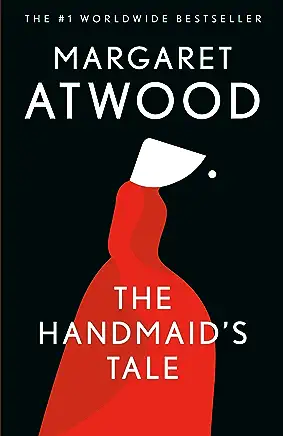
Best books made into series: The Handmaid's Tale by Margaret Atwood.

Margaret Atwood is, perhaps, one of my favourite authors. I actually read The Handmaid’s Tale in high school, quite a while before I became a fan of the series (and several more times over the years). Season one, especially, captures the flavour of the novel. Subsequent seasons have continued in the same style and world as the book, helping to build a richer world and flesh out the characters. Parallels to the world in the 2020s are made even more obvious in the series, drawing home the fact that, in addition to being a brilliant author, Atwood is also part visionary.

I should also note that I wasn’t crazy about the book’s sequel, The Testaments. I recommend that you watch the series, but most of all, read The Handmaid’s Tale.

Kindred

Best books made into series: Kindred by Octavia E. Butler

Octavia E. Butler’s Kindred was a fast, fascinating read, but the series was mesmerizing. Due to the format of a series with ten episodes and the possibility of several seasons, the narrative is slowed and we get to know the characters better. Kevin and Dana’s backstories are significantly different and Kevin is given more to do in the series, but it is worth both the watch and the read.

All Creatures Great and Small
Best books made into series: All Creatures Great and Small by James Herriot

James Herriot’s memoir has been fictionalized as a dramedy entitled All Creatures Great and Small. Though one is a memoir and the other a fiction, the flavour of Herriot’s writing is perfectly interpreted in the series. I thoroughly enjoyed reading this memoir, but discovered that three seasons weren’t enough. Luckily, season four is scheduled to debut in fall of 2023/sometime in 2024, and I can hardly wait.

The Midwife: A Memoir of Birth, Joy, and Hard Times
Best books made into series: The Midwife by Jennifer Worth

Another fictionalized memoir is The Midwife, made into the ten-season (so far) long Call the Midwife television series. Though I haven’t checked, I wouldn’t be surprised if the voiceover in the series (purporting to be Worth but played by Vanessa Redgrave) was taken directly from the novel.

The first book in the series made me feel as if I were re-watching the television series. I also read the second book, Call the Midwife, Shadows of the Workhouse, the stories of which were also dramatized in the early seasons of the series, but didn’t like it enough to venture into book three of the trilogy. The thing I like most about the television series, the characters and the theme of the way women’s rights–and specifically women’s reproductive rights–have evolved just wasn’t strong enough for me.

At any rate, I recommend watching the entire television series and reading at least book one of Jennifer Worth’s trilogy.

Outlander

Best books made into series: Outlander by Diana Gabaldon

Wow! Just…wow.

I am only a quarter of the way through the first Outlander book, and I know I’m going to love it as much as I do the series. The series has matched the characters so closely to the writing that I can see and hear Claire and Jamie as I read, as well as the other characters. I’m not usually one for re-watching a series as I find the process tedious when you know what’s going to happen next or where it’s going to end up, but for some reason, I absolutely love that feeling while reading. I will be reading more than one book in this series, for sure. The book is easy to read, whimsical in its narrative, and not as huge a bodice-ripper as the first few seasons of the television series was (which is a huge plus, in my opinion, as I much prefer character development and page-turning plots to graphic depictions of sex).

Watch Outlander on television. Read the books. You won’t be sorry.

You: A Novel
Best books made into series: You by Caroline Kepnes.

I almost didn’t watch the tv series You, as I was turned off by the point of view and found it unsettling. I’m glad I went back to watch more. I really enjoyed all three seasons of the Netflix series, but I gave up on the series of books after the second one, Hidden Bodies, as I found the narrative tedious.

Reading book one in the series is like revisiting the television series season one. Kudos to the screenwriters who were able to transfer the creepy-factor from the books to the small screen. The stories are no less compelling, no matter the medium you choose.

My recommendation is to watch the series, and read at least book one.

Pines
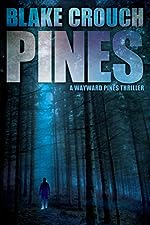
Best books made into series: Pines by Blake Crouch

Season one of the television series Wayward Pines was phenomenal. It kept me on the edge of my seat, questioning everything as I tried to figure out what, exactly, was going on. Once that secret of the town was exposed, the series jumped the shark. I read the entire trilogy of Wayward Pines books, which didn’t suffer the same glitch. By all means, watch the series, but be sure to read the entire trilogy. In this case, the books are so much better than the series.

The Magicians

Best books made into series: The Magicians by Lev Grossman

I absolutely love the entire television series of The Magicians and was sorry to see it end. There were some amazing story arcs, and I didn’t mind the fantasy aspect of the plot. Book one of the book series The Magicians was great. The series was very much like the book, and I enjoyed comparing how similar the two were. Unfortunately, book two began in Fillory, and based on Amazon’s the free sample, seemed too much fantasy for my liking, and I didn’t read any further.

My recommendation is to watch all five seasons of the tv series, and read as many of the books as you can when you’re feeling nostalgic.

Bonus Books

Other times I’ve written about books made into television series:

CW’s The 100 Proves Sometimes the Book Isn’t Always Better

100tvpicThank you so much to Jimmy at Cultured Vultures for posting!

I binge watched the CW’s The 100 over the winter break and was hooked. So hooked, in fact, I wasted no time reading the novel that started it all. I was both disappointed and elated at The 100 by Kass Morgan, and don’t know what to make of it. Here’s why…

To read more, check out my review at the Cultured Vultures site!

Proud to announce, I’m a Cultured Vulture!

cvlogo


Author Publicity Pack is a Must Have Companion for Authors

author-publicity-pack-cover

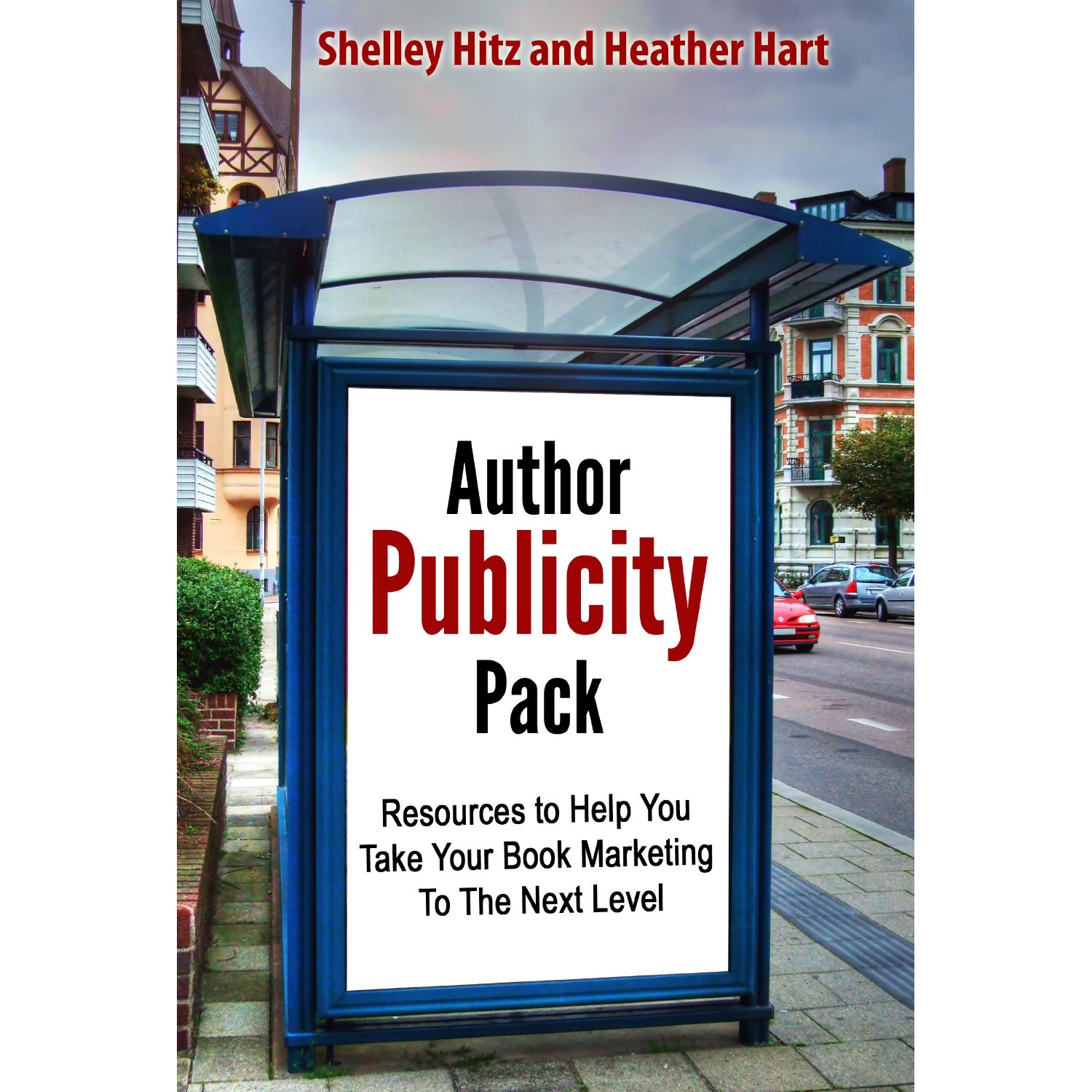
Author Publicity Pack by Shelley Hitz and Heather Hart is an excellent resource for self- and indie-published authors to help find their way in the maze of online publicity resources. Though I’ve been at the online book publicity game for about six months now and have taken online and face-to-face courses and read incessantly on the topic, I still learned from Hitz and Hart’s book.

Rather than a how-to, Author Publicity Pack is more of a collection of sources for authors to investigate in their quest to market their books online. The writing is easy to understand and detailed and the websites listed amount to a goldmine of ideas when taken collectively.

Though it is in need of a minor clean-up by the authors (quite a few of the sites listed are no longer active), Author Publicity Pack is a valuable resource for authors, whether just starting out, or mucking through the mire that is online marketing for some time now.

Note: I was gifted a free copy of this book in exchange for an honest review. 

Announcing the release of THE REVENANT!

MP900384729Welcome to the party!


The wait is finally over! The Revenant is now available for purchase in hard copy on the Black Rose Writing (BRW)page, and online and in bookstores by the end of the month. I want to thank Reagan Rothe at BRW for helping to make my dream of being published a reality. Also thank you to Dave King, Design Lead at BRW for his amazing cover design and endless patience through the revision process.


Even though we’re taught not to judge a book by its cover, most readers will tell you cover art is key. I’ve had my front cover posted on my page for The Revenant for about a week now, but here is the complete cover:

Click to enlarge

Click to enlarge

Thank you to Dave King for his work on the cover art.

On with the festivities…

Here’s what the party agenda looks like so far. Keep checking back as more activities are added over the next two months!

fan page party thursday


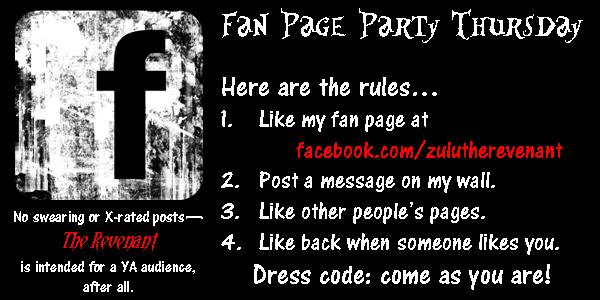
Join me on Facebook for a Fan Party meet and greet on my release date, this Thursday, July 10, 2014. Like people’s pages and get your page(s) liked as well.

new follow back friday


Join the party-hop as we move from Facebook to Twitter. I pledge to follow back everyone who follows me on Twitter on Friday, July 11, 2014 @eliseabram

going on tour


A number of really amazing bloggers and reviewers have opened up their blog sites so I can take The Revenant on tour in the month of August. Check back on my itinerary page for stops and updates as the tour takes shape.

giveaway


Use the form on my itinerary page to enter into a Rafflecopter draw for a chance to win one (1) of three (3) eCopies of The Revenant. The giveaway will run for the entire month of August. All you have to do for your chance to win is follow me on Twitter via the Rafflecopter form.

Also available as a giveaway, PDFs of The Revenant bookmarks and a study guide. Please request these via email at info @ eliseabram . com

A. Terry’s How-to Book for Blog Tours is a Recipe for Success!

promote-book-blog-tour 

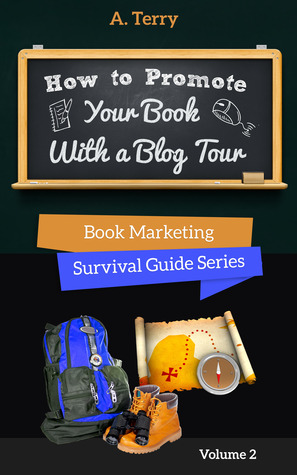
Just when I think I’m learning what it means to promote and publicize a book I’ve published, I’m thrown for a loop. I hadn’t heard about blog tours until recently. I’d always assumed that when the time came I’d find an affordable company to do it for me. Then I read How to Promote Your Book With A Blog Tour by A. Terry and I wondered why I shouldn’t be trying to do this on my own.

Terry’s How to Promote Your Book With A Blog Tour is an easy to follow step-by-step guide to planning, booking, tracking and wrapping up your blog tour. The book suggests materials you might collect prior to this endeavour, how to contact prospective bloggers, and alternatives to simple requests for reviews. Terry provides links to important sites and online exemplars. There is even a template for querying prospective blog tour hopefuls that I’ve used and find it works quite well, with a little modification.

I’m still in the process of organizing my tour.  At present, after approximately a week of sending out queries, I have four stops on my tour booked. Whether or not it works out will not be for lack of trying on my part.

Bottom line? A. Terry’s How to Promote Your Book With A Blog Tour is a recipe for success, sure to help ambitious, resourceful and persistent authors rise to the occasion of going it alone when it comes to planning and executing their book blog tours.

[Tweet “A. Terry’s “How to Promote Your Book with a Blog Tour” is a recipe for success.”]

My Writing Process: Catch as catch can!

Hello everyone! Welcome to my stop on the Writing Process Blog Hop! I was introduced to this blog hop by Lori L. Schafer:

Lori Schafer is a writer of serious prose and humorous erotica and romance. More than thirty of her short stories, flash fiction, and essays have appeared in a variety of print and online publications, and her first novel, a work of women’s fiction entitled My Life with Michael: A Story of Sex and Beer for the Middle-Aged, will be released in 2015. Also forthcoming in 2015 is her second novel Just the Three of Us: An Erotic Romantic Comedy for the Commitment-Challenged. On the more serious side, her memoir, On Hearing of My Mother’s Death Six Years After It Happened: A Daughter’s Memoir of Mental Illness, will be published in October 2014. When she isn’t writing (which isn’t often), Lori enjoys playing hockey, attending beer festivals, and spending long afternoons reading at the beach.

Website: http://lorilschafer.com/

Like my colleagues also participating in this blog hop, I’ve been asked to answer four questions about my writing and my writing process. Don’t forget to spend some time getting acquainted with authors Rosemary Whittaker, Val Conrad and Jolee Wilson whose bios and links are at the end of this post. Rosemary, Val and Jolee will be hosting the next stop on the blog hop next week.

1. What am I working on?

About a year ago I read a Writer’s Digest featured agent who said she’d be interested in reading a YA Time Traveler’s Wife. I loved that novel, and took it as a personal challenge. What I wound up with was I Am, Was, Will Be Alice something part YA Time Traveler’s Wife, part Alice in Wonderland, part YA romance (yuck!), and all adventure. I am participating in July’s Camp Nanowrimo to give me the kick in the pants to finally get Alice’s story told.

My first YA novel, The Revenant,  is to be released on 10 July 14 and so a good part of my summer will be spent on publicizing and selling that.

I am also working on an adult time travel love triangle novel called Chicken or Egg: A Love Story, not to mention the next instalment in the Molly McBride series, entitled The Next Coming Race, involving evidence of aliens having visited Earth in antiquity in the historic record.

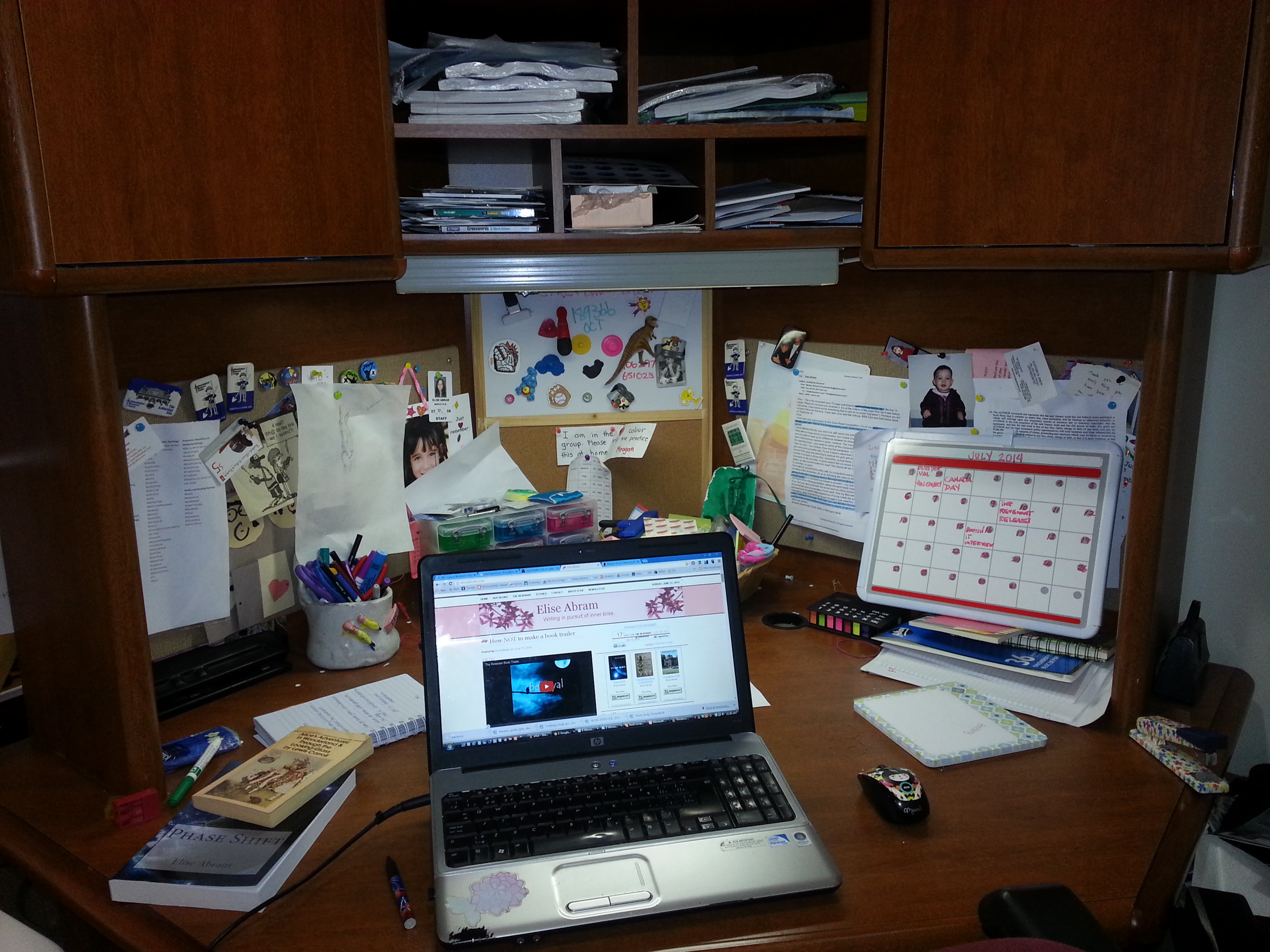
This is where I usually work:

My Writing Space

My writing space.

2. How does my work differ from others of its genre?

I suppose you could call my primary genre science fiction, but when I think of sci-fi I think of alien race wars, lots of tech, space ships, and robots. I call my brand of sci-fi feminine speculative fiction, a made up genre composed of a sort of light-sci-fi, no war (which is stereotypically masculine), modern day tech (also stereotypically masculine), but maybe with a few tweaks. If there is time travel involved, it is in the near future, less than 100 years and not that far removed from the society of today.

[Tweet “I call my brand of sci-fi feminine speculative fiction. That does not mean it only appeals to women.”]

Calling my brand of sci-fi “feminine” does not mean it is chick-lit or only appeals to women. Rather, it is sci-fi of the mind. It takes the world of today, proposes one change, and runs with it to see the effect it may have on society. Phase Shift explores what might happen if the ability to travel to alternate worlds were discovered. The Revenant (not unlike “X-Men” or “Heroes”) supposes there are people among us who have special abilities which some might use for good and others evil. Alice proposes a similar scenario – that people might one day evolve the ability to travel through time. Ditto Cat and Mouse, only this time, the ability for time travel is via technology and not genetic. 

I make small tweaks to people, beliefs and tech and sit back and watch what happens.

3. Why do I write what I do?

I consume popular culture like candy. I also question everything I consume. Star Trek was my first introduction into the world of sci-fi, introduced to me by my father at a young age and the ideas stuck. I grew up telling myself stories before bedtime between lights out and falling asleep. At some point I started writing them down. 

[Tweet “I consume popular culture like candy. I also question everything I consume.”]

It seems like I don’t choose what I write, but rather, it chooses me. Case in point is The Revenant, which grew from a desire to write the penultimate vampire story. The storyline wasn’t gelling so I decided to do some research and found a link on Wikipedia for revenants. The idea blossomed from there. You could almost say Zulu found me and started telling me his story. I really had no choice but to write it down.

4. How does your writing process work?

My first novel, The Guardian, took almost ten years to imagine and another ten years to write. This is partly because I was bogged down with the responsibility of being a new teacher, but also because I didn’t like the way I wrote and struggled over every word. When I took a page from Nanowrimo and just wrote to make up the word count and worry about the editing later, writing became more of a pleasure than a chore. The agony was still there in the revisions and re-writes, but at least the story had already been told.

[Tweet “Accepting you aren’t a real writer if you don’t write every day builds barriers to success.”]

Many sources you read will tell you that writers write every day. I’m here to tell you that’s not necessarily the case. Whole months go by where I don’t add to my current work in progress at all as far as word count goes, but I am always thinking about my work in progress and adding to the story. Taking frequent breaks like that helps the thoughts to percolate so that when I do finally sit to write, I know exactly what I want to say. Accepting that you aren’t a real writer if you don’t write every day is a good way to build barriers to your success. Life happens, especially if you are a student, or are juggling a full-time job with a family. Work on your story every day; write whenever you can.

[Tweet “Work on your story every day; write whenever you can.”]

Don’t forget to spend some time getting acquainted with authors Rosemary Whittaker and Val Conrad whose bios and links are at the end of this post. Rosemary and Val will be hosting the next stop on the blog hop next week.

[Tweet “Writing process blog hop! Get acquainted with authors @LoriLSchafer, @DanzaCRose, Val Conrad and @JoleeWilson!”]

Rosemary Whittaker:

Rosemary is a British born author. She is an English teacher by profession. Since leaving university she has lived and worked in the United States, New Zealand, Australia and twice in Denmark. Her husband works in biodiversity informatics (cataloguing all living species on earth) and this has entailed many moves. They have five children so the moves have been extra challenging.

Her real love has always been writing and she has written several novels, variously set in the countries in which she has lived. She also writes for children. All her novels are available on http://amzn.to/UXJUJp and http://amzn.to/1iUadT. Her recent novels, a set of four, all take the theme of British women who move, by choice or circumstance, to one of the four countries mentioned above. The Cinnamon Snail is set in Denmark, where Rosemary currently lives. [http://bit.ly/1puSPwJ]

Website: rosemarywhittaker.wordpress.com

Val Conrad:

Val Conrad’s life is upside-down to most – her nights are spent working as a nurse in intensive care, leaving her days and more often her nights off to writing.  Her series – Blood of Like Souls, Tears of Like Souls, Promises of Like Souls, and Secrets of Like Souls (Black Rose Writing) is available at Amazon in both paperback and e-book formats.  Much of the skeleton of these stories comes from living in the geographical settings and a career in medicine spanning decades.  She steals moments to write any time, but odd places and crowds of people don’t deter her.  She’s currently working on a new book about how cellular phones are being used to catch criminals.

Website: www.valconrad.com

Jolee Wilson:

Jolee Wilson lives in West Texas with her husband and three children. She has been writing as a hobby since age seven and decided to turn it into a career after the completion of her first novel, Seven Days Normal. With a passion to help hurting relationships, Jolee uses fiction to impart her own lessons in love.

Website: http://www.the-nkwell.blogspot.ca/

Become an online review-collecting sensation

Book Cover

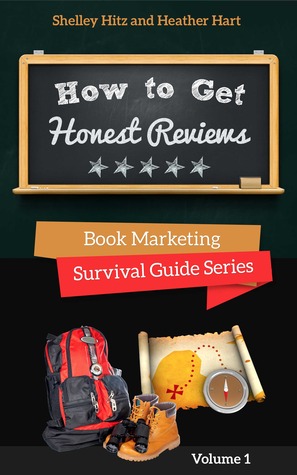
How to Get Honest Reviews

As an author, I can tell you that one of the hardest things is to get reviews for your work. When soliciting friends, relatives and social media followers, comes up nil, what does one do? How to Get Honest Reviews by Shelley Hiltz and Heather Hart is a detailed and precise guide that might help answer that question for authors in their pursuit of reviews for their work.

In their book, Hiltz and Hart leave no digital stone unturned for their readers. How to Get Honest Reviews is a catalogue of places and practical strategies anyone can immediately set into action in their search for reviewers. Of particular interest is the section on how to set up a book review program. Here, the authors include step-by-step instructions for everything from establishing a mailing list to templates to use and adapt to communicate with program participants.

Hiltz and Hart’s writing style is user-friendly and informative which makes for easy reading (if you ignore the awkward “I (author’s name)”  syntax used to introduce which of the two has written the current section). How to Get Honest Reviews makes readers feel as if, with a little elbow grease, they can become an online review-collecting sensations.

Please note that I was provided this book free by the authors in exchange for my honest review.

Literary Devices from A to Z – Brought to you by the letter N


is for Narrator


The narrator is the person who tells the story. Narrators can be protagonists of a story, secondary characters in the story, or an unnamed persona uninvolved as a character in the story.

Narrators are not to be confused with authors. Even when the narrator is the uninvolved persona, the voice is a construct created by the author and not the author him/herself. Often the narrator is reliable in that s/he tells the truth, portraying an honest version of the story being told. Sometimes, the narrator may be unreliable, spinning a story later revealed to be just that—a story and not a truthful retelling of events.

Some interesting narratives I’ve read lately include Rose Baker, the unreliable narrator of Suzanne Rindell’s The Other Typist, and Markus Zusak’s The Book Thief, narrated by Death. Taking place during the early part of World War II, Death is ever-present. As a narrator, he focuses in on the characters and then pulls back to remind us he is always there, lurking in the shadows, audience to the players on the stage, waiting until just the right moment to cull their souls. Though I found this structure awkward at times, it works in the big picture when the reader learns that Death is a reliable narrator–when he says he will return for a soul when the time is right, he means it. He lulls the reader into a false sense of security, almost forgetting Death’s pledge to remove the character from the narrative and then he returns, reminding us of his presence.

Have you read any interesting, off-beat, or unreliable narratives lately? If so, share them in the comments below.

How to write a book review in 3 easy steps

In today’s uber-wired society, most of us are bloggers. Think about it…you’ve probably already posted something on Twitter (microblogging) or Facebook (slightly longer microblogging). Or maybe you’ve used Tumblr (graphic blogging), Snapchat (also graphic blogging) or even YouTube (video blogging–or vlogging). Most of us have something to say about…well… something.

Most of us are also consumers of some kind of  popular culture, be it books, magazines, games, television or the movies. We watch voraciously. Some of us read that way, too. Most eBook sites invite users to review the books they read in order to generate sales. For us consumers, the people who pay the producers of popular culture, what better way is there than to voice an opinion on our satisfaction with the products we’ve purchased with our hard earned money than to write a review?

It’s not all that hard, really. Just three easy steps to reviewing success.

But if you’re going to review and post your review, you have to do it responsibly. Think of it this way–if you don’t understand a painting you see in the museum you wouldn’t stand in front of the museum with a sign saying “Don’t See This Painting!” Okay, so maybe some of you would. But that doesn’t make it okay. Authors put most of their blood, sweat and tears over the course of months or years into everything they write. That kind of devotion must be respected, no matter what you think about the end product. Just remember that at the receiving end of every review is a flesh and blood person with feelings and you should be okay.

Now, as promised, 3 steps to writing a good book review…

Step 1 – The Retell

Your first paragraph should retell some of the important plot points that lead up to but do not reveal the climax. Introduce main characters and their relationships and why they’re important to the story.

Step 2 – The Analysis

Every novel is written with a social conscience. This is the injustice the author sees in society that he thinks he can draw attention to by writing about it. Academics call this “theme”.

Discuss the theme in your analysis. Think about the voice and tone of the narrator; what about this is unique? Were there any recurring symbols or images and if so, how did they affect your understanding of the theme?

Step 3 – The Reflect

This is where you make connections with your understanding of the world around you. How does the novel relate to anything else you’ve ever heard or seen or read?

Lastly, discuss what you thought of the book, but before you do, try to figure out why you really liked or disliked the piece. Rather than say “The point of view is awful,” try to find a reason why you hated it so much. Maybe you didn’t like the idea of a male protagonist. Maybe  you are used to first person narratives and you just don’t get the second person viewpoint. Try to remember that this is your interpretation based on your life and reading experience and not about a major flaw in the author’s storytelling ability.

End your post with a call to action. Ask what others think in general or about a specific aspect of the work and invite them to leave a message with their opinion. Don’t forget to answer everyone kind enough to post.

What did you think?

Was this article helpful? Drop me a line letting me know why or why not. Feel free to post your book review here for feedback.

Beautifully written and compelling

My biggest regret? Not being able to say goodbye to my father before he passed away.

It all happened so quickly. One minute he was going to be okay and I needn’t have to rush to the hospital and the next it didn’t look like he’d make it home. He died while I was stuck on Highway Seven in rush hour traffic, just as I went through an underpass. I know because I had a feeling and I checked the time. When I got to the hospital I learned his time of death was within minutes of my “feeling.”

My second biggest regret? Not going with my mother to visit my grandmother in the convalescent home in the days before she died because it was boring.

I’ve often thought in the twelve years since my dad died and the thirty-five years or so since my grandmother died that I’d like to have that one last chance to say goodbye.

This is the exact sentiment Jason Mott explores in his novel The Returned.

In The Returned, eight year old Jacob returns to his parents, Lucille and Harold, almost fifty years after his death by drowning in the river behind their house. Lucille welcomes him with open arms. Harold is suspicious of his son’s return as he is of all those who have returned without explanation and seemingly without purpose. When the government begins arresting the returned and warehousing them in internment camps, Harold accompanies his son, grows closer to him, and discovers a kinship with those who have returned, as well as with their families.

Part “In the Flesh” (minus the zombies), part “The 4400”, The Returned is a beautifully written and compelling read, so long as you have willing suspension of disbelief enough to forget about why the dead have returned and simply accept the fact that they have. The overall theme of the book illustrates patterns in history, and that we are doomed to repeat ourselves. Case in point, warehousing millions of Jews in concentration camps during World War II and the establishment of Japanese internment camps later in the century. The comparison with these events in the novel is interesting but heavy handed at times, like when a Jewish couple attempts to hide a handful of returned German soldiers on their property. The soldiers are portrayed as innocents, caught up in something in which they have no say, acting as society demands of them, until they are taken outside and shot for their compliance in the war.

The Returned is being made into an American television series called “Resurrection” (the trailer is available on YouTube and it looks amazing), but given the track record of similar series, I don’t know how successful it will be. I know I’ll be watching it, for no other reason than I like the honesty and emotion of the novel and the ultimate message, how society treats “the other” with a combination of demonization and/or segregation and how one man, Harold, grows to overcome his prejudice of “the other” and learns no matter our stories of origin, we are all just people; we are all the same.