Tag Archives: the revenant

The Wattpad Experiment

For years, my friend, Mia Meade, has been encouraging me to try WattPad out. I’ll be honest–I tried it before I met her and had no success. But after talking to Mia and reading “How Authors Can Use Wattpad to Sell Books and Earn Money” by Linda Poitevin, I’ve decided to give it a go and blog about my experience.


The challenge was to figure out which story to use as a tester. I currently have three books in the works (The Carrington Pulitzer Revelation Chronicles Online Extended PlayPack–science fiction, young adult; Indoctrination–Book Two of The New Recruit; and Re-vamped (paranormal/supernatural), but they are in various stages of editing and won’t be ready to publish for a while yet.

In the end, I decided to re-issue The Revenant: A YA Paranormal Thriller with Zombies. The plan is to post a chapter a week as Poitevin suggests and to blog as I do. In the meantime, I will be reading other authors in my genre, add to my library, vote, and comment. I will also be posting to social media as I go. In addition, I will be reading a number of resources on how to use Wattpad for fun and profit and share what I learn with you.

The Revenant: A YA Paranormal Thriller with Zombies can be found on Wattpad at https://www.wattpad.com/story/134197850-the-revenant. This is a completed novel that can be purchased on Amazon, B & N, iBooks, and Kobo.

If you Wattpad, please look me up, vote for my book and follow me. I’m interested to connect with you, both here and on Wattpad. After you’ve read a chapter or two, come back and let me know what you think.

Meet the Revenant

"The Revenant" Cover Image

“The Revenant” Cover Image

My name is Zulu.

I died when I was thrown from a horse on my way to elope with my girl. Then I woke up. I haven’t aged a day since. Before long I realized I had super powers–incredible speed, perfect vision, and miraculous strength. My only companion for more than a century has been Morgan the Seer, an old man who can see the future. He tells me what he sees in his dreams and I help the people he sees. The media’s pegged me a vigilante, but I’m really more of a superhero, keeping the city safe from evil under the cover of the night.

[Tweet “Zulu doesn’t eat or get cold & if he avoids a wooden stake in the chest, he’ll keep living.”]

My name is Kat.

I like to talk. In fact, my mom? She says I talk too much and she named me Katherine because I reminded her of a Chatty Cathy doll. I tried to tell her that she wouldn’t know I was so chatty when she named me because I was still a baby and couldn’t talk at all. Zulu? He’s a revenant, which is different from a vampire, but I’m not exactly sure how except vampires drink blood and so far Zulu hasn’t. He found me after school one day and recruited me to help him and the Seer, who I think is like his father, but is more the age of his grandfather, and considering what I know of his history, isn’t even really related to him at all. Oh! Did I mention I see auras? I can also sense what people are feeling, which is probably why the Seer recruited me to help him and Zulu save people. Anyway, since I joined them I’m happy, you know? Because I finally feel like I belong somewhere, and they don’t look at me like I’m strange or something, because let’s face it, alongside a man who’s lived as long as the Seer and someone who’s immortal because he returned from the grave, I’m like…normal.

[Tweet ” Kat is full of life, youthful and sometimes just a little naïve about evil.”]

My name is Morgan.

I first learned of my ability to see the future when I was a boy and I saw the livery stable burn to the ground. I tried to warn the groom but he wouldn’t listen. I’ve spent the past hundred years recording my dreams in a journal until the timing’s right for me to send Zulu and Kat to help some poor soul escape certain danger. In my time I’ve seen many changes. For example, it used to take a week or more for news to travel. Now we see it as it’s happening and people walk around with cameras on their person, recording the minutia of every second of their lives–it’s maddening! But I digress. Where was I? Oh yes. Though I can see the fate of others, I’m unable to see my own. Considering my twin brother, Malchus, has found a way to return from the grave and he blames me for his death, I’m not sure that’s necessarily a good thing.

[Tweet “Morgan has made his path in life, trusting himself  and his judgement.”]

My name is Malchus.

Morgan is my twin brother. Growing up, my parents had high hopes for me. I apprenticed with Dr. Algernon while my dolt of a brother was relegated to farm duties. Algernon taught me more than the Healing Arts. He also taught me how to raise the dead, something my close-minded brother couldn’t comprehend. When a bunch of idiot high school kids got in over their heads with a Ouija board I slipped into one of their bodies. My plan is simple: seek revenge on my brother, who I know had a hand in my death. The only obstacle to my success is my rusty necromancing skill. If I can only recall the process to properly raise people from the dead, I will amass an army of minions to help me and the world will bow at my feet!

[Tweet “Malchus is the is the poster child for why you shouldn’t give in to peer pressure.”]

Which character from The Revenant are you? Take the quiz at http://gotoquiz.com/YRhrX to find out! Don’t forget to come back to post in the comments below.

Please note: Character bios were originally published as a part of my Bit’n Book Tour on 4 Sept 14 on The Fire & Ice Book Review Blog. 

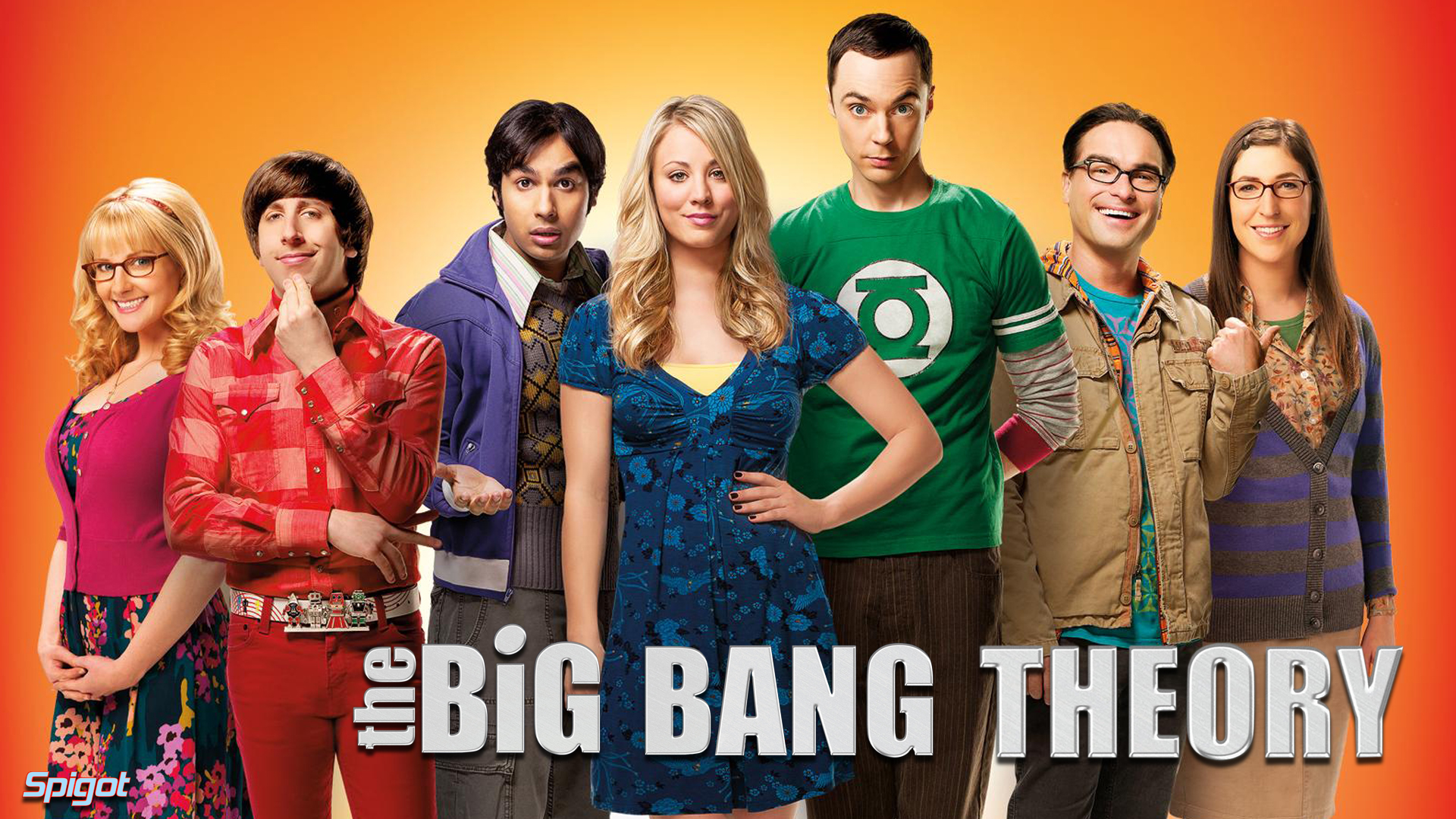
Everything I need know about Allusion I learned from “The Big Bang Theory”

bigbangtheory

Graphic from wall.alphacoders.com

Allusion is when a reference to something–a person, place, thing, or work of literature–is mentioned in a story. The idea is that people get what the reference means and the connection brings a deeper meaning to the reader’s experience. As an English teacher, I already knew about allusions and how they worked, but it wasn’t until I started watching The Big Bang Theory that I learned how to use them in a piece of writing to help develop rich settings and characters.

[Tweet “It wasn’t until I started watching @BigBang_CBS that I learned how to use allusions in writing.”]

Let me explain. For those who have never seen it, The Big Bang Theory follows the lives of four stereotypically nerdy scientists as they struggle on the outskirts of popularity. They eat, sleep, breathe, and live sci-fi, sometimes literally (remember Sheldon’s Gorn-infested sleep or the group’s misadventures as a Star Trek Next Gen landing party?). Their lives are programmed around television schedules, comic-cons, new sci-fi movies, and trips to the comic book store. But what makes this show especially enjoyable for me are the endless references–some of them quite obscure–to current popular culture. As a devout Trekker and sci-fi enthusiast, I identify with the boys and their never-ending struggle to fit in.

[Tweet “Read about my ‘The Big Bang Theory of Allusion’ as a way to make characters seem real. #WritingTip”]

I’ve adopted what I’ve dubbed “The Big Bang Theory of Allusion” in The Revenant (and my current work in progress tentatively called I Was, Am, Will Be Alice). The theory tells us that, because as writers we want our characters to seem as real as possible, we should make them consumers of current and real popular culture. This is not a new idea. Shakespeare did it, referring to bible passages or ancient Greek and Roman mythology (keep in mind he had 500 years less of popular culture to draw on). In To Kill A Mockingbird, Harper Lee draws on civil war knowledge, politics, and what we now think of as classical literature, but which would have been popular and current at the time, such as Ivanhoe, Dracula, and Tom Swift. Many of the references to movie stars such as Mae West, alluded to in Tennesee Williams’ A Streetcar Named Desire may be lost on today’s readers, but at the time of its release, these references would have brought a deeper meaning to the story for its audience.

The main allusions in The Revenant are about superheroesSuperman, Batman and Spiderman–but there are also references to characters in the sci-fi canon. Zulu, the male protagonist, imagines himself Khan Noonian Singh on the deck of the S.S. Botany Bay fighting his nemesis Kirk, as well as Hook on the deck of the Jolly Roger seeking out his nemesis, the crocodile that bit off his hand. Kat, the female protagonist, imagines herself as Buffy of vampire slayer fame and Zulu as her Angel. Zulu prefers to think of himself as more of the Spike type. Going after bad guys like he does, Zulu draws parallels between himself and Jeff Lindsay’s Dexter, the vigilante who satisfies his need to kill on people who have circumvented the law. There are also references to Hiro Nakamura of Heroes comic book and television show fame. Fans of these shows will recognize the allusions and understand the thoughts of the characters making the comparisons; others might recognize the references as allusions but miss some of the meaning, and that’s okay. We don’t need to know anything about The Gray Ghost Dill offers to swap with Jem if he touches Boo’s house in Mockingbird other than that he’s staking a treasured book on the bet.

[Tweet “Does using too many allusions date your work? That depends on syndication and DVDs. #WritingTip”]

The concern with over-use of allusions is that it may date a piece of literature. How many people will remember shows like The Big Bang Theory or Dexter or Buffy the Vampire Slayer ten years from now? How many in twenty? Given the examples in this essay, quite a few, I’d say. Classic Trek was cancelled in 1969, yet the legacy of that show is still going strong. Shows like Buffy, Heroes and Dexter are still sold in DVD/BluRay collections and available for streaming online anywhere from two to ten years and more after cancellation. Given that The Big Bang Theory is now in syndication, chances are it will continue to be broadcast to tickle the funny bones of future generations with its allusions, keeping anything it references in mainstream popular culture, for years to come.

I hope you’ve enjoyed this post on The Revenant Blog Tour. For past and future posts, see my Blog Tour Itinerary.

blog-tour-graphic

The “Meet My Main Character Blog Tour” Gone Rogue

blog-tour-graphic

The “Meet My Main Character Blog Tour” is a real thing. While I admit I was not tagged in the tour, I’m crashing the party. I discovered the tour on Eden Baylee’s Website, so I’ll pretend she tagged me in the tour.

To participate I have to answer seven questions about a main character from one of my novels, then I nominate five other authors to answer the same questions. Instead, I’m tagging all Black Rose authors to participate. Post the link to your blog tour post here or on Facebook so we can introduce each other to our main characters.

[Tweet “Zulu the Revenant revealed in the Meet My Main Character Blog Tour #YA #paranormal #book.”]

Here’s a link to Eden’s blog where I found the idea for doing this. Eden is currently promoting her novel, Stranger at Sunset on her site, a mystery/thriller from a number of viewpoints.

1. Tell us a little about this main character. Is he fictional or a historic person?

Zulu the Revenant, aka Janke Dappleford, is the fictional protagonist of my YA paranormal novel, The Revenant.

2. When and where is the story set?

The story takes place mostly in Toronto, Ontario, Canada in the present with flashbacks to the late 1800s in order to explain the origin stories of characters Zulu, Morgan the Seer and his brother, Malchus the Necromancer.

3. What should we know about him?

Zulu is a hopeless romantic who was killed when thrown from his horse on his way to elope with his girlfriend, Alma. He was buried and resurrected the next day, doomed to live forever as a revenant. He was trained in combat by Morgan the Seer so Zulu could use his powers–speed, strength and hearing–to help the people in Morgan’s premonitions.

4. What is the main conflict? What messes up his life?

Malchus, Morgan’s brother, manages to come back from the dead when a group of kids opens a portal with a Ouija board. Malchus believes Morgan responsible for his death and is out to seek revenge. Though still alive, Morgan has aged considerably over the past century and is no match for Malchus, currently in possession of a teenage body. Zulu intervenes to save  the Seer who has become a sort of father figure to him.

5. What is his personal goal?

His goal is to eliminate Malchus and emerge unscathed. Zulu and Morgan join forces with Kat the Empath and Father Paul along the way. The four of them form a sort of “Scooby Gang” out to slay Malchus and his zombie minions, while keeping themselves intact.

6. What are the titles of your novels, and where can we read more about them?

The Revenant is my latest novel. I have three other novels currently published, all of them featuring archaeologist Molly McBride and her husband Palmer Richardson, calledPhase ShiftThe Mummy Wore Combat Boots and Throwaway Child. Read more about my books at eliseabram.com/book-table.

7. When can we expect your next book to be published?

I hope to have my fifth novel, ready for publication by the end of 2014. I Was, Am, Will Be Alice is a YA science fiction novel involving time travel. I started out writing a YA version ofThe Time Traveler’s Wife after getting the idea from an agent posting on the Writer’s Digest website. As I wrote, I began to incorporate ideas from Alice in Wonderland as well. Here’s the logline for the novel: after narrowly escaping death in a school shooting, 9 year old Alice Carroll realizes she can time travel when under extreme stress, a situation she is determined to learn to control in order to go back to that day and save the lives of her teacher and classmates and discover the identity of the woman who sacrificed her life so Alice could live.


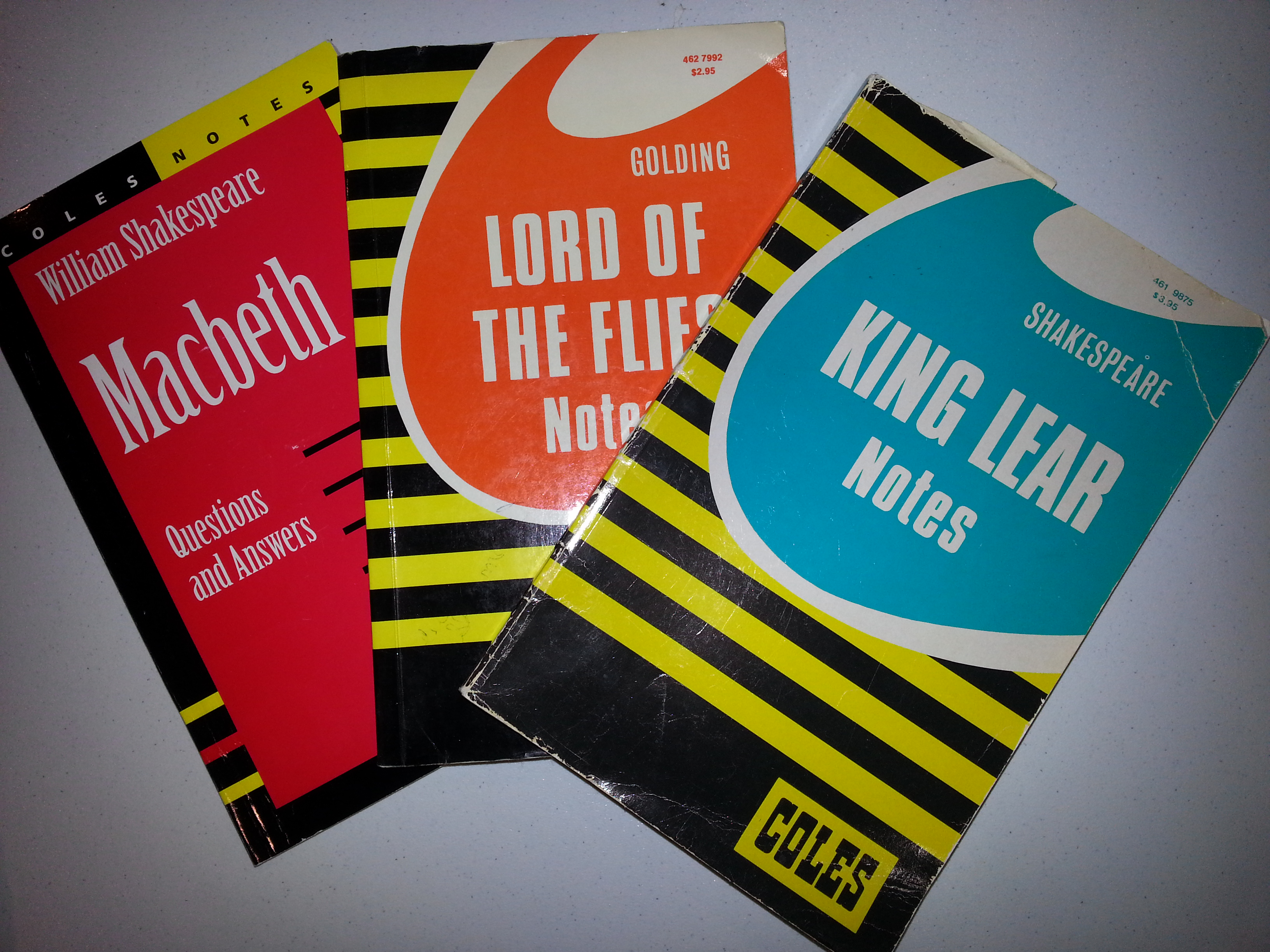
Throwback Thursday: What are Coles Notes?

coles-notes

There’s a scene in The Revenant where Father Paul discusses a case with Toronto’s coroner. So far, two bodies have been brought into the morgue in a state of decomposition indicating they’d died more than a week ago. In both cases, there are witnesses claiming they were alive only minutes or hours ago.  The discussion goes something like this:

“What’s this?” Paul asked.
“Autopsy file,” the coroner said.
“They didn’t teach Science at the Seminary. How’s about you give me the Coles Notes’ version?”

Coles Notes are the printed version of web sites like Spark Notes or Grade Saver. In the days before the Internet, we bought Coles Notes in Canada and Cliffs Notes in the U.S., on everything from literature to writing resumes. The author for the books is “The Coles Editorial Board” which was rumoured to be university students. Like the web pages of today that serve the same function, they were not infallible. While studying Richard III before teaching it, I found a discrepancy between their interpretation and mine, and no matter how hard I tried, I could not see how their interpretation was valid.

Though there are no Coles Notes for The Revenant, a study guide is available upon request, which would make an excellent tool for a teacher, student, or book club wishing to study the novel. Let me know if you’d like your PDF study guide by leaving me a note in the comments below or emailing me at info @ eliseabram . com.

How NOT to make a book trailer

For years I thought that if I were ever in a position to need a book trailer I’d be independently wealthy and could hire a professional to do it for me.

Barring that, I’d use Flash. I have a basic working knowledge of Flash. I’ve had to teach it to Travel and Tourism students for use in their end of semester presentations, and I’ve had occasion to teach entire semesters of Flash Action Script through eLearning courses. I never considered that when the time finally came, the proliferation of operating systems and browsers that do not support Flash would make that option all but obsolete.

The only other software I had was Windows Movie Maker. My kid made a movie with it while still in grade school–how hard could it be? Little did I know, the software would be the least of my worries.

Here are my three pearls of wisdom of what NOT to do, should you ever consider to go it alone when making a book trailer.

[Tweet “3 pearls of wisdom about what NOT to do when making a book trailer.”]

Pearl #1 – use royalty-free but not for commercial use graphics

I never considered that what I was embarking on was a commercial endeavour. All I wanted to do was get the word out about my book release; I wasn’t ready to start selling books yet. Nevertheless, all of those people I alerted to the release of my book were potential buyers which ultimately made my project a commercial one.

Back to the drawing board.

I eventually stumbled upon Flickr.com (make sure you click “Commercial use allowed” on the licence tab) and foter.com (make sure you click “Commercial Use” at the top of the page after doing a search).  Keep in mind you must still check the licence to ensure you have fulfilled your end of the use agreement. Most of the pictures will say to link back to the Creative Commons agreement as well as give the photographer credit, which you can do in the rolling credits at the end of your trailer.

For music, try FreeMusicArchive.org.

Pearl #2 – forget to record your titles, artists and URLs as you go

As someone who just wrote a post entitled “Just Cite the Damn Cite!” I don’t know what I was thinking. Too absorbed with ensuring I wasn’t breaking copyright to realize that if I didn’t have the credits right I was breaking copyright anyway.

Open a NotePad file (or create a file on similar software or go old school and do it on paper) and record the title of each photo, the artist, and the URL (Flickr and foter seem to want a link to the author on their site and not directly to the author) as well as a description so you’re sure you attribute the correct photo to the correct photographer. List your photos in order of appearance in the credits (and say you are doing this in your credits).

Pearl #3 – use Windows Movie Maker

I’m not sure if this should be a “pearl” or not, but like all Windows products, Movie Maker has its ups and downs.

On the up side is its ease of use. Movie Maker has the same drag and drop functionality of any other Windows product making it sort of intuitive to learn.

On the down side is just about everything else. Though the learning curve for any new app is steep, it seemed insurmountable at times for Movie Maker. Problems included how to coordinate the video with the title overlay (video should come first but since mine was a book, I started with the text), getting “slides” close enough to eliminate pauses between them (which made bang-on coordination with the audio file near impossible) and having to convert my MP3 file to a WAV file before I could even import it (I used Zamzar.com). I also could not holistically change the font, but had to do it piecemeal, one “slide” at a time, which was aggravating because it was super time consuming. Also, Movie Maker only creates WMV files, which meant I needed to do yet another conversion to the less proprietary MP4. And I couldn’t change the background of the file so my  background graphic is a different colour than the surrounding “stage” (which continues to miff me to no end).

In the end I have a passable book trailer for my new release (on 10 July 14), The Revenant, that I can display with pride. I pass this on to you now because forewarned is forearmed. You  can create a sort of professional-looking book trailer on the cheap (FREE!) with a bit of time invested (weekends for a month) and a lot of patience.

[Tweet “Making a book trailer? You’ve gotta read this!”]

Did you find this article useful? Still have questions about creating a book trailer?  Let me know in the comments below.


Literary Devices from A to Z – Brought to you by the letter V


is for Verisimilitude


Verisimilitude is the appearance of reality in a work of fiction.

I have written before about how all narrative is a construct of reality. This means that it is supposed to seem real, but it’s not really reality, it’s just constructed to appear that way.

My soon to be released novel, The Revenant, is case in point. Revenants as described in my novel do not exist in reality. And though they are believed to exist in certain circles of belief, the jury is still out as to whether seers, aura readers, empaths and possessed spirits actually exist. As a writer, that is none of my concern. As a writer, my job is to make you, the reader, believe my story could be real, that these creatures could–and in fact do–exist.

I recently had a verisimilitude shocker. I set out to travel the downtown core taking pictures of places documented in The Revenant. When I arrived at Yonge-Eglinton Square, I was surprised to see that the square was under construction. By the looks of it, they were extending the shopping plaza there out and into the square! My heart sunk at the thought of the size of the re-write–I’d have to relocate the scenes there to Dundas Square if I wanted to maintain the verisimilitude of the scene. That is, if I wanted people to believe the scene was real based on the scenery I described.

How important is verisimilitude in a piece of literature to you? If you read about a scene and there are errors in the location or the science being described does it spoil the story for you? Post your comments below.

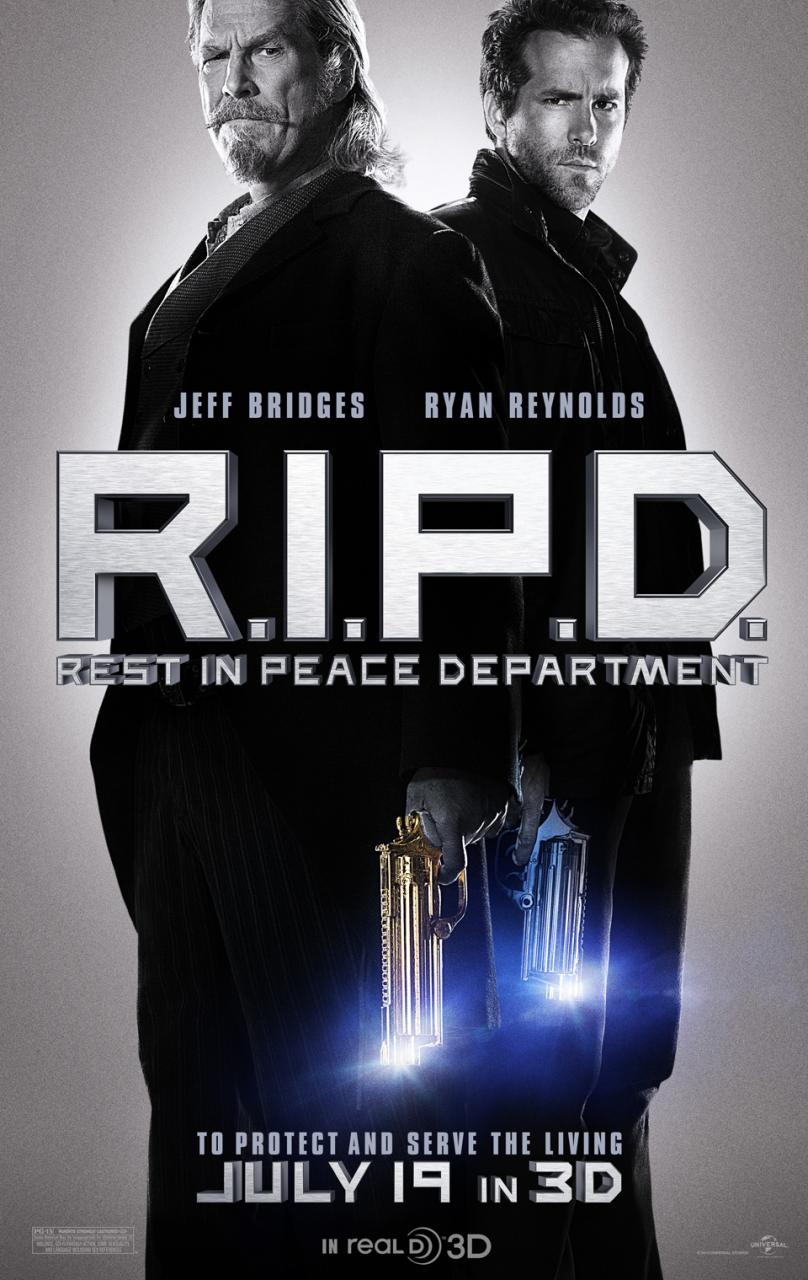
“RIPD”: “Men in Black” meets “Ghostbusters” meets lots of other things

RIPD (Rest in Peace Department) is where good cops go when they die. Their job? To track down escaped demons from Hell and return them or terminate them altogether. Ryan Reynolds plays Nick with one-note aplomb. His partner, Hayes (played by Kevin Bacon with similar gutsto), kills him over parts of a golden talisman they recover from bad guys. In the afterlife, Nick is drafted into the RIPD without ceremony and partnered with old west lawman Roy (Jeff Bridges) for training. On the first day out they happen upon the same case Nick was working when he was killed. They follow the trail to recover the rest of the talisman, failing to catch the demon when he is revealed. When the demon goes on a rampage in the city and Nick and Hayes are threatened with termination (which means meeting their final death), they take matters into their own hands.

I firmly believe there is nothing new under the sun; everybody works to put new spins on the same old archetypes. ABC’s Once Upon A Time, which puts a new spin on old fairy tales–especially on old Disney fairy tale properties–is case in point. The fun comes not in watching something new, but in watching a new spin on what must be an ages old concept. Many writers, I’m sure, set out to write something one of a kind and alternately cringe and scream when they see their original ideas manifested elsewhere (this was a regular occurrence while watching Fringe and working on Phase Shift). Other writers take someone else’s idea as a start and go from there (as is the case with every vampire property I’ve ever seen or read and The Revenant or The Time Traveler’s Wife and my untitled Alice piece).  RIPD has the typical old-timer-trains-newbie framework present in Men in Black or Lethal Weapon series. Unlike those movies, the old-timer is the strange-duck, while the newbie plays straight man.   Like Men in Black, the beings the cops hunt can hide in plain sight, appearing somewhat quirky, but for the most part normal. As is the case with Ghostbusters and television’s Reaper, RIPD detectives have a device to quickly dispatch the spirit back to the underworld before they wreak havoc on the living. Similar to Buffy the Vampire Slayer, there is a Hellmouth that is in danger of opening if the detectives don’t thwart the bad guys in time. Similar to Ghost, Nick’s love for his wife transcends death. Also similar to Ghost, his best friend/partner is the bad guy and his wife is ultimately put into jeopardy. Nick and his wife also have a brief reunion scene near the end, as do Sam and Molly at the end of Ghost.

RIPD is lots of fun. In addition to it being a police procedural, it is a love story, and involves superheroes of a sort. There is a lot of comic book violence as well as interesting villains. Jeff Bridges steals the scene in the role of talkative, cynical Roy, and much of the comedy comes from his deadpan responses and odd behaviour (such as driving the car facing sideways with his right leg up on the seat, or the way he is more concerned that he loses his hat than that he loses the demon). Though it borders on the cliché, RIPD is a light-hearted romp worth a look-see.

Did you see RIPD? Leave me a comment to let me know what you thought about it.

YA Novels

You’d think as a teacher of high school English in a school that requires students to read a young adult (YA) novel and in which I have to listen to presentations and read analysis of said novels, that I’d know quite a bit about YA novels. In reality, I know very little.

Is it folly, then, to take on a YA novel as my Nanowrimo challenge this month? Perhaps. But I’m going full speed ahead with it anyway.

I don’t remember reading many YA novels growing up, besides Judy Blume novels and Nancy Drew mysteries. I remember reading Hemingway’s Old Man and the Sea in grade six (no teen issues to be found in that one). In junior high I read the then scandalous Forever and Wifey before a friend’s mother turned me on to Stephen King in high school. I also remember reading quite a few soap-opera-type novels, cast-offs of my mother’s reading, mostly about Jewish immigrants finding their place in the New World, but not many teen novels.

In university I read Bette Greene’s The Summer of My German Soldier, and a number of classics (Winnie The Pooh, Peter Pan, Anne of Green Gables, The Sword in the Stone, Wind in the Willows) in university. I’ve taught Crabbe (William Bell), A Night To Remember (Walter Lord), Dreamspeaker (Cam Hubert), and Monster (Walter Dean Myers). On my own I’ve read Shelley Hrdlitschka’s Sister Wife, Hana’s Suitcase by Karen Levine, Virals by Kathy Reichs, and Only You Can Save Mankind by Terry Prachett. My intention here is to neither brag nor complain about the YA novels I’ve read. It is to establish that I am, by no means, an expert in the field.

Nevertheless, it doesn’t take a rocket scientist to deduce that YA novels are those which are published for and market to young adults (i.e., teenagers). The main characters in the novels are young adults. Issues explored are of interest to young adults. Forever is about a young woman losing her virginity. Pooh, Peter and Anne are all coming of age novels.  Crabbe is about a runaway. Ditto Dreamspeaker. The perennial Go Ask Alice (of which I have a still unread copy procured in my own teenage years) is about drug abuse, Monster: crime and punishment—all things you’d expect a YA novel to be about. But wait. Based on what my students report, it is much more than that. The novels my students read are tales of suicide, rape, cancer stricken youth and parents, sexual disorientation and/or ambiguity, terrorism, sexual abuse, self-abuse as in cutting, and murder, quite weighty topics for someone that can’t comprehend the difference between karma and divine retribution, I think.

Which brings me to The Revenant, the YA novel I’m chipping away at this month. Repeating the mantra “hurt your characters” (1), I am doing my best to put my characters through the ropes. Every night I sit down and type away, watching the word count mount to my goal of 1,600 plus words as I watch the story take shape. My characters have to battle with the fact that they’re empaths, seers and the undead. The main character, Zulu the Revenant, fanaticizes about superheroes as he goes about righting wrongs dreamt of by The Seer, his father figure (whom I must eventually kill). He gets stabbed, shot, and has to deal with the fact that the love of his life died a century ago and isn’t ever coming back—or is she? I haven’t yet decided. The empathy feels people’s emotions and sees auras so she is able to pick bad guys out in a crowd. So far the only hurt she experiences is that she may be falling in love with Zulu who she’s pretty sure is a vampire. She also has to deal with a meddling mother. It’s possible she may lose her mother and Malchus, the necromancer, may have to bring her back, though the way things are shaping up, it would only be temporary. Malchus is the long dead brother of The Seer (an old man cursed with longevity) in possession of a teenager’s body. He has raised two from the dead so far (one of which he killed himself), but they keep decomposing. I think the coroner may have to call his childhood friend, now the priest in the girl’s parish for religious advice as to how people who have been dead for some time are able to walk into city centres before they die one last time. Malchus struggles to get his powers back and under control and then he will have to find his brother because he must exact revenge on him for killing him.

At any rate, I have about 24 hours to percolate the next idea before I must force it to gel.

16,095 words and counting.

Viva Nanowrimo!

(1) Chartand, James. Fiction Writing: Hurt Your Characters. Men With Pens. 2006-2012. < http://menwithpens.ca/fiction-writing-hurt-your-characters/>. 10 Nov 2012.

THE REVENANT – Plot Synopsis

NaNoWriMo begins tomorrow. I am enjoying participating in the online forums on their web page at nanowrimo.org in the mean time. One of the forums asks that you post your plot synopsis for critique and then critique the synopsis of the person who has posted before you. In doing this, I came up with an amazing synopsis for the novel I plan to finish over the next month called THE REVENANT.

In case you don’t know, a revenant, is someone who has died as a result of violence with unfinished business and who comes back to complete the business. The legend of the revenant goes hand in hand with vampire lore in that many revenants were also thought to have been vampires.

In THE REVENANT, Janke, a farm boy, is thrown and trampled by his horse on the way to elope with Alma, his sweetheart. Shunned by his family when he rises after his funeral, he roams the country until he meets The Seer (a man who is able to see the future in his life span) in modern times. He reinvents himself as Zulu. Still searching for his beloved Alma, he joins The Seer in his quest to save the people he sees die in his dreams. At the same time, Malchus, The Seer’s brother, a powerful necromancer, is inadvertantly ripped from hell by teens experimenting with a Ouija board. Malchus has one goal in mind—to exact revenge on his twin brother Morgan—now known as “The Seer”—for killing him all those years ago. Joined by empath Kat, the group of three learns of Morgan’s resurrection and they gear up for the battle of their lives to save the city, and the world in which they live from Malchus’s evil.

Download PHASE SHIFT for the price of a tweet. Visit http://www.eliseabram.com, click on the button, tweet or Facebook about my novel and download it for FREE!