Category Archives: Uncategorized

“Supergirl” Season 4 is Super Duper!

Warning: spoilers are likely to follow.

Thanks to Netflix, I was just able to catch up on Supergirl season 4, and I was blown away. Now, I know I’m coming late to the party, but I’m going to whoop it up anyway, so if you’ve already watched the season and screamed accolades from the rooftop, imagine that I’m right there with you.

Supergirl, for those of you who don’t know, is Superman’s cousin who is also on Earth, wears a similar costume, and fights bad guys, just like Superman. At the core of the Supergirl story is a trio of strong female characters (Supergirl/Kara, Alex, and Lena) who are joined this season by Nia Nal, but more on her later. Nevermind that the season 4 has plenty of elements from Superman lore, like Brainiac, Lex Luthor, and even Superman himself, and aside from the fact that actors from other Superman productions–such as Erica Durance who played Lois on Smallville, Helen Slater who played Supergirl herself in the 1984 movie, and Dean Cain who played Superman on Lois and Clark–are featured in roles. Supergirl season 4 is impressive for the values it imparts. Here are my observations.

A timely message

Given the state of the nation and that racism and hatred and mistrust for immigrants has risen to the forefront over the past few years, Supergirl is to be praised for demonstrating how xenophobia can only lead to a nation’s destruction. Rather than human immigrants, aliens (as in from other planets) are the targets. They are referred to as “roaches” and told to go home. Near the climax, they are even banned from Earth and a satellite goes into orbit to shoot down approaching spacecraft. Though it’s interesting that we see the leader of the racist Children of Liberty–Ben Lockhart’s–origins (played with sexy scowls and determination by Sam Witwer), at its heart, the season is a parable for where we are heading if we give into our fear of the unknown and buy into stereotypes. In other words, allowing hate to grow and lashing out at our fellow man will assure nothing short of our own destruction.

Typically, literature–and science fiction in particular–is used to hold a mirror up to our society, but according to LiteraryTerms.net, one of the traits of science fiction is “to explore what could happen if certain events or circumstances came to be.”And while I’m not suggesting that Supergirl demonstrates what might happen on Earth if we become a safe haven for aliens in danger on their own planet, I am suggesting that it takes our persecution of those we perceive as different to the extreme. Angry mobs, protests gone wrong, and burying democracy in favour of a police state are only a few of the things that could seriously happen if we stand by and let racism flourish.

Nia Nal is a Superwoman

Nia Nal is the new character introduced this season. She is trans character played by a trans actress. Her character is a half-alien who belongs to a race of dreamers (they have prophetic dreams) that are passed on from mother to daughter. Nia’s parents expect her sister to have the ability, but instead, Nia is the one to inherit the power. This is a puzzling reveal for Nia’s sister, a genetic female, who observes that Nia shouldn’t have the power because she’s not a “real woman”. I think this turn of events is fabulous. To me, it says that in her heart and in her mind, Nia is a true woman. And the fact that the Supergirl‘s writers set the story up this way, it says that this is true of all trans people. If a person–in this case, Nia (Nicole Maines)–believes herself to be female, who are we to judge? Nia has no qualms about letting the world know that she is trans and in the Supergirl universe, no one so much as bats an eye at her admission. The situation is a brilliant example of art depicting life the way it should be.

Watching season 4 of Supergirl has only cemented my enthusiasm for this television show. I can’t wait to see season 5!

Do you watch Supergirl? What do you think of the series and plotlines? Let me know what you think in the comments below.

Exposing yet another Canadian tragedy

THE HOME FOR UNWANTED GIRLS by Joanna Goodman

At this point in history, most of us know about the Native residential schools. Some of us might be aware that there were, in fact, slaves in Canada. Let’s not forget the boatloads of Jews who were sent back to Europe during the Holocaust to meet their fate in the concentration camps. There was also the appropriation of the Dionne Quintuplets who were taken from their parents and made into tourist attractions. I would, however, be willing to bet that few Canadians are aware of the travesty orphans in Quebec orphanages suffered in the 1940s and 50s, something The Home for Unwanted Girls by Joanna Goodman strives to bring to the fore.

In The Home for Unwanted Girls, fifteen-year-old half-English/half-French Maggie gets pregnant by her French boyfriend. When the girl, named Elodie, is born, her parents whisk the baby off to be adopted by a Jewish couple who cannot adopt through the system, but Elodie is sickly at birth, and the couple backs out. The only thing left to do is to give the baby to an orphanage. When Elodie is 11, she meets with a doctor who declares her mentally insane so she can be admitted to the insane asylum to which the facility is about to be converted. Told the other is dead, Elodie and Maggie stumble through life, unable to rise above the circumstance of Elodie’s birth which, in Catholic rural Quebec, is a horrific sin.

Search for the “Duplessis Orphans” to learn the whole story. In a nutshell, the Catholic-run institution found it could make more money housing the mentally ill than orphans, so they had the residents in their orphanages declared mentally insane so they could keep living in their institutions and collecting money for their incarceration. The Duplessis orphans were treated no differently than the other inmates, receiving the same, harsh punishments and no education. The orphans were not removed from the institutions until after 1962. They were eventually issued an apology in 1999 and paid damages in 2006, but the damage for “an estimated two to four thousand children [who] were physically, mentally, and sexually abused” had already been done.” As would be imagined, the orphans found it difficult to integrate back into society after their experiences. The character of Maggie is inspired by Goodman’s mother, who was the daughter of a French Catholic married to an English “seed” man (one who makes a living selling seeds like Maggie’s father in the novel), but the rest of the book is based on Goodman’s research into the Duplessis orphans while giving a “deeper historical context into some of the long-running tensions that still exist between the province’s French and English communities.”

The Home for Unwanted Girls was an incredible read which I was unable to put down and finished in less than a week. Some of the attraction is akin to slowing down to catch a glimpse of the aftermath of an accident—we are so enticed by the devastation that we can’t look away. Elodie’s story while incarcerated, based on an actual, first-person exposition by a Duplessis orphan, propels the story forward, as do Maggie and Gabriel’s will-they-won’t-they relationship. Will Maggie and Gabriel get back together? Will Gabriel ever find out about Elodie’s existence? Will Maggie and Elodie ever be reunited? Read Joanna Goodman’s The Home for Unwanted Girls to find out.

“The OA” Season Two — WTF?

Warning: this is about “The OA”; spoilers abound.
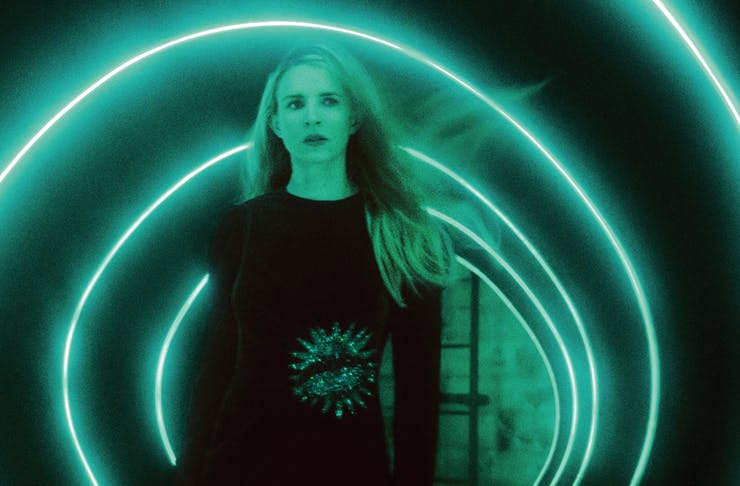
Brit Marling as Prarie/Nina from “The OA” season two

 In season one of Netflix’s “The OA”, Prairie, a blind girl, is kidnapped by Hap and kept in an underground glass prison cell for seven years. Hap is obsessed with people who have had near death experiences (NDE), and he wants to find out what happens after death. This is no “Flatliners”. Hap regularly kills Prairie and his four other charges—NDE survivors all—by drowning them in a helmet he’s devised before bringing them back to hear about their experiences. When Prairie tries to escape, she regains her sight after Hap hits her over the head in an attempt to kill her.

What the prisoners see after death is a series of “movements” they must do together in order to escape their subterranean prison. I should clarify that the way they escape is by sending their consciousnesses to another dimension.

Weird? You bet. And it only gets weirder.

“The OA” is a story within a story in which Prairie recounts what has happened to five select people in the present, including one of the teachers at Prairie’s school. When an active shooter goes on a rampage at the school, the five repeat the prisoners’ movements to distract the shooter. Season one ends with Prairie being shot in the chest.

Season two opens with Hap killing the prisoners and all of them, including Prairie, waking up in their bodies in an alternate reality. Hap is still keeping them prisoners in a psychiatric institution, Prairie finds out what her life would have been like without her NDE as a child, and Prairie’s love interest, Homer, is a doctor working under Hap. Prairie’s audience of five go on a quest to find out what happened to her and to send the teacher to Prairie’s new dimension.

Season two introduces a house that’s actually a puzzle that people solve using a phone app, a psychic octopus, ghosts from another dimension, the revelation that Nina, Prairie’s alter-ego, is a medium for nature, and that teacher BAA is a medium who can sense what’s happening in the other dimension. Remember how I said that it only gets weirder? Cue brain seeds that grow gardens forming an interdimensional map, and that Hap is Jason Isaacs (the actor that plays him) in another reality who is married to Brit Marling, the actor that plays Prairie (shades of “Being John Malkovich”). The object of the game is to find the rose window that looks into this alternate reality in order to win the game. Oh, and there are dreams. Lots of them, in which many people dream of a tunnel the size of a coffin, two round staircases, a rose window, and Karim, a private investigator hired to find Michelle who is Buck, a transgender teenager that is one of Prairie’s five select people.

I watched all eight episodes over two days and needless to say, I’m still processing. I have a lot of thinking to do and a lot of reading to figure out what I’ve just watched. Just like season one, this season takes a long time building up to the final two episodes which feel rushed. In fact, the whole season feels rushed, like there’s SO much jammed into those eight hours that it will take a lot of unpacking to understand the symbolism behind the giant octopus or how BAA suddenly has psychic powers. There’s no guessing needed to figure out the symbolism of the eyes (Prairie was blind; Nina was not), near drownings (reminiscent of Hap’s torture device) or that the puzzle floor is a huge cross-section of a tree (symbolic of the tree of life).

Regardless, both seasons of “The OA” are worth the watch for literary nerds like me who can’t help but ponder the overall meaning of the story. This is going to take a while. Discuss amongst yourselves until I figure it out.

Any thoughts? Please leave them in the comments below.  

An Iconic Dystopia for iconically dystopic times

The Handmaid’s cover I remember.

The Handmaid’s Tale is Margaret Atwood’s iconic dystopic novel from 1985. Though it was published more than three decades ago, it nevertheless functions as a contemporary cautionary tale, warning society of the path it will take if it does not check its values. It remains extremely relevant in the first quarter of the new millennia, with themes surrounding basic civil and human rights regarding freedom of speech, religion, and marginalized populations, including women.

The novel follows the story of Offred, a handmaid assigned to the Commander and his wife. In the Republic of Gilead, fertile women are forced to become handmaids to bear children for sterile upper-class women via monthly, ceremonial copulation. Offred (a name derived from the words “of Fred”, forever branding her the Commander, Fred’s, property) fails to become pregnant and the Commander’s wife, Serena Joy, suggests she allow herself to be impregnated by Nick, the Commander’s chauffeur, ostensibly to protect her station as their handmaid. When, on a shopping trip, her companion, Ofglen, introduces Offred to Mayday—an underground organization devoted to overthrowing Giliad—the otherwise unnamed Offred suddenly sees the hope of a better life, and she dreams of being reunited with her husband, Luke, their daughter, and her friend, Moira.

Given the current state of world politics, Atwood’s vision of the future couldn’t be more prescient. Women have lost reproductive rights and self-determination when it comes to their own bodies. Gilead is surrounded by a wall from which the bodies of dissidents are hanged and left on display to serve as warnings. The lines between Church and state are blurred. Secret police (aptly named “eyes”) are everywhere. Gilead is ruled by martial law. Rather than “speculative fiction”, Atwood’s novel reads like a tome sent to warn us against the not to distant future. In spite of Offred’s suffering, the underlying theme of the novel is that no matter how dystopic a person’s situation may seem, people will always move forward by clinging to whatever ray of hope they can find, be it family, personal freedom, or striving for change. Is that not ultimately the definition of human nature?      

Atwood’s writing style—though disjointed at times—sets the tone for Offred’s lamentation of the loss of the world in which she was raised. It is also reflective of Offred’s thoughts as she tries to adapt to her “new normal” way of living. The novel is information-heavy, at least in the beginning, which can be overwhelming, but this soon changes and becomes more compelling as Atwood slowly enlightens the reader to its significance.

While The Handmaid’s Tale may not be considered groundbreaking literature—consider dystopic staples like 1984, Children of Men, and Fahrenheit 451—it is visionary in its scope. Having spawned versions in a gamut of media including film, ballet, theatre, radio, the Hulu television production, and The Testaments, the upcoming sequel novel, Atwood’s The Handmaid’s Tale has permeated our popular culture as more than simple speculation. Rather, it should be viewed as a warning for the trajectory of society should those in control in the new millennium continue to trample on the civic and social rights of its citizens.      

The Wattpad Experiment

For years, my friend, Mia Meade, has been encouraging me to try WattPad out. I’ll be honest–I tried it before I met her and had no success. But after talking to Mia and reading “How Authors Can Use Wattpad to Sell Books and Earn Money” by Linda Poitevin, I’ve decided to give it a go and blog about my experience.


The challenge was to figure out which story to use as a tester. I currently have three books in the works (The Carrington Pulitzer Revelation Chronicles Online Extended PlayPack–science fiction, young adult; Indoctrination–Book Two of The New Recruit; and Re-vamped (paranormal/supernatural), but they are in various stages of editing and won’t be ready to publish for a while yet.

In the end, I decided to re-issue The Revenant: A YA Paranormal Thriller with Zombies. The plan is to post a chapter a week as Poitevin suggests and to blog as I do. In the meantime, I will be reading other authors in my genre, add to my library, vote, and comment. I will also be posting to social media as I go. In addition, I will be reading a number of resources on how to use Wattpad for fun and profit and share what I learn with you.

The Revenant: A YA Paranormal Thriller with Zombies can be found on Wattpad at https://www.wattpad.com/story/134197850-the-revenant. This is a completed novel that can be purchased on Amazon, B & N, iBooks, and Kobo.

If you Wattpad, please look me up, vote for my book and follow me. I’m interested to connect with you, both here and on Wattpad. After you’ve read a chapter or two, come back and let me know what you think.

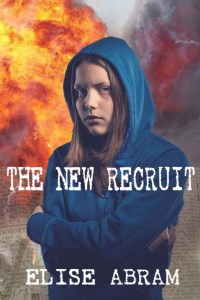
New Release: THE NEW RECRUIT

How far would you be willing to go to change the world?

Have you ever felt like an outcast? That’s exactly how sixteen-year-old Judith feels. Having just transferred from parochial school after losing her mother, Judith is alone and vulnerable. When she meets Cain, she has no idea what she’s getting herself into. Cain is the most beautiful human being Judith has ever seen, but he hides a dangerous secret. When Cain’s recruits her for a job working with his surrogate father, her whole life changes. Things are great at first, but the more she learns about Cain’s world of climate crusaders, the more she questions his motives behind singling her out. Will Judith find a way out before it’s too late?

BUY “THE NEW RECRUIT” TODAY!


“You know that feeling when you’re totally fangirling a new YA and you want more, more, more? When you discover a new author and you just can’t get enough? That’s how I feel after reading Elise Abram…The New Recruit is a plot-driven emotional rollercoaster.”

—Maria Samurin, author

Rescuing food from the dumpster to feed the hungry, spending the weekend picking up garbage in a park, and attending peaceful protests all seem like great ways to make the world a better place but…

What if it’s not enough?

When sixteen-year-old Judith meets Cain, she has no idea what she’s getting herself into. Cain is the most beautiful human being Judith has ever seen, but he hides a dangerous secret. When Jo-Jo, Cain’s surrogate father, offers her a job, she accepts, unaware she’s been recruited as a pawn in Jo-Jo’s ecoterrorist plot.

Will Judith find a way out before it’s too late?

Does she have a choice?

In a time when jobs are scarce, politics are unstable, and the future is uncertain, all of us are vulnerable, willing to blindly follow a charismatic leader in exchange for the promise of a stable world view.

BUY “THE NEW RECRUIT” TODAY!

Paleo Mug Muffins – Bonus Recipe!

paleo-mug-muffins-coverIntroducing Paleo, Gluten Free, and Low Carb Mug Muffins: A Baker’s Dozen of One Minute Muffins
Sweet tooth got your tongue?

It’s happened to all of us–we want to eat healthier, but then we’re sabotaged by cravings for sugar, salty, carb-laden snacks. Rather than reach for a chocolate bar or bag of chips the next time the carb craving hits, reach for a mug muffin instead. Paleo, Gluten Free, and Low Carb Mug Muffins are a healthy-ish alternative, great for breakfast, dessert, or just because.

Paleo, Gluten Free, and Low Carb Mug Muffins will show you how to make a baker’s dozen of different mug muffins from a single base recipe. Choose from Black Forest Cherry, Blueberry Crumble, Carrot Cake, Red Velvet, and Apple Fritter…and we’re just getting started! In addition to recipes, you will learn about the health benefits of the basic building block ingredients, such as the flours, sweeteners, and fiber options used to make the best mug muffins you’ve ever tasted!

Introducing: Snickerdoodle!

This summer, I vowed to get back on track with my diet by KOing popcorn and chocolate. The only thing that kept me going were my mug muffins. Turns out, a little bit of sweetness in the morning was enough to curb my sweet tooth and/or chocolate craving. Before I knew it, the cravings were gone!

Paleo, Gluten Free, and Low Carb Mug Muffins: A Baker’s Dozen of One Minute Muffins was the result of my summer experimentation–a girl can only eat so many double-chocolate and chocolate chip muffins before she gets bored. I decided to document it as I experimented with flavours and the result is my recipe book.

Publishing the book isn’t the end of it, though. I’m still experimenting. One hot flavour nowadays is snickerdoodle. The more recipes I saw for snickerdoodle-flavoured things, the more curious I was to see what the hype was all about, and so I created a Snickerdoodle One Minute Muffin variation for my basic recipe. To find out the basic recipe, you’ll have to buy the book, which is available here, from my book page.

alien-1295486For the uninitiated who might be asking exactly what a snickerdoodle is, it’s not the name you might give to the drawing of a Snickers bar, nor is it some kind of crazy alien like the guy on the right. It’s a caramel-flavoured, nuttiness that can be infused into any cake, cookie, candy, or in this case, a paleo, gluten free, and low carb mug muffin.

Here’s how:

To the basic recipe, omit:

  • maple syrup

Add:

  • 1 tsp of your favourite nut butter
  • 1 tsp coconut sugar
  • pinch of cinnamon
  • handful of butterscotch or peanut butter chips

Now, I know that butterscotch and/or peanut butter chips are neither healthy, nor are they paleo. I am also aware that peanuts, aka legumes, are not paleo, and purists can omit this ingredient if they choose. However, if you don’t mind the odd “cheat” they make the caramel flavour really pop.

Mix and bake recipe according to instructions in the book.

For the basic paleo, gluten free, and low carb mug muffin recipe along with more than 13 variations on the recipe, buy Paleo, Gluten Free, and Low Carb Mug Muffins: A Baker’s Dozen of One Minute Muffins.

Complications: Mild-mannered Doctor goes Commando

Complications-1050x592

Jason O’Mara stars in “Complications”.

Thank you so much to Callum at Cultured Vultures for posting!

Complications, Jason O’Mara plays Dr. John Ellison, a mild-mannered ER doctor who goes commando when he witnesses a drive-by shooting in a park. Grieving the loss of his daughter to cancer the year before, he’s on his way to the vet to save a mauled squirrel when he realizes the animal has died. This most recent death brings back the emotions experienced during his daughter’s illness and death. Overwhelmed, Ellison stops the car in front of a park only to witnesses the boy being shot…

To read more, check out my review at the Cultured Vultures site!

I’m a Cultured Vulture!

cvlogo


How NOT to make a book trailer

For years I thought that if I were ever in a position to need a book trailer I’d be independently wealthy and could hire a professional to do it for me.

Barring that, I’d use Flash. I have a basic working knowledge of Flash. I’ve had to teach it to Travel and Tourism students for use in their end of semester presentations, and I’ve had occasion to teach entire semesters of Flash Action Script through eLearning courses. I never considered that when the time finally came, the proliferation of operating systems and browsers that do not support Flash would make that option all but obsolete.

The only other software I had was Windows Movie Maker. My kid made a movie with it while still in grade school–how hard could it be? Little did I know, the software would be the least of my worries.

Here are my three pearls of wisdom of what NOT to do, should you ever consider to go it alone when making a book trailer.

[Tweet “3 pearls of wisdom about what NOT to do when making a book trailer.”]

Pearl #1 – use royalty-free but not for commercial use graphics

I never considered that what I was embarking on was a commercial endeavour. All I wanted to do was get the word out about my book release; I wasn’t ready to start selling books yet. Nevertheless, all of those people I alerted to the release of my book were potential buyers which ultimately made my project a commercial one.

Back to the drawing board.

I eventually stumbled upon Flickr.com (make sure you click “Commercial use allowed” on the licence tab) and foter.com (make sure you click “Commercial Use” at the top of the page after doing a search).  Keep in mind you must still check the licence to ensure you have fulfilled your end of the use agreement. Most of the pictures will say to link back to the Creative Commons agreement as well as give the photographer credit, which you can do in the rolling credits at the end of your trailer.

For music, try FreeMusicArchive.org.

Pearl #2 – forget to record your titles, artists and URLs as you go

As someone who just wrote a post entitled “Just Cite the Damn Cite!” I don’t know what I was thinking. Too absorbed with ensuring I wasn’t breaking copyright to realize that if I didn’t have the credits right I was breaking copyright anyway.

Open a NotePad file (or create a file on similar software or go old school and do it on paper) and record the title of each photo, the artist, and the URL (Flickr and foter seem to want a link to the author on their site and not directly to the author) as well as a description so you’re sure you attribute the correct photo to the correct photographer. List your photos in order of appearance in the credits (and say you are doing this in your credits).

Pearl #3 – use Windows Movie Maker

I’m not sure if this should be a “pearl” or not, but like all Windows products, Movie Maker has its ups and downs.

On the up side is its ease of use. Movie Maker has the same drag and drop functionality of any other Windows product making it sort of intuitive to learn.

On the down side is just about everything else. Though the learning curve for any new app is steep, it seemed insurmountable at times for Movie Maker. Problems included how to coordinate the video with the title overlay (video should come first but since mine was a book, I started with the text), getting “slides” close enough to eliminate pauses between them (which made bang-on coordination with the audio file near impossible) and having to convert my MP3 file to a WAV file before I could even import it (I used Zamzar.com). I also could not holistically change the font, but had to do it piecemeal, one “slide” at a time, which was aggravating because it was super time consuming. Also, Movie Maker only creates WMV files, which meant I needed to do yet another conversion to the less proprietary MP4. And I couldn’t change the background of the file so my  background graphic is a different colour than the surrounding “stage” (which continues to miff me to no end).

In the end I have a passable book trailer for my new release (on 10 July 14), The Revenant, that I can display with pride. I pass this on to you now because forewarned is forearmed. You  can create a sort of professional-looking book trailer on the cheap (FREE!) with a bit of time invested (weekends for a month) and a lot of patience.

[Tweet “Making a book trailer? You’ve gotta read this!”]

Did you find this article useful? Still have questions about creating a book trailer?  Let me know in the comments below.


Literary Devices from A to Z – Brought to you by the letter W


is for Weather


Pathetic fallacy is when inanimate objects of nature–specifically the weather–mimic human emotion. The distinction between pathetic fallacy and personification is as follows: personification “gives human attributes to abstract ideas, animate objects of nature or inanimate non-natural objects” (Literary Devices).

An example of this occurs in Phase Shift. After Molly finds Stanley’s body, she says,

At the foot of Stanley’s driveway. In the rain.  Police offer me hot drinks and dry blankets. Refuge from the drizzle in a cruiser. They think they’re helping. Won’t help take the chill off. 

On this night, the weather is cold and rainy, the perfect atmosphere for coming to terms with finding a body that appears to have spontaneously combusted and for finding out that you may be under investigation for setting the fire.

Think about the weather during “There’s a Light (Over at the Frankenstein Place)” in “The Rocky Horror Picture Show”, or the lightening gathering as Macbeth meets the witches on the heath. What other notable uses of the weather via pathetic fallacy stick out in your mind? Share your ideas in the comments below.