Author Archives: Admin

How to write a book review in 3 easy steps

In today’s uber-wired society, most of us are bloggers. Think about it…you’ve probably already posted something on Twitter (microblogging) or Facebook (slightly longer microblogging). Or maybe you’ve used Tumblr (graphic blogging), Snapchat (also graphic blogging) or even YouTube (video blogging–or vlogging). Most of us have something to say about…well… something.

Most of us are also consumers of some kind of  popular culture, be it books, magazines, games, television or the movies. We watch voraciously. Some of us read that way, too. Most eBook sites invite users to review the books they read in order to generate sales. For us consumers, the people who pay the producers of popular culture, what better way is there than to voice an opinion on our satisfaction with the products we’ve purchased with our hard earned money than to write a review?

It’s not all that hard, really. Just three easy steps to reviewing success.

But if you’re going to review and post your review, you have to do it responsibly. Think of it this way–if you don’t understand a painting you see in the museum you wouldn’t stand in front of the museum with a sign saying “Don’t See This Painting!” Okay, so maybe some of you would. But that doesn’t make it okay. Authors put most of their blood, sweat and tears over the course of months or years into everything they write. That kind of devotion must be respected, no matter what you think about the end product. Just remember that at the receiving end of every review is a flesh and blood person with feelings and you should be okay.

Now, as promised, 3 steps to writing a good book review…

Step 1 – The Retell

Your first paragraph should retell some of the important plot points that lead up to but do not reveal the climax. Introduce main characters and their relationships and why they’re important to the story.

Step 2 – The Analysis

Every novel is written with a social conscience. This is the injustice the author sees in society that he thinks he can draw attention to by writing about it. Academics call this “theme”.

Discuss the theme in your analysis. Think about the voice and tone of the narrator; what about this is unique? Were there any recurring symbols or images and if so, how did they affect your understanding of the theme?

Step 3 – The Reflect

This is where you make connections with your understanding of the world around you. How does the novel relate to anything else you’ve ever heard or seen or read?

Lastly, discuss what you thought of the book, but before you do, try to figure out why you really liked or disliked the piece. Rather than say “The point of view is awful,” try to find a reason why you hated it so much. Maybe you didn’t like the idea of a male protagonist. Maybe  you are used to first person narratives and you just don’t get the second person viewpoint. Try to remember that this is your interpretation based on your life and reading experience and not about a major flaw in the author’s storytelling ability.

End your post with a call to action. Ask what others think in general or about a specific aspect of the work and invite them to leave a message with their opinion. Don’t forget to answer everyone kind enough to post.

What did you think?

Was this article helpful? Drop me a line letting me know why or why not. Feel free to post your book review here for feedback.

“The Curse of Oak Island” is must see TV!

A curse. Pirates. A treasure. Booby traps.

It has all the trappings of the next “Indiana Jones” or “National Treasure” movie. The main difference? This is for real.

Oak Island, Nova Scotia. Three boys discover a pit (“the Money Pit”) on and begin to dig. As they get deeper, strange artifacts begin to pop up. Flagstones. Wooden platforms. Small metal artifacts. And then, at around 27 metres (that’s more than 80 feet), they find a stone cipher that when translated says, “Forty feet below, two million pounds are buried.” The boys dig a little more, and then leave for the night. When they return, the shaft is underwater. They conclude a booby trap has been triggered by their digging, which flooded the shaft to protect the treasure from plunderers (oakislandtreasure).

In modern times, Dan Blankenship and his associates dig a shaft parallel to the Money Pit (called 10X), fortifying it with steel. He takes some video in which he insists he can see a body, a treasure chest, and other buried  items. 10X eventually floods as well. Due to disagreements over land ownership, digging on the island ceases until brothers Rick and Marty Lagina buy a controlling stake in the island’s tourism company and are able to resume excavations.

I saw the first episode of History’s “The Curse of Oak Island” yesterday; I haven’t been that excited since seeing “In Search of Noah’s Ark” when I was a kid. The premiere episode explains the history of the Money Pit and 10X and documents the Lagina brothers’ excavation of the pits as they search for the fabled treasure. Viewers get to see the Blankenship video and meet Dan Blankenship (now 80 and just as obsessed as ever) and his son who are active members of the Laginas’ team. The first thing they do is send a camera into the Money Pit, but the footage comes back inconclusive and the files mysteriously disappear from the computer midway through the viewing. Perhaps this is part of the curse, they wonder.

Next, the team drills into the hole while one of the brothers searches the fill. They find bits of blue transfer ceramic, but not much else. Lastly, air is pumped into the shaft in an effort to remove the water. They jerry-rig a sediment holding tank and use a shovel to start mucking about, but turn up only a single metal artifact. Later, the team takes a boat ride to see the island from the water. They hypothesize the presence of five box-drains, used to draw sea water into the shafts and plan to dive at a later date to confirm or debunk their existence.

In “The Curse of Oak Island,” the Laginas and the Blankenships document their real-life adventure as they search for pirate treasure. The curse promises that seven will die before the secret of the Money Pit is revealed, which only serves to bolster the excitement which makes this an hour of tv worth watching. What I like about “The Curse of Oak Island” is that, unlike other salvaging shows, the Laginas do things legally. They let us know the credentials of the team members, as well as the permits needed and the legalities and cost of the dig and that the task they have undertaken is dangerous, with the implicit message not to try this at home.

“The Curse of Oak Island” is not only exciting television, it’s also responsible television. And that’s good archaeology.

Did you see “The Curse of Oak Island”? What did you think?

Beautifully written and compelling

My biggest regret? Not being able to say goodbye to my father before he passed away.

It all happened so quickly. One minute he was going to be okay and I needn’t have to rush to the hospital and the next it didn’t look like he’d make it home. He died while I was stuck on Highway Seven in rush hour traffic, just as I went through an underpass. I know because I had a feeling and I checked the time. When I got to the hospital I learned his time of death was within minutes of my “feeling.”

My second biggest regret? Not going with my mother to visit my grandmother in the convalescent home in the days before she died because it was boring.

I’ve often thought in the twelve years since my dad died and the thirty-five years or so since my grandmother died that I’d like to have that one last chance to say goodbye.

This is the exact sentiment Jason Mott explores in his novel The Returned.

In The Returned, eight year old Jacob returns to his parents, Lucille and Harold, almost fifty years after his death by drowning in the river behind their house. Lucille welcomes him with open arms. Harold is suspicious of his son’s return as he is of all those who have returned without explanation and seemingly without purpose. When the government begins arresting the returned and warehousing them in internment camps, Harold accompanies his son, grows closer to him, and discovers a kinship with those who have returned, as well as with their families.

Part “In the Flesh” (minus the zombies), part “The 4400”, The Returned is a beautifully written and compelling read, so long as you have willing suspension of disbelief enough to forget about why the dead have returned and simply accept the fact that they have. The overall theme of the book illustrates patterns in history, and that we are doomed to repeat ourselves. Case in point, warehousing millions of Jews in concentration camps during World War II and the establishment of Japanese internment camps later in the century. The comparison with these events in the novel is interesting but heavy handed at times, like when a Jewish couple attempts to hide a handful of returned German soldiers on their property. The soldiers are portrayed as innocents, caught up in something in which they have no say, acting as society demands of them, until they are taken outside and shot for their compliance in the war.

The Returned is being made into an American television series called “Resurrection” (the trailer is available on YouTube and it looks amazing), but given the track record of similar series, I don’t know how successful it will be. I know I’ll be watching it, for no other reason than I like the honesty and emotion of the novel and the ultimate message, how society treats “the other” with a combination of demonization and/or segregation and how one man, Harold, grows to overcome his prejudice of “the other” and learns no matter our stories of origin, we are all just people; we are all the same.

Dracula is a page turner

Bram Stoker’s Dracula is the gothic horror story that put down roots for modern day vampire lore.

In Dracula, lawyer Jonathan Harker is sent to Transylvania to close a deal on the sale of a house for Count Dracula in England. Confined to a limited number of rooms in Dracula’s castle, Harker goes  exploring where he discovers siren-like creatures and Dracula’s dark nature. Harker eventually escapes, goes nearly mad, and convalesces in a hospital where fiance Mina Murray retrieves him and marries him. They return to England to find Mina’s friend, Lucy, mysteriously ill from blood loss. Harker and Dr. Seward enlist a retired Van Helsing for help. They replenish Lucy’s blood nightly to no avail. Eventually Lucy dies, her body claimed by Dracula. It’s not long before Mina falls prey to the same “illness,” with one strange symptom–she has a connection with Count Dracula. Harker, Seward and Van Helsing use this connection to ambush Dracula and kill him for good at last.

Fan of vampire stories that I am, I had always meant to read the original Dracula, but never got around to it. But after watching NBC’s Dracula, I needed to go back to the archetype to see which characters and events were borrowed from the original and which were new.

In NBC’s Dracula, the count assumes the name Alexander Greyson and pretends to be an American newly arrived in England on business. In a grand spectacle opening, Greyson holds a party at his mansion where he introduces his guests to free, wireless power which sends the oil magnates into a tizzy. At this gala is socialite Lucy Westenra who has invited her friend and medical student Mina Murray and Mina’s boyfriend, reporter Jonathan Harker. When Dracula sees Mina he sees his wife’s doppelganger and is determined to have her, but not by force. To that end, he hires Harker as his assistant, puts him up in a mansion and pays him enough to marry Mina and live happily ever after. The idea is to keep Mina close and gradually insinuate himself into her life. Pursued by the Order of the Dragon, an ancient organization whose members are involved in (among other things I can’t figure out) maintaining a power monopoly and killing vampires, Greyson’s goal is to punish members of the Order for their role in making him what he is today.

Other than character names and the time in which the story takes place, there is little comparison between the original book and the television show. In the book, Dracula has no alter ego and there is no mention of Mina the doppelganger. TV’s Renfield is Dracula’s manservant, a far cry from Stoker’s raving, bug-eating lunatic and Stoker’s Van Helsing is out to kill Dracula, not form an unholy alliance with him in order to seek revenge on the Order of the Dragon. Reading the book  also shed some light on other supernatural works, including  an explanation as to why the brothers on Supernatural bear the last name Winchester and the origin of the title “Vampire Diaries”, adopted because most of Stoker’s novel is told in journal or diary format.

The novel is a page turner at times, boring at others, but worth the time to read.

The series picks up pace midway through episode two and becomes the television version of a page turner. I binge watched the first three episodes and regret not watching the fourth as well (but Once Upon a Time was about to begin and priorities must be set).

Are you watching NBC’s Dracula? What do you think?

I’m Leaning Paleo

When there’s nothing on television I have three go to vices: The Big Bang Theory repeats, The History Channel, and The Food Network. The problem with watching the Food channel is that I want to make so many of the delectable treats I see there. And for a while I did. And I blogged about it. And I let the creators know about it. Some of them even took time from their busy schedules to respond.

Times have changed. I have a brand new hip. I’m getting old and pounds are getting hard to drop. I’ve returned to the gym, became gluten free, and now, at the suggestion of my trainer, I’m experimenting with paleo.

The paleo diet in a nutshell is about eating only the foods our prehistoric ancient ancestors ate, which means no milk products, no grains, and no processed foods. I can handle the processed food bit, and even the grains–I’ve cut all but oatmeal and quinoa out of my diet already and technically, quinoa is a seed and not a grain. But the milk? To go totally paleo means no morning latte, no greek yogurt snack (including as a substitute for bananas in my Yonanas machine), and no cheese protein boosts.

I really need to think about this decision.

In the mean time, let’s just say I’m leaning.

As is the case with any diet, there is tons of preparation involved. I arrived home from work at 4:15 last night and spent more than two hours cooking. I made chicken breast with duck sauce (processed sauce, so not truly paleo chicken), and tried a few new recipes.

Roll up for last night’s magical mystery tour of the paleo diet in the test kitchen!

Paleo Hummus

Cauliflower hummus? Sounds weird, but it’s actually quite flavourful. Not quite as smooth as the original recipe (I had to add extra oil, lemon and tahini but couldn’t get it to quite the right consistency), and still reminiscent of baked cauliflower, this was really good with the microwave sweet potato chips recipe below. The recipe calls for 4 cloves of garlic which seems like a lot, but it’s really not. I made the mistake of substituting hot chili pepper for paprika–not something I would recommend–but the extra wet ingredients balanced out the taste a bit. No need for sriracha in my version, that’s for sure. The recipe is time consuming (30 minutes to bake) but well worth the wait.

Sweet Potato Chips

Crisp potato chips in the microwave? There’s a trick to it, but if you can master it, they’re really good. The problem is that they’re cooked on parchment paper on the spinning tray inside the machine. This means the chips on the outside perimeter would eventually get crisp if only the ones in the middle didn’t start to burn. When you try this, line them up around the outside of the tray, leaving the middle empty and watch them closely. Take them out just before they begin to brown. Use them as scoops when eating the paleo hummus recipe above.

Paleo Granola Bars

Technically this really isn’t granola as there are no oats in the recipe. Instead, these bars contain lots of healthy nuts and seeds and coconut and hold together nicely when frozen. When making these, I misread the recipe and measured a half cup of coconut oil instead of a quarter cup. I caught it before it melted, but the oil is a solid coming out of the jar and I’m not sure I wound up with exactly a quarter cup. I boiled the mixture per instruction, but then realized it was burning–maybe if I melt the oil with the honey first, bring it to a boil and then add the almond butter it will be more candy-like and harden better next time? Regardless of the “glue” holding this bar together, the end result is delicious, and I’m not a coconut fan.

Enjoy!

If you come across any interesting, easy and delicious paleo recipes, please post the links in the comments or tweet them to me. If I test them out, I’ll give you credit for the find in my blog.

Dr. Who’s A Christmas Carol

day of the doctor poster

image from skinnyglasses.deviantart.com

Imagine Alex Kingston in the guise of River Song saying, “Spoilers,” in that sing-songy way of hers.

In The Day of the Doctor, the very first Doctor (John Hurt), the one responsible for saving the universe and causing the destruction of Gallifrey in the process, meets his Kobayashi Maru. In priming the weapon to do this, a weapon so sophisticated it has developed a conscience (Billie Piper), the Doctor is connected through a time funnel with the tenth (David Tennant) and eleventh (Matt Smith) regenerations of himself. While engaged (literally) in trying to save Queen Elizabeth the First from shape-shifting Zygons, the three doctors realize that Gallifrey must perish in order to save the universe. In a nice parallel, UNIT agents realize they must destroy England to save the world from the Zygons. The solution to a win-win scenario is clear: all characters–UNIT and Zygon, and all Doctors–must come together to save themselves. Smith’s Doctor uses a memory wiping device in the bowels of UNIT’s storage vault to make both human and Zygon forget they are human and Zygon respecfully to keep them honest during negotiations. As for the Doctors, they enlist all iterations of previous Doctors and their TARDISes (TARDI?) to freeze Gallifrey in a moment in time. To the Daleks firing on the planet it will seem as if the planet were destroyed and they’ll wind up firing against themselves. In this way, the Doctor lifts a huge weight from his shoulders as he no longer regrets killing all of his kind, though he must live without knowing if what they did saved or destroyed them.

The Day of the Doctor might be better named “A Dr. Who Carol”, as the present Doctor meets two past iterations of himself and one future iteration. Like Dickens’s Carol, each iteration of the Doctor is held up for consideration by another. The very first Doctor–known as the “War Doctor”–realizes he has choices he didn’t know existed, barring the use of timey-wimey things he could only do with the other Doctors. The tenth and eleventh Doctors–cleverly dubbed “The One Who Regrets” and “The One Who Forgets”–learn they must accept their past, because at the time in question, there really was no other option. At the end, a previous (I think–I’m not up on my Who trivia) Doctor , number gives number eleven hope that his solution to the unwinnable scenario was the right one, and that Gallifrey lives on, but as more than a memory of a moment in time.

I have to admit–I’m a reluctant Dr. Who fan. I never cared for the series in the past, finding it too silly and fantastic for my sci-fi sensibilities. When my husband told me they’d revived the series, I had no interest to watch. When he insisted I watch I liked it, but not to fanatic proportions. I found the ninth Doctor, my first Doctor (Christopher Eccelston) rather arrogant. Then he regenerated into Tennant and I was hooked. The episodes are not consistently exciting, or even interesting, but The Day of the Doctor was one of the best, if not THE best, Who episode yet. William Hurt plays the War Doctor as the reluctant hero. Tennant and Smith are wonderful together playing parts more alike than not, Tennant channeling his inner Hamlet in contrast to Smith’s child-like, devil-may-care attitude. I liked the Torchwood nod, allowing Who companion Clara (Jenna-Louise Coleman) to escape from the Zygons with Captain Jack’s device, as well as the return of Rose (Piper), even if only as a facsimile of the original.

Though Tennant is still my favourite Doctor, I’m looking forward the Christmas special next month, though without Tennant and after this episode, it has a tough act to follow.

“Heart Shaped Box” not for the faint of heart

In Heart Shaped Box by Joe Hill, Judas Jude Coyne, aging grunge rocker and collector of oddities and antiquities, purchases a ghost online. He later learns the ghost, Craddock McDermott, is the step-father of his ex-girlfriend, Anna, and he has a vendetta settle with Jude. Both Craddock and Anna’s sister, Jessica blame Jude for Anna’s death. After the ghost kills Jude’s assistant Danny and nearly killing Jude, he and his current girlfriend, Marybeth (whom Jude has nicknamed Georgia) set out on a quest to deliver Craddock’s ghost home.

Heart Shaped Box is a novel reminiscent of Stephen King’s early horror stories, such as Christine, Carrie or The Shining, that is to say, it is more gory horror than spooky horror. For me, the joy of reading horror should have the same effect as rushing down the highest embankment of a roller coaster–heart pumpingly scary. When I was a preteen, I was hooked on the Real Canadian Ghost Stories series I used to buy from the Scholastic Books magazine. Those stories were freaky, so much so that I had to stop reading them once I found I couldn’t sleep soundly without my bedroom door open, the hallway light on, and first checking in my closet and under my bed for ethereal trespassers. In this respect, Heart Shaped Box does not deliver.

Hill’s horror is gruesome and violent and not for the faint of heart. After Marybeth pricks her finger on a ghostly pin hidden in Craddock’s suit, and the wound festers, Hill describes it in high definition. When Jude’s finger is blown off after he’s shot, Hill paints the picture for the reader in glorious, living technicolor. It’s a testament to Hill’s prose and storytelling ability that I continued to read in spite of being utterly and totally grossed out. Coyne’s character (think Treasure Trader’s Billy Jamieson) is a reluctant anti-hero. A drug abuser and alcoholic raised by an abusive father, he goes through a series of girls half his age, referring to them by their cities of origin rather than their given names. He pities himself enough to want to give in to Craddock’s mind control and end his life, but when that plan is thwarted by Marybeth, Jude turns around, vowing to do her the same favour. The only way to do that is to see his quest through to the bitter end, in spite of the fact that it may mean the end of his life as well.

Heart Shaped Box is a good read, but it’s not true horror. Quite frankly, there are more chills to be had listening to voices from Zak Bagans’s ghost box on The Travel Channel’s Ghost Adventures series or TAPS EVPs than reading this novel, but that’s not to say it’s not worth reading. Joe Hill is an excellent author, worthy of my earlier King comparison. He tells a great story, sure to put a chill in your heart and a churn in your belly.

Do you read Joe Hill? What do you think about his knack for tale telling this bloody brand of horror?


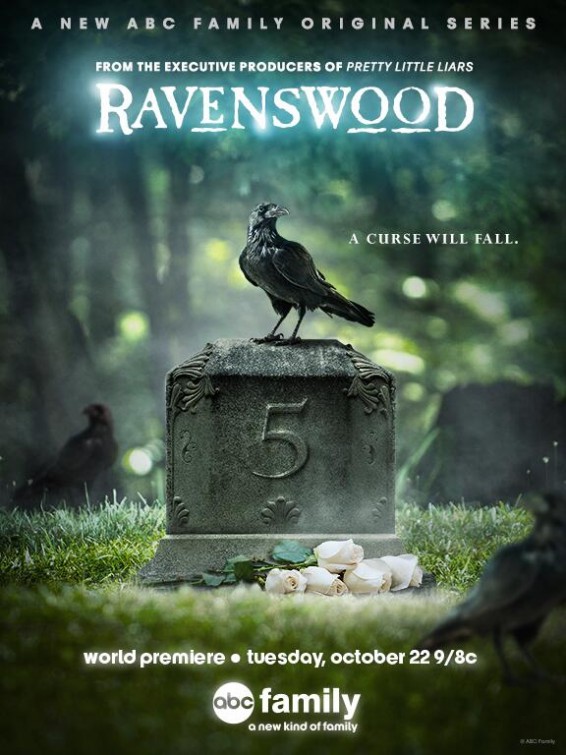
“Ravenswood” rocks the horror cliche

A haunted funeral home, shadow figures, disembodied hands, and distant relative doppelgangers; these are the foundations of Ravenswood, spin-off of Pretty Little Liars. In Ravenswood, runaway Miranda Collins, strikes up a friendship with Caleb Rivers, regular on Pretty Little Liars. Together they delve into the mysteries that plague Ravenswood, including why their names and pictures appear on ancient tombstones, why Miranda’s Lurch-like uncle didn’t raise her when her parents died, and what Caleb’s ties to the town are. Mysteries aren’t the only thing plaguing Ravenswood. True to scary form, there is a curse. Twice in history, a bunch of teens drowned after a soldier returned from the war, both times the sole survivours of their troops. As a portend, Remy Beaumont’s mom has just returned from Afghanistan, the only survivour of her troop. When Remy stops her car on a dark road to pick up twins Luke and Olivia Matheson bringing the body count in the car to five, you know something’s going to happen. The episode ends with Remy’s car partially submerged after going off the edge of a bridge.

While watching the episode, my fourteen year old daughter ran upstairs during every commercial to fill me in on the horrors of Ravenswood. She was both excited and a little spooked by the pilot plot. Though intrigued while watching, I found the horror more cliche than bonafide. I grew up watching horror flicks like Friday the Thirteenth, Nightmare on Elm Street and Halloween, and gave up on them some time in my twenties because sooner or later, the stories and the franchises began to blur. Something’s always not quite right at the funeral home. Whenever someone crawls into a hot bath they’re always going under (kudos to Ravenswood for putting the boy–rather than the curvy blonde girl–into the tub, breaking the stereotype). And there’s always an adult or two trying to keep the pesky kids from uncovering town secrets. In a nod to Stephen King’s Carrie (currently enjoying a re-release at the theatres), the disgraced prom queen–in this case, Olivia trying to come to grips with the fact that the town (her brother included) believes her mother has just murdered her father–is doused with blood.

Though the pilot didn’t bring the nail-biting moments for me as for my daughter, I will be watching the next episode. I liked the first two seasons of Pretty Little Liars, and watched as long as I was curious about who “A” was, why s/he was tormenting the main characters, and if Alison really was dead. I gave up midway through season three because the mystery grew lacklustre, there wasn’t enough character growth, and the clues were too few and far between to hold my interest. Ravenswood sets up enough mysteries to promise intrigue for years to come, provided they don’t try to kill all of the main characters at the end of every episode. It’s pretty obvious Miranda’s Uncle Lurch got rid of her because Ravenswood’s not the best place to raise a child. I predict the twins’ father probably faked his death to escape the far reaching fingers of the town curse. I’m also left wondering about Remy’s mother who remains silent as long as Remy’s father is around and who sleeps on the couch, allegedly due to nightmares. Has her mother actually returned in body as well as in soul?

Why do you think Miranda’s uncle sent her away? Who really killed the twins’ father? Has Remy’s mother returned to anyone but Remy? Who is the wet shadow woman Miranda saw in her uncle’s parlour?

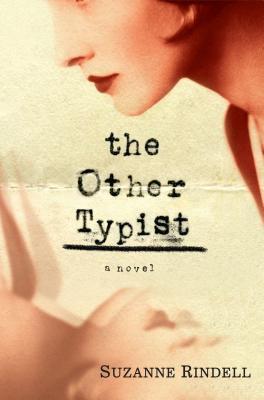
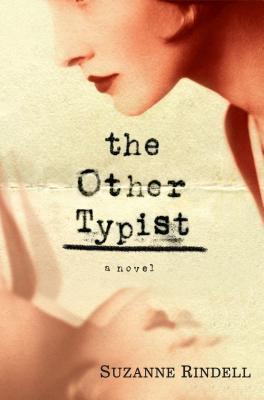
“The Other Typist” – Flappers gone wild

In her job as stenographer for the police department, The Other Typist‘s Rose Baker is forced to hear a number of graphic and sometimes gruesome confessions not suitable for a woman’s ears. Rose is a prim and proper young woman living in 1924 New York in an era of prohibition and waning morals. When Odalie joins the steno pool, Rose distains her at first, but then she becomes fascinated by her. It’s not long before Rose becomes Odalie’s friend and roommate and Odalie becomes her obsession. When Rose enters Odalie’s world, she is thrown into a world of lies, mistaken identity and murder.  It’s not long before Rose’s world begins to unravel. She fakes a police report, attends speakeasies, runs errands for bootleggers, and fights her feelings for the Lieutenant Detective and for Odalie.

I enjoyed the inherent suspense of Suzanne Rindell’s first publication, the likes of which I have not seen since S.J. Watson’s Before I Go To Sleep. In the beginning, the mystery revolves around Odalie. I wanted to know who she was, why someone of her stature and grace wanted to work in a dirty police station. When we are taken to her upscale apartment and learn she may have a sugar daddy, I wondered why, if she had someone to pay her bills, she would need to work at all, let alone with smelly drunks and underhanded murderers. After Rose attends her first club and finds out Odalie is both bootlegger and speakeasy organizer, the mystery shifts and the reader wonders how far buttoned-up Rose will go to be near the object of her obsession. Rose soon confides she is telling her story from a hospital and seeing a psychiatrist, adding another level of intrigue. Then Teddy appears to question Odalie’s identity, claiming she is not Odalie, but Ginevra instead, and that she has something to do with his cousin’s death. Later, when Teddy shows up at the police department, the page-turning reaches manic proportion. I think I missed most of Revolution in my haste to finish the novel. After all, Kobo told me I only had 1 hour left of reading to go. Having to re-watch parts of Revolution to fill in the blanks was a small price to pay for the punch line of this amazing book.

The Other Typist is an excellent example of the unreliable narrator. In most of what we read, we grow an affinity with the narrating character. Over the course of the novel, we learn to trust the narrator, identify with her, empathize with her, maybe even imagine ourselves in her position, but this is not always the case. By the end of The Other Typist, the reader is left questioning unsuspecting, mousey Rose’s culpability in the debacle. Did Odalie drug her fiancé and leave him to die in his car on the train tracks or was it Rose? Did Rose grow up in an orphanage or was it Odalie? Was Rose the one making changes to the confessions all along or was it Odalie? Did Odalie kill Teddy or was it Rose? What about Gib? Does Odalie really disappear to begin life anew at the end or does Rose kill her too? Is Ginevra Odalie’s alter ego, or is it Rose’s? Normally I like a story to tie all loose ends into a tidy bow at the end, but somehow, having these questions burn on in my psyche long after the novel is done is more satisfying.

As is the case with Single White Female and The Talented Mr. Ripley, the suspense of The Other Typist is in the build toward the climax, wanting to see how far the characters will go, waiting for the last thread to unravel.

Have you read The Other Typist? Who do you believe is Ginevra in disguise?

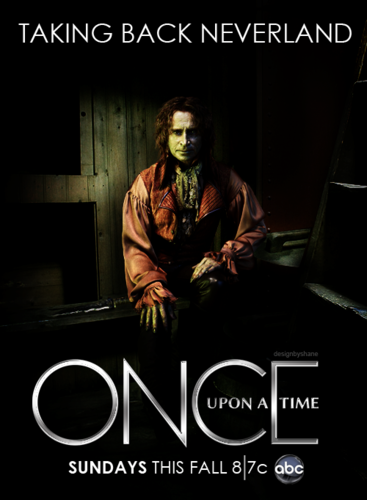
We’re not in Storybrooke anymore!

If the Enchanted Forest is heavenly, Neverland is hellish. Sure there are ogres, evil witches, and dark wizards in the forest, but Snow White and Prince Charming keep them at bay and away from the castle and surrounding lands under their protection. There seems no similar safe haven in Neverland.

Once Upon A Time‘s Neverland is rife with shark-like mermaids that would as soon kill you as die themselves, a shadow wraith that steals souls, and Peter Pan, Neverland’s equivalent of the Dark One, and his sworn enemy. Claiming to be on the run from the Lost Boys who are after his vial of pixie dust, Peter gains Henry’s trust. When he learns Henry has the heart of a true believer, he reveals himself. Peter is now in possession of the body and heart of the true believer, a parallel to Rumplestiltskin’s possession of the Dark One’s dagger. I hope Henry gets to keep both to himself.

Meanwhile, back on the deck of the Jolly Roger, Emma and Snow pull a mermaid from the deep. The mermaid (could this be Ariel?) conjures a storm fuelled by the animus the crew has for each other. Fights ensue–Hook vs. Charming, Snow vs. Regina–and Emma realizes the storm can only be quelled when they agree to bury their respective hatchets. Emma nearly commits suicide jumping overboard; the crew works together to save her. When they arrive on shore, Emma proclaims herself their fearless leader and they go in search of Henry.

In the Enchanted Forest, Neal teams with Sleeping Beauty and Mulan on a quest to Rumplestiltskin’s castle to find an enchanted object that will help them contact Emma to let her know he’s still alive. Rumplestiltskin disappears from the deck of the Jolly Roger only to materialize in Neverland’s woods for a sit down with the head Lost Boy who throws a doll at him that reduces the Dark One to tears. Intriguing.

Season three’s opener was worth the wait. Not only does it turn the page on the old storyline (please forgive the pun), it sets up a chapter of new mysteries. What is the significance of the doll? Will Neal find his way back to Storybrooke? To Neverland? Is Rumplestiltskin really destined to die in Neverland? Are Neal and Tamara really dead? Will Emma and Hook ever get a room? Will Regina be content to assume the role of follower and to Emma, of all people? Do Neal and Mulan join Robin Hood’s band of Merry Men? Will there be any tie-ins between Wonderland and the Enchanted Forest? Between Wonderland and Storybrooke? Wonderland and Neverland? I’m certainly looking forward to finding out.

Weigh in on what you thought of the season première. Was it worth the wait?