Author Archives: Admin

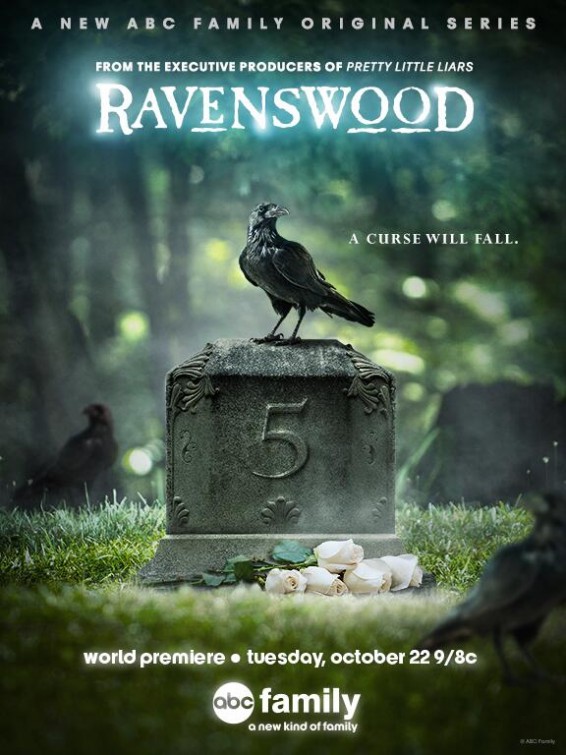
“Ravenswood” rocks the horror cliche

A haunted funeral home, shadow figures, disembodied hands, and distant relative doppelgangers; these are the foundations of Ravenswood, spin-off of Pretty Little Liars. In Ravenswood, runaway Miranda Collins, strikes up a friendship with Caleb Rivers, regular on Pretty Little Liars. Together they delve into the mysteries that plague Ravenswood, including why their names and pictures appear on ancient tombstones, why Miranda’s Lurch-like uncle didn’t raise her when her parents died, and what Caleb’s ties to the town are. Mysteries aren’t the only thing plaguing Ravenswood. True to scary form, there is a curse. Twice in history, a bunch of teens drowned after a soldier returned from the war, both times the sole survivours of their troops. As a portend, Remy Beaumont’s mom has just returned from Afghanistan, the only survivour of her troop. When Remy stops her car on a dark road to pick up twins Luke and Olivia Matheson bringing the body count in the car to five, you know something’s going to happen. The episode ends with Remy’s car partially submerged after going off the edge of a bridge.

While watching the episode, my fourteen year old daughter ran upstairs during every commercial to fill me in on the horrors of Ravenswood. She was both excited and a little spooked by the pilot plot. Though intrigued while watching, I found the horror more cliche than bonafide. I grew up watching horror flicks like Friday the Thirteenth, Nightmare on Elm Street and Halloween, and gave up on them some time in my twenties because sooner or later, the stories and the franchises began to blur. Something’s always not quite right at the funeral home. Whenever someone crawls into a hot bath they’re always going under (kudos to Ravenswood for putting the boy–rather than the curvy blonde girl–into the tub, breaking the stereotype). And there’s always an adult or two trying to keep the pesky kids from uncovering town secrets. In a nod to Stephen King’s Carrie (currently enjoying a re-release at the theatres), the disgraced prom queen–in this case, Olivia trying to come to grips with the fact that the town (her brother included) believes her mother has just murdered her father–is doused with blood.

Though the pilot didn’t bring the nail-biting moments for me as for my daughter, I will be watching the next episode. I liked the first two seasons of Pretty Little Liars, and watched as long as I was curious about who “A” was, why s/he was tormenting the main characters, and if Alison really was dead. I gave up midway through season three because the mystery grew lacklustre, there wasn’t enough character growth, and the clues were too few and far between to hold my interest. Ravenswood sets up enough mysteries to promise intrigue for years to come, provided they don’t try to kill all of the main characters at the end of every episode. It’s pretty obvious Miranda’s Uncle Lurch got rid of her because Ravenswood’s not the best place to raise a child. I predict the twins’ father probably faked his death to escape the far reaching fingers of the town curse. I’m also left wondering about Remy’s mother who remains silent as long as Remy’s father is around and who sleeps on the couch, allegedly due to nightmares. Has her mother actually returned in body as well as in soul?

Why do you think Miranda’s uncle sent her away? Who really killed the twins’ father? Has Remy’s mother returned to anyone but Remy? Who is the wet shadow woman Miranda saw in her uncle’s parlour?

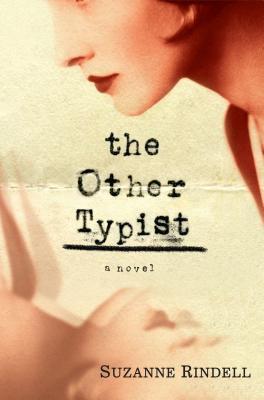
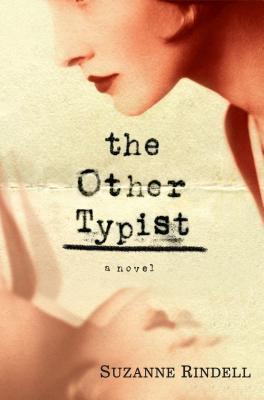
“The Other Typist” – Flappers gone wild

In her job as stenographer for the police department, The Other Typist‘s Rose Baker is forced to hear a number of graphic and sometimes gruesome confessions not suitable for a woman’s ears. Rose is a prim and proper young woman living in 1924 New York in an era of prohibition and waning morals. When Odalie joins the steno pool, Rose distains her at first, but then she becomes fascinated by her. It’s not long before Rose becomes Odalie’s friend and roommate and Odalie becomes her obsession. When Rose enters Odalie’s world, she is thrown into a world of lies, mistaken identity and murder.  It’s not long before Rose’s world begins to unravel. She fakes a police report, attends speakeasies, runs errands for bootleggers, and fights her feelings for the Lieutenant Detective and for Odalie.

I enjoyed the inherent suspense of Suzanne Rindell’s first publication, the likes of which I have not seen since S.J. Watson’s Before I Go To Sleep. In the beginning, the mystery revolves around Odalie. I wanted to know who she was, why someone of her stature and grace wanted to work in a dirty police station. When we are taken to her upscale apartment and learn she may have a sugar daddy, I wondered why, if she had someone to pay her bills, she would need to work at all, let alone with smelly drunks and underhanded murderers. After Rose attends her first club and finds out Odalie is both bootlegger and speakeasy organizer, the mystery shifts and the reader wonders how far buttoned-up Rose will go to be near the object of her obsession. Rose soon confides she is telling her story from a hospital and seeing a psychiatrist, adding another level of intrigue. Then Teddy appears to question Odalie’s identity, claiming she is not Odalie, but Ginevra instead, and that she has something to do with his cousin’s death. Later, when Teddy shows up at the police department, the page-turning reaches manic proportion. I think I missed most of Revolution in my haste to finish the novel. After all, Kobo told me I only had 1 hour left of reading to go. Having to re-watch parts of Revolution to fill in the blanks was a small price to pay for the punch line of this amazing book.

The Other Typist is an excellent example of the unreliable narrator. In most of what we read, we grow an affinity with the narrating character. Over the course of the novel, we learn to trust the narrator, identify with her, empathize with her, maybe even imagine ourselves in her position, but this is not always the case. By the end of The Other Typist, the reader is left questioning unsuspecting, mousey Rose’s culpability in the debacle. Did Odalie drug her fiancé and leave him to die in his car on the train tracks or was it Rose? Did Rose grow up in an orphanage or was it Odalie? Was Rose the one making changes to the confessions all along or was it Odalie? Did Odalie kill Teddy or was it Rose? What about Gib? Does Odalie really disappear to begin life anew at the end or does Rose kill her too? Is Ginevra Odalie’s alter ego, or is it Rose’s? Normally I like a story to tie all loose ends into a tidy bow at the end, but somehow, having these questions burn on in my psyche long after the novel is done is more satisfying.

As is the case with Single White Female and The Talented Mr. Ripley, the suspense of The Other Typist is in the build toward the climax, wanting to see how far the characters will go, waiting for the last thread to unravel.

Have you read The Other Typist? Who do you believe is Ginevra in disguise?

We’re not in Storybrooke anymore!

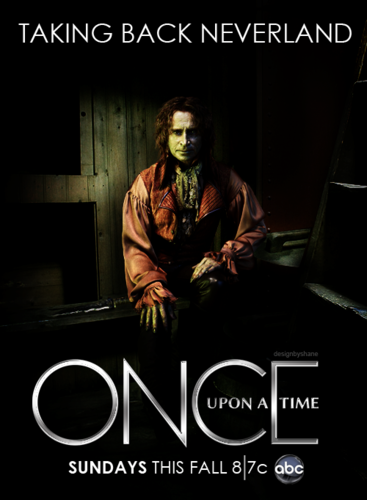
If the Enchanted Forest is heavenly, Neverland is hellish. Sure there are ogres, evil witches, and dark wizards in the forest, but Snow White and Prince Charming keep them at bay and away from the castle and surrounding lands under their protection. There seems no similar safe haven in Neverland.

Once Upon A Time‘s Neverland is rife with shark-like mermaids that would as soon kill you as die themselves, a shadow wraith that steals souls, and Peter Pan, Neverland’s equivalent of the Dark One, and his sworn enemy. Claiming to be on the run from the Lost Boys who are after his vial of pixie dust, Peter gains Henry’s trust. When he learns Henry has the heart of a true believer, he reveals himself. Peter is now in possession of the body and heart of the true believer, a parallel to Rumplestiltskin’s possession of the Dark One’s dagger. I hope Henry gets to keep both to himself.

Meanwhile, back on the deck of the Jolly Roger, Emma and Snow pull a mermaid from the deep. The mermaid (could this be Ariel?) conjures a storm fuelled by the animus the crew has for each other. Fights ensue–Hook vs. Charming, Snow vs. Regina–and Emma realizes the storm can only be quelled when they agree to bury their respective hatchets. Emma nearly commits suicide jumping overboard; the crew works together to save her. When they arrive on shore, Emma proclaims herself their fearless leader and they go in search of Henry.

In the Enchanted Forest, Neal teams with Sleeping Beauty and Mulan on a quest to Rumplestiltskin’s castle to find an enchanted object that will help them contact Emma to let her know he’s still alive. Rumplestiltskin disappears from the deck of the Jolly Roger only to materialize in Neverland’s woods for a sit down with the head Lost Boy who throws a doll at him that reduces the Dark One to tears. Intriguing.

Season three’s opener was worth the wait. Not only does it turn the page on the old storyline (please forgive the pun), it sets up a chapter of new mysteries. What is the significance of the doll? Will Neal find his way back to Storybrooke? To Neverland? Is Rumplestiltskin really destined to die in Neverland? Are Neal and Tamara really dead? Will Emma and Hook ever get a room? Will Regina be content to assume the role of follower and to Emma, of all people? Do Neal and Mulan join Robin Hood’s band of Merry Men? Will there be any tie-ins between Wonderland and the Enchanted Forest? Between Wonderland and Storybrooke? Wonderland and Neverland? I’m certainly looking forward to finding out.

Weigh in on what you thought of the season première. Was it worth the wait?

“Sleepy Hollow” builds rich mythology

Fox’s Sleepy Hollow premièred last week to rave reviews. Like its predecessors Grimm and Once Upon a Time, Sleepy Hollow offers an interesting spin on an archetypal story.

The town of Sleepy Hollow was a small valley in the settlement of Tarrytown, New York in 1820 when Washington Irving published his short story about a Revolutionary War soldier in search of his head, lost when it was taken by a cannonball. In Irving’s The Legend of Sleepy Hollow, which takes place in 1790, Ichabod Crane is a gangly schoolteacher in competition for the love of Katrina Van Tassel, the daughter of a wealthy farmer. His competition is the burly Abraham “Brom” Van Brunt, who sets Ichabod up as an object of ridicule. Katrina sees through Brom’s antics and appears content to give her heart to Ichabod when he meets the horseman and disappears. Katrina marries Brom instead. Other than his horse and a shattered pumpkin, there is no sign of Ichabod to be found. Ichabod considers the horseman might be Brom in disguise during the attack, but the description of the horseman, headless and awash in fire and brimstone, is too horrific to have been pulled off by Ichabod’s rival, given the technology at the time. When the horseman throws his head at him, Ichabod falls from his horse and is never seen again.

Irving’s Sleepy Hollow is a typical horror story. Its setting is a place reputed to have been bewitched by “an old Indian chief, the prophet or wizard of his tribe”. People believe it to be overrun by “haunted spots and twilight superstitions” where they “see strange sights and hear music and voices in the air.”  In this way, Sleepy Hollow is no different than Vampire Diaries‘s Mystic Falls or Buffy the Vampire Slayer‘s Sunnydale. Similar to these towns, witches, ghosts and evil supernatural entities abound. Irving’s Ichabod is the stereotypical geek, described as tall, lank, “narrow shoulders, long arms and legs,” small head, “huge ears, large green glassy eyes and a long snipe nose.” He is later described as scarecrow-like, hardly the physique one would expect from a leading man. The fact that he would have the girl in the end were it not for his disappearance, shows the advantage of brains over brawn, which may very well be the moral of the story. Also, don’t go out at night, particularly alone and on a path reputed to be haunted by a headless Hessian hefting a pumpkin head.

In the Fox series, Sleepy Hollow is a thriving town with a Starbucks on every corner. Abbie Mills (Nicole Beharie), a black, female police lieutenant finds a decidedly anti-gangly Ichabod Crane (Tom Mison) wandering around town and arrests him for a series of murders. People report sightings of a headless horseman and since Ichabod seems to know quite a bit on the topic, Mills enlists his help to try to stop the body count from rising even further. The backstory, we learn, is that during the Revolutionary War, a Hessian soldier mortally wounded Crane, and Crane beheaded him with his sword. They died together, their blood mixing in the field, forever linking their souls. When someone in 2013 resurrects the horseman–believed to be Death, one of the horsemen of the apocalypse–Ichabod is similarly resurrected. Mills convinces her colleagues to let Ichabod go free to help her stave off the supernatural and catch the horseman before the coming of the Apocalypse.

I love the Supernatural-slash-Fringe-slash-X-Files vibe of Sleepy Hollow. I was a little upset when Officer Andy Dunn (John Cho) and Sherriff Corbin (Clancy Brown) were killed off in the first episode, but delighted to see their return in the second. Cho plays a (literal) devil’s advocate with creepy excellence while Brown’s character’s ghost becomes Mills’s Yoda, giving her cryptic clues when she asks for help. Mison is more than competent as the handsome yet fearless hero-type, solving problems with ages old wisdom over technology. Subtle humour is hidden in Crane’s curiosity about the modern world, feeding much of the banter between he and Mills.  Unlike many of the new science fictiony shows of last season (Zero Hour, Do No Harm, Cult and 666 Park Avenue, to name a few), I think Sleepy Hollow can look forward to finishing out this season while building a rich mythology with the potential to move forward for many seasons to come.

Is the world ready for self-driving cars?

auto-car


“As Reyes speaks to me, the car lurches into action.  He uses the rudder control to join the traffic stream, and then flips a toggle switch on the dash. The car moves forward, speed ebbing and flowing with the pool of traffic. I get the idea the vehicle uses auto-pilot to arrive at its destination.  Once he has flipped the switch, he keeps his eyes on me instead of the road. Not once does Reyes busy himself with the drudgeries of defensive driving.”

Phase Shift

Google uses them; “Toyota Priuses equipped with self-driving technology“. Once the stuff of science fiction, self-driving cars may be a reality within four years. Already we have cruise control and anti-lock breaks (which always take me by surprise and do nothing but make me brace for uncontrolled impact), proximity cameras and cars that parallel park themselves, is it such a stretch to think they could do so much more in the very near future? The argument is that cars on auto-pilot could drive closer together, alleviating traffic. They could eliminate the need to stop at intersections if the coast is clear. They would take out the human error factor that causes so many deaths on the road. To extrapolate, if there is no danger of collision, there is no need for heavy, internal structure and safety features, so cars could be made of lighter-weight materials making them more fuel efficient. Seems win-win, no?

If there’s one thing the invention of autonomous cars reinforces, it’s the extent of human ingenuity. History tells us that if one person invents it, another will invent a hack for it. Case in point, Will Smith’s I Robot, Live Free or Die Hard, and Revolution or worse, Terminator, all cautionary tales in which technology either malfunctions or is derailed (on purpose in Die Hard and accidentally in Revolution) to the detriment of society. What if the system malfunctions or is hacked? In the event the Internet is turned off, would the cars still work?

Imagine the President of the United States in an entourage of light-weight self-driving cars, free of safety features. How easy would it be to commandeer the vehicle from a distance? Tired of paying alimony? Hack into your ex’s auto-pilot and drive him/her into a wall. If you use anonymous servers and encryption codes, what are the chances they could track the destruction code patch back to you? Why go through the trouble of training and placing pilots in major US airlines to fly planes into buildings when you can cause a multi-vehicle pile-up on a highway by turning off proximity detectors or throwing a bug or two into the software without leaving your country of origin?

Sounds like a premise to the next great science fiction disaster epic to me. Guess what? We’re all cast as the main characters. Coming soon to a parking lot near you.

Once Upon A Time is Coming!

In preparation for the new season of ABC’s Once Upon A Time, I took some time to go over some of the classics associated with the show. I re-read Alice’s Adventures in Wonderland and Through the Looking Glass, partially to “borrow” allusions and create symbols for my Alice Untitled story, but also in anticipation of the premiere of Once Upon A Time in Wonderland. I also went back to read up on Rumplestiltskin’s origins.

In the Grimms’  version, a miller boasts that his daughter can spin straw into gold. The greedy king of the realm locks the daughter up demanding she spin a roomful of straw into gold. The daughter cries and Rumplestiltskin, a plain-looking dwarf of a man, helps her in exchange for a necklace. The same thing happens the next day and, thanks to Rumplestiltskin, the daughter delivers. On the third day, the king promises that if she spins the gold he will make her his queen. Having nothing else to trade, the daughter promises Rumplestiltskin her first born. After the child is born and she decides she doesn’t want to give the child up, Rumplestilstkin tells her that if she guesses his name, she will be allowed to keep it. They hire someone to tail the dwarf and hear him singing his name as he gloats. The next day, the queen “guesses” his name and is allowed to keep the child.

OUAT’s version incorporates much of Rumple’s archetypal story in “The Miller’s Daughter”, and in snippets woven into other characters’ origin stories. OUAT’s Rumple starts out as the fearless trickster imp, granting favours in exchange for what each of the characters holds dear. The character is broadened by the writers to personify Belle’s Beast and Hook’s Croc. The Trickster, the Cowardly Lover and the Adversary are portrayed with most excellent skill by Robert Carlyle. The same goes for Gold, Rumple’s real-world counterpart.

In my search for an online version of Rumple’s origin story, I found “Rumpelstiltskin in Love“, a flash-fiction short story by KC Norton that tells the story of the dwarf as he raises a child. We learn Rumpel is not the child’s father. He has also raised other children, now grown and moved away. The child asks about his mother and Rumpel answers vaguely, hoping to spare the child the heartache of knowing his mother gave him up to save herself. This shows that in addition to being a trickster who is vain and greedy he is caring and lonely, someone who longs for human love, someone who cannot find a woman to love him because he is ugly, so he settles for the unconditional love of a succession of children, each of which winds up breaking his heart when they grow to maturity.

OUAT‘s Rumple embodies the characteristics of both tellings. As previously stated, he is a trickster, someone who makes deals with desperate people without compassion. But he also has a human side, one that is achingly lonely, and believes himself unlovable, in spite of–or maybe because of–his power. This Rumple has compassion, though begrudgingly so. He is a romantic who believes in his own happy ending in spite of himself.

I don’t know about you, but I can’t wait for OUAT season 3 to unfold as the crew travels to Neverland to rescue Henry and discover new facets to the characters, especially Rumplestiltskin. In the mean time, go to the Flash Fiction website and read “Rumpelstiltskin in Love” to tide you over. Let me know what you think about this poignant addition to the mythology.

“RIPD”: “Men in Black” meets “Ghostbusters” meets lots of other things

RIPD (Rest in Peace Department) is where good cops go when they die. Their job? To track down escaped demons from Hell and return them or terminate them altogether. Ryan Reynolds plays Nick with one-note aplomb. His partner, Hayes (played by Kevin Bacon with similar gutsto), kills him over parts of a golden talisman they recover from bad guys. In the afterlife, Nick is drafted into the RIPD without ceremony and partnered with old west lawman Roy (Jeff Bridges) for training. On the first day out they happen upon the same case Nick was working when he was killed. They follow the trail to recover the rest of the talisman, failing to catch the demon when he is revealed. When the demon goes on a rampage in the city and Nick and Hayes are threatened with termination (which means meeting their final death), they take matters into their own hands.

I firmly believe there is nothing new under the sun; everybody works to put new spins on the same old archetypes. ABC’s Once Upon A Time, which puts a new spin on old fairy tales–especially on old Disney fairy tale properties–is case in point. The fun comes not in watching something new, but in watching a new spin on what must be an ages old concept. Many writers, I’m sure, set out to write something one of a kind and alternately cringe and scream when they see their original ideas manifested elsewhere (this was a regular occurrence while watching Fringe and working on Phase Shift). Other writers take someone else’s idea as a start and go from there (as is the case with every vampire property I’ve ever seen or read and The Revenant or The Time Traveler’s Wife and my untitled Alice piece).  RIPD has the typical old-timer-trains-newbie framework present in Men in Black or Lethal Weapon series. Unlike those movies, the old-timer is the strange-duck, while the newbie plays straight man.   Like Men in Black, the beings the cops hunt can hide in plain sight, appearing somewhat quirky, but for the most part normal. As is the case with Ghostbusters and television’s Reaper, RIPD detectives have a device to quickly dispatch the spirit back to the underworld before they wreak havoc on the living. Similar to Buffy the Vampire Slayer, there is a Hellmouth that is in danger of opening if the detectives don’t thwart the bad guys in time. Similar to Ghost, Nick’s love for his wife transcends death. Also similar to Ghost, his best friend/partner is the bad guy and his wife is ultimately put into jeopardy. Nick and his wife also have a brief reunion scene near the end, as do Sam and Molly at the end of Ghost.

RIPD is lots of fun. In addition to it being a police procedural, it is a love story, and involves superheroes of a sort. There is a lot of comic book violence as well as interesting villains. Jeff Bridges steals the scene in the role of talkative, cynical Roy, and much of the comedy comes from his deadpan responses and odd behaviour (such as driving the car facing sideways with his right leg up on the seat, or the way he is more concerned that he loses his hat than that he loses the demon). Though it borders on the cliché, RIPD is a light-hearted romp worth a look-see.

Did you see RIPD? Leave me a comment to let me know what you thought about it.

5 reasons why revenants are not vampires

revenant-child

Revenants are kissing cousins to vampires, and while some sources consider them one and the same, there are significant differences between the two. Seeing as there isn’t a lot of supernatural lore out there where revenants are concerned, it’s time to set the record straight as to the differences between the two.

1. Revenants and vampires are created differently.

While both revenants and vampires are resurrected from the dead, the reason for their return differs. Revenants were thought to have died under violent circumstances and return as animated corpses due to unfinished business, such as exacting revenge for their deaths (Wiki Revenants). Vampires must be bitten by another vampire in order to return. Most legends need there to be vampire blood in the newly dead’s system for successful turning.

2. Revenants can go out in the daytime.

It is well-known that ultra-violet light can incinerate vampires beyond the point of no return, but there are some exceptions to this rule. Vampires on HBO’s True Blood are able to bask in the sun for brief intervals after drinking fairy blood, while the Salvatore brothers on CW’s Vampire Diaries can withstand sunlight so long as they’re wearing enchanted rings. On Being Human and some other shows, vampires have only a sensitivity to UV light and either burn or sparkle when exposed. Revenants, on the other hand, have no problem with light. They are able to walk about freely in the daytime and are immune to sunburn.

3. Revenants are teetotalers.

Vampires are notorious drinkers. On Vampire Diaries, for example, alcohol keeps vampire blood pumping. Vampires in Buffy the Vampire Slayer may feel their senses dulled after drinking copious amounts of alcohol. Revenants cannot drink alcohol (or ingest any food or drink for that matter), as it would only ferment inside their bodies.

4. Revenants can enter a home without being invited.

When they try to enter a private residence without invitation, Vampires hit a force-field-like wall preventing them from entering. While revenants can enter private residences without first being invited, they begin to smoke when they try, so they prefer to wait for the invite.

5. Revenants don’t drink blood.

The legend of the vampire first got started because people used to blame the spirits of the newly dead for their misfortunes. When they dug up the corpses, they were bloated as if they’d just fed. Some of them had blood on their lips. Because the process of decomposition was not well-known, people believed the corpses to have risen to wreak havoc and feed on unsuspecting villagers by night, and hide in their coffins by day. This is probably where the whole blood-sucking myth was born. Unlike vampires, revenants don’t need blood to survive. They are driven by the need to right the wrong they left behind by dying. Combine that with the mojo from a powerful necromancer, and revenants can live indefinitely.

Because they both developed from people’s unfamiliarity of the decomposition process, there are quite a few similarities between revenants and vampires as well.

Look for my next blog post to read what revenants and vampires have in common.

Guest Blog Post Announcement!

20 May 2013


I am proud to announce the publication of a guest blog post on TheWritePractice.com website.

Showing, not telling, is the mantra I use with my students in the first months of teaching Writer’s Craft. I tell them they must paint a word picture, using sensory information from all five senses. The trick is in finding balance between when to show and when to tell.

The post’s direct link is http://thewritepractice.com/word-pictures Please feel free to visit the site and post in the comments. I will make every effort to get back to you after posting.

2 May 2013

I am proud to announce the publication of my first guest blog post on the WriteToDone.com website.

Modelling expert text is something I learned about in teachers’ college and have used many times over the years, both as a tool with which to develop my own writing voice (as I discuss in the article) as well as with my students as a writing exercise.

The post’s direct link is http://writetodone.com/2013/05/02/develo-your-narrative-voice-by-stealing-from-bestselling-authors/. Please feel free to visit the site and post in the comments. I will make every effort to get back to you within 24 hours of posting.

Stephen P. Kiernan’s THE CURIOSITY is Part “Encino Man”, Part “Blast from the Past”

In 1991, two German tourists discovered the body of Otzi, the now infamous Ice Man, believed to have died and been encased in ice near 5,000 years ago. Though well-preserved, Otzi’s body more resembles traditional mummies than living, breathing tissue. But what if it didn’t? What if Otzi were flash-frozen, so to speak, encased in ice in perfect preservation and scientists had the reanimation technology? This is the question tackled by Stephen P. Kiernan in The Curiosity.

After joining an Arctic expedition in 1906, Judge Jeremiah Rice fell overboard into the Arctic Ocean and was perfectly preserved in ice. Dr. Kate Philo is a member of a modern-day scientific team working on a process to reanimate small ocean animals. Her team travels to the Arctic to harvest the creatures from the ice when they find and recover Rice’s body. They take him back to the lab where they reanimate him. When he awakens, he is thrown into a world completely different from the one he remembers. Kate takes it upon herself to help acclimatize him, and finds herself falling in love with the judge, who is so different than the men she is used to. It isn’t long before Kate realizes Rice is about to suffer the same fate as the reanimated shrimp and krill—his metabolism is speeding, burning up his energy, and he will soon die. At first, Erastus Carthage, the director of the project, attempts to control media coverage of the event, but it soon snowballs out of control, and Rice and Kate are on the run from both the media and the authorities.

The Curiosity is written from the points of view of four characters: Kate Philo, Jeremiah Rice, Erastus Carthage, and Daniel Dixon, the reporter Carthage initially hires as exclusive teller of the expedition’s tale.  While Kate, Rice and Dixon are written in first person point of view, Carthage is written in second person, and I’m not sure why. I’m also not sure why the two points of view I most dislike are third person omniscient and second person, perhaps because so few modern stories are told well this way. Kate is perhaps the most realistic character of the four. I found Carthage to be the stereotypical megalomaniac, better than thou academic type, and in spite of the point of using second person narrative—to put the reader into the role of the character—I neither liked him, nor identified with him. Dixon is portrayed as the hard-boiled, unimpressed, unfazed reporter who has seen it all, objectifies women (particularly Kate), and winds up portraying the team as a fraud. Somehow, it works. Dixon’s parts were quite amusing to read. Though Rice is interesting as a concept, I found his attraction to Kate a little two convenient plot-wise. The last thing he remembers is leaving his wife and daughter, and while they are long dead, they are not to him. Rice doesn’t seem to grieve much for them, making his attraction to Kate and his easy-going adaptation to the present somewhat questionable.

Part Encino Man, part Blast from the Past, and yes, per other reviewers, part Michael Crichton and Time Traveler’s Wife, The Curiosity is well-written with interesting characters. I found myself drawn into Kate’s romance with Rice and amused at the way the media is portrayed with the ability to spin information hundreds of ways. Kiernan juxtaposes the nostalgia of an idyllic and integrity-rich lifestyle of only a century ago with the fast-paced, technology and tabloid-integrity of the modern world. Though the story is predictable at times (Who didn’t see Kate’s hook-up with Rice from their first scene together? Or know that Rice would wake-up and surpass the expectations for post-animation life span?), and sometimes weighed down with scientific jargon, The Curiosity is an entertaining and interesting story that documents our fascination with pushing the boundaries of scientific knowledge, and then holding science’s successes up for vilification in the media.

Graphic from http://www.goodreads.com/book/show/16248197-the-curiosity

 About the Author

Elise Abram, English teacher and former archaeologist, has been writing for as long as she can remember, but it wasn’t until she was asked to teach Writer’s Craft in 2001 that she began to seriously write. Her first novel, THE GUARDIAN, was partially published as a Twitter novel a few summers back (and may be accessed at @RKLOGYprof). Nearly ten years after its inception Abram decided it was time to stop shopping around with traditional publication houses and publish PHASE SHIFT on her own.