Tag Archives: sci fi

THE REVENANT – Plot Synopsis

NaNoWriMo begins tomorrow. I am enjoying participating in the online forums on their web page at nanowrimo.org in the mean time. One of the forums asks that you post your plot synopsis for critique and then critique the synopsis of the person who has posted before you. In doing this, I came up with an amazing synopsis for the novel I plan to finish over the next month called THE REVENANT.

In case you don’t know, a revenant, is someone who has died as a result of violence with unfinished business and who comes back to complete the business. The legend of the revenant goes hand in hand with vampire lore in that many revenants were also thought to have been vampires.

In THE REVENANT, Janke, a farm boy, is thrown and trampled by his horse on the way to elope with Alma, his sweetheart. Shunned by his family when he rises after his funeral, he roams the country until he meets The Seer (a man who is able to see the future in his life span) in modern times. He reinvents himself as Zulu. Still searching for his beloved Alma, he joins The Seer in his quest to save the people he sees die in his dreams. At the same time, Malchus, The Seer’s brother, a powerful necromancer, is inadvertantly ripped from hell by teens experimenting with a Ouija board. Malchus has one goal in mind—to exact revenge on his twin brother Morgan—now known as “The Seer”—for killing him all those years ago. Joined by empath Kat, the group of three learns of Morgan’s resurrection and they gear up for the battle of their lives to save the city, and the world in which they live from Malchus’s evil.

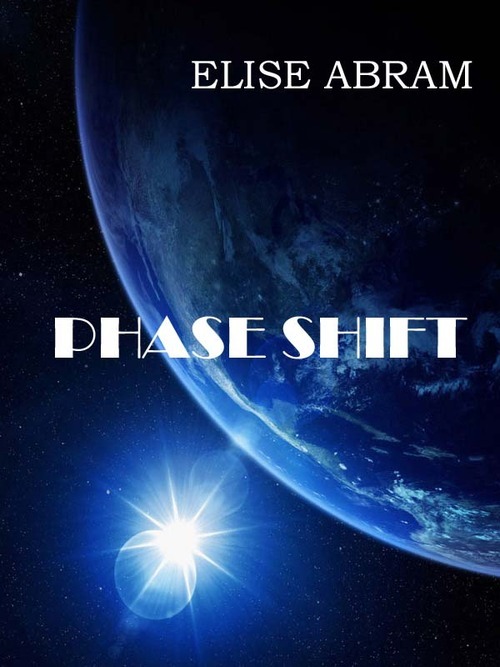
Download PHASE SHIFT for the price of a tweet. Visit http://www.eliseabram.com, click on the button, tweet or Facebook about my novel and download it for FREE!


PHASE SHIFT – Prelude

Here is the Prelude, the first chapter of my  novel PHASE SHIFT.

Enjoy.

I am laying in the dark listening to my husband’s raspy almost-snore, unable to sleep.  To keep myself occupied, I try to remember when I first knew I wanted to be an archaeologist. 

After seeing the first Indiana Jones movie as a teenager, perhaps? No, Indy merely served to bolster my interest in the field.  The real turning point came while watching a documentary called “In Search of Noah’s Ark” when I was no more than twelve, back in the time before the super cinemas.  It was then, I knew.  Wood decomposed to nothing but dark shadows in the soil, aerial photographs of well-fed vegetation, and measurements approximating those in The Bible—I still shudder in awe at the thought of it. 

My first real taste of archaeology was in the middle of a conservation area  almost an hour’s drive north of the city: dark soil dampening trouser knees and buttocks, dirt rammed under fingernails, blowing out a peppering of dust mixed with snot on the Kleenex—man!  I was hooked. 

A few years later I was near graduation and looking toward grad school.  Dr. Richardson, the head of the Archaeology department, offered to be my faculty advisor and I accepted without hesitation. He assigned me a site, the remains of a carriage house behind a restored clapboard house, built nearly two centuries ago.  The planning, supervision, excavation and analysis of the site over two years’ time would earn me my Master’s degree. 

My assistants and I arrived at the house, to find Dr. Richardson sitting on the stoop reading Scientific American, anissue featuring an article about a cache of Peruvian mummies. Dr. Richardson is a forensic anthropologist. That means he gets off on dead people and figuring out how they died.  He works extensively with the police, to give them clues as to what decomposed bodies and skeletons might have looked like while they were still living and breathing. 

We approached the stoop and he stood to greet us.  I had to crane my neck and shield my eyes from the sun in order to meet his gaze.  He smiled at me, said hello and squeezed my shoulder.  My stomach lurched.  Dr. Richardson is what we used to call “a hunk”.  The first time my mother met him she called him “a dreamboat” and said she wouldn’t throw him out of her bed for eating crackers.  The way things turned out, that comment was so many different levels of wrong. 

The house was converted to a living museum sometime in the late eighties.  The side entrance, added on around the same time, smelled of new carpet and fresh paint.  Pictures of the house in various stages of disrepair and renovation hung on the walls like windows into the past.  Dr. Richardson gave us the grand tour:  men’s parlor, women’s sitting room, dining room, upstairs ballroom, and nurseries.  A narrow staircase took us up to the third floor servants’ quarters. 

Back downstairs, Dr. Richardson showed us the kitchen.  The walls were of unfinished wood made dark by soot.  At the centre of one wall was the original hearth, complete with bake ovens.  A single wooden table stood in the middle of the room, deeply scarred through use and over time, and in the far corner, the kitchen pantry, converted to a small storage-cum-utility closet after the restorations.  Near the ceiling Dr. Richardson pointed to a series of wallpaper layers.  He recited each occupation and era by rote and I was in awe of him. 

He finished his lecture and ushered us out of our cramped quarters.  I chanced a glance up at him and he smiled at me.  A perfect three-toed crow’s foot appeared to frame the outer edge of each of his eyes.  The solitary, unshaded light bulb that dimly lit the room shone in his dark eyes—a girl could get lost in those eyes.  I blushed, embarrassed at the lust I felt for him at that moment, chastising myself for falling for my faculty advisor.  But then I reminded myself that Dr. Richardson was a good sixteen years’ my senior, and everyone knew he was seeing Suzanne Pascoe, the Egyptologist.  Dr. Richardson was safe, like a movie star.  Like a movie star, he was unattainable, and consequently, not entirely real. I told myself the crush would pass, and it eventually did.


Palmer’s snoring again. I nudge him, tell him to roll over, then roll over myself, wedging one hand between his rib cage and the mattress and one foot arch-deep between his thighs. He doesn’t protest. 

Sleep has eluded me this evening.  Pretty soon my bedside alarm will begin to shriek at me, signifying the start of yet another day.  I need a drink.  Tea would go down good right about now.  Hot tea with honey and lemon. 

In the kitchen I fill the kettle and plug it in. While I wait for the water to boil, I stroll into the living room and take a peek out the front window.  Two black sedans are parked on the road, each facing opposite directions, waiting for me in case I decide to take it on the lam.  Inside each car sits a pair of officers—which officers are out there tonight is anybody’s guess. The possibilities read like a who’s who for law enforcement:  CIA, CSIS, OPP… It’s funny how quickly things spiral out of your control:  yesterday I was an archaeology professor considering earning my doctoral degree. Today I am the prime suspect in a murder investigation.

The kettle begins to boil.  I unplug it.  Sometime between eying the sedans and thinking about the death I may have expedited, I’ve lost my appetite for tea.

I return to bed, drawing my body close to Palmer’s, more for security than warmth.  I find solace in the fact I was right about one thing when I was struggling with that crush on my faculty advisor all those years ago:  Palmer Richardson is safe.

First Meeting

I wrote this thinking it fit into the scene I was working on but then realized it was what the sourcces called “Information Dump” and removed it. I don’t know if I’ll ever use it, but here it is anyway.

This scene documents the first meeting between Molly and Palmer. This time round I imagine Robert Carlyle playing Palmer. Feel free to imagine whomever you feel fills the part as Molly.

Second year. Department Star Trek Movie Marathon. Bored studying, I’d attended alone. Palmer, Dr. Richardson, manned the concessions. I watched him interact with the others in line in front of me. The stories the high school teachers told us about university profs still vivid in my mind, I  grew more and more petrified at the thought of an informal interaction with a prof—any prof—as the line drew me near. Though I knew nothing of Palmer at the time, Dr. Richardson, the department head, had a reputation for being a hard-ass. Watching his mouth as he spoke, the way he flung his hair—the perfect mix of sandy brown, dirty blond, and grey—out of his eyes, the curve of his nose, I was surprised at how personable a man with his reputation could be. When at last it was my turn to order, I wasn’t sure I’d be able to speak.

                “What can I get for you?” he said with a smile.

                I checked out the display of items in stock. “I’ll have a popcorn and a Vernors, please.”

                He nodded over his shoulder. “Popcorn’ll be a while.” This was followed by a very awkward silence. I looked over my shoulder at the people rapidly filling the auditorium and hoped my jacket would be enough to save me my spot. “Well,” he said, “it appears we have a bit of time.”

I nodded and forced a smile; I hoped it looked natural.

“So. All American girl, are you?” I noticed he trilled his Rs slightly and wondered which culture was of influence.

“Canadian.”

“Really?” He seemed truly astonished.  So what if I don’t go around saying “eh” or mispronouncing “about”.

“Yep. Born and raised. Why?”

“Vernors claims to be the oldest ginger ale in the States.”

“Really?” I said, not feigning interest at all.

“Yeah.” He shook his head to force the bangs from his eyes. When that didn’t work, he used his thumb to push them out of the way. “Dates back to the 1850s or so.”

“It’s more a nostalgic thing for me. My grandfather drank it.”

“So he’s the American, then.”

                “Canadian. Well, British originally, but he immigrated here when he was still very young.”

                Dr. Richardson smiled a polite smile and nodded at my response. Then the awkward and very pregnant silence rose once more.

“So,” he said at last, “are you an archaeology student?”

Where was my popcorn? I was no good at small talk. And he was only slightly better than I. “Anthropology,” I answered.

                “You should switch.” He winked and nodded his head once. “Archaeology’s cooler.”

“I’ll take that under advisement,” I said with a chuckle.” Thanks.”

                The popcorn continued to pop behind the glass of the movie theatre popper the club had rented for the week. It smelled of childhood and Disney movies. Then the opening fanfare of the movie sounded.

                “You should come back later,” he said. “You’ll miss the beginning”.

“No I won’t. This is my favourite one of the series. I must’ve seen it like a dozen times.”

                He laughed once. “Noob,” he said.

“See that guy? The one with the blue shirt and pointy ears over there? He’s seen the movie 32 times. And that guy dressed in leather with the bad wig and dreds? 53 times. That guy? The one in the red jacket and white bib? Over 100 times.”

“So what’s your number?” I asked him, intentionally provocative. The awkward silence gone, engaged in real conversation like we were, I was beginning to see why he was so popular amongst my female peers in the department.

“I haven’t seen the movie yet.”

                “Not even once?”

                “Well I guess technically, this will be my first time then, won’t it?” He leaned forward on the counter between us, as if to let me in on a secret. “I saw a couple a few episodes of the original series when I was younger. Never quite got the hang of it, I’m afraid.”

“But you study anthropology. Star Trek’s all about culture. It’s about all the cultures in the universe coming together. It’s about hope in a world where hope is a rare commodity. It tells us that if we can just learn to get along the human race still has a future.”

“Maybe that’s the problem,” he said. A student had begun to bag the fresh popcorn. Dr. Richardson handed one the bags to me. “I don’t study anthropology. I study archaeology. You should switch. Way cooler.”

I smiled in thanks and said that I should go. He told me to enjoy. When I got back to my seat I looked back at him. The light in the concession stand was the only one in the room besides the projection on the screen. Dr. Suzanne Pascoe, the Egyptology prof approached him from behind and placed a hand on the small of his back. He turned to her and they embraced.

After the movie I saw Dr. Richardson hold her coat for her. He seated it on her shoulders and then reached in behind the collar to lift her long, blonde waves from beneath the jacket. He kissed the back of her neck while it was exposed and then let her hair flow naturally down her neck and back. As I put my own jacket on, I wished I had someone that would treat me with the same tenderness and intimacy as the moment we, unbeknownst to them, had just shared.

Press Release for PHASE SHIFT

Can you dig it?

English teacher and former archaeologist Elise Abram is proud to announce the publication of her first novel, PHASE SHIFT, which follows the adventures of archaeologists Molly McBride and her husband, Dr. Palmer Richardson after they are given an unusual artifact with the ability to take them to a doppelganger Earth. Abram has been writing ever since she can remember, but it wasn’t until she was asked to teach Writer’s Craft in 2001 that she began to write seriously. Having to research writing and the writing process gave her the confidence she needed to actually put proverbial pen to paper. Her first novel, THE GUARDIAN was partially published as a Twitter novel a few summers back. Nearly ten years after PHASE SHIFT’s inception Abram decided it was time to stop shopping around with traditional publication houses and try to publish the manuscript on her own.

In her novels, Abram marries two of her passions, writing and archaeology, while paying tribute to the city in which she grew up. Born and raised in Toronto, Abram’s novels take place on sites modelled after actual archaeological sites in and around the city. Her characters volunteer at the Royal Ontario Museum and teach at the University of Toronto, and mummies are X-rayed and CT-scanned at downtown hospitals.

Abram continues to write, no easy task, given the demands of teaching three English courses each semester, and raising three teenagers simultaneously. Currently, she is working on another Molly McBride adventure, tentatively called THE NEXT COMING RACE, and inspired by Edward Bullwer-Lytton’s classic “The Coming Race”, which melds pseudo-scienceand paranormal phenomenon in a race to save the world after a device left behind by aliens in the future is activated. Also in the works is THE REVENANT, a take on the current young adult vampire craze, and CHICKEN OR EGG: A LOVE STORY, revolving around a time travel love triangle.

PHASE SHIFT is available at on the Amazon and KoboBooks web sites.


My Biography

English teacher and former archaeologist Elise Abram is proud to announce the release of PHASE SHIFT, her first fiction publication. Abram has been writing ever since she can remember, but it wasn’t until she was asked to teach Writer’s Craft in 2001 that she began to write seriously. Having to research writing and the writing process gave her the confidence she needed to actually put proverbial pen to paper. Her first novel, THE GUARDIAN was partially published as a Twitter novel a few summers back. Nearly ten years after its inception Abram decided it was time to stop shopping around with traditional publication houses and try to publish PHASE SHIFT on her own.

PHASE SHIFT documents the adventures of archaeologists Molly McBride and her husband, Dr. Palmer Richardson after they are given an unusual artifact with the ability to take them to a doppelganger Earth. Palmer Richardson, forensic anthropologist and head of the Archaeology department at the University of Toronto, is a character Abram first conceived in 1987 when taking a Science Fiction English course at The University of Waterloo (Clinton Johns, co-star of THE GUARDIAN was also conceived at that time). Writing a short story as the final assignment for that course was the first time she’d melded her passion for archaeology with storytelling.

Abram continues to write, no easy task, given the demands of teaching three English courses each semester, and raising three teenagers simultaneously. Currently, she is working on another Molly McBride adventure, tentatively called THE NEXT COMING RACE, and inspired by Edward Bullwer-Lytton’s classic “The Coming Race”, which melds known pseudo-scientific and paranormal phenomenon in a race to save the world from certain destruction after a device left behind by aliens in the future is activated by construction in the present. Also in the works is THE REVENANT, a take on the current young adult vampire craze, and CHICKEN OR EGG: A LOVE STORY, revolving around a time travel love triangle.

Look for the publication of eBook novellas THE MUMMY WORE COMBAT BOOTS, which follows Palmer Richardson in a case in which he consults for the Metropolitan Toronto Police Department to figure out the origins of an errant mummy found in the Royal Ontario Museum’s holdings, and THROWAWAY CHILD, in which Molly joins with Police Constable Michael Crestwood (also starring in THE MUMMY WORE COMBAT BOOTS and THE NEXT COMING RACE) to investigate a child’s skeleton found beneath a historic house.

Amazon author’s site: http://www.amazon.com/author/eliseabram

I’m Published!

My hands were literallly shaking as I entered the information on the Kobo Writing Life web page. I have resisted self-publishing for many years, but I resolved myself to give it a go. My first book, Phase Shift, is now officially published as and E-book at KoboBooks.com (at least it will be within the next 24 to 48 hours). I decided that this was not a venture about money, but one about building an audience. The more books I sell (at a moderately priced CDN$6.99), the more people will purchase and read and then then I can go to a publisher with my next manuscript and audience in tow.

The synopsis of this book goes like this:

Two planets, Earth and Gaia, co-exist in the same space-time though slightly out of phase. When archaeologists find an artifact allowing them to travel between the two worlds, they discover that environmental issues on both planets have caused the planets’ phase variances to grow more alike. Upon exploring Gaia, they realize trade between the planets has been ongoing for decades, and the act of traveling between the worlds only serves to bring the phase variances closer together.  It’s up to the archaeologists, together with scholars from Gaia, to do what they can to stop the impending disaster.

I will post again with the ISBN number once I get it (in 3 – 6 business days) and a link to the page so you can purchase it if you wish. I appreciate any and all feedback. In future novels, I have cast Robert Carlyle in the part of Palmer Richardson, though for this one, it was another actor. I’d love to hear your opinion of how Mr. Carlyle might bring life to this role.

This is exciting. The first glimpse of My Own Little Storybrooke will soon be published. Unlike the OUAT Storybrooke, all visitors are welcome!