Tag Archives: sci fi

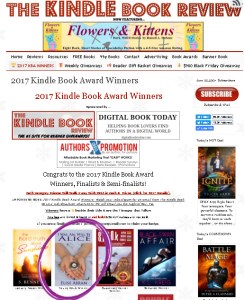
ALICE wins 2017 Kindle Book Review Award for YA

The title says it all.

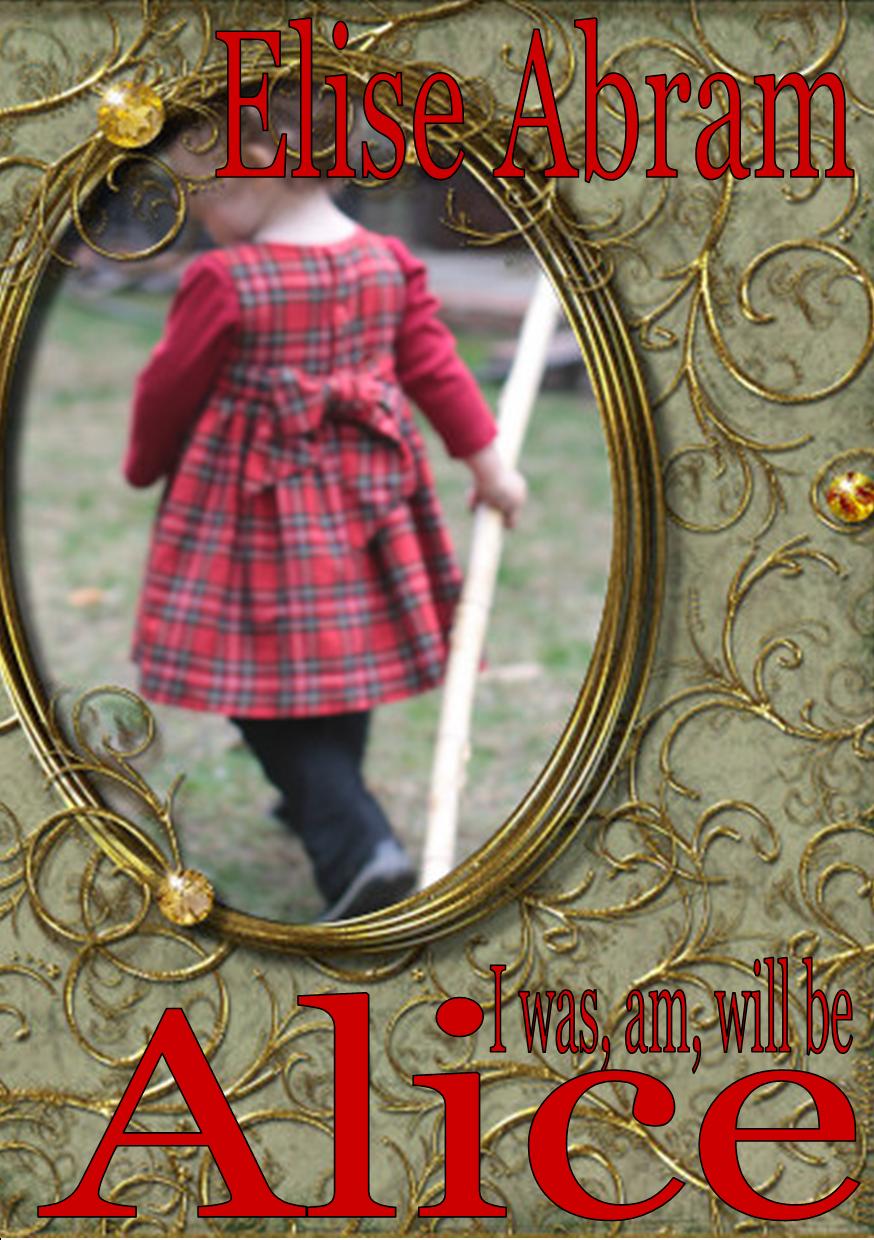
I Was, Am, Will Be Alice has won the 2017 Kindle Book Review Award for YA!

Thank you so much to Jeff Bennington from the Kindle Book Review and all of the panelists and prize-givers for this much-gilded feather in my writing cap.

Here’s my badge:

To celebrate, I Was, Am, Will Be Alice will remain on sale (for a limited time) for only $0.99! Here’s what the book looks like (beside the other winners):

Here it is in the list that follows, marking it as the winner:

Same plot, different setting

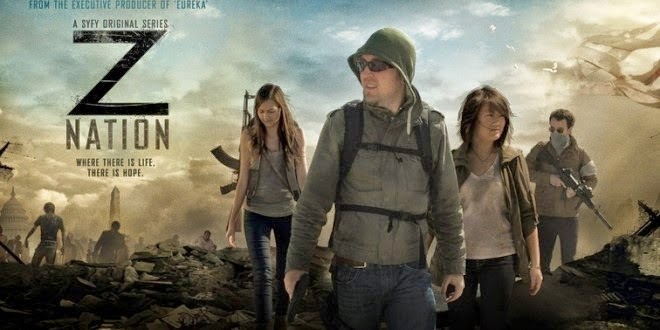
I watched last week’s premiere of Z Nation with some trepidation. I mean, did the world really need another post-apocalyptic television show featuring zombies? I already watch The Walking Dead–need I say anything more?  I was left with mixed feelings after watching, unsure if I liked it. Turning a baby, though reminiscent of Chucky, was a nice touch, but there was something that didn’t sit right about it (the show, not the zombified infant).

It took a few more days and a bout of in-class free association with respect to themes in literature for it to hit me.

Z Nation and The Last Ship are essentially one and the same.

[Tweet “#ZNation and #TheLastShip are essentially the same #tv show. Here’s how…”]

Let me explain…

The Last Ship is about a navy ship sent on a top secret mission to gather the primordial strain of a flu virus that is killing off most of the world’s population. They engage in war-lord-type power struggles including one with a Russian ship before finding a girl who is immune to the virus. They synthesize a cure for the virus from her blood and must rush the girl and the cure to a lab somewhere in the U.S.

Z Nation is about a group of people on a secretive mission to take a prison inmate to a lab in California. After being bit by zombies, the prisoner is seemingly immune to whatever it is that turns people into zombies. They need to take him to the lab so they can synthesize a cure for the zombie virus from his blood. So far there have been no war-lord-type power struggles, but you can bet they are sure to be on the near horizon.

I will be watching more of Z Nation, if only to compare it to The Walking Dead (in which, coincidentally, the characters are also sort of on a quest to take a scientist who claims to have a cure to a lab somewhere in the U.S. to create a vaccine) and other similar post-apocalyptic tales.

Did you watch Z Nation? Do you watch The Last Ship? Do you see a connection? Let me know what you think in the comments below.

When did sharing intellectual property become criminal?

Graphic by Parker Knight, "Family 1353" under Creative Commons

girl graphic by Parker Knight, “Family 1353” under Creative Commons

About a month ago, I came out with the synopsis of my  next novel, a YA science fiction with time travel, entitled I Was, Am, Will Be Alice.  Here’s the synopsis:

After narrowly escaping death in a school shooting, 9 year old Alice Carroll realizes she can time travel when under extreme stress, a situation she is determined to learn to control in order to go back to that day and save the lives of her teacher and classmates and discover the identity of the woman who sacrificed her life so Alice could live.

This week I was horrified to learn of a middle school teacher in Maryland who was put on administrative leave and taken in for an emergency medical evaluation after officials learned he wrote a sci fi about a future school shooting. As you can imagine, my thoughts turned to my Alice book and the repercussions I might suffer should I go ahead and publish it.

[Tweet “What repercussions might I suffer if I #publish my book about a #school shooting?”]

Try as I might, I cannot wrap my head around this. Maybe it’s because McLaw’s shooting takes place in the future? Maybe it’s because an ungodly number of people are killed? Maybe it’s because, given gun laws in the U.S., McLaw’s story is plausible and people are scared?

Granted, Alice differs in that it takes place in the present, the shooting is in the past, and Canada has fewer incidences of school shootings than the U.S. due to it’s more stringent gun control, but it doesn’t make us any less scared of the possibility of something like this happening.

As a teacher, I’ve been flirted with, felt physically threatened, been subjected to bullying from my students, told I’d be better off dead, called the “C” word, and the “B” word and worse, had students bring concealed pocket knifes and BB-guns to class (thankfully, both remained concealed) and heard tell of students going on to commit nefarious acts both outside of school hours and after graduation. That doesn’t even take into account similar (and sometimes worse) offences and assaults I’ve heard from my peers. Quite frankly, I’m scared.

Writing empowers me. If through my writing I can identify with a character that has went through the amalgam of my fears and learned to conquer them, more power to me. But now I am left worrying if the school officials won’t agree and what the consequences may be.

[Tweet “I identify with a character that has experienced the amalgam of my fears and lived to tell”]

I want to go on record stating that the school shooting in Alice comes from a place of wanting to conquer my fears (much like the characters in the novel). In the book I totally identify with Alice and not Dodgson who is an amalgam of the students who have caused concern over the years. I will press on with the proofing and publishing of this novel because I think it’s my best work to date. I’m hoping McLaw will prevail, unless there’s something we aren’t being told about his situation that actually warrants this 1984-style breach of what are McLaw’s basic human rights. Hopefully by then, sharing the fruits of my intellectual property won’t be subject to similar scrutiny.

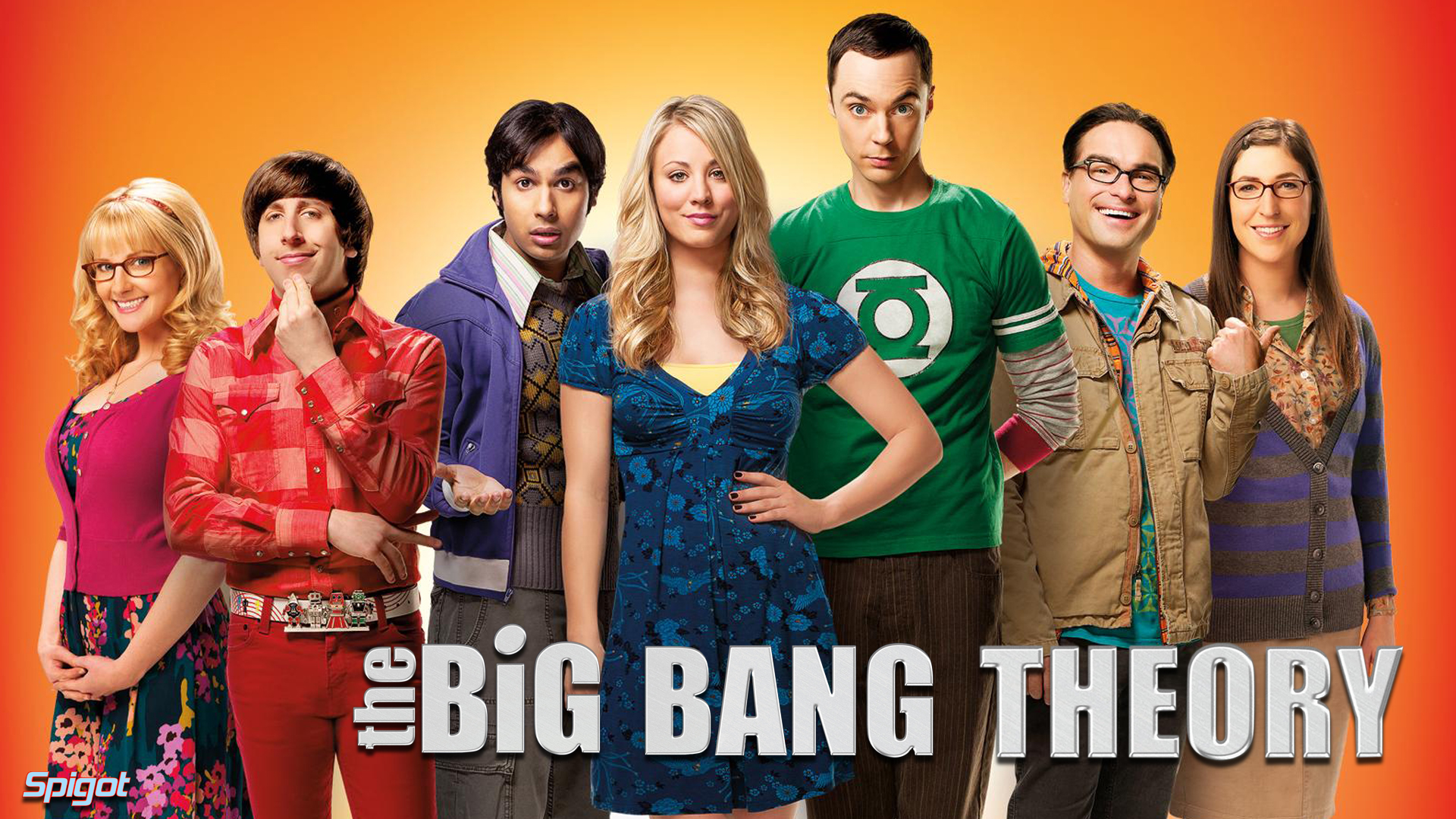
Everything I need know about Allusion I learned from “The Big Bang Theory”

bigbangtheory

Graphic from wall.alphacoders.com

Allusion is when a reference to something–a person, place, thing, or work of literature–is mentioned in a story. The idea is that people get what the reference means and the connection brings a deeper meaning to the reader’s experience. As an English teacher, I already knew about allusions and how they worked, but it wasn’t until I started watching The Big Bang Theory that I learned how to use them in a piece of writing to help develop rich settings and characters.

[Tweet “It wasn’t until I started watching @BigBang_CBS that I learned how to use allusions in writing.”]

Let me explain. For those who have never seen it, The Big Bang Theory follows the lives of four stereotypically nerdy scientists as they struggle on the outskirts of popularity. They eat, sleep, breathe, and live sci-fi, sometimes literally (remember Sheldon’s Gorn-infested sleep or the group’s misadventures as a Star Trek Next Gen landing party?). Their lives are programmed around television schedules, comic-cons, new sci-fi movies, and trips to the comic book store. But what makes this show especially enjoyable for me are the endless references–some of them quite obscure–to current popular culture. As a devout Trekker and sci-fi enthusiast, I identify with the boys and their never-ending struggle to fit in.

[Tweet “Read about my ‘The Big Bang Theory of Allusion’ as a way to make characters seem real. #WritingTip”]

I’ve adopted what I’ve dubbed “The Big Bang Theory of Allusion” in The Revenant (and my current work in progress tentatively called I Was, Am, Will Be Alice). The theory tells us that, because as writers we want our characters to seem as real as possible, we should make them consumers of current and real popular culture. This is not a new idea. Shakespeare did it, referring to bible passages or ancient Greek and Roman mythology (keep in mind he had 500 years less of popular culture to draw on). In To Kill A Mockingbird, Harper Lee draws on civil war knowledge, politics, and what we now think of as classical literature, but which would have been popular and current at the time, such as Ivanhoe, Dracula, and Tom Swift. Many of the references to movie stars such as Mae West, alluded to in Tennesee Williams’ A Streetcar Named Desire may be lost on today’s readers, but at the time of its release, these references would have brought a deeper meaning to the story for its audience.

The main allusions in The Revenant are about superheroesSuperman, Batman and Spiderman–but there are also references to characters in the sci-fi canon. Zulu, the male protagonist, imagines himself Khan Noonian Singh on the deck of the S.S. Botany Bay fighting his nemesis Kirk, as well as Hook on the deck of the Jolly Roger seeking out his nemesis, the crocodile that bit off his hand. Kat, the female protagonist, imagines herself as Buffy of vampire slayer fame and Zulu as her Angel. Zulu prefers to think of himself as more of the Spike type. Going after bad guys like he does, Zulu draws parallels between himself and Jeff Lindsay’s Dexter, the vigilante who satisfies his need to kill on people who have circumvented the law. There are also references to Hiro Nakamura of Heroes comic book and television show fame. Fans of these shows will recognize the allusions and understand the thoughts of the characters making the comparisons; others might recognize the references as allusions but miss some of the meaning, and that’s okay. We don’t need to know anything about The Gray Ghost Dill offers to swap with Jem if he touches Boo’s house in Mockingbird other than that he’s staking a treasured book on the bet.

[Tweet “Does using too many allusions date your work? That depends on syndication and DVDs. #WritingTip”]

The concern with over-use of allusions is that it may date a piece of literature. How many people will remember shows like The Big Bang Theory or Dexter or Buffy the Vampire Slayer ten years from now? How many in twenty? Given the examples in this essay, quite a few, I’d say. Classic Trek was cancelled in 1969, yet the legacy of that show is still going strong. Shows like Buffy, Heroes and Dexter are still sold in DVD/BluRay collections and available for streaming online anywhere from two to ten years and more after cancellation. Given that The Big Bang Theory is now in syndication, chances are it will continue to be broadcast to tickle the funny bones of future generations with its allusions, keeping anything it references in mainstream popular culture, for years to come.

I hope you’ve enjoyed this post on The Revenant Blog Tour. For past and future posts, see my Blog Tour Itinerary.

blog-tour-graphic

The “Meet My Main Character Blog Tour” Gone Rogue

blog-tour-graphic

The “Meet My Main Character Blog Tour” is a real thing. While I admit I was not tagged in the tour, I’m crashing the party. I discovered the tour on Eden Baylee’s Website, so I’ll pretend she tagged me in the tour.

To participate I have to answer seven questions about a main character from one of my novels, then I nominate five other authors to answer the same questions. Instead, I’m tagging all Black Rose authors to participate. Post the link to your blog tour post here or on Facebook so we can introduce each other to our main characters.

[Tweet “Zulu the Revenant revealed in the Meet My Main Character Blog Tour #YA #paranormal #book.”]

Here’s a link to Eden’s blog where I found the idea for doing this. Eden is currently promoting her novel, Stranger at Sunset on her site, a mystery/thriller from a number of viewpoints.

1. Tell us a little about this main character. Is he fictional or a historic person?

Zulu the Revenant, aka Janke Dappleford, is the fictional protagonist of my YA paranormal novel, The Revenant.

2. When and where is the story set?

The story takes place mostly in Toronto, Ontario, Canada in the present with flashbacks to the late 1800s in order to explain the origin stories of characters Zulu, Morgan the Seer and his brother, Malchus the Necromancer.

3. What should we know about him?

Zulu is a hopeless romantic who was killed when thrown from his horse on his way to elope with his girlfriend, Alma. He was buried and resurrected the next day, doomed to live forever as a revenant. He was trained in combat by Morgan the Seer so Zulu could use his powers–speed, strength and hearing–to help the people in Morgan’s premonitions.

4. What is the main conflict? What messes up his life?

Malchus, Morgan’s brother, manages to come back from the dead when a group of kids opens a portal with a Ouija board. Malchus believes Morgan responsible for his death and is out to seek revenge. Though still alive, Morgan has aged considerably over the past century and is no match for Malchus, currently in possession of a teenage body. Zulu intervenes to save  the Seer who has become a sort of father figure to him.

5. What is his personal goal?

His goal is to eliminate Malchus and emerge unscathed. Zulu and Morgan join forces with Kat the Empath and Father Paul along the way. The four of them form a sort of “Scooby Gang” out to slay Malchus and his zombie minions, while keeping themselves intact.

6. What are the titles of your novels, and where can we read more about them?

The Revenant is my latest novel. I have three other novels currently published, all of them featuring archaeologist Molly McBride and her husband Palmer Richardson, calledPhase ShiftThe Mummy Wore Combat Boots and Throwaway Child. Read more about my books at eliseabram.com/book-table.

7. When can we expect your next book to be published?

I hope to have my fifth novel, ready for publication by the end of 2014. I Was, Am, Will Be Alice is a YA science fiction novel involving time travel. I started out writing a YA version ofThe Time Traveler’s Wife after getting the idea from an agent posting on the Writer’s Digest website. As I wrote, I began to incorporate ideas from Alice in Wonderland as well. Here’s the logline for the novel: after narrowly escaping death in a school shooting, 9 year old Alice Carroll realizes she can time travel when under extreme stress, a situation she is determined to learn to control in order to go back to that day and save the lives of her teacher and classmates and discover the identity of the woman who sacrificed her life so Alice could live.


Announcing the completion of “I Was, Am, Will Be Alice”!

Graphic by Parker Knight, "Family 1353" under Creative Commons

Graphic by Parker Knight, “Family 1353” under Creative Commons

Announcing…

Hot on the heels of The Revenant‘s release I am thrilled to announce the completion of my next YA novel, I Was, Am Will Be Alice.

After narrowly escaping death in a school shooting, 8 year old Alice Carroll realizes she can time travel when under extreme stress, a situation she is determined to learn to control in order to go back to that day and save the lives of her teacher and classmates and discover the identity of the woman who sacrificed her life so Alice could live.

My Inspiration

I began writing Alice when, while shopping for agents and publishers for The Revenant, I found a call for clients for a new agent on Chuck Sambuchino’s excellent “Writer’s Digest” blog. This particular agent said she would love to read a young adult version of Audrey Niffenegger’s The Time Traveler’s Wife (TTW). I absolutely love TTW, and adopted her request as a personal challenge. I began with a similar premise: what if someone, a young girl, discovered she had the ability to time travel? In Niffenegger’s novel, the main character, Henry, keeps returning to his first episode of time travel, when he was in a car accident with his mother. Henry survived because he time traveled out of the car avoiding the crash which killed his mother. In my novel, Alice’s defining moment is being caught in a school shooting in grade three in which her favourite teacher killed. There is a romance and an episode with frostbite, too, but that’s where the similarities end.

The name Alice Carroll comes from Lewis Carroll’s Alice in Wonderland and Through the Looking Glass. I appropriated that name for my character early in the writing because the more I wrote, the weirder the character’s predicament until it was almost like she’d entered a bizarre world where nothing made sense to her any more. Why did she survive when others perished? Why did she time travel? What kind of future could she possibly make for herself? Would she ever learn to control it? Why did the shooting happen? Could she find a way to save her teacher? These questions, and more, confuse my Alice, much like Wonderland confused Carroll’s. To drive the parallel home, I borrowed other names from Wonderland to draw further connections.

Though a mouthful, the title for the book comes from something Henry says in TTW:

I love. I have loved. I will love.

I liked the juxtaposition of the different tenses and adapted this for my novel. Late in the writing I decided to use the title, I Was, Am, Will Be Alice, as subtitles and divide the book into sections. I Was Alice describes Alice of the past, when she discovers she can time travel and is traumatized by it. I Am Alice describes Alice of the present, when she realizes she can’t continue randomly traveling through time for the rest of her life and she decides to do something about it. I Will Be Alice describes Alice of the future, after her life comes full circle and she returns back to the day of the shooting and learns answers to some of the questions that have plagued her for most of her life.

Looking for Support

I am reaching out to the reading and writing community to look for “beta readers” and help printing and publicizing my YA sci-fi time-travel romance novel when the time comes.

If you would like to volunteer as a beta reader–finding errors in spelling, grammar, punctuation and consistency in story and possibly writing a review further into the process–please contact me at info @ eliseabram.com

[Tweet “Attention beta readers and reviewers – request your copy of I AM, WAS, WILL BE ALICE info@eliseabram.com”]

If you would like to donate to support my project, you may do so by visiting my PubSlush page at eliseabram.pubslush.com. I am giving away an eBook to all $20 donors and a hard copy, autographed, to all $50 donors (please note an additional $10 is required for international shipping outside of Canada). If you donate over $75, I will also throw in a free study guide in full colour, available as a PDF and/or printed copy sent along with your novel.

[Tweet “Support the arts – help me publish and publicise I AM, WAS, WILL BE ALICE eliseabram.pubslush.com”]

All donors will receive a mention in the acknowledgements section of the final, printed novel (eBook and hard copy).

My Writing Process: Catch as catch can!

Hello everyone! Welcome to my stop on the Writing Process Blog Hop! I was introduced to this blog hop by Lori L. Schafer:

Lori Schafer is a writer of serious prose and humorous erotica and romance. More than thirty of her short stories, flash fiction, and essays have appeared in a variety of print and online publications, and her first novel, a work of women’s fiction entitled My Life with Michael: A Story of Sex and Beer for the Middle-Aged, will be released in 2015. Also forthcoming in 2015 is her second novel Just the Three of Us: An Erotic Romantic Comedy for the Commitment-Challenged. On the more serious side, her memoir, On Hearing of My Mother’s Death Six Years After It Happened: A Daughter’s Memoir of Mental Illness, will be published in October 2014. When she isn’t writing (which isn’t often), Lori enjoys playing hockey, attending beer festivals, and spending long afternoons reading at the beach.

Website: http://lorilschafer.com/

Like my colleagues also participating in this blog hop, I’ve been asked to answer four questions about my writing and my writing process. Don’t forget to spend some time getting acquainted with authors Rosemary Whittaker, Val Conrad and Jolee Wilson whose bios and links are at the end of this post. Rosemary, Val and Jolee will be hosting the next stop on the blog hop next week.

1. What am I working on?

About a year ago I read a Writer’s Digest featured agent who said she’d be interested in reading a YA Time Traveler’s Wife. I loved that novel, and took it as a personal challenge. What I wound up with was I Am, Was, Will Be Alice something part YA Time Traveler’s Wife, part Alice in Wonderland, part YA romance (yuck!), and all adventure. I am participating in July’s Camp Nanowrimo to give me the kick in the pants to finally get Alice’s story told.

My first YA novel, The Revenant,  is to be released on 10 July 14 and so a good part of my summer will be spent on publicizing and selling that.

I am also working on an adult time travel love triangle novel called Chicken or Egg: A Love Story, not to mention the next instalment in the Molly McBride series, entitled The Next Coming Race, involving evidence of aliens having visited Earth in antiquity in the historic record.

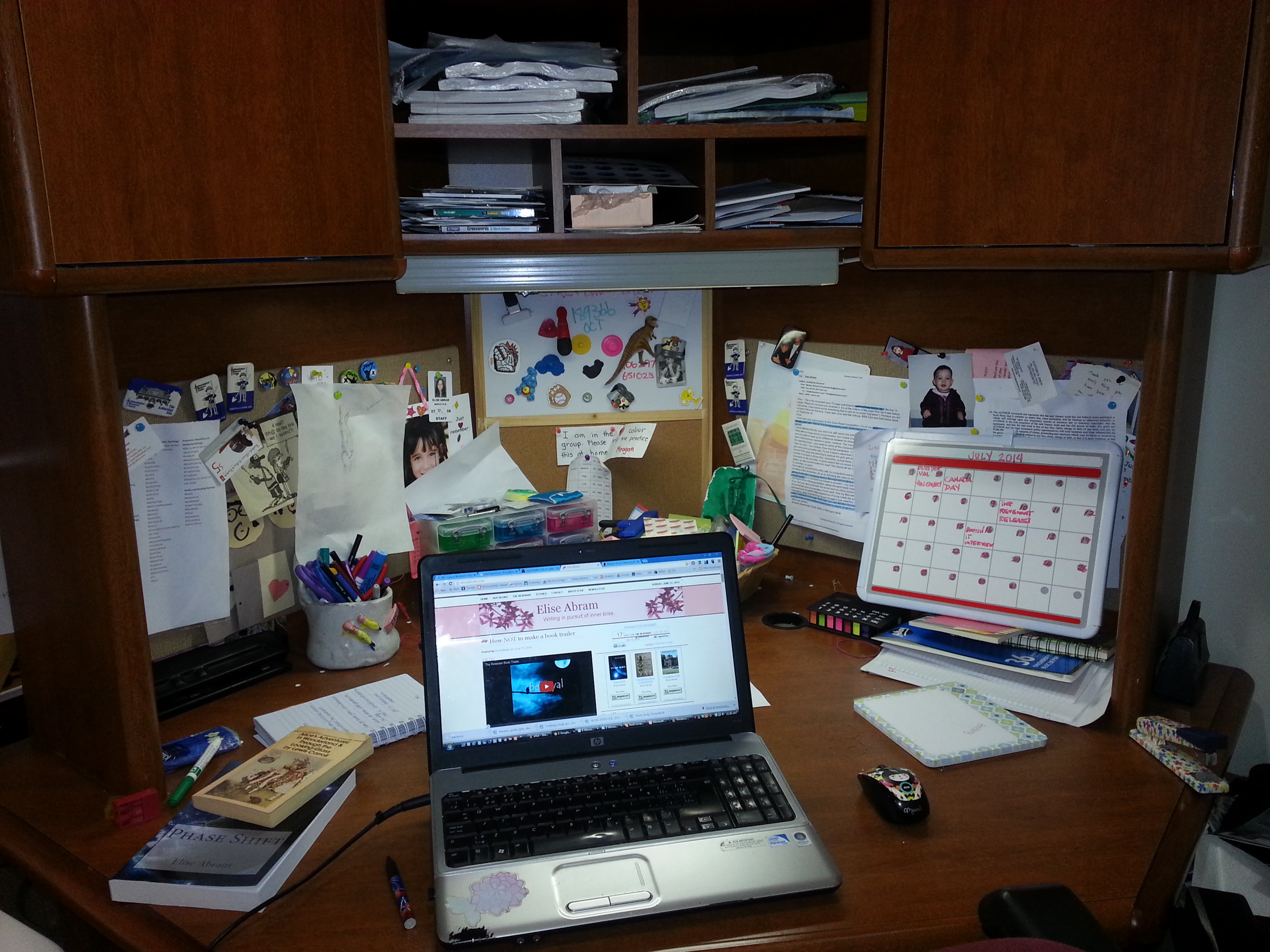
This is where I usually work:

My Writing Space

My writing space.

2. How does my work differ from others of its genre?

I suppose you could call my primary genre science fiction, but when I think of sci-fi I think of alien race wars, lots of tech, space ships, and robots. I call my brand of sci-fi feminine speculative fiction, a made up genre composed of a sort of light-sci-fi, no war (which is stereotypically masculine), modern day tech (also stereotypically masculine), but maybe with a few tweaks. If there is time travel involved, it is in the near future, less than 100 years and not that far removed from the society of today.

[Tweet “I call my brand of sci-fi feminine speculative fiction. That does not mean it only appeals to women.”]

Calling my brand of sci-fi “feminine” does not mean it is chick-lit or only appeals to women. Rather, it is sci-fi of the mind. It takes the world of today, proposes one change, and runs with it to see the effect it may have on society. Phase Shift explores what might happen if the ability to travel to alternate worlds were discovered. The Revenant (not unlike “X-Men” or “Heroes”) supposes there are people among us who have special abilities which some might use for good and others evil. Alice proposes a similar scenario – that people might one day evolve the ability to travel through time. Ditto Cat and Mouse, only this time, the ability for time travel is via technology and not genetic. 

I make small tweaks to people, beliefs and tech and sit back and watch what happens.

3. Why do I write what I do?

I consume popular culture like candy. I also question everything I consume. Star Trek was my first introduction into the world of sci-fi, introduced to me by my father at a young age and the ideas stuck. I grew up telling myself stories before bedtime between lights out and falling asleep. At some point I started writing them down. 

[Tweet “I consume popular culture like candy. I also question everything I consume.”]

It seems like I don’t choose what I write, but rather, it chooses me. Case in point is The Revenant, which grew from a desire to write the penultimate vampire story. The storyline wasn’t gelling so I decided to do some research and found a link on Wikipedia for revenants. The idea blossomed from there. You could almost say Zulu found me and started telling me his story. I really had no choice but to write it down.

4. How does your writing process work?

My first novel, The Guardian, took almost ten years to imagine and another ten years to write. This is partly because I was bogged down with the responsibility of being a new teacher, but also because I didn’t like the way I wrote and struggled over every word. When I took a page from Nanowrimo and just wrote to make up the word count and worry about the editing later, writing became more of a pleasure than a chore. The agony was still there in the revisions and re-writes, but at least the story had already been told.

[Tweet “Accepting you aren’t a real writer if you don’t write every day builds barriers to success.”]

Many sources you read will tell you that writers write every day. I’m here to tell you that’s not necessarily the case. Whole months go by where I don’t add to my current work in progress at all as far as word count goes, but I am always thinking about my work in progress and adding to the story. Taking frequent breaks like that helps the thoughts to percolate so that when I do finally sit to write, I know exactly what I want to say. Accepting that you aren’t a real writer if you don’t write every day is a good way to build barriers to your success. Life happens, especially if you are a student, or are juggling a full-time job with a family. Work on your story every day; write whenever you can.

[Tweet “Work on your story every day; write whenever you can.”]

Don’t forget to spend some time getting acquainted with authors Rosemary Whittaker and Val Conrad whose bios and links are at the end of this post. Rosemary and Val will be hosting the next stop on the blog hop next week.

[Tweet “Writing process blog hop! Get acquainted with authors @LoriLSchafer, @DanzaCRose, Val Conrad and @JoleeWilson!”]

Rosemary Whittaker:

Rosemary is a British born author. She is an English teacher by profession. Since leaving university she has lived and worked in the United States, New Zealand, Australia and twice in Denmark. Her husband works in biodiversity informatics (cataloguing all living species on earth) and this has entailed many moves. They have five children so the moves have been extra challenging.

Her real love has always been writing and she has written several novels, variously set in the countries in which she has lived. She also writes for children. All her novels are available on http://amzn.to/UXJUJp and http://amzn.to/1iUadT. Her recent novels, a set of four, all take the theme of British women who move, by choice or circumstance, to one of the four countries mentioned above. The Cinnamon Snail is set in Denmark, where Rosemary currently lives. [http://bit.ly/1puSPwJ]

Website: rosemarywhittaker.wordpress.com

Val Conrad:

Val Conrad’s life is upside-down to most – her nights are spent working as a nurse in intensive care, leaving her days and more often her nights off to writing.  Her series – Blood of Like Souls, Tears of Like Souls, Promises of Like Souls, and Secrets of Like Souls (Black Rose Writing) is available at Amazon in both paperback and e-book formats.  Much of the skeleton of these stories comes from living in the geographical settings and a career in medicine spanning decades.  She steals moments to write any time, but odd places and crowds of people don’t deter her.  She’s currently working on a new book about how cellular phones are being used to catch criminals.

Website: www.valconrad.com

Jolee Wilson:

Jolee Wilson lives in West Texas with her husband and three children. She has been writing as a hobby since age seven and decided to turn it into a career after the completion of her first novel, Seven Days Normal. With a passion to help hurting relationships, Jolee uses fiction to impart her own lessons in love.

Website: http://www.the-nkwell.blogspot.ca/

Literary Devices from A to Z – Brought to you by the letter S


is for Symbolism


Sometimes a red rose is just a pretty flower sitting in a vase on the shelf while others it is a symbol of love. Visual symbols, like the rose, are usually linked to imagery. Other symbols may be linked to theme. The bottom line is that if something recurs in a story and means something other than the obvious literal meaning, it’s probably a symbol and not just another pretty flower.

In The Revenant, Morgan is a symbol of good, his brother Malchus, a symbol of evil. The sum of their lives show that good and evil are more than simple black and white divisions. There is a little bit of evil thought and good intentions in the best of us, but in the case of Morgan and Malchus, their personalities ultimately polarize and repeated references to this polarization is what makes them symbols (and foils).

In I am, Was, Will be Alice, the ability of Alice to control her time traveling becomes a symbol of hope. If she can control when she travels, maybe she can save the lives of her teacher and student peers and ultimately, herself.

Likewise, in the short story “Hope Floats”, a butterfly found by a child in a dystopic world becomes a symbol of hope. Having settled underground, a child ventures to the surface and captures a butterfly to give to his mother to show her there is still hope for returning to the old way of life. But when the butterfly dies, he realizes there is no turning back the clock.

Symbols are all around us in everyday life and in popular culture. I prefer the puzzle of the subtler symbols, no rose = love in my writing! Do you think of symbols at all? Can you think of any you noticed recently? Share examples of the best ones in the comments below.

Literary Devices from A to Z – Brought to you by the letter R


is for Repetition


Repetition occurs when a word or phrase is repeated for emphasis or effect.

In I Am, Was, Will Be Alice, when Tina learns Alice and Pete have not had sex yet, she tells Alice, “Maybe he’s just not that into you.” Through her adventure, Pete has been her faithful sidekick and the thought of losing him is horrifying. As Alice lies in bed that night, the phrase plays over and over like an ear-worm in Alice’s mind:

Maybe he’s just not that into you.

He tells me he loves me every time he sees me.

Maybe he’s just not that into you.

He took care of me that time at the ROM, got me out of a bad situation and took me to safety, clothed me, and fed me.

Maybe…

The point of this repetition of phrase is for the reader to identify with Alice’s stress in anticipation of another time leap.

Can you recall an effective use of repetition in something you’ve read? Why did you think it was so effective? Share your thoughts in the comments below.


Literary Devices from A to Z – Brought to you by the letter M


is for Mood


Mood (often called “atmosphere“) is the feeling a piece of writing evokes in the reader. This is often done through narrative tone, description and setting.

After Molly finds Stanley’s body in Phase Shift, she goes into shock:

At the foot of Stanley’s driveway. In the rain.  Police offer me hot drinks and dry blankets. Refuge from the drizzle in a cruiser. They think they’re helping. Won’t help take the chill off.

Three police cars. Two fire engines. One ambulance. Yellow police tape on the property line. Surreal. Like I’m on television. A TV crime show. Waiting on the coroner. Where’s Palmer? Time passes in waves. Folds in and around itself. Inconsistent.

In this passage, the use of short sentences and sentence fragments as well as confused observations help to demonstrate the shock Molly experiences.  Because the narrative has changed in this chapter, the goal is for the reader to experience Molly’s disorientation. In this case, the mood is set using narrative tone.

If the death of Stanley represents a sort of mini-climax in the story, the chapter that follows is a falling action of sorts. The chapter begins:

The rhythmic patter of the rain on the windshield has a calming effect. In spite of the fact we’re out of the weather, I can’t help but shiver. I can sense Palmer considering me, wet puppy, licking her wounds. Stanley’s dead, my mind repeats and repeats again, needle stuck in a groove. Stanley‘s dead and I killed him. Palmer wriggles out of his overcoat and then his suit jacket. He drapes the jacket over me and wriggles back into his overcoat, gifting me his woollen warmth and spicy scent.

In this chapter, a calmer, comforting mood is evoked in the patter of the rain, and the warm comfort of Palmer’s jacket. The reader should experience a respite from the tense shock of the previous scene and be lulled by a sense of security before thrown back into the fray as the climax of the novel nears.

What novels or short stories do you remember as most effective? “The Monkey’s Paw” by WW Jacobs comes to mind for me. Record your thoughts on mood and/or atmosphere in the comments below.