Tag Archives: Romance

What I learned from William Shakespeare about building character

I taught Romeo and Juliet to ninth-graders when I was an English teacher. It was the perfect play for an introduction to Shakespeare: two kids about the same age as my students making impulsive decisions that got them into trouble. We all think the play is about star-crossed love and the tragedy Romeo, Juliet, and so many other characters suffer because the protagonists challenge the norms of society. Romeo and Juliet’s relationship is a romantic whirlwind that has stood the test of time, but at its heart is another fabulous, forgotten relationship: the “bromance” between Romeo, Benvolio, and Mercutio. It is this wonderfully crafted dynamic I want to discuss today.

Romeo

Romeo is the consummate romantic. He sees the world through rose-coloured glasses. He longs for love, but his devotion is fickle, and he gives his heart over to his latest fancy. Nothing is impossible in Romeo’s mind, even if it is marrying the daughter of his family’s greatest enemy, a girl who could barely be considered a teen. He believes himself to be invincible. Though banished upon sentence of death, he stays in Verona for a booty call. Ever the optimist, he believes Friar Lawrence when he says the fuss over his banishment will eventually blow over, and he can return to Verona a free man.    

Benvolio

Benvolio is the pragmatist of the group. He is the only trio member who keeps a cool head, thinks things through, remains calm, and tries to defuse conflicts instead of aggravating them. Several characters rely on Benvolio to give an unbiased report of plot events. After Roseline rejects Romeo, Benvolio convinces him to attend the Capulet party. During Mercutio and Tybalt’s altercation, Benvolio tries to convince the men to discuss matters further at another time, but then Romeo enters, and the duel begins.

Mercutio

Mercutio plays the role of the impulsive clown. His mouth has no filter, which often goads people to anger. Everything is a joke to him, and he drinks to excess. When stabbed by Tybalt, Mercutio jokes and downplays his injuries. Believing he has suffered only a scratch, his friends do nothing to help him and watch him die.

The trio in my writing

When writing, I often recall these three personalities—the optimist, the pragmatist, and the clown—and use them to shape my characters. The protagonists in my novels (like Braelynn in the Braelynn’s Birthright series) often have two close friends. My protagonist is usually the Benvolio of the group. She keeps a cool head in times of conflict and thinks things through. One of her friends is a Romeo, jaded, romantic, always looking for the silver-lined cloud in the storm. Her other friend is a Mercutio, a joker, always trying to make light in the darkness and not always at opportune times.

The trio in other stories

I am not alone in modelling my characters after this famous trio. Here are a few others you might have seen (each of these examples lists the roles in the following order: Romeo, Mercutio, Benvolio):

  • Supernatural: Sam, Dean, Castiel
  • Buffy the Vampire Slayer: Willow, Buffy, Xander
  • The Rookie: Lucy, Tim, John
  • Elsbeth: Kaya, Captain Wagner, Elsbeth
  • The Big Bang Theory: Penny, Leonard, Sheldon

What other Romeo-Mercutio-Benvolio trios can you think of?

The takeaway

The next time you sit down to write, consider modelling your characters after classic groupings like the one in Romeo and Juliet. To do this, read classic literature like a writer would, not for pleasure, but to question the author’s choices. Try to figure out why the pairings (or trios) of characters work—What has made them stand the test of time? What is their appeal?—and try to create personalities with similar traits, motivations, and relationship dynamics. The ability to pen memorable characters that will pull on your readers’ heartstrings is only a few classic works away.

Subscribe to my newsletter for more great writing tips and free books for review and receive Self Publishing Made Simple: A Step-by-Step Guide for New Authors for freee!

New release and blog tour for THE NEW RECRUIT

I am excited to announce the release of my book, The New Recruit, on Canada Day, spilling over into the American Independence day. To celebrate, I’m going on tour this week. Here’s a bit about the book:
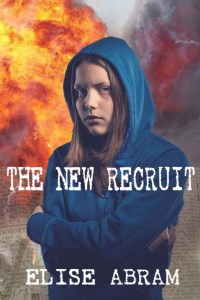
THE NEW RECRUIT is a timely story, exploring how, without love and support from those around them, our disenfranchised youth can be so easily misguided.

Genre: YA, Contemporary, Romance, Girls & Women
Pages: 214
Release Date: 1 July 17
Blog Tour Date: 1 – 8 July 17

To buy The New Recruit, see my Buy Books page or visit EMSA Publishing‘s home page for buy links


Join me as I tour the world (wide web). My itinerary is listed below and on my Blog Tour Itinerary page.

Here’s the press release:

The New Recruit is a story for the millennium

Sixteen year old Judith Abraham feels like an outsider. She has just transferred to a new school, has only one friend, and suffers from social anxiety, but when recruiter Cain Barrett offers her a job, her whole life changes. Things are great at first, but the more she learns about Cain’s world of climate crusaders, the more she questions his motives behind singling her out. Will Judith find a way out before it’s too late?

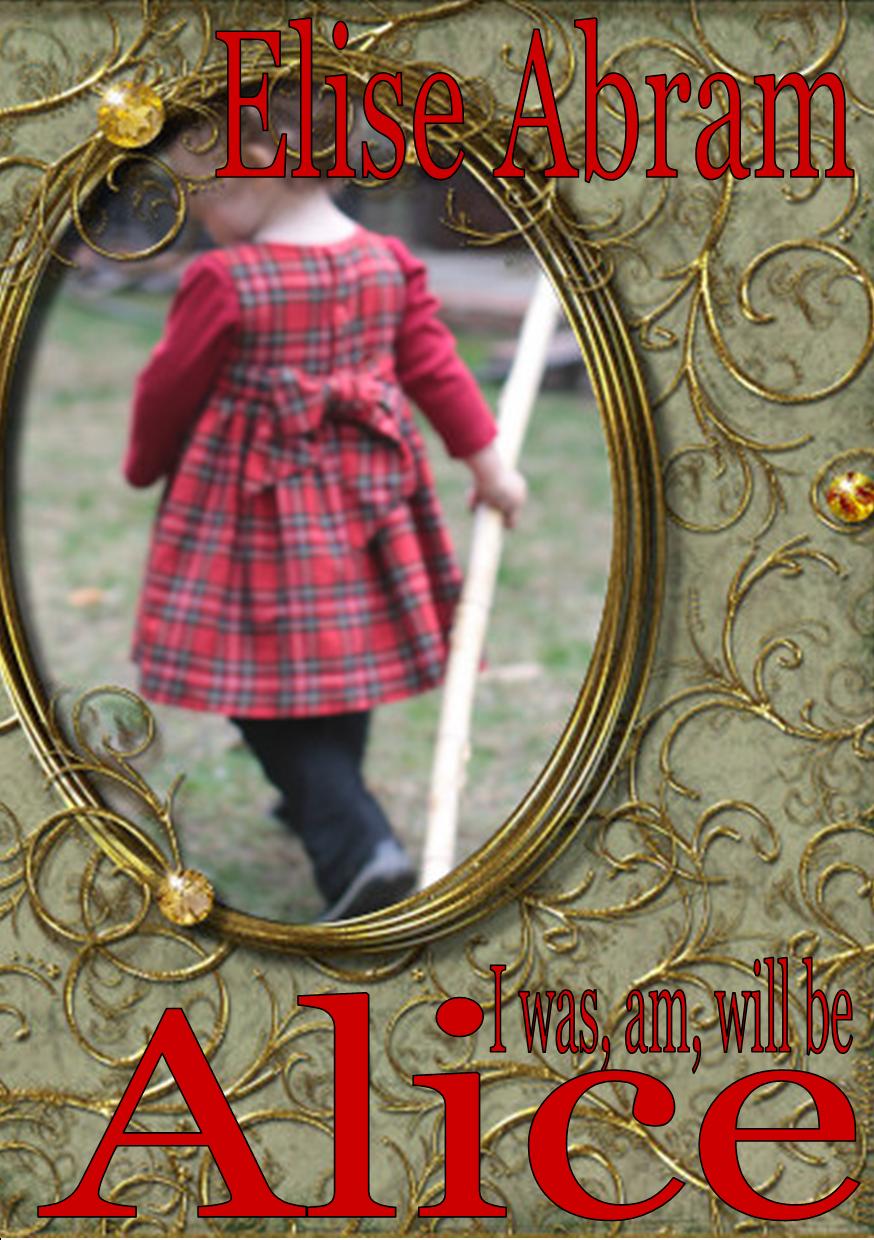
THE NEW RECRUIT is the first book of a trilogy (followed by INDOCTRINATION) published by EMSA Publishing by author Elise Abram, winner of the 2015 A Woman’s Write competition for I WAS, AM, WILL BE ALICE.THE NEW RECRUIT is a young adult contemporary romance for the new millennium. In a time when jobs are scarce, politics are unstable, and the future is uncertain, millennials are ripe for recruitment by cults, groups offering a stable world view in exchange for total devotion. THE NEW RECRUIT is meant to be a cautionary tale exploring how, without love and support from those around them, our disenfranchised youth can be so easily misguided.

For more information, visit http://emsapublishing.com

Enter for a chance to win one of three eCopies of The New Recruit with the Rafflecopter form below:

a Rafflecopter giveaway
https://widget-prime.rafflecopter.com/launch.js

Blog Tour Itinerary

Check out my Blog Tour Itinerary page for the complete itinerary.

Read the first chapter of The New Recruit below. Hope to hear from you in a review after you’ve finished the book! Check back here for more posts over the rest of the week.

The New Recruit

Chapter 1

If I had to pick a moment, that single, deciding moment when everything went south, it would have to have been when my father told me he’d lost his job.

Dad had a job at a food distribution plant, picking and shipping customer orders. Kind of middle management. It paid good, but it didn’t pay well. We’d been comfortable since Mom had died because they’d had this insurance policy that paid off the mortgage in the case of one of their deaths. Dad said he had connections, that one of the suppliers he knew wanted to hire him, but that didn’t pan out. The world, it seemed, was in a recession. Businesses were failing everywhere. Stores were closing down all over the place, which meant that even the suppliers who had wanted to steal him away from his boss when he had one could no longer afford to hire him.

After a few weeks, Dad got a retail job making barely more than minimum. Though his biggest expense was his car, we needed it to get around, and so we had to find other ways to tighten our belts. Dad swore he’d do his best to make sure our lifestyle wouldn’t change, and though he’d never admit it, it was a promise he couldn’t keep.

The first major change came when I couldn’t make my tuition the following semester. Mom and Dad were big proponents of parochial Jewish school. They’d both been raised in the public system. They’d grown up celebrating the major religious holidays—Rosh Hashanah (the Jewish New Year), Yom Kippur (the Day of Atonement), Passover, and (more fun than religious) Chanukah—and both had done a stint at after school Hebrew school, but none of them was particularly Jewish. Because they’d felt unprepared to teach me themselves, they’d decided, long before I was born, to send me to parochial school so I’d know what it meant to be Jewish.

I hated it. Dad and I enjoyed pork roast, ribs, and cheeseburgers at home, and celebrated birthdays at Mandarin (all you can eat Chinese), a fact I had to hide from my friends and classmates. I had to wear this ugly uniform at school—a skirt that went practically to my ankles, and my elbows had to be covered, even when the weather was thirty-plus degrees outside.  I hated it, but I knew how much it mattered to them and so I didn’t complain. Maybe if I’d known how much it cost, I might have persuaded them to let me go public sooner.

Dad had a meeting with my principal and they offered to subsidize my tuition. When Dad said he still couldn’t afford it, the principal suggested he take out a mortgage on his house. But when I caught my noble father sitting at the kitchen table one night, crunching numbers with his calculator, actually considering the consequences of a mortgage, I put my foot down. He looked up at me (I swear I saw tears in his eyes) and smiled, though whether out of relief or pride, I couldn’t tell.

When second semester began, I was registered at the local high school. My first day was scary. I was alone. I’d known the girls at Jewish school since I was in kindergarten, but there?

My dad had wanted to walk me in, but I decided that was uncool—I didn’t want to start my first day as the Daddy’s Girl—and decided to go it alone. I stepped into the foyer of the school and it felt like stepping into a shopping mall, with its vaulted ceiling and green glass skylights. There were trees, actual trees, growing up from grates in the tiled floor. Further down the hall were banks of lockers. Much to my surprise, there was no dress code—boys and girls wore pants, skinny jeans, or baggy sweats. No one wore kippas, but quite a few girls wore hijabs. My school, my previous school, had been populated by a homogeneous lot, and because of the uniforms, everyone had dressed the same, with the boys wearing pants and kippas, and the girls wearing skirts and sleeves.

This was definitely going to take some getting used to.

I looked down at my own clothes, an A-line, mid-calf skirt and baggy sweatshirt; I definitely needed to rethink my wardrobe.

“You look lost,” a girl said to me.

I looked up and forced a smile. “I’m new.”

She smiled back. Her hair was dyed ombre, something we weren’t allowed to do at my old school. “Do you have a locker?”

I shook my head.

“A schedule?”

Another head shake.

“You should probably start at the office. Do you know where that is?”

I shook my head again.

She smiled, something warm and friendly; I’d have to find her again later and see if we could be friends. “Come with me.” We turned right and walked down a narrow corridor. “I’m Jem, by the way. My mom loved that cartoon growing up.” I must’ve looked at her weird sideways because she said, “Jem and the Holograms?” She gasped. “Oh! You should totally come over and see that movie with me some time. My dad? He’s like this techno-geek? He has the entire basement wired like a movie theatre. I have the movie on Blu-ray.” She paused. “Okay, so my mom has the movie on Blu-ray, but she’ll let us watch it if we want.”

I was thrilled. Here I was, not ten minutes into my public high school career, and I already had a friend and future plans. Okay, so they weren’t exactly firmed-up plans, but I was ready to take whatever I could get. The mom thing freaked me out a bit. Moms were hard to swallow, seeing as I didn’t have one anymore, and being around them only made me want mine even more. I decided that Jem’s mom would be the type to stay in the shadows, calling down to see if we wanted snacks and then making Jem go up to get them, rather than coming down into the basement to serve us herself.

“I didn’t catch your name,” Jem said.

“Judith,” I told her.

“Nice to meet you, Judy.”

“Not Judy; Judith. Judy reminds me of that Jewish kids’ singing duo, Judy and David.”

Jem’s look grew stern. “You got something against Jews, Judith?”

I felt my eyes grow wide with surprise, A: that she’d straight up ask something like that, and B: as if me and my parochial school style clothes didn’t tip her off that I was a Jew. “No,” I said. I let out a short, snorty guffaw. “God, no. It’s just that my cousin was addicted to them when she was young, and I’ve listened to enough of their music to last several lifetimes.”

“I myself have a younger sister who still worships Judy and David,” she said, kind of formal-toned. “So, good answer.” She opened the office door for me and said, “You may pass.”

Okay—so my new friend was kind of weird, but she seemed like fun, too. She took good care of me, introducing me to the office secretary who issued me a locker and then sent us to Guidance where I got my schedule.

We compared notes and discovered we had a common lunch and the same period three English class. We made arrangements to meet for lunch, and Jem walked me to my first class.

***

The rest of the first day went smoothly, I guess. All classes were kind of awkward, seeing as I knew no one, spoke to no one, and no one spoke to me. Jem introduced me to her friends at lunch and in period three English, and I recognized a few girls from my earlier classes. I left school feeling kind of good about the day. I had even higher hopes that the next day would exceed that day’s experiences.

Dad was still at work when I got home, but he’d left a meatloaf in the fridge with instructions for me to put it into the oven. Dad is like the Ground Meat King. He can do a million and two dishes with it, everything from chili to shepherd’s pie, to this awesome dish he calls “deconstructed cabbage rolls”. His meatloaf rocks. He has about ten different ways to make it, and he’s adding to his repertoire all the time. That night he’d prepared what he calls his Sweet-and-Sour Meatloaf. He makes it with this sauce of molasses and soy and enough garlic to drop a vampire at fifty feet. I love the way it smells when it cooks, knowing that it will taste even better.

With dinner in the oven, I decided to check out my wardrobe. I pulled everything from my closet and drawers and divided everything into three piles like they do on those hoarding shows on television: keep, trash, and donate. I don’t own a lot of clothes, seeing as I had to wear an ugly uniform most of the time, so it didn’t take long, but at the end of it, my trash pile held a few single socks and some holey underwear; my donate pile had everything from my uniforms to the skirt I’d worn that day; and my keep pile was made up of exactly three pairs of jeans, one pair of leggings, two sweats, a few sweatshirts and sweaters, and some t-shirts. Depression sunk in. I needed clothes—badly—but didn’t have the money to buy any. I had about five hundred dollars in my savings account, the aggregate sum of almost a decade of birthday and Chanukah gifts, but Dad insisted I save that for post-secondary school. I could ask Dad, and knowing he didn’t like to say no to his little girl, I’m sure he’d oblige with the cash, but I didn’t want to take advantage.

I decided I needed to get a job, so the next day after school, I made a bee-line for the mall. Lots of places were asking for extra help, but they all wanted me to apply online, so I went home and filled out as many digital applications as I could find.

I didn’t hold out much hope, as my only experience was volunteering at school during their Chanukah toy drive, or at the local food bank over the summer, but I got a call from a clothing store the next day. The manager conducted a phone interview with me and asked me to come in the very next day for a face-to-face interview.

We met in the Food Court at the mall and talked for almost half-an-hour about my volunteer and school experience, as well as why I wanted to work at their store. “My mom died a few years back,” I said, garnering her sympathy. “It’s just been my dad and me ever since, and Dad got laid off a few months ago,” I said.

The manager’s face went blank, as if I’d caught her even further off guard than when I’d played the Dead Mom Card, and she had no idea how to react, let alone what to say.

“I need this job to help out, to try to make ends meet.” I hoped I sounded responsible and sincere. Not wanting to destroy any credibility I might have built with the manager thus far, I decided not to add that working in a clothing store would also help me build my much-needed wardrobe, now that I no longer had to wear that gross-looking uniform, and given the 30% discount they offered their employees.

We talked a bit more and then ended the interview with, “We’ll be in touch,” before she said goodbye.

I sat at the table, playing the interview over in my head—what I’d said, what I shouldn’t have said, what I didn’t say but should have…

After the self-debrief, I decided I’d done quite well and deserved a reward, so I went to Tim Hortons, bought an Oreo Ice Capp and a Red Velvet Cookie, and took another seat.

That’s when he approached me. “This seat taken?” he asked.

Thinking he meant he wanted to take the spare chair at the table to use elsewhere, I said, “No,” but much to my surprise, he sat down across from me instead.

He took a sip from the coffee cup he’d been carrying. “Looking for a job?” he asked. His eyes were a striking turquoise, the colour you need to wear contacts to achieve.

“How did—”

“I saw your interview.”

“Oh,” I said. I took a careful sip of my Ice Capp, letting it melt in my mouth before swallowing to stave off brain freeze.

“How did it go?”

“Okay, I guess.”

“Not much of a talker, are you?”

“You mean the interview?”

“I mean now.”

“Oh.” Dad always said I’d have the guys flirting with me any day now. I wondered if this was the day.

“My card,” he said. He handed me a business card, which I thought was weird. I mean, how many teenage guys carried business cards with them? Unless he was older than he looked, like those actors who played teenagers long into their twenties.

I read the card. “Cain Barrett. Recruiting.” I looked up into those blue-green eyes and felt I was drowning. “Who do you recruit?”

“People.” I took offense to his evasiveness. He was the stranger approaching me—shouldn’t I be the evasive one?

“Like who? For what?”

“For…things,” he said matter-of-factly, as if I should already know.

I laughed, probably out of discomfort rather than amusement. What was on his agenda? Was his aim to flirt? Pick me up? Hire me for a job? Something more sinister?

“Things?” I asked.

“I work for a non-profit. We mostly raise money for the less fortunate—you know: selling flowers, silent auctions, organizing craft shows, stuff like that.” He smiled and my creep-dar went up a notch.

“You were watching me?” I asked, remembering what had led to the conversation. He’d said he’d seen my interview, but he didn’t approach me until after I’d bought my Ice Capp. That meant he’d been following me. And while the remote possibility that he’d just happened to be in the Food Court sitting near us, happened to be near enough to overhear our conversation, and then happened to see me again after I’d bought my drink was possible, I don’t believe in coincidence.

“Well, when you put it that way—”

“Well, how would you put it?” Besides stalking, I mean.

He chuckled nervously and smiled, and I remembered why I was still talking to him. He was cute.  It had to be the dimples. And the spiky hair. And the eyes, definitely the eyes. “I saw a damsel in distress and thought I’d help out. You know, be your knight in shining armor.”

“And how do you propose to do that, Sir Cain?” Did that score too high on the flirtation scale? Did I mention I used to go to a religious school where the boys and girls were separated and like oil and vinegar, couldn’t ever mix?

“Why, by coming to your rescue, Princess…?”

He made it sound like a question, so I said, “Judith.”

“At your service, Princess Judith.”

I remembered what he’d said before I’d introduced myself, and I cocked my head and squinched my eyebrows together. “Rescue? Why, whatever do you mean, squire?”

He chuckled again. It was an amazing sound, the sound of Cain’s laugh. Equally amazing was the mellowing effect it had on me, making me believe he and I could be friends. More than friends, if we chose. “Keep the card. Think about my non-profit, about me. Call me if you’re interested.” Then he did this amazing thing: he took a step back and bowed with a flourish. “Later, my fair lady.”

“Wasn’t there a movie with that name?”

“Would you prefer Dame Judith?”

“Isn’t that taken, too?”

He looked at me, grinned, and winked. I liked this banter and the giddiness I felt. My first flirtation. Judging by his reaction, I seemed to be doing okay with it. “I think that’s Dame Edna,” he said. “You know, that cross-dresser with the purple hair?”

“I was thinking more along the lines of Dame Judy Dench.”

He smiled again, brought his palm to his mouth, made a kissing noise, and blew the kiss to me. “Till we meet again,” he said.

I watched as he walked away, the words, “Count on it,” sticking in my throat.

Announcing the completion of “I Was, Am, Will Be Alice”!

Graphic by Parker Knight, "Family 1353" under Creative Commons

Graphic by Parker Knight, “Family 1353” under Creative Commons

Announcing…

Hot on the heels of The Revenant‘s release I am thrilled to announce the completion of my next YA novel, I Was, Am Will Be Alice.

After narrowly escaping death in a school shooting, 8 year old Alice Carroll realizes she can time travel when under extreme stress, a situation she is determined to learn to control in order to go back to that day and save the lives of her teacher and classmates and discover the identity of the woman who sacrificed her life so Alice could live.

My Inspiration

I began writing Alice when, while shopping for agents and publishers for The Revenant, I found a call for clients for a new agent on Chuck Sambuchino’s excellent “Writer’s Digest” blog. This particular agent said she would love to read a young adult version of Audrey Niffenegger’s The Time Traveler’s Wife (TTW). I absolutely love TTW, and adopted her request as a personal challenge. I began with a similar premise: what if someone, a young girl, discovered she had the ability to time travel? In Niffenegger’s novel, the main character, Henry, keeps returning to his first episode of time travel, when he was in a car accident with his mother. Henry survived because he time traveled out of the car avoiding the crash which killed his mother. In my novel, Alice’s defining moment is being caught in a school shooting in grade three in which her favourite teacher killed. There is a romance and an episode with frostbite, too, but that’s where the similarities end.

The name Alice Carroll comes from Lewis Carroll’s Alice in Wonderland and Through the Looking Glass. I appropriated that name for my character early in the writing because the more I wrote, the weirder the character’s predicament until it was almost like she’d entered a bizarre world where nothing made sense to her any more. Why did she survive when others perished? Why did she time travel? What kind of future could she possibly make for herself? Would she ever learn to control it? Why did the shooting happen? Could she find a way to save her teacher? These questions, and more, confuse my Alice, much like Wonderland confused Carroll’s. To drive the parallel home, I borrowed other names from Wonderland to draw further connections.

Though a mouthful, the title for the book comes from something Henry says in TTW:

I love. I have loved. I will love.

I liked the juxtaposition of the different tenses and adapted this for my novel. Late in the writing I decided to use the title, I Was, Am, Will Be Alice, as subtitles and divide the book into sections. I Was Alice describes Alice of the past, when she discovers she can time travel and is traumatized by it. I Am Alice describes Alice of the present, when she realizes she can’t continue randomly traveling through time for the rest of her life and she decides to do something about it. I Will Be Alice describes Alice of the future, after her life comes full circle and she returns back to the day of the shooting and learns answers to some of the questions that have plagued her for most of her life.

Looking for Support

I am reaching out to the reading and writing community to look for “beta readers” and help printing and publicizing my YA sci-fi time-travel romance novel when the time comes.

If you would like to volunteer as a beta reader–finding errors in spelling, grammar, punctuation and consistency in story and possibly writing a review further into the process–please contact me at info @ eliseabram.com

[Tweet “Attention beta readers and reviewers – request your copy of I AM, WAS, WILL BE ALICE info@eliseabram.com”]

If you would like to donate to support my project, you may do so by visiting my PubSlush page at eliseabram.pubslush.com. I am giving away an eBook to all $20 donors and a hard copy, autographed, to all $50 donors (please note an additional $10 is required for international shipping outside of Canada). If you donate over $75, I will also throw in a free study guide in full colour, available as a PDF and/or printed copy sent along with your novel.

[Tweet “Support the arts – help me publish and publicise I AM, WAS, WILL BE ALICE eliseabram.pubslush.com”]

All donors will receive a mention in the acknowledgements section of the final, printed novel (eBook and hard copy).

Beautiful Twilight

I have read a bit of young adult (YA) fiction in my life, more that I remember since I’ve been an adult than a young adult. Most of my exposure to YA is vicariously through my students. Every year, my grade 10 English students must pick a YA novel and write two reading journals (retell, reflect and relate), a newspaper article about a significant event in the novel and do a literary analysis presentation on it. I learn a lot about YA novels and themes from them. Since I’ve decided to try and write the next great North American YA novel, I’ve made a concerted effort to read more YA. I have to say, so far, my choices haven’t impressed me.

The last YA novel I attempted (unsuccessfully as I didn’t finish) to read was Beautiful Creatures, by Kami Garcia and Margaret Stohl. The reasons I chose this book were because I remember seeing the trailers for the movie in the theatre and it looked interesting, and honestly, because it was free at the Kobo bookstore. The preview seemed interesting, and so I downloaded.

In Beautiful Creatures, Ethan Wate befriends new student Lena Duchannes at school. He finds himself attracted to her, primarily because she’s different from the other girls and he’s intrigued by the strange things that seem to happen around her. When a window breaks near her and without her touching it, Ethan goes to her home to check on her and winds up befriending her. Their friendship soon turns into a romance. Lena and Ethan find they have been dreaming about each other and they are able to communicate by thinking to each other. Ethan soon learns Lena is a caster. She is about to turn sixteen and her powers are beginning to manifest, though she cannot always control them. On her sixteenth birthday—many months into the future from the start of the book—she will be claimed, either by light or dark and her life will change. Her greatest fear is she will be claimed by the dark and turn into an evil caster like her cousin and her mother.

To its credit, Beautiful Creatures uses great allusions that many teens will recognize. Lena’s reclusive uncle is compared to Boo Radley of To Kill a Mockingbird fame. He even owns a dog whose name is Boo Radley that follows the couple around throughout the book. There are also comparisons to Gone with the Wind that I understood, but might be over most teens’ heads, unless they grew up in the American south. There were sections of the book which made me second guess my giving up, but these always gave way to slower narrative and focus on Ethan and Lena’s connection which seemed forced at times. Also, romance just isn’t my bag; I felt the concentration on teen angst and romantic insecurity too soupy for my liking at times.

Once Ethan meets Lena, the book reminded me too much of Twilight. In Twilight, Bella lives in a small, boring town and meets Edward with whom she’s forced to work in class. When Edward saves Bella from certain death in a strange feat of strength, she feels a connection to him, thus beginning their relationship. In Beautiful Creatures, Ethan lives in a small, boring town and meets Lena with whom he chooses to work in class when no one else wants to. When Ethan witnesses Lena exert a feat of mental strength, he feels a connection to her, thus beginning their relationship. Also, I felt that the novel begins too much in advance of Lena’s transformation. The reader must slog through six months of Lena’s angst around being claimed, which is too much anticipation. Lastly, the parameters of Lena’s abilities are too wishy-washy. Other casters’ abilities are specific; they can do one thing. Lena seems to be able to do more than most casters, which makes it seem like the authors invented her abilities as they needed them to advance the plot. I found myself often frustrated as I tried to figure out the parameters of magic in the Beautiful Creatures world.

If you are a young girl looking for a supernatural romance, I think you might enjoy this novel, especially if you liked Twilight (which I didn’t). For an adult not interested in romance, but rather, in great literature with clear cut rules governing the science and magic of the fictional world in which to immerse yourself for a few hours, Beautiful Creatures is not for you.

Graphic from: http://books.google.ca/books/about/Beautiful_Creatures.html?id=hTE6xarZsk8C&redir_esc=y

About the Author

Elise Abram, English teacher and former archaeologist, has been writing for as long as she can remember, but it wasn’t until she was asked to teach Writer’s Craft in 2001 that she began to write seriously. Her first novel, THE GUARDIAN was partially published as a Twitter novel a few summers back (and may be accessed at @RKLOGYprof). Nearly ten years after its inception Abram decided it was time to stop shopping around with traditional publication houses and publish PHASE SHIFT on her own.

Download PHASE SHIFT for the price of a tweet. Visit http://www.eliseabram.com, click on the button, tweet or Facebook about my novel and download it for FREE!

First Meeting

I wrote this thinking it fit into the scene I was working on but then realized it was what the sourcces called “Information Dump” and removed it. I don’t know if I’ll ever use it, but here it is anyway.

This scene documents the first meeting between Molly and Palmer. This time round I imagine Robert Carlyle playing Palmer. Feel free to imagine whomever you feel fills the part as Molly.

Second year. Department Star Trek Movie Marathon. Bored studying, I’d attended alone. Palmer, Dr. Richardson, manned the concessions. I watched him interact with the others in line in front of me. The stories the high school teachers told us about university profs still vivid in my mind, I  grew more and more petrified at the thought of an informal interaction with a prof—any prof—as the line drew me near. Though I knew nothing of Palmer at the time, Dr. Richardson, the department head, had a reputation for being a hard-ass. Watching his mouth as he spoke, the way he flung his hair—the perfect mix of sandy brown, dirty blond, and grey—out of his eyes, the curve of his nose, I was surprised at how personable a man with his reputation could be. When at last it was my turn to order, I wasn’t sure I’d be able to speak.

                “What can I get for you?” he said with a smile.

                I checked out the display of items in stock. “I’ll have a popcorn and a Vernors, please.”

                He nodded over his shoulder. “Popcorn’ll be a while.” This was followed by a very awkward silence. I looked over my shoulder at the people rapidly filling the auditorium and hoped my jacket would be enough to save me my spot. “Well,” he said, “it appears we have a bit of time.”

I nodded and forced a smile; I hoped it looked natural.

“So. All American girl, are you?” I noticed he trilled his Rs slightly and wondered which culture was of influence.

“Canadian.”

“Really?” He seemed truly astonished.  So what if I don’t go around saying “eh” or mispronouncing “about”.

“Yep. Born and raised. Why?”

“Vernors claims to be the oldest ginger ale in the States.”

“Really?” I said, not feigning interest at all.

“Yeah.” He shook his head to force the bangs from his eyes. When that didn’t work, he used his thumb to push them out of the way. “Dates back to the 1850s or so.”

“It’s more a nostalgic thing for me. My grandfather drank it.”

“So he’s the American, then.”

                “Canadian. Well, British originally, but he immigrated here when he was still very young.”

                Dr. Richardson smiled a polite smile and nodded at my response. Then the awkward and very pregnant silence rose once more.

“So,” he said at last, “are you an archaeology student?”

Where was my popcorn? I was no good at small talk. And he was only slightly better than I. “Anthropology,” I answered.

                “You should switch.” He winked and nodded his head once. “Archaeology’s cooler.”

“I’ll take that under advisement,” I said with a chuckle.” Thanks.”

                The popcorn continued to pop behind the glass of the movie theatre popper the club had rented for the week. It smelled of childhood and Disney movies. Then the opening fanfare of the movie sounded.

                “You should come back later,” he said. “You’ll miss the beginning”.

“No I won’t. This is my favourite one of the series. I must’ve seen it like a dozen times.”

                He laughed once. “Noob,” he said.

“See that guy? The one with the blue shirt and pointy ears over there? He’s seen the movie 32 times. And that guy dressed in leather with the bad wig and dreds? 53 times. That guy? The one in the red jacket and white bib? Over 100 times.”

“So what’s your number?” I asked him, intentionally provocative. The awkward silence gone, engaged in real conversation like we were, I was beginning to see why he was so popular amongst my female peers in the department.

“I haven’t seen the movie yet.”

                “Not even once?”

                “Well I guess technically, this will be my first time then, won’t it?” He leaned forward on the counter between us, as if to let me in on a secret. “I saw a couple a few episodes of the original series when I was younger. Never quite got the hang of it, I’m afraid.”

“But you study anthropology. Star Trek’s all about culture. It’s about all the cultures in the universe coming together. It’s about hope in a world where hope is a rare commodity. It tells us that if we can just learn to get along the human race still has a future.”

“Maybe that’s the problem,” he said. A student had begun to bag the fresh popcorn. Dr. Richardson handed one the bags to me. “I don’t study anthropology. I study archaeology. You should switch. Way cooler.”

I smiled in thanks and said that I should go. He told me to enjoy. When I got back to my seat I looked back at him. The light in the concession stand was the only one in the room besides the projection on the screen. Dr. Suzanne Pascoe, the Egyptology prof approached him from behind and placed a hand on the small of his back. He turned to her and they embraced.

After the movie I saw Dr. Richardson hold her coat for her. He seated it on her shoulders and then reached in behind the collar to lift her long, blonde waves from beneath the jacket. He kissed the back of her neck while it was exposed and then let her hair flow naturally down her neck and back. As I put my own jacket on, I wished I had someone that would treat me with the same tenderness and intimacy as the moment we, unbeknownst to them, had just shared.