I taught Romeo and Juliet to ninth-graders when I was an English teacher. It was the perfect play for an introduction to Shakespeare: two kids about the same age as my students making impulsive decisions that got them into trouble. We all think the play is about star-crossed love and the tragedy Romeo, Juliet, and so many other characters suffer because the protagonists challenge the norms of society. Romeo and Juliet’s relationship is a romantic whirlwind that has stood the test of time, but at its heart is another fabulous, forgotten relationship: the “bromance” between Romeo, Benvolio, and Mercutio. It is this wonderfully crafted dynamic I want to discuss today.
Romeo

Romeo is the consummate romantic. He sees the world through rose-coloured glasses. He longs for love, but his devotion is fickle, and he gives his heart over to his latest fancy. Nothing is impossible in Romeo’s mind, even if it is marrying the daughter of his family’s greatest enemy, a girl who could barely be considered a teen. He believes himself to be invincible. Though banished upon sentence of death, he stays in Verona for a booty call. Ever the optimist, he believes Friar Lawrence when he says the fuss over his banishment will eventually blow over, and he can return to Verona a free man.
Benvolio
Benvolio is the pragmatist of the group. He is the only trio member who keeps a cool head, thinks things through, remains calm, and tries to defuse conflicts instead of aggravating them. Several characters rely on Benvolio to give an unbiased report of plot events. After Roseline rejects Romeo, Benvolio convinces him to attend the Capulet party. During Mercutio and Tybalt’s altercation, Benvolio tries to convince the men to discuss matters further at another time, but then Romeo enters, and the duel begins.
Mercutio
Mercutio plays the role of the impulsive clown. His mouth has no filter, which often goads people to anger. Everything is a joke to him, and he drinks to excess. When stabbed by Tybalt, Mercutio jokes and downplays his injuries. Believing he has suffered only a scratch, his friends do nothing to help him and watch him die.
The trio in my writing

When writing, I often recall these three personalities—the optimist, the pragmatist, and the clown—and use them to shape my characters. The protagonists in my novels (like Braelynn in the Braelynn’s Birthright series) often have two close friends. My protagonist is usually the Benvolio of the group. She keeps a cool head in times of conflict and thinks things through. One of her friends is a Romeo, jaded, romantic, always looking for the silver-lined cloud in the storm. Her other friend is a Mercutio, a joker, always trying to make light in the darkness and not always at opportune times.
The trio in other stories
I am not alone in modelling my characters after this famous trio. Here are a few others you might have seen (each of these examples lists the roles in the following order: Romeo, Mercutio, Benvolio):
- Supernatural: Sam, Dean, Castiel
- Buffy the Vampire Slayer: Willow, Buffy, Xander
- The Rookie: Lucy, Tim, John
- Elsbeth: Kaya, Captain Wagner, Elsbeth
- The Big Bang Theory: Penny, Leonard, Sheldon
What other Romeo-Mercutio-Benvolio trios can you think of?
The takeaway
The next time you sit down to write, consider modelling your characters after classic groupings like the one in Romeo and Juliet. To do this, read classic literature like a writer would, not for pleasure, but to question the author’s choices. Try to figure out why the pairings (or trios) of characters work—What has made them stand the test of time? What is their appeal?—and try to create personalities with similar traits, motivations, and relationship dynamics. The ability to pen memorable characters that will pull on your readers’ heartstrings is only a few classic works away.
Subscribe to my newsletter for more great writing tips and free books for review and receive Self Publishing Made Simple: A Step-by-Step Guide for New Authors for freee!

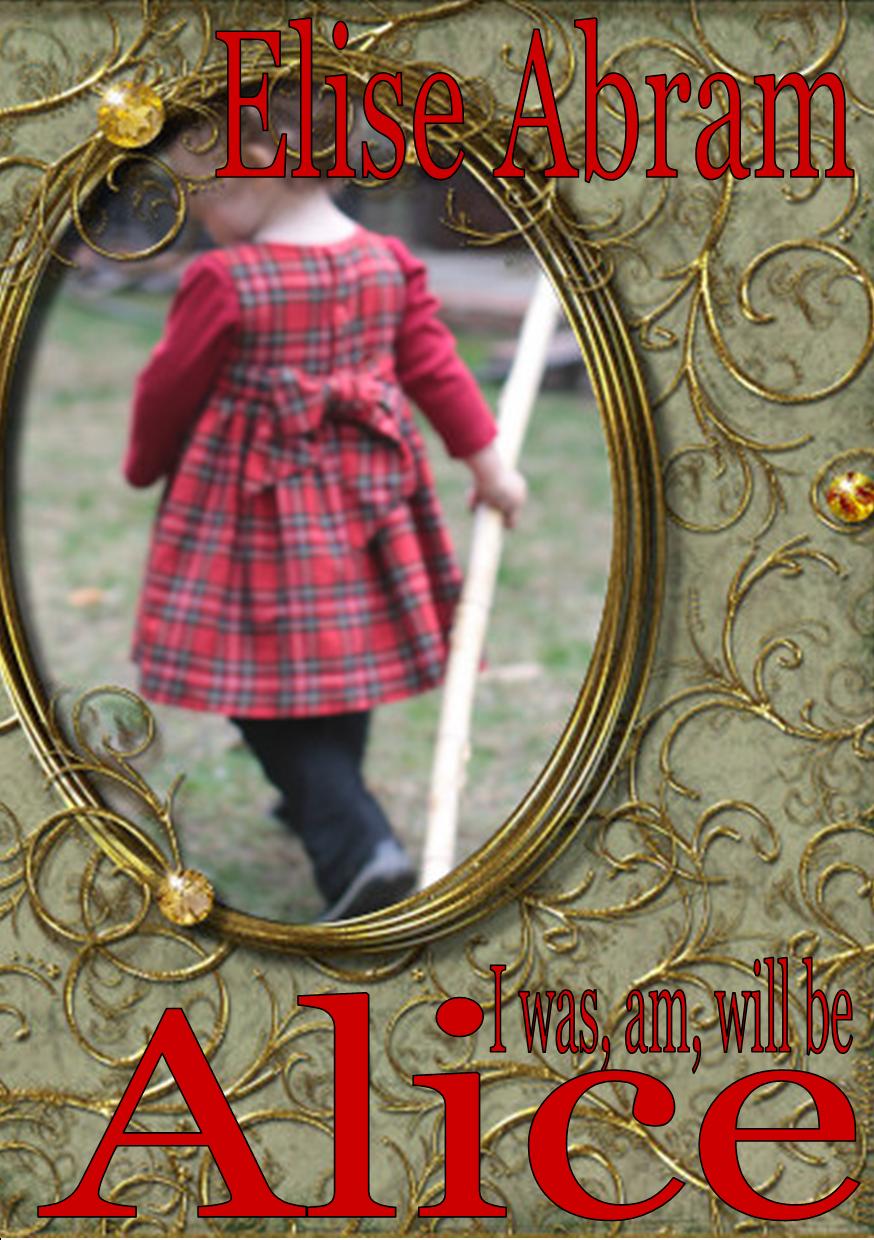
 The last book I released, I Was, Am, Will Be Alice, is a time travel fiction (largely inspired by The Time Traveler’s Wife), as is my as of yet unfinished manuscript, tentatively entitled Cat and Mouse: A Love Story, largely inspired
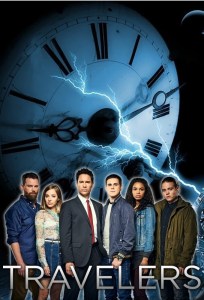 The future is a dystopia, largely due to the fact that a meteor will hit Earth with devastating consequences. They have figured out how to transfer consciousness back in time with the help of a large supercomputer. A team of scientists have their consciousnesses sent back in time to change the past and make the world a better place. To do this, the supercomputer–known as the Director–pinpoints the moment of a host’s death and transfers the future consciousness in the seconds before the host dies. This show is made interesting by the characters of the hosts, which include an FBI agent with a failing marriage, a mentally impaired woman and her social worker, an addict, a teenaged football player, and a woman who is fighting for custody of her son with her abusive, police officer husband. Eric McCormack, a long time favourite of mine since Will and Grace, stars.
 When a seemingly bad guy steals a time machine from a top secret think tank, a historian, a soldier, and a pilot chase him through time in an effort to preserve the timeline. In the first episode, misunderstood Garcia Flynn (expertly played Goran Visnjic) introduces the Rittenhouse Corporation, a Mafia-like group of people who have infiltrated every aspect of government and power corporations for centuries. Through the course of the season, we learn that Flynn is only out to stop Rittenhouse to save his family (whom he believes was murdered by members of Rittenhouse) and make the world a better place. Abigail Spencer, Matt Lanter, and Malcolm Barrett have such incredible chemistry as the team of heroes out to stop Flynn, that by the time they realize they’re fighting for the wrong team, they can do no wrong in the viewers’ eyes.
 Based on the movie by the same name, Frequency supposes that a ham radio can connect the present to the past. In Frequency, police officer Raimy Sullivan learns she can talk to her father over his old radio. The only problem is her father died 20 years ago. Raimy gives her father advice which saves him from the accident that took his life. She goes into work the next morning only to learn that her mother–safe before Raimy had saved her father’s life–went missing twenty years ago and her bones are on the coroner’s table. Her mother, it seems, was a victim of the Nightingale Killer. As if to make matters worse, she is a stranger to her fiancee. Raimy and her father, Frank, spend the season as partners as they try to catch the Nightingale Killer on both ends of the time continuum.
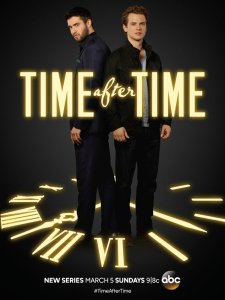 I remember seeing Time After Time, the movie, as a young adult. I loved the fact that H. G. Wells was portrayed as a time traveller. The Time Machine reads more like a journal, after all, documenting the travels of a scientist into the past and incredibly distant future to check in on the evolution of mankind. It’s not hard to imagine that the novel was Wells’s actual journal. In Time After Time, H.G. Wells invents a time machine that is immediately appropriated by Jack the Ripper who goes forward in time to escape capture and continues his murderous ways. The show is more cat and mouse thriller than time travel epic as Dr. John Stephenson (Jack the Ripper) taunts Wells, daring him to follow through with his threat to capture him before his next kill.
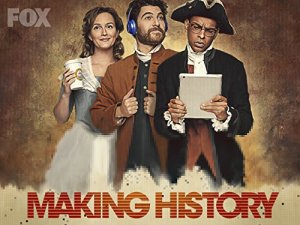 A time travelling duffle bag is absurd on the face of it. Even so, I could accept it provided the show did something smart with it. In the first two episodes, Dan goes back to make sure the American Revolution happens, only to find that the founding fathers are even dumber than he is, and though they love their guns and will only be riled when the British threaten to take them away (cue the political satire), they refuse to do anything more than threaten to take the guns and aver their love for guns. There’s a love affair (as in Time After Time), false identities with modern names, and claiming of song lyrics that won’t be written for centuries (as in Back to the Future). Though there may be a few moments that made me smile, this was even more groan-worthy than Legends of Tomorrow at it’s campy best.





 Elise Abram