I don’t see many movies in the theatre anymore, mostly because there hasn’t been much that’s piqued my interest lately. But this week was my husband’s birthday and he wanted to see Chappie. I agreed so long as I could have a large bag of popcorn and a big glass of cherry-vanilla Coke, thinking I’d have Hugh Jackman to console me.
I should have put up more of a fight. Though it features Jackman and Sigourney Weaver, Chappie is B-movie fodder at it’s mediocre-best.
In a future ripped from the pages of an Almost Human script, Chappie proposes that a few years from now the Johannesburg police force will consist totally of robot automatons. Deon Wilson (Dev Patel), the man responsible for inventing them, has finished an AI program for the robots in his spare time. He steals a robot marked for demolition to test his AI program, which is, in turn, stolen by a group of street thugs who name him Chappie, turn him into a gangsta, and convince him to commit crimes.
Jackman plays the villain in the piece, an ex-soldier, jealous that his destructive behemoth of a robot design lost out to Deon’s design for mass production, who manages to shut down the entire robot force with a virus for the sole purpose of killing people by proxy with the machine. His performance, like many of the others in this movie, is one-dimensional and disappointing.
Do not pay to see Chappie in the theatre. Watch the DVD of iRobot followed by the canon of Almost Human on Shomi instead. No amount of movie-style popcorn and Coca-Cola served from one of those fancy-shmancy machines is worth it.
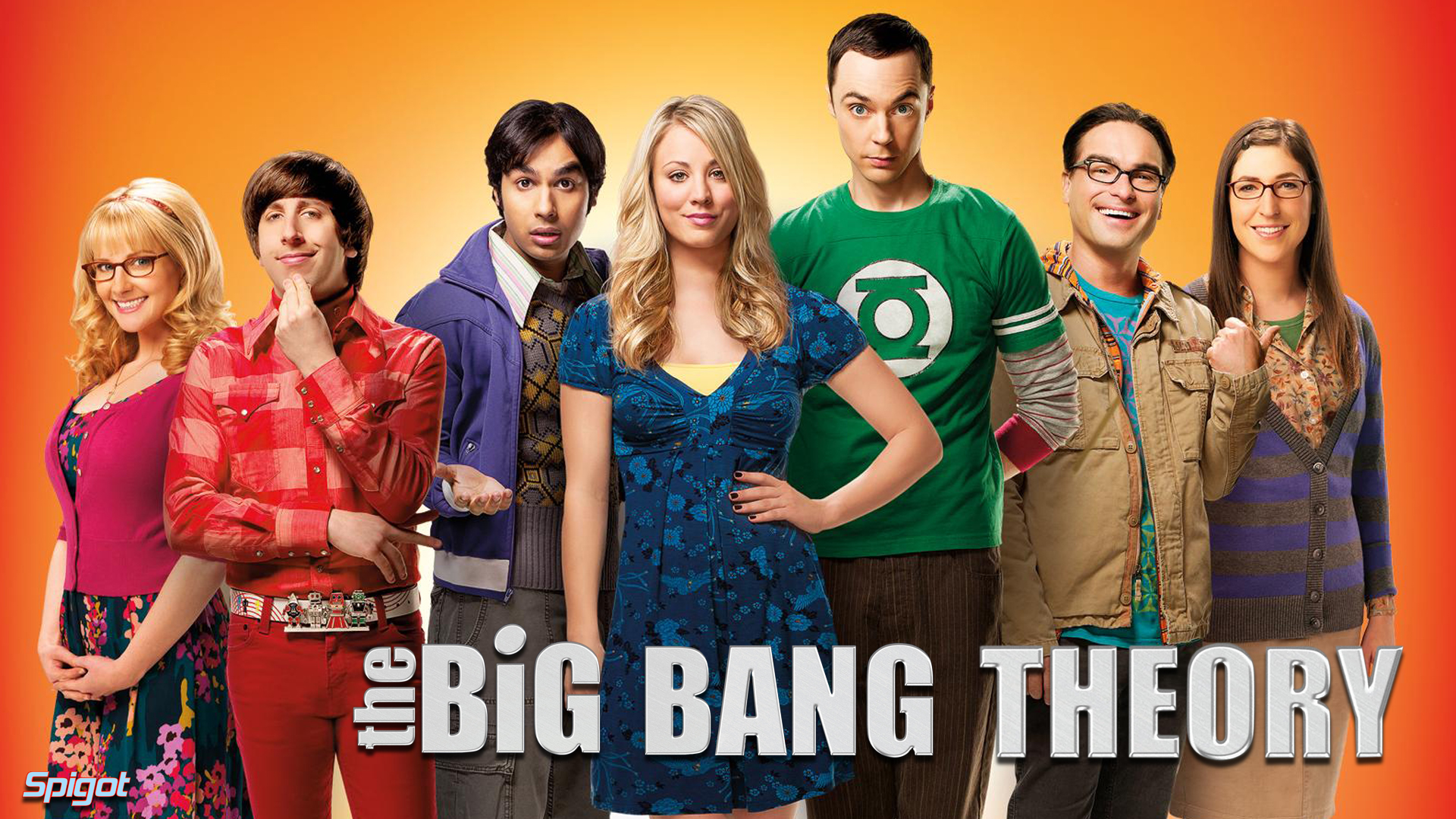
Allusionis when a reference to something–a person, place, thing, or work of literature–is mentioned in a story. The idea is that people get what the reference means and the connection brings a deeper meaning to the reader’s experience. As an English teacher, I already knew about allusions and how they worked, but it wasn’t until I started watching The Big Bang Theory that I learned how to use them in a piece of writing to help develop rich settings and characters.
[Tweet “It wasn’t until I started watching @BigBang_CBS that I learned how to use allusions in writing.”]
Let me explain. For those who have never seen it, The Big Bang Theory follows the lives of four stereotypically nerdy scientists as they struggle on the outskirts of popularity. They eat, sleep, breathe, and live sci-fi, sometimes literally (remember Sheldon’s Gorn-infested sleep or the group’s misadventures as a Star Trek Next Gen landing party?). Their lives are programmed around television schedules, comic-cons, new sci-fi movies, and trips to the comic book store. But what makes this show especially enjoyable for me are the endless references–some of them quite obscure–to current popular culture. As a devout Trekker and sci-fi enthusiast, I identify with the boys and their never-ending struggle to fit in.
[Tweet “Read about my ‘The Big Bang Theory of Allusion’ as a way to make characters seem real. #WritingTip”]
I’ve adopted what I’ve dubbed “The Big Bang Theory of Allusion” in The Revenant (and my current work in progress tentatively called I Was, Am, Will Be Alice). The theory tells us that, because as writers we want our characters to seem as real as possible, we should make them consumers of current and real popular culture. This is not a new idea. Shakespeare did it, referring to bible passages or ancient Greek and Roman mythology (keep in mind he had 500 years less of popular culture to draw on). In To Kill A Mockingbird, Harper Lee draws on civil war knowledge, politics, and what we now think of as classical literature, but which would have been popular and current at the time, such as Ivanhoe, Dracula, and Tom Swift. Many of the references to movie stars such as Mae West, alluded to in Tennesee Williams’ A Streetcar Named Desire may be lost on today’s readers, but at the time of its release, these references would have brought a deeper meaning to the story for its audience.
The main allusions in The Revenant are about superheroes—Superman, Batman and Spiderman–but there are also references to characters in the sci-fi canon. Zulu, the male protagonist, imagines himself Khan Noonian Singh on the deck of the S.S. Botany Bay fighting his nemesis Kirk, as well as Hook on the deck of the Jolly Roger seeking out his nemesis, the crocodile that bit off his hand. Kat, the female protagonist, imagines herself as Buffy of vampire slayer fame and Zulu as her Angel. Zulu prefers to think of himself as more of the Spike type. Going after bad guys like he does, Zulu draws parallels between himself and Jeff Lindsay’s Dexter, the vigilante who satisfies his need to kill on people who have circumvented the law. There are also references to Hiro Nakamura of Heroes comic book and television show fame. Fans of these shows will recognize the allusions and understand the thoughts of the characters making the comparisons; others might recognize the references as allusions but miss some of the meaning, and that’s okay. We don’t need to know anything about The Gray Ghost Dill offers to swap with Jem if he touches Boo’s house in Mockingbird other than that he’s staking a treasured book on the bet.
[Tweet “Does using too many allusions date your work? That depends on syndication and DVDs. #WritingTip”]
The concern with over-use of allusions is that it may date a piece of literature. How many people will remember shows like The Big Bang Theory or Dexter or Buffy the Vampire Slayer ten years from now? How many in twenty? Given the examples in this essay, quite a few, I’d say. Classic Trek was cancelled in 1969, yet the legacy of that show is still going strong. Shows like Buffy, Heroes and Dexter are still sold in DVD/BluRay collections and available for streaming online anywhere from two to ten years and more after cancellation. Given that The Big Bang Theory is now in syndication, chances are it will continue to be broadcast to tickle the funny bones of future generations with its allusions, keeping anything it references in mainstream popular culture, for years to come.
I hope you’ve enjoyed this post on The Revenant Blog Tour. For past and future posts, see my Blog Tour Itinerary.
Image from ia.media-imdb.com/images/M/MV5BNjY2Mzc0MDA4NV5BMl5BanBnXkFtZTcwOTg5OTcxNw@@._V1_SX214_AL_.jpg
I had the opportunity to catch Abraham Lincoln: Vampire Hunter on Space last night and I was surprisingly impressed. What I thought was going to be a campy movie turned out to be entertaining with amazing CGI.
In case you haven’t seen it, Abraham Lincoln: Vampire Hunter hypothesizes that former President of The United States, Abraham Lincoln, was a trained vampire hunter. After he witnesses his mother being killed by vampire, Jack Barts, young Abe is trained by Henry to wield his silver-tipped axe to kill vampires. Abe wants to use his training to exact revenge on Barts, but he makes a vow to Henry only to kill those Henry chooses. After learning that the King of Vampires, the aptly named Adam, plans to take over the U.S., Abe take him on.
Like all paranormal hunter/slayers, Abe has his own “Scooby Gang”, composed of “Watcher” Henry, friends Will Johnson, Joshua Speed and wife, Mary Todd. I liked the dynamic between members of the gang, but would have liked to see Mary slay a few vamps of her own, no matter how out of character for the time. I also liked the revisionist history in the movie that draws a parallel between the fight for emancipation from slavery and the fight for the emancipation of the U.S. from becoming a country enslaved by vampires.
Benjamin Walker plays the part of Abe Lincoln well, and looks strong and sexy twisting his axe like a baton as he slices through attacking vampires. I was glad to see Rufus Sewell again, a favourite of mine since Eleventh Hour and Pillars of the Earth, who plays the evil Adam with great aplomb. Deserving equal billing with the actors are the CGI effects. There is an impressive scene in which Abe chases Barts on the backs of a stampede of wild horses. Equally impressive is the climactic scene on top of a speeding train and the final showdown on the burning bridge.
Though the title sounds like it promises to be a groaner, Abraham Lincoln: Vampire Hunter is a movie worth watching.
For years I thought that if I were ever in a position to need a book trailer I’d be independently wealthy and could hire a professional to do it for me.
Barring that, I’d use Flash. I have a basic working knowledge of Flash. I’ve had to teach it to Travel and Tourism students for use in their end of semester presentations, and I’ve had occasion to teach entire semesters of Flash Action Script through eLearning courses. I never considered that when the time finally came, the proliferation of operating systems and browsers that do not support Flash would make that option all but obsolete.
The only other software I had was Windows Movie Maker. My kid made a movie with it while still in grade school–how hard could it be? Little did I know, the software would be the least of my worries.
Here are my three pearls of wisdom of what NOT to do, should you ever consider to go it alone when making a book trailer.
[Tweet “3 pearls of wisdom about what NOT to do when making a book trailer.”]
Pearl #1 – use royalty-free but not for commercial use graphics
I never considered that what I was embarking on was a commercial endeavour. All I wanted to do was get the word out about my book release; I wasn’t ready to start selling books yet. Nevertheless, all of those people I alerted to the release of my book were potential buyers which ultimately made my project a commercial one.
Back to the drawing board.
I eventually stumbled upon Flickr.com (make sure you click “Commercial use allowed” on the licence tab) and foter.com (make sure you click “Commercial Use” at the top of the page after doing a search). Keep in mind you must still check the licence to ensure you have fulfilled your end of the use agreement. Most of the pictures will say to link back to the Creative Commons agreement as well as give the photographer credit, which you can do in the rolling credits at the end of your trailer.
Pearl #2 – forget to record your titles, artists and URLs as you go
As someone who just wrote a post entitled “Just Cite the Damn Cite!” I don’t know what I was thinking. Too absorbed with ensuring I wasn’t breaking copyright to realize that if I didn’t have the credits right I was breaking copyright anyway.
Open a NotePad file (or create a file on similar software or go old school and do it on paper) and record the title of each photo, the artist, and the URL (Flickr and foter seem to want a link to the author on their site and not directly to the author) as well as a description so you’re sure you attribute the correct photo to the correct photographer. List your photos in order of appearance in the credits (and say you are doing this in your credits).
Pearl #3 – use Windows Movie Maker
I’m not sure if this should be a “pearl” or not, but like all Windows products, Movie Maker has its ups and downs.
On the up side is its ease of use. Movie Maker has the same drag and drop functionality of any other Windows product making it sort of intuitive to learn.
On the down side is just about everything else. Though the learning curve for any new app is steep, it seemed insurmountable at times for Movie Maker. Problems included how to coordinate the video with the title overlay (video should come first but since mine was a book, I started with the text), getting “slides” close enough to eliminate pauses between them (which made bang-on coordination with the audio file near impossible) and having to convert my MP3 file to a WAV file before I could even import it (I used Zamzar.com). I also could not holistically change the font, but had to do it piecemeal, one “slide” at a time, which was aggravating because it was super time consuming. Also, Movie Maker only creates WMV files, which meant I needed to do yet another conversion to the less proprietary MP4. And I couldn’t change the background of the file so my background graphic is a different colour than the surrounding “stage” (which continues to miff me to no end).
In the end I have a passable book trailer for my new release (on 10 July 14), The Revenant, that I can display with pride. I pass this on to you now because forewarned is forearmed. You can create a sort of professional-looking book trailer on the cheap (FREE!) with a bit of time invested (weekends for a month) and a lot of patience.
[Tweet “Making a book trailer? You’ve gotta read this!”]
Did you find this article useful? Still have questions about creating a book trailer? Let me know in the comments below.
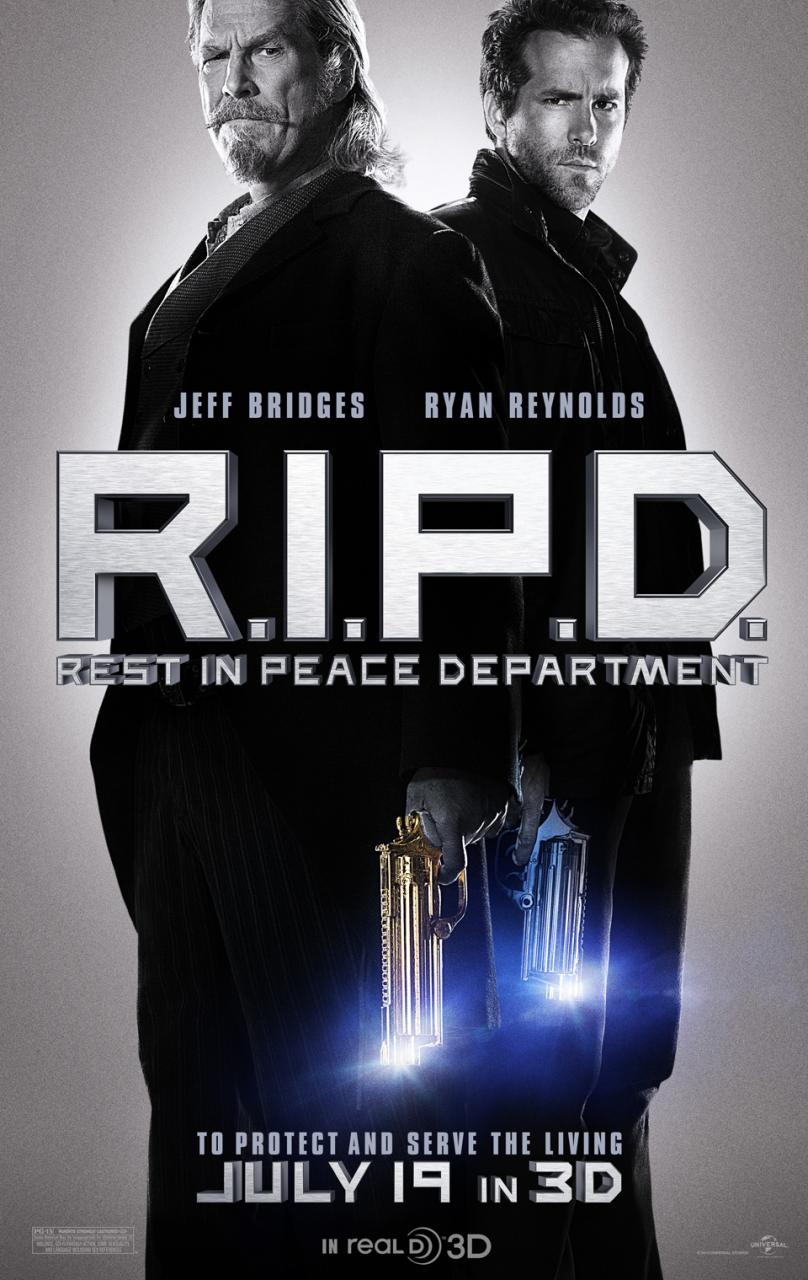
RIPD (Rest in Peace Department) is where good cops go when they die. Their job? To track down escaped demons from Hell and return them or terminate them altogether. Ryan Reynolds plays Nick with one-note aplomb. His partner, Hayes (played by Kevin Bacon with similar gutsto), kills him over parts of a golden talisman they recover from bad guys. In the afterlife, Nick is drafted into the RIPD without ceremony and partnered with old west lawman Roy (Jeff Bridges) for training. On the first day out they happen upon the same case Nick was working when he was killed. They follow the trail to recover the rest of the talisman, failing to catch the demon when he is revealed. When the demon goes on a rampage in the city and Nick and Hayes are threatened with termination (which means meeting their final death), they take matters into their own hands.
I firmly believe there is nothing new under the sun; everybody works to put new spins on the same old archetypes. ABC’s Once Upon A Time, which puts a new spin on old fairy tales–especially on old Disney fairy tale properties–is case in point. The fun comes not in watching something new, but in watching a new spin on what must be an ages old concept. Many writers, I’m sure, set out to write something one of a kind and alternately cringe and scream when they see their original ideas manifested elsewhere (this was a regular occurrence while watching Fringe and working on Phase Shift). Other writers take someone else’s idea as a start and go from there (as is the case with every vampire property I’ve ever seen or read and The Revenant or The Time Traveler’s Wife and my untitled Alice piece). RIPD has the typical old-timer-trains-newbie framework present in Men in Black or Lethal Weapon series. Unlike those movies, the old-timer is the strange-duck, while the newbie plays straight man. Like Men in Black, the beings the cops hunt can hide in plain sight, appearing somewhat quirky, but for the most part normal. As is the case with Ghostbustersand television’s Reaper, RIPD detectives have a device to quickly dispatch the spirit back to the underworld before they wreak havoc on the living. Similar to Buffy the Vampire Slayer, there is a Hellmouth that is in danger of opening if the detectives don’t thwart the bad guys in time. Similar to Ghost, Nick’s love for his wife transcends death. Also similar to Ghost, his best friend/partner is the bad guy and his wife is ultimately put into jeopardy. Nick and his wife also have a brief reunion scene near the end, as do Sam and Molly at the end of Ghost.
RIPD is lots of fun. In addition to it being a police procedural, it is a love story, and involves superheroes of a sort. There is a lot of comic book violence as well as interesting villains. Jeff Bridges steals the scene in the role of talkative, cynical Roy, and much of the comedy comes from his deadpan responses and odd behaviour (such as driving the car facing sideways with his right leg up on the seat, or the way he is more concerned that he loses his hat than that he loses the demon). Though it borders on the cliché, RIPD is a light-hearted romp worth a look-see.
Did you see RIPD? Leave me a comment to let me know what you thought about it.




 Elise Abram
