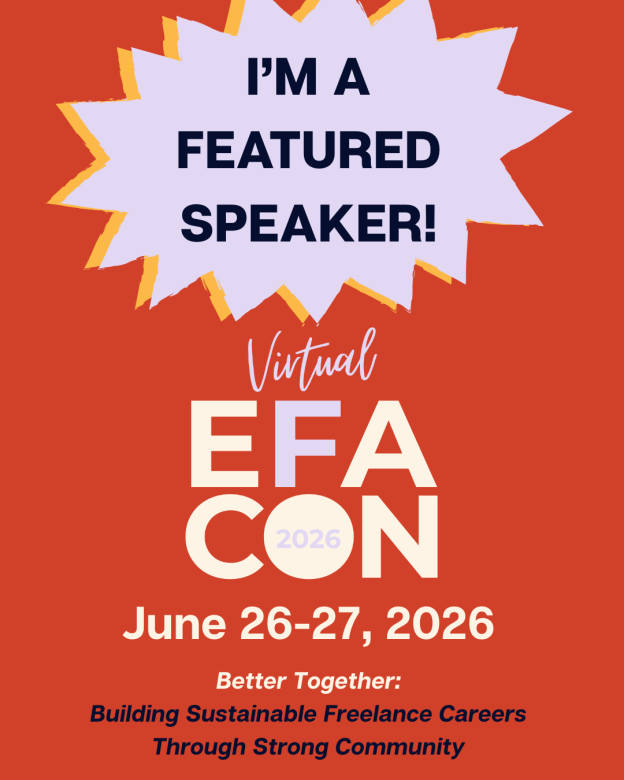
I am thrilled to announce that I will be presenting a session at this year’s Editorial Freelancer’s Association’s virtual EFACON 2026 conference!
The name of my session is “Write • Revise • Repeat: A Self-Editing Toolkit.” Here’s a bit more about it:
Even experienced editors struggle to edit their own work. Our expertise does not eliminate our brain’s tendency to “autocorrect” errors or eliminate cognitive bias when we are too close to the prose. This session takes a look at why it’s difficult to edit your own work and offers practical strategies for editing your manuscript with greater clarity and objectivity.
We’ll begin with “big-picture” developmental editing techniques—such as reverse outlining and building a “book bible.” Next, we’ll discuss how to copy/line edit your manuscript using multiple, focused passes.
The use of AI tools as a diagnostic tool to train yourself to identify personal stylistic habits, patterns, and crutches while revising will also be discussed.
My latest work in progress (WIP) had me stumped. I loved most of the book, but the beginning had me second-guessing myself. It wasn’t the plot as much as it was the writing. I thought I was introducing my world to my audience, but it fell flat. Try as I might, I couldn’t streamline the information dump, the narrator’s voice sounded a little off, and the telling was a bit lacklustre. That was when I thought of my read-alikes and started to read like a writer.
I have often cited books like The 100, Wool, The Hunger Games, and Wayward Pines as my inspirations, and those books were resounding successes. So, I returned to re-read them to see if they could help me with my problem. When I did, I made sure to read like a writer.
What is reading like a writer?
Reading like a writer is very different than reading for pleasure. Rather than read for pleasure, start to question the author’s choices.Your ultimate goal is to figure out why the author wrote the way they did. Some of the questions you might ask include
Here’s what I learned by revisiting my read-alikes.
The 100: begin in medias res
The 100 begins with Clarke, the eighteen-year-old heroine and point of view (POV) character, in a jail cell, awaiting her next beating. The plot begins in the middle of the story, with Clarke already in peril. This helps to build suspense. It makes the audience wonder why she is being treated so horribly. Our curiosity is piqued when she leaves her cell, and we can’t wait to see what will happen next.
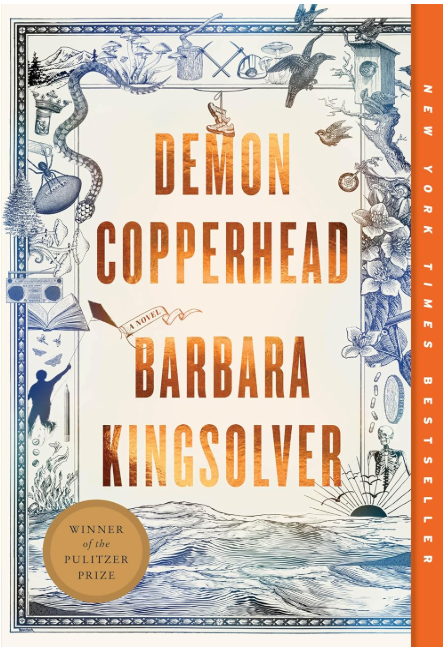
Demon Copperhead: it’s okay to use sentence fragments
In Demon Copperhead, Barbara Kingsolver uses sentence fragments almost exclusively. This helps the audience to see inside Demon’s head. It uses a technique similar to stream-of-consciousness to make the reader feel as if they are reading his thoughts. Because we are privy to Demon’s uncensored thoughts, it helps the reader easily bond with the character.
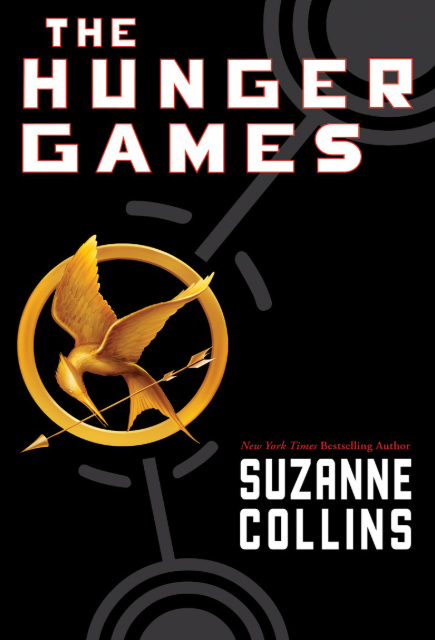
The Hunger Games: how to build a world without information dump
The start of The Hunger Games is a masterclass in establishing setting in a sci-fi dystopian world. With a few strategically placed hints and comments, Suzanne Collins introduces the dystopian backdrop of the novel as well as Katniss’s character as the narrator. We understand her powerlessness and reserved acceptance of her situation. We also admire that she is willing to do anything for her family, including sacrificing herself, if it means their lives will be more comfortable. At the same time, Collins tells us the dangers of the world she’s created through Katniss’s eyes. The novel flows beautifully, maintaining a consistent pace, and we are given a lot of information without feeling it is being dumped on us.
Wool: how to establish suspense with flashbacks
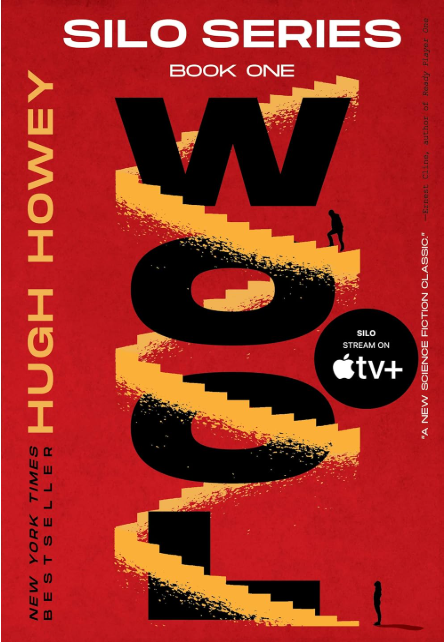
Hugh Howey’s Wool begins in medias res. It continues for two chapters before flashing back three years, showing what has led to Holsten, the sheriff, being sent to clean. By skipping back and forth in time, Howey establishes suspense. The reader cannot wait to see the events leading up to the sheriff, the person normally sending people to clean, to clean himself. The story uses hushed conversations about forbidden things to firmly establish Wool as a dystopia. The time shifts help build curiosity—the reader knows where the story is going, but not how it gets there, which keeps us turning pages.
Key takeaways
After spending some time reviewing my look-alikes and re-reading some of them as a writer, I was able to break free of my writer’s block and revise my work. This included
changing a scene to begin in medias res
breaking some of my longer sentences into sentence fragments that made sense in the context
streamlining how I established my setting
cutting out duplicate ideas
deleting information already established
moving other bits of information (to where they were more apropos)
using one or two flashbacks where the reader already knows what had happened, and the time shift helps clarify events
I’m not going to lie. Radical editing—all the chopping and revision—was the most painful experience I could imagine, but I really like what I came up with!
How to read like a writer
Here are some things to keep in mind when reading like a writer.
Focus on read-alikes for your story. Take a look at stories similar to your own and try to determine what about the narrative voice made them so successful.
Be specific with the questions you ask. If your difficulty is composing dialogue, read with an eye to dialogue. If your difficulty is eliminating information dump, read to see how other authors give background information about characters and settings without it.
Try modelling the author’s voice. Using mentor texts is a good way to try on someone else’s voice. Read a chapter of your mentor text like a writer. Pay attention to the way the author tells the story. When you are done, try to write a section of your own story using the other author’s voice. You might hate the resulting hybrid voice. But you might also love it.
Reading like a writer—studying the way bestselling authors structure their plots, create their stories, incorporate literary devices, and establish setting—turns each book you read into a master class in writing, helping you grow as a writer and refine your narrative voice.
Even the best laid plans often go awry. It’s true. No matter how much planning or plotting you might do for your work in progress (WIP), the characters soon develop minds of their own and take you to places you never thought you’d go. So you let them go wherever they want and say whatever they want to say, and your book is better for it, but the moment you let them go off-book, you are opening yourself up to a host of plot holes. This is where your first revision comes in.
Last week, I typed “The End” on my latest WIP, Phoenix Station. But it wasn’t the end. Last week only marked the beginning of my first editing pass: Revision.
I’m an editor, and I’m really good at finding inconsistencies in my clients’ plots. Now is the time to put away my author’s cap and don my developmental editor’s one for my own book. In keeping with that spirit, today’s post is all about revision.
Milanote for Outlining
I’m usually more of a pantser than a plotter, but at some point, I always wind up plotting the rest of the book out. Given its plot, I started writing Phoenix Station as a planner. I started out with handmade notes and ramblings, refined that into a word processed chapter summary, and broke that down even further when I stumbled upon Milanote.
Milanote column with notes
In the months since discovering Milanote, it’s become one of my staple tools for developmental editing. Milanote is similar to an endless bulletin board on which you can stick “columns” and add “notes” to layout your book. I like that everything is on the desktop in front of me. It becomes a living document of the progress of my writing.
Finding Plot holes
My first pass is to tie up all loose ends I might have created along the way, aka plot holes. As I revise, I catalogue each chapter in a separate “column.” I list plot events in a bulletted list and reserve a “notes” section for questions that need to be answered on my next pass through the document. I highlight terms, character names, and the names of places so I will be sure to use the same terminology throughout. Text messages are important in my story, so I also highlight each of the strategically placed cryptic messages my character received. This makes it easier to locate later, though Milanote’s search function helps.
Revise for Consistency
When revising your document, I recommend making several passes. The first pass should be devoted to consistency. This applies to descriptions of characters and places as well as the internal structure of the world you have built (especially important for sci-fi and fantasy). I also edit for grammar and word choice as I go. Each pass through polishes my work even more. Creating a separate document that functions as a “story bible” for your work will help. I’m using Milanote, but you could use Word if you prefer.
Next Steps
What happens next depends on what I find in my first pass. I might need another revision dedicated to plugging the holes in my first (and second) draft. I might need to look at diction, imagery, symbolism, foreshadowing or something else. The important thing to note is that I won’t know where to go next until I complete this draft.
Stay tuned to follow my journey as I take Phoenix Station from first draft through to published (fingers crossed) bestseller!
One of the things I see in my editing is that many authors are unsure as to how to show the possessive of a proper noun ending in S. Here are some things to remember to clear up this confusion.
Tip 1: When you have a name that ends in an S, add an apostrophe to show belonging, but only if the apostrophe S is not pronounced.
The ball belongs to Sanders.
It’s Sanders’ ball.
NOT: It’s Sander’s ball. [the S is a part of the name and cannot be separated to add the comma]
Tip 2: If you would pronounce the S to show the possessive, you must add an apostrophe S at the end of the name.
The ball belongs to Cyrus.
It’s Cyrus’s ball.
Tip 3: If a family name ends in S and you want to show the possessive for the whole family, add es’ to the end of the name.
The ball belongs to the Sanderses. [the whole of the Sanders family]
It’s the Sanderses’ ball.
Tip 4: Limit the apostrophes to one per name (or word).
It’s Cyrus’s ball.
NOT: It’s Cyrus’s’ ball.
Keeping these tips in mind as you write is sure to help you avoid these mistakes in the future. It has been said that, on average, it takes about a month to build a habit, so the more you practice applying these tips, the quicker these rules will become second nature.
If you are still unsure of whether you are using apostrophes to show the possessive form of proper nouns, be sure to use a grammar-checker like the ones built into Microsoft Word or Google Docs or an AI grammar-checker like Grammarly to help you with this.




 Elise Abram