Author Archives: Admin

When did sharing intellectual property become criminal?

Graphic by Parker Knight, "Family 1353" under Creative Commons

girl graphic by Parker Knight, “Family 1353” under Creative Commons

About a month ago, I came out with the synopsis of my  next novel, a YA science fiction with time travel, entitled I Was, Am, Will Be Alice.  Here’s the synopsis:

After narrowly escaping death in a school shooting, 9 year old Alice Carroll realizes she can time travel when under extreme stress, a situation she is determined to learn to control in order to go back to that day and save the lives of her teacher and classmates and discover the identity of the woman who sacrificed her life so Alice could live.

This week I was horrified to learn of a middle school teacher in Maryland who was put on administrative leave and taken in for an emergency medical evaluation after officials learned he wrote a sci fi about a future school shooting. As you can imagine, my thoughts turned to my Alice book and the repercussions I might suffer should I go ahead and publish it.

[Tweet “What repercussions might I suffer if I #publish my book about a #school shooting?”]

Try as I might, I cannot wrap my head around this. Maybe it’s because McLaw’s shooting takes place in the future? Maybe it’s because an ungodly number of people are killed? Maybe it’s because, given gun laws in the U.S., McLaw’s story is plausible and people are scared?

Granted, Alice differs in that it takes place in the present, the shooting is in the past, and Canada has fewer incidences of school shootings than the U.S. due to it’s more stringent gun control, but it doesn’t make us any less scared of the possibility of something like this happening.

As a teacher, I’ve been flirted with, felt physically threatened, been subjected to bullying from my students, told I’d be better off dead, called the “C” word, and the “B” word and worse, had students bring concealed pocket knifes and BB-guns to class (thankfully, both remained concealed) and heard tell of students going on to commit nefarious acts both outside of school hours and after graduation. That doesn’t even take into account similar (and sometimes worse) offences and assaults I’ve heard from my peers. Quite frankly, I’m scared.

Writing empowers me. If through my writing I can identify with a character that has went through the amalgam of my fears and learned to conquer them, more power to me. But now I am left worrying if the school officials won’t agree and what the consequences may be.

[Tweet “I identify with a character that has experienced the amalgam of my fears and lived to tell”]

I want to go on record stating that the school shooting in Alice comes from a place of wanting to conquer my fears (much like the characters in the novel). In the book I totally identify with Alice and not Dodgson who is an amalgam of the students who have caused concern over the years. I will press on with the proofing and publishing of this novel because I think it’s my best work to date. I’m hoping McLaw will prevail, unless there’s something we aren’t being told about his situation that actually warrants this 1984-style breach of what are McLaw’s basic human rights. Hopefully by then, sharing the fruits of my intellectual property won’t be subject to similar scrutiny.

Extant casts wide net; may come up empty

image from globaltv.com

image from globaltv.com

It’s Alien.

It’s ET.

It’s Predator.

It’s AI.

It’s Extant, and it’s having trouble deciding what it wants to be.

[Tweet “#Extant is having trouble deciding which #SciFi sub-#genre it wants to be.”]

Extant is the story of astronaut Molly (Halle Berry), her husband, John (Goran Visnjic) and their “son”, an android–called a humanich–named Ethan (Pierce Ganon). After spending 13 months in space, Molly returns pregnant. Half-human, half-alien, the baby is removed from Molly’s body and incubated in a secret facility ran by the Yasumoto Corporation, which also happens to be John’s employer. Molly’s friend and colleague, Alan Sparks (Michael O’Neil), is in charge of the project.

This week, Sparks escapes the facility with the hybrid (known as the Offspring) and goes to an isolated resort where he can be alone with the visions of his deceased daughter the Offspring shows him. He calls his ex-wife to join him in the reunion. In order to maintain enough energy to produce it’s illusions, the Offspring must feed on humans (calling to mind Defiance’s Irisa and Atlantis’s wraith). The people survive the feeding in order to do Alan’s bidding.  Meanwhile, John and Ethan are essentially held captive by Yasumoto (Hiroyuki Sanada) at his house along with Odin (Charlie Bewley), a member of an anti-humanichs group, pretending to be interested in John’s assistant, Julie (Grace Gummer). In a third sub-plot, Molly is handcuffed inside a truck by one of Yasumoto’s men who supposedly wants to help her find, raise and protect the Offspring.

Are you confused yet? I can’t say as I was, but it is an awful lot to take in, the net result being that I have a lot of questions.

[Tweet “#Extant asks more questions than it answers, which is an awful lot to take in.”]

Alan is a die hard professional, determined to see the project proceeds in a by-the-books manner. In this episode, his character moves to the opposite extreme. He is now a devoted father, determined to spend as much time as he can with a facsimile of his daughter, which–on some level–he knows is an illusion produced by the Offspring. Nevertheless, he does his level best to protect her. He feeds the Offspring, not for the creature, but to maintain the illusion of his daughter. Alan is a scientist. Why does he fall so easily for something he knows is in the domain of the heart and not of the head?

Molly is a smart woman. She goes to space hoping absence will make her heart grow fonder for her husband. She knows Alan is working against her even when he insists he’s on her side. She figures out why friend Sam (Camryn Manheim) turns against her and uses Sam’s predicament to work in her favour. Why is she so quick to believe the  ruse Yasumoto’s man portrays about putting all of his employer’s resources at her fingertips once they recover the Offspring?

Ethan is part android, part child. He is inquisitive like a child, but shows incredible logical and analytical deduction ability. Why is he so quick to believe Odin’s bologna  about parents not being trustworthy and shun John as a result? Every character–and I mean EVERY–is a scientist. Why is someone like Odin able to outsmart them all?

My last question deals with the focus of the show. Why can’t Extant decide which sub-genre of science fiction it wants to be? Rather than decide, it tries to be all sub-genres at once. This week alone, Extant covered the following sub-genres: parasitic infestation; vampires; androids; paranormal investigation; mind control and conspiracy theory. And I’m probably missing a few more. I really like Extant. In addition to having two of my favourite actors (Visnjic and Manheim), Extant is refreshing for it’s focus on future families striving to stay together in spite of the perils that threaten to tear it apart, rather than on sci-fi elements alone.

As of this week, I can no longer say that about Extant.

Extant taken on too much? Let me know what you think in the comments below.

[Tweet “Has #Extant taken on too much? Extant casts wide net, comes up empty.”]

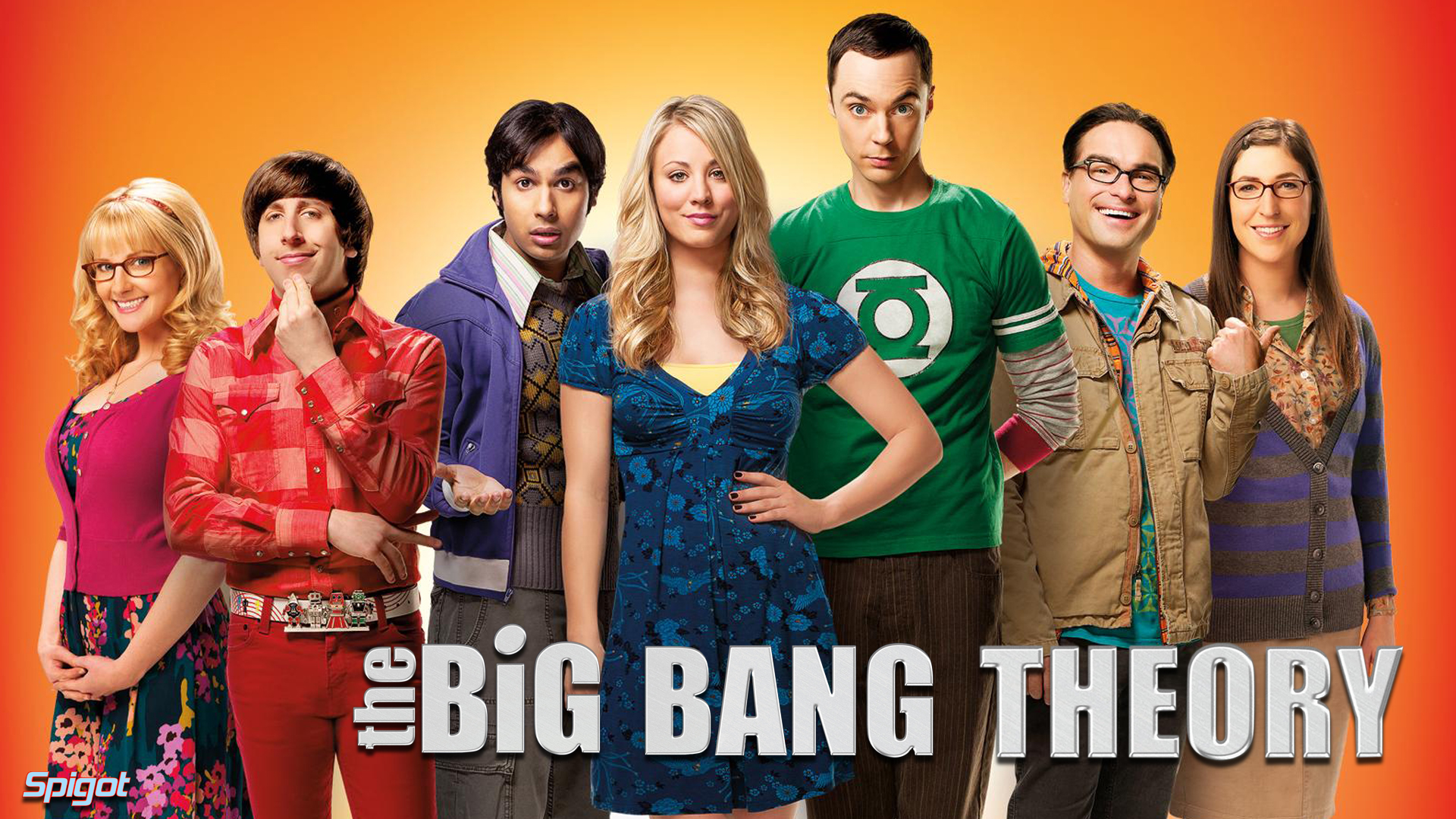
Everything I need know about Allusion I learned from “The Big Bang Theory”

bigbangtheory

Graphic from wall.alphacoders.com

Allusion is when a reference to something–a person, place, thing, or work of literature–is mentioned in a story. The idea is that people get what the reference means and the connection brings a deeper meaning to the reader’s experience. As an English teacher, I already knew about allusions and how they worked, but it wasn’t until I started watching The Big Bang Theory that I learned how to use them in a piece of writing to help develop rich settings and characters.

[Tweet “It wasn’t until I started watching @BigBang_CBS that I learned how to use allusions in writing.”]

Let me explain. For those who have never seen it, The Big Bang Theory follows the lives of four stereotypically nerdy scientists as they struggle on the outskirts of popularity. They eat, sleep, breathe, and live sci-fi, sometimes literally (remember Sheldon’s Gorn-infested sleep or the group’s misadventures as a Star Trek Next Gen landing party?). Their lives are programmed around television schedules, comic-cons, new sci-fi movies, and trips to the comic book store. But what makes this show especially enjoyable for me are the endless references–some of them quite obscure–to current popular culture. As a devout Trekker and sci-fi enthusiast, I identify with the boys and their never-ending struggle to fit in.

[Tweet “Read about my ‘The Big Bang Theory of Allusion’ as a way to make characters seem real. #WritingTip”]

I’ve adopted what I’ve dubbed “The Big Bang Theory of Allusion” in The Revenant (and my current work in progress tentatively called I Was, Am, Will Be Alice). The theory tells us that, because as writers we want our characters to seem as real as possible, we should make them consumers of current and real popular culture. This is not a new idea. Shakespeare did it, referring to bible passages or ancient Greek and Roman mythology (keep in mind he had 500 years less of popular culture to draw on). In To Kill A Mockingbird, Harper Lee draws on civil war knowledge, politics, and what we now think of as classical literature, but which would have been popular and current at the time, such as Ivanhoe, Dracula, and Tom Swift. Many of the references to movie stars such as Mae West, alluded to in Tennesee Williams’ A Streetcar Named Desire may be lost on today’s readers, but at the time of its release, these references would have brought a deeper meaning to the story for its audience.

The main allusions in The Revenant are about superheroesSuperman, Batman and Spiderman–but there are also references to characters in the sci-fi canon. Zulu, the male protagonist, imagines himself Khan Noonian Singh on the deck of the S.S. Botany Bay fighting his nemesis Kirk, as well as Hook on the deck of the Jolly Roger seeking out his nemesis, the crocodile that bit off his hand. Kat, the female protagonist, imagines herself as Buffy of vampire slayer fame and Zulu as her Angel. Zulu prefers to think of himself as more of the Spike type. Going after bad guys like he does, Zulu draws parallels between himself and Jeff Lindsay’s Dexter, the vigilante who satisfies his need to kill on people who have circumvented the law. There are also references to Hiro Nakamura of Heroes comic book and television show fame. Fans of these shows will recognize the allusions and understand the thoughts of the characters making the comparisons; others might recognize the references as allusions but miss some of the meaning, and that’s okay. We don’t need to know anything about The Gray Ghost Dill offers to swap with Jem if he touches Boo’s house in Mockingbird other than that he’s staking a treasured book on the bet.

[Tweet “Does using too many allusions date your work? That depends on syndication and DVDs. #WritingTip”]

The concern with over-use of allusions is that it may date a piece of literature. How many people will remember shows like The Big Bang Theory or Dexter or Buffy the Vampire Slayer ten years from now? How many in twenty? Given the examples in this essay, quite a few, I’d say. Classic Trek was cancelled in 1969, yet the legacy of that show is still going strong. Shows like Buffy, Heroes and Dexter are still sold in DVD/BluRay collections and available for streaming online anywhere from two to ten years and more after cancellation. Given that The Big Bang Theory is now in syndication, chances are it will continue to be broadcast to tickle the funny bones of future generations with its allusions, keeping anything it references in mainstream popular culture, for years to come.

I hope you’ve enjoyed this post on The Revenant Blog Tour. For past and future posts, see my Blog Tour Itinerary.

blog-tour-graphic

The “Meet My Main Character Blog Tour” Gone Rogue

blog-tour-graphic

The “Meet My Main Character Blog Tour” is a real thing. While I admit I was not tagged in the tour, I’m crashing the party. I discovered the tour on Eden Baylee’s Website, so I’ll pretend she tagged me in the tour.

To participate I have to answer seven questions about a main character from one of my novels, then I nominate five other authors to answer the same questions. Instead, I’m tagging all Black Rose authors to participate. Post the link to your blog tour post here or on Facebook so we can introduce each other to our main characters.

[Tweet “Zulu the Revenant revealed in the Meet My Main Character Blog Tour #YA #paranormal #book.”]

Here’s a link to Eden’s blog where I found the idea for doing this. Eden is currently promoting her novel, Stranger at Sunset on her site, a mystery/thriller from a number of viewpoints.

1. Tell us a little about this main character. Is he fictional or a historic person?

Zulu the Revenant, aka Janke Dappleford, is the fictional protagonist of my YA paranormal novel, The Revenant.

2. When and where is the story set?

The story takes place mostly in Toronto, Ontario, Canada in the present with flashbacks to the late 1800s in order to explain the origin stories of characters Zulu, Morgan the Seer and his brother, Malchus the Necromancer.

3. What should we know about him?

Zulu is a hopeless romantic who was killed when thrown from his horse on his way to elope with his girlfriend, Alma. He was buried and resurrected the next day, doomed to live forever as a revenant. He was trained in combat by Morgan the Seer so Zulu could use his powers–speed, strength and hearing–to help the people in Morgan’s premonitions.

4. What is the main conflict? What messes up his life?

Malchus, Morgan’s brother, manages to come back from the dead when a group of kids opens a portal with a Ouija board. Malchus believes Morgan responsible for his death and is out to seek revenge. Though still alive, Morgan has aged considerably over the past century and is no match for Malchus, currently in possession of a teenage body. Zulu intervenes to save  the Seer who has become a sort of father figure to him.

5. What is his personal goal?

His goal is to eliminate Malchus and emerge unscathed. Zulu and Morgan join forces with Kat the Empath and Father Paul along the way. The four of them form a sort of “Scooby Gang” out to slay Malchus and his zombie minions, while keeping themselves intact.

6. What are the titles of your novels, and where can we read more about them?

The Revenant is my latest novel. I have three other novels currently published, all of them featuring archaeologist Molly McBride and her husband Palmer Richardson, calledPhase ShiftThe Mummy Wore Combat Boots and Throwaway Child. Read more about my books at eliseabram.com/book-table.

7. When can we expect your next book to be published?

I hope to have my fifth novel, ready for publication by the end of 2014. I Was, Am, Will Be Alice is a YA science fiction novel involving time travel. I started out writing a YA version ofThe Time Traveler’s Wife after getting the idea from an agent posting on the Writer’s Digest website. As I wrote, I began to incorporate ideas from Alice in Wonderland as well. Here’s the logline for the novel: after narrowly escaping death in a school shooting, 9 year old Alice Carroll realizes she can time travel when under extreme stress, a situation she is determined to learn to control in order to go back to that day and save the lives of her teacher and classmates and discover the identity of the woman who sacrificed her life so Alice could live.


Walter White as a Tragic Hero

I realize I’m coming late to the game with my analysis of Breaking Bad, but I just finished season five this weekend. Somewhere in the middle of the last season I realized that the series played out like a tragedy with Walter White as the typical tragic hero, and I needed to write about it.

A tragedy, in the Ancient Greek tradition, includes the following traits:

  1. The hero meets his downfall through a combination of his pride, “fate, and the will of the gods“.
  2. The hero eventually encounters some limits as a result of his quest to attain his goals, usually due to “human frailty  (flaws in reason, hubris, society)“.
  3. The hero must undergo a change in fortune or revelation or recognition (anagnorisis) at the end.

So let’s examine how Breaking Bad adheres to these rules (Warning: spoilers abound from this point on):

The hero meets his downfall through a combination of his pride, fate, and the will of the gods

At the beginning of the series, Walter White is a meek, science geek schoolteacher, well-liked by the people around him.

Walt’s pride rears its ugly head when he begins cooking the purest form of crystal meth the market has ever seen, something in which he takes pride.

The second thing that sends Walt on his downwards spiral is the discovery of his lung cancer (the will of the gods). This prompts him to continue cooking in order to earn enough money to keep his family safe upon his death.

It is only a matter of time before his DEA brother-in-law, Hank, catches up to him (fate). Walt’s only human, and though he does a good job of covering his tracks, making it hard for the DEA to track down the elusive Heisenberg, and for Hank to draw the connection between Heisenberg and his brother-in-law, he eventually slips up due to human frailty where Jessie is concerned, arranging for him to start over rather than killing him when he has the chance.

The hero eventually encounters some limits as a result of his quest to attain his goals, usually due to human frailty

Walt is nothing if not frail. He manages to beat his cancer only for it to return in the final season. Knowing it will get the better of him, Walt figures he has nothing to lose. Consequently, this is also when he is at his most bold (hubris). Love is the most powerful human frailty contributing to Walt’s downfall.

Family is a powerful motivator for Hank (flaw in reason). His main imperative is to keep his wife and children safe. When Jessie begins to break down and Walt realizes he has become his Achilles’ heel, Walt orders his murder. Because he considers Jessie family, he insists it be quick and painless. In the end, his desire to make things right with Jessie is what leads to his death. When Todd and his uncle’s gang of thugs hold Hank at gunpoint, Walt insists Hank is family and should be allowed to live.

In the end, it is only when Walt’s family renounces him they are truly safe. Walt stages a phone call convincing the police (limit from society) wife Skyler was coerced into participating in his drug empire, forcing her to keep her distance. His son wishes him dead. His sister-in-law tells him to kill himself. His brother-in-law is dead as a result of his doings. He assumes pseudo-son Jessie is also dead, having ordered the hit himself.

It is at this point Walt experiences anagnorisis.

 The hero must undergo a change in fortune or revelation or recognition (anagnorisis) at the end

Walt experiences a host of ups and downs throughout the series, always managing to escape his situation and come out on top through sheer dumb luck. He reasons away every death by his hands as necessary for his survival, but at some point that changes. I believe the turning point is Gus Fring’s death. Though one could successfully argue Fring’s death is necessary, the same could not be said for Mike Ehrmantraut’s. Walt kills Mike in a fit of rage, not because he poses a threat, but because Walt wants him dead.

Walt’s change in fortune is simultaneous with the return of his cancer. The DEA becomes aware of his connection with Heisenberg at around the same time. I have to admit, though I never really liked Walt as a protagonist, I began to hate him from this point forward.

It’s not until he’s hiding out and tries to find a way to get his remaining money to his family that he begins to redeem himself. Walt begins to experience recognition with Hank’s death, but it’s not until he speaks with Skyler and admits he stayed in the business because he liked it that his redemption begins. Anagnorisis occurs when he sacrifices himself for Jessie and he accepts his death in the last seconds of the final episode.

What do you think? Is can Breaking Bad be best described as a tragedy? Is Walter White a tragic hero? Weigh in with your comments below.

[Tweet “@BreakingBad_AMC as a #Greek #tragedy. #review #tv #BreakingBad”]

Abraham the Vampire Slayer? Review of “Abe Lincoln: Vampire Hunter”

Image from ia.media-imdb.com/images/M/MV5BNjY2Mzc0MDA4NV5BMl5BanBnXkFtZTcwOTg5OTcxNw@@._V1_SX214_AL_.jpg

Image from ia.media-imdb.com/images/M/MV5BNjY2Mzc0MDA4NV5BMl5BanBnXkFtZTcwOTg5OTcxNw@@._V1_SX214_AL_.jpg

I had the opportunity to catch Abraham Lincoln: Vampire Hunter on Space last night and I was surprisingly impressed. What I thought was going to be a campy movie turned out to be entertaining with amazing CGI.

In case you haven’t seen it, Abraham Lincoln: Vampire Hunter hypothesizes that former President of The United States, Abraham Lincoln, was a trained vampire hunter. After he witnesses his mother being killed by vampire, Jack Barts,  young Abe is trained by Henry to wield his silver-tipped axe to kill vampires. Abe wants to use his training to exact revenge on Barts, but he makes a vow to Henry only to kill those Henry chooses. After learning that the King of Vampires, the aptly named Adam, plans to take over the U.S., Abe take him on.

Like all paranormal hunter/slayers, Abe has his own “Scooby Gang”, composed of “Watcher” Henry, friends Will Johnson, Joshua Speed and wife, Mary Todd. I liked the dynamic between members of the gang, but would have liked to see Mary slay a few vamps of her own, no matter how out of character for the time. I also liked the revisionist history in the movie that draws a parallel between the fight for emancipation from slavery and the fight for the emancipation of the U.S. from becoming a country enslaved by vampires.

Benjamin Walker plays the part of Abe Lincoln well, and looks strong and sexy twisting his axe like a baton as he slices through attacking vampires. I was glad to see Rufus Sewell again, a favourite of mine since Eleventh Hour and Pillars of the Earth, who plays the evil Adam with great aplomb. Deserving equal billing with the actors are the CGI effects. There is an impressive scene in which Abe chases Barts on the backs of a stampede of wild horses. Equally impressive is the climactic scene on top of a speeding train and the final showdown on the burning bridge.

Though the title sounds like it promises to be a groaner, Abraham Lincoln: Vampire Hunter is a movie worth watching.

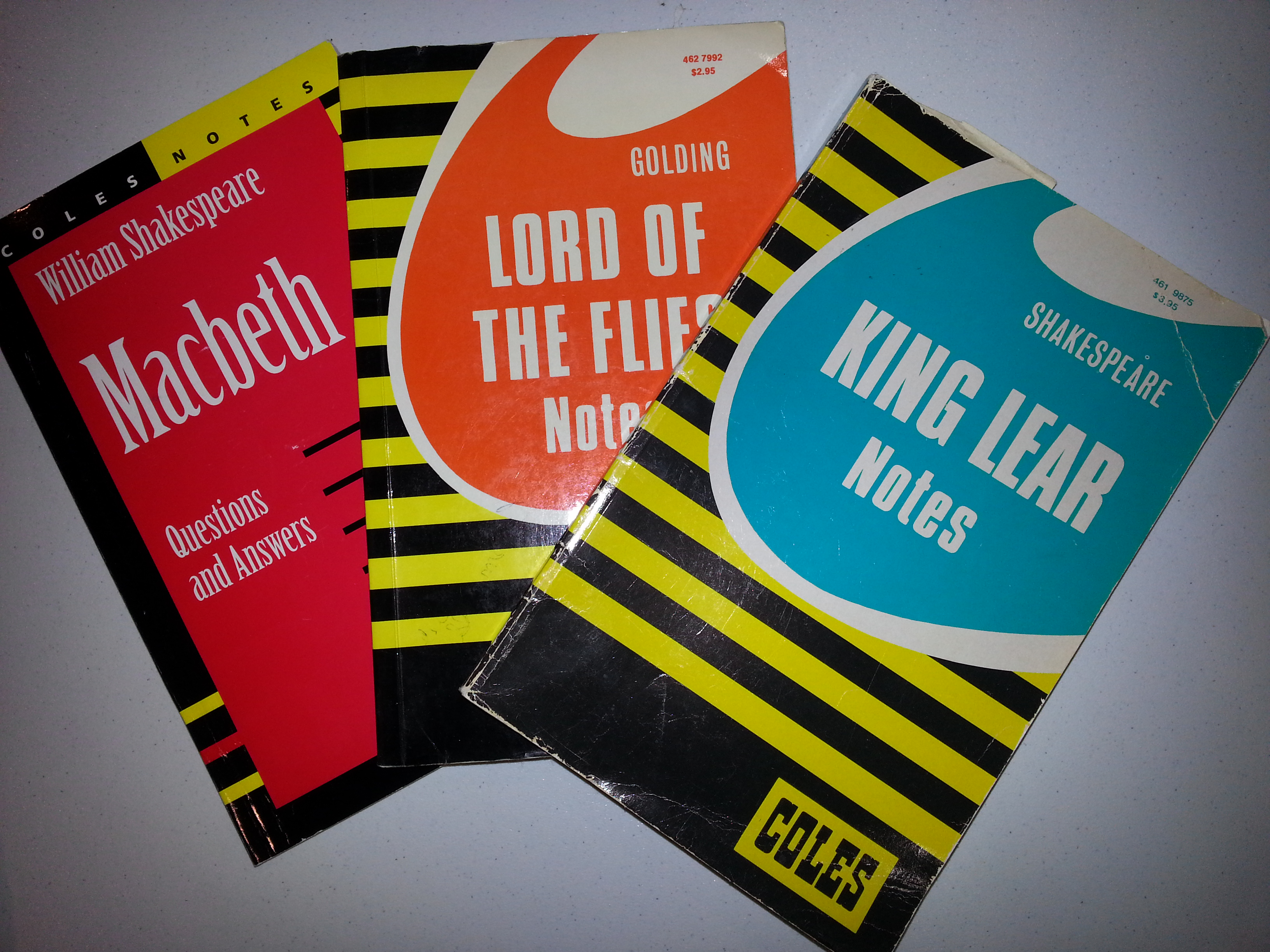
Throwback Thursday: What are Coles Notes?

coles-notes

There’s a scene in The Revenant where Father Paul discusses a case with Toronto’s coroner. So far, two bodies have been brought into the morgue in a state of decomposition indicating they’d died more than a week ago. In both cases, there are witnesses claiming they were alive only minutes or hours ago.  The discussion goes something like this:

“What’s this?” Paul asked.
“Autopsy file,” the coroner said.
“They didn’t teach Science at the Seminary. How’s about you give me the Coles Notes’ version?”

Coles Notes are the printed version of web sites like Spark Notes or Grade Saver. In the days before the Internet, we bought Coles Notes in Canada and Cliffs Notes in the U.S., on everything from literature to writing resumes. The author for the books is “The Coles Editorial Board” which was rumoured to be university students. Like the web pages of today that serve the same function, they were not infallible. While studying Richard III before teaching it, I found a discrepancy between their interpretation and mine, and no matter how hard I tried, I could not see how their interpretation was valid.

Though there are no Coles Notes for The Revenant, a study guide is available upon request, which would make an excellent tool for a teacher, student, or book club wishing to study the novel. Let me know if you’d like your PDF study guide by leaving me a note in the comments below or emailing me at info @ eliseabram . com.

Kick Off Party for THE REVENANT Blog Tour!


going on tour

A number of really amazing bloggers and reviewers have opened up their blog sites so I can take The Revenant on tour this month. Check my itinerary page for stops and updates.

Remember, The Revenant is now available for purchase in hard copy on the Black Rose Writing (BRW)page, at Amazon and Barnes and Noble, both in paperback and as an eBook.

Once more, thanks to Reagan Rothe at BRW for helping to make my dream of being published a reality. Also thank you (again) to Dave King, Design Lead at BRW for his amazing cover design and endless patience through the revision process.

Even though we’re taught not to judge a book by its cover, most readers will tell you cover art is key. I’ve had my front cover posted on my page for The Revenant for about a week now, but here is the complete cover:

Click to enlarge

Click to enlarge

Thank you to Dave King for his work on the cover art.

On with the festivities…

giveaway

Use the form on my itinerary page to enter into a Rafflecopter draw for a chance to win one (1) of three (3) eCopies of The Revenant. The giveaway will run for the entire month of August. All you have to do for your chance to win is follow me on Twitter via the Rafflecopter form.

Also available as a giveaway, PDFs of The Revenant  study guide. Please request these via email at info @ eliseabram . com


fan page party wednesdayJoin me on Facebook for a Fan Party meet and greet every Wednesday in the month of August. Like people’s pages and get your page(s) liked as well.

throwback thursdayI’m considerably older than your sterotypical YA reader. My  mind might work a bit differently than them, too. On Thursdays I’ll be writing about how that particular challenge has effected me as an author.


new follow back friday

Join the party-hop as we move from Facebook to Twitter. I pledge to follow back everyone who follows me on Twitter on every Friday in the month of August @eliseabram


Announcing the completion of “I Was, Am, Will Be Alice”!

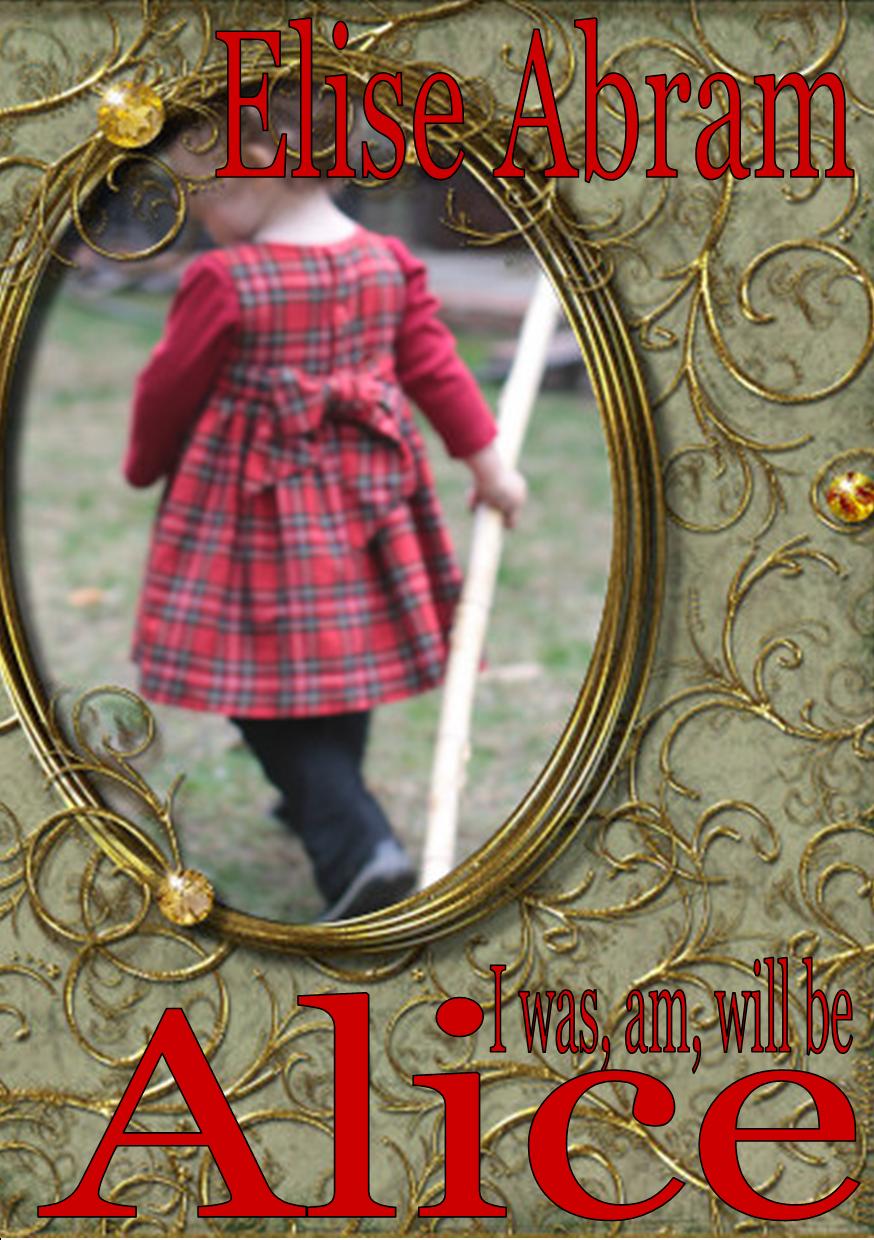
Graphic by Parker Knight, "Family 1353" under Creative Commons

Graphic by Parker Knight, “Family 1353” under Creative Commons

Announcing…

Hot on the heels of The Revenant‘s release I am thrilled to announce the completion of my next YA novel, I Was, Am Will Be Alice.

After narrowly escaping death in a school shooting, 8 year old Alice Carroll realizes she can time travel when under extreme stress, a situation she is determined to learn to control in order to go back to that day and save the lives of her teacher and classmates and discover the identity of the woman who sacrificed her life so Alice could live.

My Inspiration

I began writing Alice when, while shopping for agents and publishers for The Revenant, I found a call for clients for a new agent on Chuck Sambuchino’s excellent “Writer’s Digest” blog. This particular agent said she would love to read a young adult version of Audrey Niffenegger’s The Time Traveler’s Wife (TTW). I absolutely love TTW, and adopted her request as a personal challenge. I began with a similar premise: what if someone, a young girl, discovered she had the ability to time travel? In Niffenegger’s novel, the main character, Henry, keeps returning to his first episode of time travel, when he was in a car accident with his mother. Henry survived because he time traveled out of the car avoiding the crash which killed his mother. In my novel, Alice’s defining moment is being caught in a school shooting in grade three in which her favourite teacher killed. There is a romance and an episode with frostbite, too, but that’s where the similarities end.

The name Alice Carroll comes from Lewis Carroll’s Alice in Wonderland and Through the Looking Glass. I appropriated that name for my character early in the writing because the more I wrote, the weirder the character’s predicament until it was almost like she’d entered a bizarre world where nothing made sense to her any more. Why did she survive when others perished? Why did she time travel? What kind of future could she possibly make for herself? Would she ever learn to control it? Why did the shooting happen? Could she find a way to save her teacher? These questions, and more, confuse my Alice, much like Wonderland confused Carroll’s. To drive the parallel home, I borrowed other names from Wonderland to draw further connections.

Though a mouthful, the title for the book comes from something Henry says in TTW:

I love. I have loved. I will love.

I liked the juxtaposition of the different tenses and adapted this for my novel. Late in the writing I decided to use the title, I Was, Am, Will Be Alice, as subtitles and divide the book into sections. I Was Alice describes Alice of the past, when she discovers she can time travel and is traumatized by it. I Am Alice describes Alice of the present, when she realizes she can’t continue randomly traveling through time for the rest of her life and she decides to do something about it. I Will Be Alice describes Alice of the future, after her life comes full circle and she returns back to the day of the shooting and learns answers to some of the questions that have plagued her for most of her life.

Looking for Support

I am reaching out to the reading and writing community to look for “beta readers” and help printing and publicizing my YA sci-fi time-travel romance novel when the time comes.

If you would like to volunteer as a beta reader–finding errors in spelling, grammar, punctuation and consistency in story and possibly writing a review further into the process–please contact me at info @ eliseabram.com

[Tweet “Attention beta readers and reviewers – request your copy of I AM, WAS, WILL BE ALICE info@eliseabram.com”]

If you would like to donate to support my project, you may do so by visiting my PubSlush page at eliseabram.pubslush.com. I am giving away an eBook to all $20 donors and a hard copy, autographed, to all $50 donors (please note an additional $10 is required for international shipping outside of Canada). If you donate over $75, I will also throw in a free study guide in full colour, available as a PDF and/or printed copy sent along with your novel.

[Tweet “Support the arts – help me publish and publicise I AM, WAS, WILL BE ALICE eliseabram.pubslush.com”]

All donors will receive a mention in the acknowledgements section of the final, printed novel (eBook and hard copy).

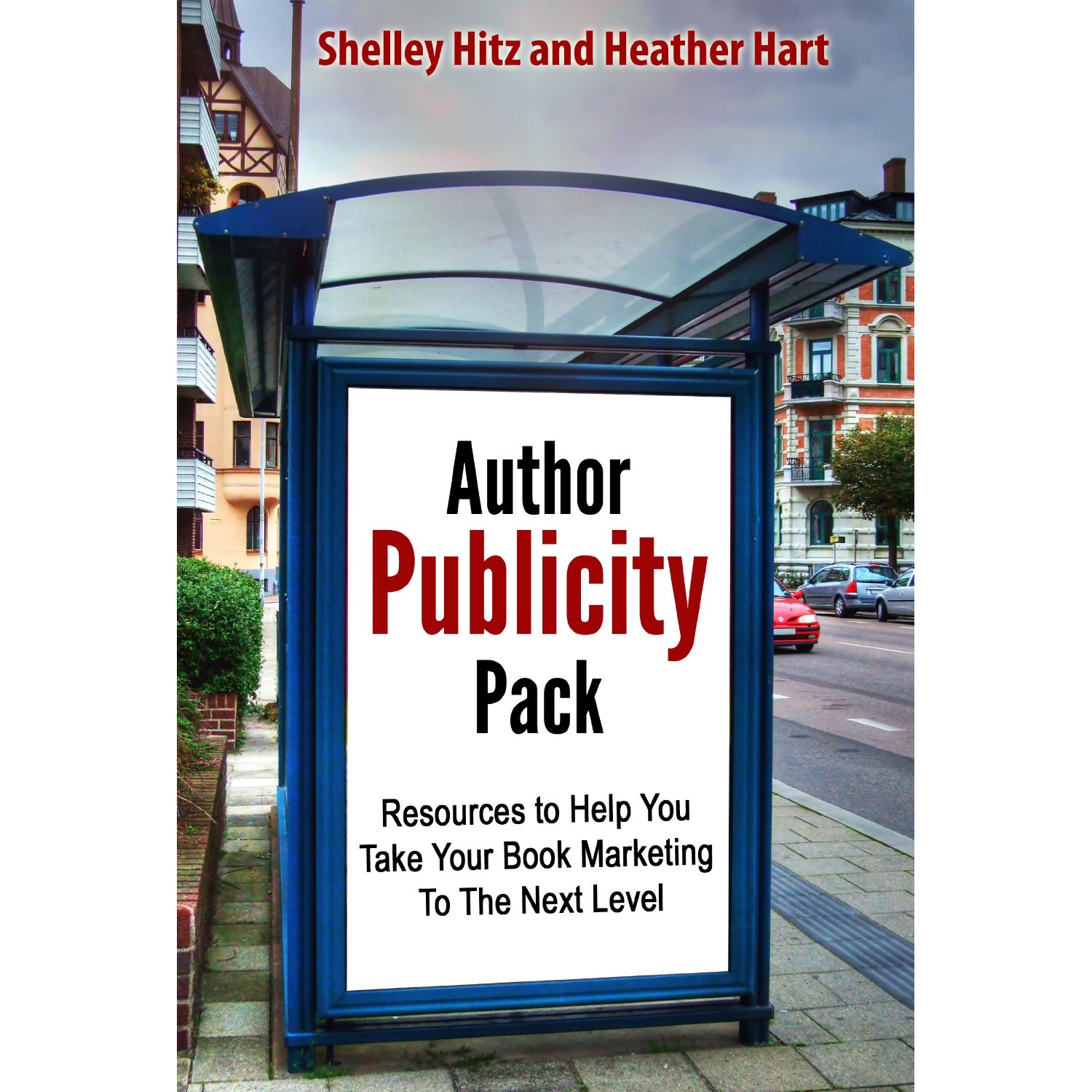
Author Publicity Pack is a Must Have Companion for Authors

author-publicity-pack-cover

Author Publicity Pack by Shelley Hitz and Heather Hart is an excellent resource for self- and indie-published authors to help find their way in the maze of online publicity resources. Though I’ve been at the online book publicity game for about six months now and have taken online and face-to-face courses and read incessantly on the topic, I still learned from Hitz and Hart’s book.

Rather than a how-to, Author Publicity Pack is more of a collection of sources for authors to investigate in their quest to market their books online. The writing is easy to understand and detailed and the websites listed amount to a goldmine of ideas when taken collectively.

Though it is in need of a minor clean-up by the authors (quite a few of the sites listed are no longer active), Author Publicity Pack is a valuable resource for authors, whether just starting out, or mucking through the mire that is online marketing for some time now.

Note: I was gifted a free copy of this book in exchange for an honest review.