Author Archives: Admin

English is a Funny Language

As I write this post, I am going back and editing my recently published novel, I Was, Am, Will Be Alice, via Grammarly. I do this as a result of a review that claimed I had quite a few errors in my book, which I took as a personal affront, as I freelance as an editor. Grammarly tagged quite a few “errors” that really aren’t errors in the true sense of poor grammar and/or typographical errors (although, admittedly, there were a few, but I could count these on my fingers and still have a few left over). I’ve decided to write this and other posts to set the record straight with respect to grammar, punctuation, and spelling.

Here’s some of what I’ve learned:

OR vs. OUR

Both Canadians and Brits spell words like colour, neighbour, and favour (and a whole host of other words with similar endings) with an extra “u”, probably as a result of our French roots.

L vs. LL

Many words ending in “l” double the letter before adding the ending. Travelling is one of these words (as opposed to “traveling” in American English). There are exceptions to this rule, and “instalment” is one of them, spelled with a single “l” in Canadian but a double “l” (installment) in American. Weird.

The elusive E

It is perfectly acceptable to add an extra “E” in words such as “acknowledgement” and “judgement” in Canadian English (“acknowledgment” and “judgment” in American English respectively). Interestingly enough, the word “jewellery” is the proper, Canadian/British spelling of the American “jewelry”, contrary to what one of my reviewers criticized.

In Canadian English, “insure” tends to refer to issuing and insurance policy, whereas “ensure” means to make sure. Though some sites, like Writer’s Digest,  insist there is a difference, other sites, like The Oxford English Dictionary, say that while the primary meaning for “insure” is the insurance connection, it is sometimes used in American English to mean “to make sure”. It is for this reason that my American clients insist using “insure” throughout.

C vs. S

Many American spellings favour “se” rather than “ce”. Examples of this include “licence” (Canadian) vs. “license” (American); “offence” (Canadian) vs. “offense” (American) ; and “defence” (Candian) vs. “defense” (American).

Commas Inside or Outside of Quotation Marks?

While we’re on the subject of Canadian vs. American, it’s important to note that in American English, the commas and periods go on the inside of quotation marks, while in Canadian and British English, they go on the outside. Note that this does not apply to dialogue. For example,

American: Canadian spellings are frequently tagged by American reviewers as “errors.”

Canadian: Canadian spellings are frequently tagged by American reviewers as “errors”.

Which Came First: The Chicken or the Egg?

“Dialogue”, as it is spelled above, is correct in Canada, with Americans preferring “dialog”. Some websites say that “dialogue” is to be used for conversation and “dialog” for a pop-up box to communicate with a computer. I also read that “dialogue” is gradually being replaced, primarily in America, for the shorter, “dialog”. I have to wonder if the reason the shorter spelling is used for the computer is because dialog boxes originate in the States, and therefore, the American spelling is used. Definitely a chicken or egg scenario.

Interestingly enough, Canadian English distinguishes between “blonde” for a woman with blonde hair, and “blond” for a man. This is largely due to ties with the French, as this is the rule in French grammar. While some sites say that “blond” is common for both men and women, others say “blond” is always used though it is still acceptable to use “blonde” for a woman in Canadian English. I would argue that this is not the case in Canada and that one should always use “blonde” for women, but with such a loosey-gooesy rule, one can hardly call this an error, unless you use “blonde” to refer to a male.

In Conclusion…

Keep in mind that I come at this from a uniquely Canadian perspective. Many of the “errors” Grammarly marked in my manuscript were simply the difference between American and Canadian spellings, and these should not be considered errors. As most of my clients are American, I’ve learned a few things regarding the differences between Canadian, British, and American English, and I’ve learned that one rule does not fit all, and just when you think you have it, there’s an exception to the rule, and you’ve broken it! Much of what I know about spelling American, is recently learned, as to me, spelling Canadian is the norm (and I’d like to think I’m quite good at it, having won more than a few spelling bees in my youth). An American can no more call the Candian and/or British spelling of a word an error, any more than a Canadian or a Brit can call the American spelling an error.–if you’re going to read, and/or review indie books, you simply

The bottom line is, if you’re going to read, and/or review indie books, you simply must be aware of the differences. Hopefully, my posts will help.

Paleo Mug Muffins – Bonus Recipe!

paleo-mug-muffins-coverIntroducing Paleo, Gluten Free, and Low Carb Mug Muffins: A Baker’s Dozen of One Minute Muffins

Sweet tooth got your tongue?

It’s happened to all of us–we want to eat healthier, but then we’re sabotaged by cravings for sugar, salty, carb-laden snacks. Rather than reach for a chocolate bar or bag of chips the next time the carb craving hits, reach for a mug muffin instead. Paleo, Gluten Free, and Low Carb Mug Muffins are a healthy-ish alternative, great for breakfast, dessert, or just because.

Paleo, Gluten Free, and Low Carb Mug Muffins will show you how to make a baker’s dozen of different mug muffins from a single base recipe. Choose from Black Forest Cherry, Blueberry Crumble, Carrot Cake, Red Velvet, and Apple Fritter…and we’re just getting started! In addition to recipes, you will learn about the health benefits of the basic building block ingredients, such as the flours, sweeteners, and fiber options used to make the best mug muffins you’ve ever tasted!

Introducing: Snickerdoodle!

This summer, I vowed to get back on track with my diet by KOing popcorn and chocolate. The only thing that kept me going were my mug muffins. Turns out, a little bit of sweetness in the morning was enough to curb my sweet tooth and/or chocolate craving. Before I knew it, the cravings were gone!

Paleo, Gluten Free, and Low Carb Mug Muffins: A Baker’s Dozen of One Minute Muffins was the result of my summer experimentation–a girl can only eat so many double-chocolate and chocolate chip muffins before she gets bored. I decided to document it as I experimented with flavours and the result is my recipe book.

Publishing the book isn’t the end of it, though. I’m still experimenting. One hot flavour nowadays is snickerdoodle. The more recipes I saw for snickerdoodle-flavoured things, the more curious I was to see what the hype was all about, and so I created a Snickerdoodle One Minute Muffin variation for my basic recipe. To find out the basic recipe, you’ll have to buy the book, which is available here, from my book page.

alien-1295486For the uninitiated who might be asking exactly what a snickerdoodle is, it’s not the name you might give to the drawing of a Snickers bar, nor is it some kind of crazy alien like the guy on the right. It’s a caramel-flavoured, nuttiness that can be infused into any cake, cookie, candy, or in this case, a paleo, gluten free, and low carb mug muffin.

Here’s how:

To the basic recipe, omit:

  • maple syrup

Add:

  • 1 tsp of your favourite nut butter
  • 1 tsp coconut sugar
  • pinch of cinnamon
  • handful of butterscotch or peanut butter chips

Now, I know that butterscotch and/or peanut butter chips are neither healthy, nor are they paleo. I am also aware that peanuts, aka legumes, are not paleo, and purists can omit this ingredient if they choose. However, if you don’t mind the odd “cheat” they make the caramel flavour really pop.

Mix and bake recipe according to instructions in the book.

For the basic paleo, gluten free, and low carb mug muffin recipe along with more than 13 variations on the recipe, buy Paleo, Gluten Free, and Low Carb Mug Muffins: A Baker’s Dozen of One Minute Muffins.

The Power of Paying It Forward

network

Never underestimate the power of paying it forward.

When I launched my book two years ago, I had a small network of authors. I could count on a single hand how many connections I had with fingers still left over. When I planned my first blog tour, I was touched by the number of people who agreed to post materials for me, totally free of charge, and I was inspired to do the same.

Most authors already have their own blogs. If you don’t have one, I urge you to go out and get one (I have three–they’re great!). I purchased my own domain name, and pay a web server provider yearly to house my email and WordPress account. If you can’t afford to do that, you can still begin a blog, totally for free.

Creating  a secondary blog

If you already have a blog, contact your web server provider and ask how you can set up another. My site uses WordPress, and it was really easy to set up another web site, totally free of charge. Keep the site under your author’s domain name strictly for your self-promotion. Keep the second site strictly for promoting other authors.

If you have a blog with a free service, like WordPress.com  or Wix.com, then you can create a second blog at no extra charge.

When someone offers to host your blog tour, offer to do the same for them when the time comes.

How to find stuff to blog about

If you’re worried about how you will ever find enough time to create posts for your promotional blog, simply sign on as hosts for services who promote blog tours. These sites are always looking for blogs to help them out. They often send emails directly to your inbox and you can pick and choose which ones you would like to post. You might even get a free book or two out of it if you sign up to write a review.

Here are a few that I’ve discovered over the years:

Call in a favour

The first thing I did when planning my blog tour was to contact everyone I had hosted on my promotional site a month in advance of the book’s release date, and ask if they’d be willing to host for my new blog tour.

I live in Canada, and there are strict rules for advertising via unsolicited email, and the last thing I wanted to do was to have the CRTC at my back, so I began with the following disclaimer (slightly edited):

Hello.

Firstly, I want to thank each and every one of you for helping me to build Britbear’s Book Reviews into a success. Whether you have contributed by allowing me the opportunity to review your book, or by posting publicity materials, you have helped me to build my network and provide a platform for authors to help sell their books.

Now, I have a favour to ask.

I have my latest release scheduled for this July 12th, and I’d love it if you would be able to help me publicize my books, either by posting a review, or by posting publicity materials for me during the week of its release.

If you are unable to help, no worries. Britbear’s Book  Reviews remains open to each and every one of you as a venue to  help you publicize your future releases. If, however, you are able to help, it would be greatly appreciated.

Once more, a HUGE thank you to each and every one of you!

Elise Abram

This was followed by

alice email

  • a cover image
    • the title of the
      book
  • the logline (one sentence summary)
  • genre list
  • number of pages
  • release date
  • blog tour dates
  • back cover blurb

The email went out to 46 people. Three people volunteered to post materials. Three others volunteered to post reviews (that I know of).

I know some of you will be doing a bit of math now–roughly 13%.

But remember that a week is only 7 days long. One email and 6/7 days are already taken care of.

Now do the math: one email and roughly 86% of my blog tour booked–those are numbers I can get behind!

Best Practice Blog Tour

suitcase_edited-4

I took a course a few years ago at a local university on book promotions, and the instructor swore that the blog tour was the most important publicity tool you will have. When I signed with a publisher for the last book, he was less than convinced about the correlation between running blog tours and successful book launches. Undaunted, I planned and ran my own month long blog tour for the release of my last novel, The Revenant: A YA Paranormal Thriller with Zombies with limited results. As a baseline comparison, I also hired a company to run a week long blog tour the following month, also with limited results.

In this series of posts, I plan to blog about the days leading up to the release and blog tour to help publicize  my new novel, I Was, Am, Will Be Alice. This time through I’ve scheduled my own again, trying to post as much material as I can to as many websites as I can over the course of a week, and compare that to my sales (something I couldn’t do last time as my publisher had control to all of the data).

I plan to be transparent in my posts, sharing with you how I went about the planning and execution of my tour as well as how it effects book sales, with the hope that I can help other authors to do the same.

I would be remiss if I did not share the document that gave me the idea to plan my own blog tour rather than pay someone to do it for me. Before I set out to go it on my own, I read A. Terry’s How to Promote Your Book with a Blog Tour, Volume 2 in Terry’s Book Marketing Survival Guide Series.

I won’t lie–planning a blog tour on your own takes a lot of work. You have to have good organizational and writing skills to do it. In addition, you must be willing to invest your time during the tour, sharing on Twitter, Facebook, Google+, Pinterest, Storify, etc. But in the end, it will all be worth it as it (should) help sell books, but it will also help you to network and make a whole bunch of new contacts to help build your writing community for the next time around.

Kudos for “I Was, Am, Will Be Alice”

alice blue cover

I Was, Am, Will Be Alice is the winner of the A Woman’s Write competition for 2015!

Here’s what Barbara Bamberger Scott of A Woman’s Write had to say about Alice:

Elise, who hails from Canada, has composed an elaborate time-travel fantasy based on Lewis Carroll’s world-famous classic “Alice” books. Her book is entitled I Was, Am, Will Be Alice. Starting with her mysterious role in a school shooting, we follow the heroine as she grows up, seeking the identity of the shooter, traveling back and forth in time to encounter characters reminding us of a modernized conception of Wonderland. Well conceived and cleverly carried through. Congratulations, Elise Abram!

In I Was, Am, Will Be Alice

When Alice Carroll is in grade three she narrowly escapes losing her life in a school shooting. All she remembers is the woman comforting her in the moments before the gunshot, and that one second she was there, the next she wasn’t.

It’s bad enough coming to terms with surviving while others, including her favourite teacher, didn’t, let alone dealing with the fact that she might wink out of existence at any time.

Alice spends the next few years seeing specialists about her Post Traumatic Stress as a result of VD–Voldemort Day–but it’s not until she has a nightmare about The Day That Shall Not Be Mentioned, disappears from her bed, is found by police, and taken home to meet her four-year-old self that she realizes she’s been time travelling.

Alice is unsure if her getting unstuck in time should be considered an ability or a liability, until she disappears right in front of her high school at dismissal time, the busiest time of day. Worried that someone may find out about her problem before long, Alice enlists her best friend (and maybe boyfriend), Pete, to help her try to control her shifting through time with limited success. She’s just about ready to give up when the shooter is caught. Now more than ever, Alice is determined to take control of her time travelling in order to go back to That Day, stop the shooting, and figure out the identity of the stranger who’d shielded Alice’s body with her own.

I Was, Am, Will Be Alice is scheduled for a summer 2016 release.

Complications: Mild-mannered Doctor goes Commando

Complications-1050x592

Jason O’Mara stars in “Complications”.

Thank you so much to Callum at Cultured Vultures for posting!

Complications, Jason O’Mara plays Dr. John Ellison, a mild-mannered ER doctor who goes commando when he witnesses a drive-by shooting in a park. Grieving the loss of his daughter to cancer the year before, he’s on his way to the vet to save a mauled squirrel when he realizes the animal has died. This most recent death brings back the emotions experienced during his daughter’s illness and death. Overwhelmed, Ellison stops the car in front of a park only to witnesses the boy being shot…

To read more, check out my review at the Cultured Vultures site!

I’m a Cultured Vulture!

cvlogo


Revenants are Real!

On 19 June 15, the Ancient Origins website published an article by Mark Miller entitled “Ancient Greeks apparently feared zombies so much they weighed down the dead“.  In his article, Miller says ancient inhabitants of the island of Sicily feared zombies so much they used large boulders to weigh down the bodies of the newly buried dead. This, apparently, was the result of the fear of revenants held by the Ancient Greeks. Miller defines revenants as existing in a state between life and death, in which the undead would be able to “ris[e] from their graves to haunt the living.”

Both Miller and an article published by Richard Gray on Mail Online quote heavily from a Popular Archaeology article which confirms that “necrophobia, or fear of the dead…has been present in Greek culture from the Neolithic period to the present.”   These articles are the result of the excavation of a site in Sicily yielding close to 3,000 bodies. Two of the burials found were covered with heavy amphora fragments and rocks, presumably “to trap [the bodies] in the grave.”

In her article, Carrie L. Sulosky Weaver defines revenants as “reanimated corpses [who] rose from their graves, prowled the streets, and stalked unsuspecting victims, often to exact retribution denied to them in life.” She goes on to explain that  the Ancient Greeks believed that “even those who could not physically leave their tombs posed a threat, because mediums could easily invoke restless spirits and cajole them into committing heinous acts…[N]ecromancy, the purposeful invocation of the dead,” was another of their practices for which there is evidence in the archaeological record.

There are two revenants in The Revenant. Zulu is thrown from his horse on his way to elope with his sweetheart in nineteenth century Toronto. Raised from the dead by a necromancer, he has walked the earth for more than two centuries, searching for his beloved Alma. His lifelong companion has been Morgan, a seer with the gift of longevity. Together, they save the people Morgan sees in his dreams from certain death. Malchus, the other revenant in the story, also seeks closure, but in his relationship with his brother. Raised in spirit form and inhabiting the body of a local teen, Malchus believes his brother, Morgan, is responsible for his death, and he intends to exact retribution. The Revenant is a young adult paranormal thriller with zombies that pits brother against brother in the archetypal battle between good and evil. Will Zulu and Morgan survive, or will Malchus emerge victorious?

Buy The Revenant wherever eBooks are sold.

Glints of Light on Broken Glass: the Art of Showing in Writing

Some of the first things new writers are told is to write what you know, and to show, and not tell. Russian playwright and author Anton Checkhov is credited with having said “Don’t tell me the moon is shining; show me the glint of light on broken glass,” underscoring the latter. Showing can be a powerful tool when used with discretion, but all too often new authors forget to do this, preferring instead to paint their word pictures with broad strokes rather than choose a finer brush.

I’ve often written about how writing is a construct, something artificial made to seem real. Everything authors do, from creating and recreating setting, penning plot, and/or developing character and dialogue is not real. Everything about any given scene is there for a purpose; the trick is to add them subtly so they seem happenstance .

One mistake many new authors make is in how to express the physical appearance of a character. Having the character stand in front of a mirror and take stock, making note of his or her own hair and eye colour, and the shape of his or her jaw, lips, and nose doesn’t work. How many times have you looked in the mirror and taken stock? When I look in the mirror, the bow of my eyebrow is only important to me if it’s time to get a waxing. I notice my eye colour if my clothes make them pop. I may make note of my hair colour, but only if it’s time for a dye job.

Here’s another mistake. When I flip my hair back from my face, I don’t think that my hair is brown with red highlights as I’m doing so. I might be cognizant of the fact that I’m flipping too many times in a day and am due for a cut. I might get frustrated and sweep it back into a ponytail, but I don’t take note of the colour. Your characters shouldn’t either.

When you get into your car to go to work in the morning, do you take time to contemplate that it’s a 2010 slate grey, four-door Toyota Camry?  Isn’t it more likely you might think that it’s a beater, or that it’s nearly half-a-decade old and still looks like new? Might you think it needs a wash? Would you rub at a patch of dirt to make sure it wasn’t a scratch? Be annoyed that the neighbourhood kids wrote “Wash Me!” with their finger on the trunk again?

If I describe the car, my reader will know a lot about the make and model of the car, but little about the driver. If I get into the driver’s head and show what he’s thinking, I’m building character. If my reader drives a middle-age Camry, s/he might find a small point of identification with my character. If I show my character as either taking pride in the car or neglecting it, I’ve given my reader a more precise point of connection.

The next time you show detail, consider narrative viewpoint. If you describe something your character wouldn’t normally see, think or hear, then change tack.  For example, if I smile, I can’t see my white teeth gleam in the sunlight. I might feel my cheeks ache, the cold air I let in when I part my lips might hurt my overly-sensitive teeth, or I can imagine I must look like a grinning idiot (but I can’t know for sure).

Never forget your job as a writer is to construct an immersive version of reality.   Paint your word pictures with fine detail, and texture with character, dialogue and setting, using only the palette colours limited by your narrative point of view.

Have you noticed these errors in the books you’re reading? Maybe you’ve made some of these errors yourself? Share your experiences in the comments below!

Watch “Almost Human” Instead

I don’t see many movies in the theatre anymore, mostly because there hasn’t been much that’s piqued my interest lately. But this week was my husband’s birthday and he wanted to see Chappie. I agreed so long as I could have a large bag of popcorn and a big glass of cherry-vanilla Coke, thinking I’d have Hugh Jackman to console me.

I should have put up more of a fight. Though it features Jackman and Sigourney Weaver, Chappie is B-movie fodder at it’s mediocre-best.

In a future ripped from the pages of an Almost Human script, Chappie proposes that a few years from now the Johannesburg police force will consist totally of robot automatons. Deon Wilson (Dev Patel), the man responsible for inventing them, has finished an AI program for the robots in his spare time. He steals a robot marked for demolition to test his AI program, which is, in turn, stolen by a group of street thugs who name him Chappie, turn him into a gangsta, and convince him to commit crimes.

Jackman plays the villain in the piece, an ex-soldier, jealous that his destructive behemoth of a robot design lost out to Deon’s design for mass production, who manages to shut down the entire robot force with a virus for the sole purpose of killing people by proxy with the machine. His performance, like many of the others in this movie, is one-dimensional and disappointing.

Do not pay to see Chappie in the theatre. Watch the DVD of iRobot followed by the canon of Almost Human on Shomi instead. No amount of movie-style popcorn and Coca-Cola served from one of those fancy-shmancy machines is worth it.

Indie Lights Book Parade


circus_parade__by_alene-d66ao37

“Circus Parade” by Alene. alene.deviantart.comI’m

I’m participating in the First Annual Indie Lights Book Parade!

What is a book parade?

Coordinator of the Indie Lights Book Parade, Cheri Roman, describes it this way:

A book parade is like a regular parade, except with books and blogs rather than with floats and city streets. Each author composes one to three blog posts (guest posts, character interviews, excerpts, short stories; the choices are only as limited as you want them to be.) Then, like floats in a parade, each author “visits” a different blog in the parade route each day of the parade.

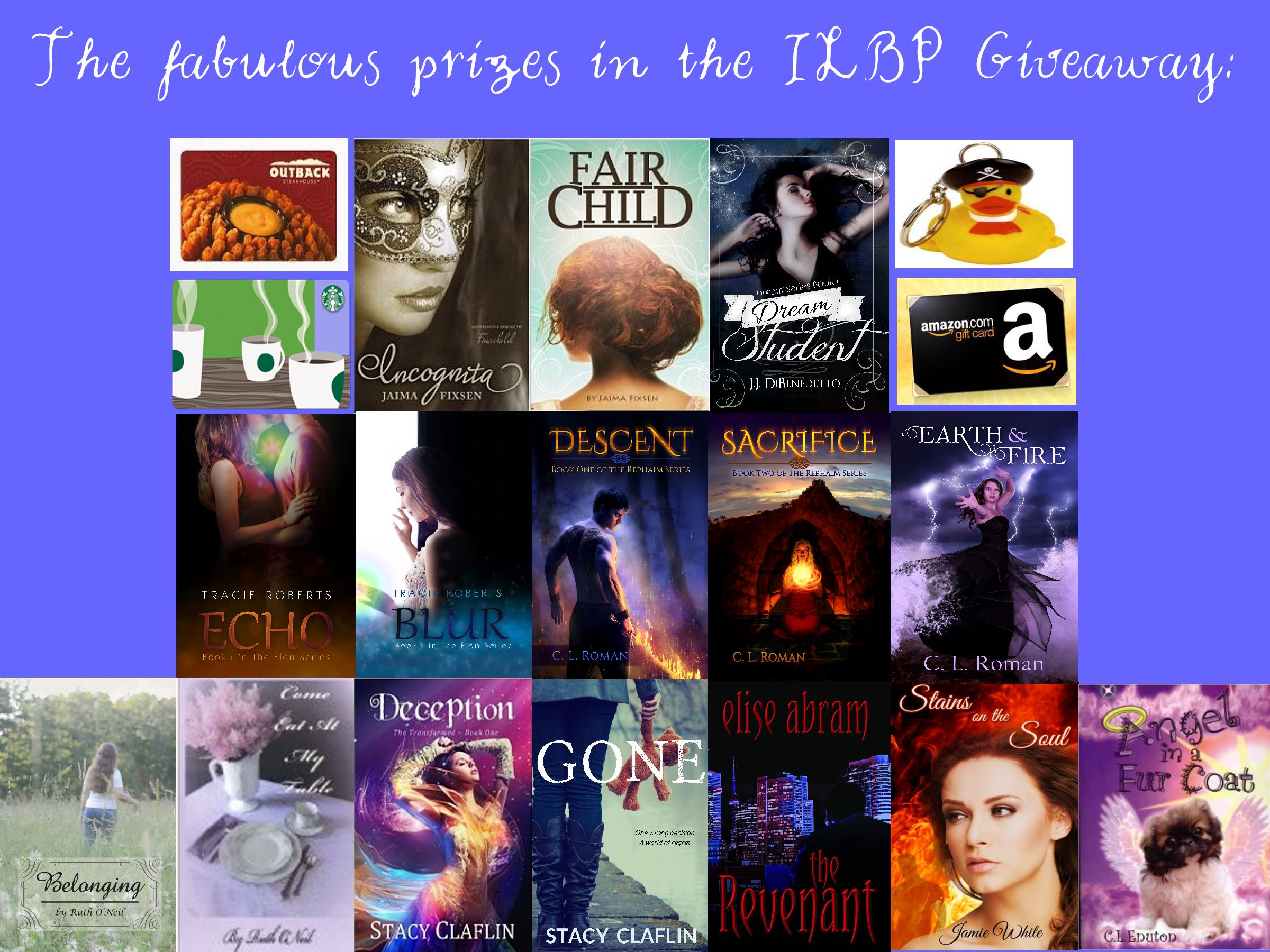
There’s a Rafflecopter giveaway, too!

Thanks to the wonderful parade authors there are fantastic swag baskets for three awesome winners! Prizes include ebooks, gift cards and fun!

Remember, winning is as easy as visiting, clicking or commenting–easy to enter; easy to win!

ILBP prizes-001

To enter the Rafflecopter giveaway, click here!

My parade schedule…

2 Feb 15 – Charmain Z. Brackett‘s website

4 Feb 15 – Real Life is Better Than Fiction

6 Feb 15 – The Brass Rag

9 Feb 15 – Grilled Cheese and Applesauce

10 Feb 15 – Tracie Robert‘s website

13 Feb 15 – Words

16 Feb 15 – Writing Dreams

18 Feb 15 – Stacy Claflin‘s website

20 Feb 15 –Lisa Buie-Collard‘s website

23 Feb 15 – Gooberella

25 Feb 15 – Ancient City Poets

26 Feb 15 – Whyte’s Wyrd World

27 Feb 15 – Leslie C. Halpern‘s website

Here’s who I’m featuring on my sister site, Britbear’s Book Reviews:

2 Feb 15 – Leslie C. Halpern’s guest post: Six Things I Learned From Writing Children’s Books

4 Feb 15 – Jamie White’s guest post: The Dream

9 Feb 15 – Cynthia CL Eunton’s guest post: Using Video Media for Book Promotions

10 Feb 15 – Lisa Buie-Collard’s guest post: Advice to Up-and-coming Writers

11 Feb 15 – Excerpt from Gone by Stacy Claflin

13 Feb 15 – Interview with author James DiBenedetto

16 Feb 15 – Letter from the correspondence of Lady Fairchild by Jaima Fixen

18 Feb 15 – Cover Reveal for Lily of Peru by David C. Edmonds

25 Feb 15 – Cheri Roman’s guest post: The Shoulda/Coulda/Woulda Series of Writing

26 Feb 15 – Interview with author Ruth O’Neil

27 Feb 15 – Charmain Zimmerman Brackett’s guest post: Circus in Their Blood

Join us online  for the Indie Lights Book Parade Facebook Party! See you there!

ilbplogo

 Indie Lights Book Parade