
Author Archives: Admin

This is not 50 FIRST DATES!

This is not 50 FIRST DATES!

Christine spends the first hours of each day reading in her journal and the rest of it recording what happens to her as it happens so she will remember it tomorrow. The victim of a hit and run almost twenty years ago, Christine cannot remember anything from one day to the next. She writes at her doctor’s suggestion, keeping both the journal and her doctor a secret from her husband, Ben. Over time, she learns she has had a book published, lost most of her possessions in a fire she inadvertently set, and lost her nineteen-year-old son in Afghanistan…or has she?

Told mostly through Christine Lucas’ journal entries, Before I Go To Sleep by S.J. Watson is a compelling page-turner. As an amnesiac, Christine awakes every morning unsure of herself. She “remembers” who she and her husband are by the labelled pictures posted around the bathroom mirror. Every morning, after she adjusts to the years she’s lost and her husband goes to work, she takes a call on her cell phone from Dr. Nash, who reminds her of where she’s hidden her journal. She reads it, gets caught up with her life, and then moves forward, frantically recording everything so she can pick up where she left off tomorrow. At times peaceful, at times panicked, Christine’s journal kept me on the edge of my seat, unable to put it down.

In Before I Go To Sleep, everyone, from the main character on down, has secrets to keep. It is these secrets that kept me reading. As we read each new entry in Christine’s journal along with her, both the protagonist and the reader realize things don’t add up. Is Christine a reliable narrator? Is the journal a fabrication, the next fiction she imagines? Is Ben as loving as he seems? What, if anything, is he hiding? Was Christine having an affair or was Ben? Who is Claire and why did she abandon Christine all those years ago? Is Dr. Nash to be trusted? These are questions the reader struggles with as the novel progresses; they are the questions Christine struggles with every moment of every day. While Christine begins each new day with a blank slate, reading the same entries in the same journal, Watson makes a concerted effort to spare the reader from that monotony, often glossing over Christine’s reaction to her age, the accident, the temporary separation from her husband after the accident, and the death of her son, but the parts that are repetitive are forgiven because the rest of the story is so compelling. You will not expect what happens once Christine finally pieces together the puzzle that is her life.

The hardcover version of this novel is 359 pages long; I zoomed through it (in eBook format, mind) in three days. I almost didn’t read it at all. Having been burned too many times buying eBooks sight unseen, it was a huge turnoff that Kobo didn’t offer a preview beyond the table of contents. Luckily, Kindle did, and before the end of it I was hooked. I was also wary because the premise sounded a lot like 50 First Dates. While Adam Sandler and Drew Barrymore played this concept for its comedic worth, Watson’s interpretation is an absolute thriller, one that is worthy of being placed in the genre. I only wish I could find more books as powerful and as wonderfully written as Before I Go To Sleep.

 Graphic from http://www.harpercollins.com/harperimages/isbn/large/8/9781443404068.jpg

About the Author

Elise Abram, English teacher and former archaeologist, has been writing for as long as she can remember, but it wasn’t until she was asked to teach Writer’s Craft in 2001 that she began to write seriously. Her first novel, THE GUARDIAN was partially published as a Twitter novel a few summers back (and may be accessed at @RKLOGYprof). Nearly ten years after its inception Abram decided it was time to stop shopping around with traditional publication houses and publish PHASE SHIFT on her own.

Download PHASE SHIFT for the price of a tweet. Visit http://www.eliseabram.com, click on the button, tweet or Facebook about my novel and download it for FREE!


Orange is the New Black Critique – Memoir and Netflix Series 

Orange is the New Black is the memoir of Piper Kerman, a woman who, at 34, is jailed for a crime she committed ten years earlier. At that time, Piper was in a relationship with Nora, an older woman and drug dealer for an international cartel. Aware of this information, Piper nevertheless agrees to transport money for her girlfriend. When the story takes place, though Piper has a new life, a legitimate job and a fiancée, she must surrender herself to the department of corrections to carry out her sentence.

I found Orange is the New Black, the memoir a day or so after binge-watching Orange is the New Black the Netflix series. Though memoirs aren’t my reading thing, the online reviews were good and the preview was interesting and easy to read, and so I bought it. The memoir turned out to be a quick read, taking me less than a week to complete. Piper’s narrative voice keeps the story moving and the reader turning pages. While I don’t regret reading it, I do regret not reading it before seeing the series.

Memoirs sell for a reason – they help people experience aspects of life they wouldn’t ordinarily get to experience, sleeping with the rich and famous, for example, or living through a long past moment in history. They detail lives out of the ordinary, and are usually didactic or uplifting in nature.  Piper’s story is both. Throughout the story, she gets on her soapbox to tell the reader sad statistics about the number of women who are denied some sort of treatment for ailments while incarcerated, or the proportion of those requesting early release or furlough compared to those who actually get it. Her story is uplifting because she learns to accept the responsibility in her situation and makes peace with Nora and gets out and lives her life, able to put her experience behind her. In the memoir, Piper elevates herself above the rest of the prison population in her narrative, but she is easily able to make friends and fit in, unlike the Piper of the series.

It took me one and a half episodes of Orange is the New Black to decide I wanted to see more. Part of the allure of the series is the way Piper is played as a fish-out-of-water. She wants to fit in, she desperately tries to fit in, but nearly always fails. Though she enters the system thinking she’s different from the other women there, she soon learns she is exactly the same, a point driven home by the last scene of episode 12 of the season. The series is equally horrifying and funny, albeit ironically so. Though Piper tries to mind her own business and quietly serve her sentence, she is dealt random acts of craziness in each episode that she’s forced to deal with, experiencing varying degrees of success. To add to the stress on the inside, she quickly becomes at odds with Larry, her fiancée, on the outside, which impacts the way she reacts to the randomness of events she experiences on a daily basis.

Her rekindling of the relationship she has with Nora on the inside is exaggerated in the series, and characters from the memoir are either similarly exaggerated or made composite for the series (Crazy Eyes, for example, is a composite of 2 or 3 characters alluded to in the memoir). The one thing that attracted me to the series is conspicuously absent from the memoir and that is the way the series gives the backstories of the other prisoners. I found I liked the inmates better when I understood their motivations inside and how, like Piper, they too are fighting to maintain a semblance of normalcy in their lives.

I understand that, while based on a memoir, much of the series is fiction and fictional characters are constructs (see my earlier post) and so the parts that I liked so much are made up to serve that exact purpose. Disregarding the fact that I don’t usually read memoirs, I much preferred the series to the memoir. While the memoir is a good, fast, interesting read, the series fills in the blanks of the story, blanks that, admittedly, Kerman could not know for fact.

Read the memoir first, then go to Netflix to see the fictionalized version. I think you’ll be pleasantly surprised by both. 

Graphic from http://blogs.metrotimes.com/wp-content/uploads/2013/07/orange-is-the-new-black-poster.jpg

About the Author

Elise Abram, English teacher and former archaeologist, has been writing for as long as she can remember, but it wasn’t until she was asked to teach Writer’s Craft in 2001 that she began to write seriously. Her first novel, THE GUARDIAN was partially published as a Twitter novel a few summers back (and may be accessed at @RKLOGYprof). Nearly ten years after its inception Abram decided it was time to stop shopping around with traditional publication houses and publish PHASE SHIFT on her own.

Download PHASE SHIFT for the price of a tweet. Visit http://www.eliseabram.com, click on the button, tweet or Facebook about my novel and download it for FREE!

Rumplestiltskin is a Construct

All literature is a construct. This means it does not depict real life. Everything in literature has a secondary meaning that you, as the reader, are expected to interpret to unlock the author’s hidden message about society, human behaviour, and the human condition. Everything in literature has a significance, a reason for being there.

Take Once Upon A Time’s Rumplestiltskin, for example:

I, Rumplestiltskin am a construct. I am a symbol of how power can corrupt even the most humble of people. As for physical symbols, I have many. I own a pawn shop that holds objects symbolic of the weaknesses of the people in the town. A shawl represents a happier time for me when I had a family and was no more than a coward. I imbued this with magic to help me find my son. I own a dagger with my name on it that is the source and symbol of my power. I embody the theme of good vs. evil. My story is the internal conflict I suffer as I battle my desire to be good and surrounded by people who love me against the thrill using my magic brings. I live in Fairytale Land, a place where the true good is embodied in princesses, princes, fairies, dwarves and true evil is embodied in trolls, evil queens, witches, and giants and magic is real. I take my name from the Rumplestiltskin of fairy tale fame, and my origins are based in that story, but I am so much more than that. I am the trickster. I am the Godfather. I am the everyman, the poor peasant who found himself the most powerful creature in the land and allowed himself to be seduced by it. I have lost my family, and no one really likes me. I am the heartless landlord, the wealthy miser, the lonely curmudgeon, but I also have a human side, one that is lonely, has desires, and wants to belong. I speak in riddles, use certain phrases in my fairytale life that bleed into my every day one. I maintain an accent that hearkens back to my humble roots. I reveal little personal information when I speak as knowledge is power, and in spite of my character flaws, power is what I crave, in spite of myself. Everything about me is a construct, designed to serve a purpose. My legend is vast because my character is diverse (and my actor is so talented) that the authors use me to my potential, writing and re-writing my history whenever they see a reason to further plot, character or theme.

Graphic from http://io9.com/5887438/supercut-every-single-maniacal-laugh-from-once-upon-a-times-rumpelstiltskin

About the Author

Elise Abram, English teacher and former archaeologist, has been writing for as long as she can remember, but it wasn’t until she was asked to teach Writer’s Craft in 2001 that she began to write seriously. Her first novel, THE GUARDIAN was partially published as a Twitter novel a few summers back (and may be accessed at @RKLOGYprof). Nearly ten years after its inception Abram decided it was time to stop shopping around with traditional publication houses and publish PHASE SHIFT on her own.

Download PHASE SHIFT for the price of a tweet. Visit http://www.eliseabram.com, click on the button, tweet or Facebook about my novel and download it for FREE!

Literature is a Construct of Reality

I haven’t written in a while because I’ve been all but consumed with a grade 11 English course I’ve been teaching through eLearning. While teaching, a lot of time was spent on symbolism. Students find it difficult to understand that novels are not real life – they are constructions of real life, which means that everything in everything you read is there for a reason. Case in point are characters.

Characters are not real people. They are given desires, physical characteristics and relationships just like people, but they do not develop as a result of natural elements in combination with the nurturing environments in which they are raised. In my class, we discussed “A Doll’s House” by Henrik Ibsen. In the play, Nora is a typical Victorian trophy wife with a twist – she’s unhappy with looking pretty and doing what’s expected by the men in her life; Nora wants something more. Were many women in Nora’s position unhappy in their lives, want to own their own property, make their own decisions, have the vote? Most definitely. Did many of them leave their husbands and children to try to have their fantasy lives on their own? Probably not. Nora is a construct in that she proves Ibsen’s point that women should want something more for themselves, and that they should make that desire known.

Likewise, Torvald is a construct of the typical Victorian man. He does not verbally abuse Nora with his condescending names, and by treating her like a child as this was the way he was raised to treat women. By law, women were infantilized. Like children are often treated as the property of their parents, women were first the property of their fathers and then of their husbands. Torvald works hard to keep Nora in the lifestyle to which she is accustomed. He gives her money when she asks though he teases her about it and asks her not to eat macaroons because they didn’t have the dentistry to repair rotten teeth we do today and it would have been expensive and ugly. When Nora comes clean about Krogstad, he reacts as most men would, I think, worried about what it meant for him. Given time, Torvald might have come around, because, at his core, he does think he loves Nora and is petrified at a life without her, but Nora doesn’t give him the chance to have time to think and formulate a plan as she has, for she leaves immediately after dropping the Krogstad bomb.

Funny they way how these blogposts evolve, isn’t it? I hadn’t meant to write so much about “A Doll’s House”, but I guess I had a lot to say. I’ll save my construct analysis of a character for the next post.

Graphic from www.cityweekly.net

About the Author

Elise Abram, English teacher and former archaeologist, has been writing for as long as she can remember, but it wasn’t until she was asked to teach Writer’s Craft in 2001 that she began to write seriously. Her first novel, THE GUARDIAN was partially published as a Twitter novel a few summers back (and may be accessed at @RKLOGYprof). Nearly ten years after its inception Abram decided it was time to stop shopping around with traditional publication houses and publish PHASE SHIFT on her own.

Download PHASE SHIFT for the price of a tweet. Visit http://www.eliseabram.com, click on the button, tweet or Facebook about my novel and download it for FREE!

The Ultimate Battle of Good vs. Evil

The Ultimate Battle of Good vs. Evil

Superman is my favourite superhero, bar none. The last Superman movie, 2006’s Superman Returns, blew me away. I was so looking forward to another blow-me-away Superman movie in Man of Steel. Instead, I left the theatre entertained, but somewhat disappointed.

Man of Steel was an okay movie. The special effects were spectacular. Henry Cavill is an attractive choice to play Kal-El/Clark—he certainly has the looks and body-type for the role. Michael Shannon, he of Boardwalk Empire fame, plays General Zod with stoic menace. Kevin Costner is perfect as Jonathan Kent. But for me, that is where the praise ends.

 Part of Superman’s attraction is his humility, his relationship with his earth parents, and his internal struggle to be a normal human which will never be realized. Man of Steel’s Superman never fits in. He spends his entire life hiding the fact that he’s different. He saves strangers because he feels guilty seeing people come to harm. He feels responsible for Jonathan Kent’s death because he allowed him to die rather than expose his powers to save him. When Zod and his minions break free of the Phantom Zone, they want Kal to join them. The rest of the movie (which is most of it) devolves into a rehash of ET when Clark gives himself up to the authorities and then a good alien vs. bad alien scenario—similar to Transformers 3—once Zod tracks him down. The climax (if it can be called that) is Kal vs. Zod. At stake is the DNA of every future Kryptonian vs. the fate of humans on earth, a high stakes battle, to be sure, but one lacking the high emotional stakes an audience should have vested in the characters at this point in the plot.

In a break from the battle, Lois kisses Kal and says something like, “They say it’s all downhill after the first kiss.” This is also true of the movie. Sadly, the second half of the climax is anti-climactic at best. After they kiss, more fighting ensues. Metropolis is destroyed. Jenny (in lieu of a Jimmy?) is almost killed. The story ends with Kal-El assuming his position as Clark Kent, reporter at The Daily Planet. Lois is the only one who knows of his secret identity.

For a franchise re-boot, I expected more plot and better character development. While Clark’s youth is told with charm, the rest of his story is one-dimensional. I will, in all probability, see subsequent films in the franchise. Perhaps, like the Sherlock Holmes re-boot starting Robert Downey Jr. in which the second movie was much better than the first, I will be pleasantly surprised. If I could give one piece of advice to director Zack Snyder, producer Christopher Nolan, and scriptwriter David S. Goyer, it would be that instead of special effects for special effects’ sake, plot and character development must always be of paramount importance. 

Graphic from http://b-i.forbesimg.com/robertwood/files/2013/06/Man-of-Steel-Henry-Cavill.jpg

About the Author

Elise Abram, English teacher and former archaeologist, has been writing for as long as she can remember, but it wasn’t until she was asked to teach Writer’s Craft in 2001 that she began to write seriously. Her first novel, THE GUARDIAN was partially published as a Twitter novel a few summers back (and may be accessed at @RKLOGYprof). Nearly ten years after its inception Abram decided it was time to stop shopping around with traditional publication houses and publish PHASE SHIFT on her own.

Download PHASE SHIFT for the price of a tweet. Visit http://www.eliseabram.com, click on the button, tweet or Facebook about my novel and download it for FREE!

Dexter Meets Nancy Drew

Dexter Meets Nancy Drew

Harper Curtis squats in a house, the owner dead and rotting in the hallway. In his pocket he finds a key. When he uses the key in the front door, he is taken to whatever time he imagines. He returns later to bludgeon the owner, thus coming full circle in the timeline. Harper travels through time looking for his “shining girls”, girls that emit an aura-like light that he alone can see. He finds them as children, making contact with them when he does, promising to return again, sometime in the future. When he finds them as adults, he brutally slays them, leaving with them a souvenir from a previous kill. The book opens with Harper gifting Kirby a small, plastic horse, years before the date left behind by the mould on the bottom off the horse’s foot. He returns later to murder Kirby, but unbeknownst to Harper, she survives and devotes most of her adult life to bringing Harper to justice. Harper’s hubris in leaving behind these anachronistic souvenirs is what eventually helps Kirby orchestrate his undoing.

The Shining Girls by Lauren Beukes is part Dexter’s evil twin, part grown-up Nancy Drew in the perfect combination. It’s been a while since I’ve read a page-turner, and The Shining Girls is a mesmerizing one at that. Beukes’ prose is literary and compelling. Her tone is gritty and dark, whether from Harper, the murderer’s, Kirby, the victim’s, or Dan, the reporter’s points of view. Whether depression, disco, or near-twenty-first century, Buekes’ story makes the era come to life. I love time travel as a plot device, but it must be done right. I need to know about the technology that transports the characters from one time to the next. Beukes chooses to make the device a psychic key, of sorts. Beyond the question of how the original owner obtains it (which is told in the final chapter), the reader is too caught up in the lives of the characters to question it’s true origin (i.e., from where or whom it originated in all time and how it got its power), which is a credit to the author, as I thought this would hang me up and sour me on the novel altogether; it didn’t.

Like The Time Traveler’s Wife, The Shining Girls is one of those novels I can see myself returning to in the future (no pun intended) to read and re-read before I am able to grasp all of the subtle nuances of the manuscript. And I will do this with gusto.

Graphic from http://www.goodreads.com/book/show/16131077-the-shining-girls

About the Author

Elise Abram, English teacher and former archaeologist, has been writing for as long as she can remember, but it wasn’t until she was asked to teach Writer’s Craft in 2001 that she began to write seriously. Her first novel, THE GUARDIAN was partially published as a Twitter novel a few summers back (and may be accessed at @RKLOGYprof). Nearly ten years after its inception Abram decided it was time to stop shopping around with traditional publication houses and publish PHASE SHIFT on her own.

Download PHASE SHIFT for the price of a tweet. Visit http://www.eliseabram.com, click on the button, tweet or Facebook about my novel and download it for FREE!
Beautiful Twilight

I have read a bit of young adult (YA) fiction in my life, more that I remember since I’ve been an adult than a young adult. Most of my exposure to YA is vicariously through my students. Every year, my grade 10 English students must pick a YA novel and write two reading journals (retell, reflect and relate), a newspaper article about a significant event in the novel and do a literary analysis presentation on it. I learn a lot about YA novels and themes from them. Since I’ve decided to try and write the next great North American YA novel, I’ve made a concerted effort to read more YA. I have to say, so far, my choices haven’t impressed me.

The last YA novel I attempted (unsuccessfully as I didn’t finish) to read was Beautiful Creatures, by Kami Garcia and Margaret Stohl. The reasons I chose this book were because I remember seeing the trailers for the movie in the theatre and it looked interesting, and honestly, because it was free at the Kobo bookstore. The preview seemed interesting, and so I downloaded.

In Beautiful Creatures, Ethan Wate befriends new student Lena Duchannes at school. He finds himself attracted to her, primarily because she’s different from the other girls and he’s intrigued by the strange things that seem to happen around her. When a window breaks near her and without her touching it, Ethan goes to her home to check on her and winds up befriending her. Their friendship soon turns into a romance. Lena and Ethan find they have been dreaming about each other and they are able to communicate by thinking to each other. Ethan soon learns Lena is a caster. She is about to turn sixteen and her powers are beginning to manifest, though she cannot always control them. On her sixteenth birthday—many months into the future from the start of the book—she will be claimed, either by light or dark and her life will change. Her greatest fear is she will be claimed by the dark and turn into an evil caster like her cousin and her mother.

To its credit, Beautiful Creatures uses great allusions that many teens will recognize. Lena’s reclusive uncle is compared to Boo Radley of To Kill a Mockingbird fame. He even owns a dog whose name is Boo Radley that follows the couple around throughout the book. There are also comparisons to Gone with the Wind that I understood, but might be over most teens’ heads, unless they grew up in the American south. There were sections of the book which made me second guess my giving up, but these always gave way to slower narrative and focus on Ethan and Lena’s connection which seemed forced at times. Also, romance just isn’t my bag; I felt the concentration on teen angst and romantic insecurity too soupy for my liking at times.

Once Ethan meets Lena, the book reminded me too much of Twilight. In Twilight, Bella lives in a small, boring town and meets Edward with whom she’s forced to work in class. When Edward saves Bella from certain death in a strange feat of strength, she feels a connection to him, thus beginning their relationship. In Beautiful Creatures, Ethan lives in a small, boring town and meets Lena with whom he chooses to work in class when no one else wants to. When Ethan witnesses Lena exert a feat of mental strength, he feels a connection to her, thus beginning their relationship. Also, I felt that the novel begins too much in advance of Lena’s transformation. The reader must slog through six months of Lena’s angst around being claimed, which is too much anticipation. Lastly, the parameters of Lena’s abilities are too wishy-washy. Other casters’ abilities are specific; they can do one thing. Lena seems to be able to do more than most casters, which makes it seem like the authors invented her abilities as they needed them to advance the plot. I found myself often frustrated as I tried to figure out the parameters of magic in the Beautiful Creatures world.

If you are a young girl looking for a supernatural romance, I think you might enjoy this novel, especially if you liked Twilight (which I didn’t). For an adult not interested in romance, but rather, in great literature with clear cut rules governing the science and magic of the fictional world in which to immerse yourself for a few hours, Beautiful Creatures is not for you.

Graphic from: http://books.google.ca/books/about/Beautiful_Creatures.html?id=hTE6xarZsk8C&redir_esc=y

About the Author

Elise Abram, English teacher and former archaeologist, has been writing for as long as she can remember, but it wasn’t until she was asked to teach Writer’s Craft in 2001 that she began to write seriously. Her first novel, THE GUARDIAN was partially published as a Twitter novel a few summers back (and may be accessed at @RKLOGYprof). Nearly ten years after its inception Abram decided it was time to stop shopping around with traditional publication houses and publish PHASE SHIFT on her own.

Download PHASE SHIFT for the price of a tweet. Visit http://www.eliseabram.com, click on the button, tweet or Facebook about my novel and download it for FREE!

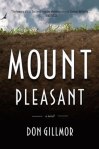
Review of Mount Pleasant by Don Gillmor

I first heard about Mount Pleasant by Don Gillmor on CBC Radio One. The reviewer said he couldn’t read the novel in public because he was embarrassed by the laugh-out-loud moments. I could use a good laugh, I thought to myself, and went home, downloaded and read the preview, and liked it enough to buy the ebook. The premise of Mount Pleasant is simple enough—a middle-aged man faces the realization that life is not what he’d expected.

When Harry Salter’s father dies leaving much less by way of inheritance than Harry thought, he hires a forensic accountant to find out what has happened to his father’s money. On the way he has an affair with his father’s younger second wife, learns his own wife had an affair decades earlier, comes to terms with his son’s new girlfriend, and his ailing mother. In his quest, Harry discovers his father was cheated out of his money by colleagues involved in a ponzi investment scheme. Now, in addition to the fact that he’s barely staying financially afloat, he must pay the forensic accountant for his services and convince his wife to sell the house in order to ease their financial burden. He must also come to grips with a sense of his own mortality after a colonoscopy yields a number of polyps.

Mount Pleasant—named after the cemetery in which Harry’s father is buried—is beautifully written. It is funny in a way, but the tone is more dark and ironic than laugh-out-loud funny.  The novel paints a detailed picture of Harry and his disenfranchisement from both his family and society. Though he teaches and still has contact with youth, there is the sense that the world has passed Harry by, and Harry doesn’t quite know what to make of it. While reading the novel, White Noise by Don DeLillo came to mind as both Gillmor and DeLillo write about coming to terms with a changing, postmodern society. In White Noise, fear of the future comes in the form of airborne toxins and invisible technological miasma. In Mount Pleasant, it is in the form of growing old alone (both literally and figuratively), and finding oneself unable to maintain accustomed lifestyles in a rapidly approaching retirement.

Mount Pleasant is worth the read. Gillmor’s prose is literary, his descriptions—whether on point or on tangent—superb. Gillmor’s storytelling is even paced, though anti-climactic. Mount Pleasant is a slice-of-life parable with which many aging baby boomers will identify.

About the Author

Elise Abram, English teacher and former archaeologist, has been writing for as long as she can remember, but it wasn’t until she was asked to teach Writer’s Craft in 2001 that she began to write seriously. Her first novel, THE GUARDIAN was partially published as a Twitter novel a few summers back (and may be accessed at @RKLOGYprof). Nearly ten years after its inception Abram decided it was time to stop shopping around with traditional publication houses and publish PHASE SHIFT on her own.

Download PHASE SHIFT for the price of a tweet. Visit http://www.eliseabram.com, click on the button, tweet or Facebook about my novel and download it for FREE!

Graphic from: http://www.dongillmor.ca/

Rob Ford needs a speech writer

I was never one to go out for politics. As a young adult, I never voted, primarily because I had no idea what was going on. Politics were boring and I never cared to pay attention. Politics—Canadian politics in particular—w ere, quite frankly, never worth following.

Until recently.

Before I continue, it must be said that I don’t live in Toronto. As a citizen of Vaughan—and by extension, Ontario—and as Toronto is the capital of Ontario, Toronto politics nevertheless affect me. In addition, all of the local media I monitor is Toronto based. And the Toronto-based media (as well as some American-based) has recently been abuzz with the antics of Toronto mayor Rob Ford. Has, in fact, been saturated with it this past week.

For those of you who are unaware, Rob Ford has been the centre of much controversy in the past year, with accusations ranging from misappropriating a Toronto Transit Commission bus on the city dollar to shelter the high school football team he coached, to inappropriate use of funds in his campaign, to appearing in public drunk and disorderly, making inappropriate and unwanted sexual passes at partygoers. As the icing on this week’s cake, a video has surfaced, purporting to document Mr. Ford smoking crack cocaine with drug dealers. The owners of the video want $200,000 for the file. They showed it to The Toronto Star who declined to purchase it as they do not pay for news stories. The gossip tabloid website Gawker.com is currently in the process of raising the money for the purchase.

After spending a week in which he remained mum to the media, Mr. Ford finally spoke today in a forty-some-odd second speech in which he made the following statements: “I do not use crack cocaine, nor am I an addict of crack cocaine…I cannot comment on a video that I have never seen or that does not exist. It is most unfortunate, very unfortunate, that my colleagues and the great people of this city have been exposed to the fact that I have been judged by the media without evidence” (Gillis).

Within a half an hour after broadcasting Mayor Ford’s speech on CBC Radio One, a spokesperson from Gawker was interviewed in which he argued that Mr. Ford did not deny any of the allegations. He accused him of pussyfooting around the accusations. His reasoning goes something like this:

1.       “I do not use crack cocaine” means he does not currently use crack cocaine. It does not address his use of the substance in the past six months.

2.       “nor am I an addict of crack cocaine” means he is not currently an addict because  he does not currently use it. Heavy emphasis on the word “currently”.

3.       “I cannot comment on a video that I have never seen” does not refute the existence of such a video.

4.       “or that does not exist” leaves the possibility open that a video may exist, but not one that Mr. Ford has ever seen.

The spokesperson went on to insist both he and two Toronto Star reporters confirmed the identification of Mr. Ford as the subject of the video.

I did some research on Mr. Ford. Wikipedia reports he completed one year of post-secondary education at Carleton University (Rob). Because I know there is a question about the validity of Wikipedia, I searched other sources as well. The Star reports he quit two credits short of a degree (Rider). Macleans reports the only thing known for sure about Mr. Ford’s post-secondary education is that he attended Carleton between 1989 and 1990 and later attended York University, taking  courses through distance education from 1990 to 1991 (Jerema). The implication in all online sources is that he listed his years in attendance at a post-secondary institution on his mayoral application as if to gloss over the fact that he didn’t graduate.  

I mention this because I don’t think Mayor Ford’s speech today was a way for him to dance around the subject of whether or not he had a drug problem, or whether, as his recently fired chief of staff, Mark Towhey apparently suggested, he needed to “go away and get help” (Strashin). I think his speech was a denial of accusations written by a man under a great deal of stress who, pressed by the media and his staff to make a statement, neglected to hire himself a proof-reader before reading his statement.

Speaking as a teacher of English who just came from a half-hour discussion in which she tried to explain to a student the nuances between explaining evidence and giving its significance, many people, untrained in writing a series of cohesive paragraphs, neglect to proofread to ensure a connection is made between the point they are trying to prove and their thesis. Consider the following statements:

1.       “I do not use crack cocaine nor am I an addict of crack cocaine” – how can you be an addict of crack cocaine if you do not use crack cocaine? This statement suffers from redundant phrases bordering on circular reasoning. “I am not an addict of crack cocaine, nor have I ever used crack cocaine” would put an immediate end to the speculation.

2.       “I cannot comment on a video that I have never seen or that does not exist” should have been worded “I cannot comment on a video that I have never seen and that does not exist.” The use of “or” instead of “and”, confusion of conjunctions, is a common mistake in writers who have not studied the English language.

3.       “It is most unfortunate, very unfortunate, that my colleagues and the great people of this city have been exposed to the fact that I have been judged by the media without evidence.” This, to me, is further proof that the only thing Mr. Ford is guilty of is scribbling out his assignment the night before it is due without leaving himself enough time to proofread it. What he means, I think, is “It is most unfortunate that my colleagues and the people of this great city have been forced to endure my being judged in the media, considering the media’s lack of evidence.”

Mr. Ford is not trying to hem and haw his way through this accusation as the media contends he did when reporting his educational background. Instead, he rushed his speech, writing it himself without stopping to give it to a professional for editing, and wound up striking the blow that broke the lock on his personal Pandora’s box.

Works Cited

Jerema, Carson. Rob Ford dropped out of university. How dare he? Macleans On Campus. 22 December 2010. <oncampus.macleans.ca/education/2010/12/22/rob-ford-dropped-out-of-university-how-dare-he/> 24 May 2013.

Rider, David. Rob Ford’s confusing university life. The Star. 21 December 2010. <www.thestar.com/news/city_hall/2010/12/21/rob_fords_confusing_university_life.html> 24 May 2013.

Rob Ford. Wikipedia. 22 May 2013. <en.m.wikipedia.org/wiki/Rob_Ford> 24 May 2013.

Strashin, Jamie. Rob Ford fired chief of staff for telling mayor to ‘get help’. CBC News: Toronto. 23 May 2013. <www.cbc.ca/news/canada/toronto/story/2013/05/23/toronto-ford-towhey.html> 24 May 2013.

Gillis, Wendy, Paul Moloney, Daniel Dale. Rob Ford’s video scandal: ‘I do not use crack cocaine,’ mayor says. 24 May 2013. <read.thestar/#!/article/519f793e8e492dd36c1a1-rob-ford-s-video-scandal-i-do-not-use-crack-cocaine-mayor-says> 24 May 2013.

Graphic from http://hcp2010.physics.utoronto.ca/toronto_night_skyline.jpg

About the Author

Elise Abram, English teacher and former archaeologist, has been writing for as long as she can remember, but it wasn’t until she was asked to teach Writer’s Craft in 2001 that she began to write seriously. Her first novel, THE GUARDIAN was partially published as a Twitter novel a few summers back (and may be accessed at @RKLOGYprof). Nearly ten years after its inception Abram decided it was time to stop shopping around with traditional publication houses and publish PHASE SHIFT on her own.

Download PHASE SHIFT for the price of a tweet. Visit http://www.eliseabram.com, click on the button, tweet or Facebook about my novel and download it for FREE!

Critique of “Star Trek: Into Darkness”

Critique of Star Trek: Into Darkness

Warning: Spoilers follow.

I’ve been a Star Trek fan for as long as I can remember, so devout a fan, in fact, that the first time I heard of the JJ Abrams re-boot, I thought it was sacrilege. And then I watched it. In light of the cancellation of Deep Space Nine and the failure of Enterprise, 2009’s Star Trek brought a breath of fresh air to the franchise.

After the vacuum in which there was no new Trek after the original series ended, I looked forward to the first Trek movie with anticipation. After watching it, I didn’t know what to make of it. Any new Trek is good Trek, I argued, but I loathed calling the new Trek good Trek. Then the second movie premiered and I went, in spite of the first, and was blown away. The Wrath of Khan was the best epic epi of Star Trek ever. I think I must’ve seen it a dozen times or more in the emptiness between it and The Search for Spock, only to be disappointed once more. The third movie in the franchise was too short and too proscribed. A mistake had been made in killing Spock and the purpose of The Search for Spock was an ends to a means—to put the canon right.

By contrast, The Voyage Home shined because it was a return to the two things Trek does best—the buddy relationship between Kirk and Spock (made better by Spock’s newfound struggle with humanity/vulcanry) and time travel. After movie number four, the original flavour of Trek would not return until movie seven, Final Contact. This movie, capitalizing on the popularity of The Next Generation series, was a winner as it was as good as TNG’s best television episodes. The movies that followed never, in my opinion, recaptured the camaraderie and adventure that made the series such a hit.

On the heels of TNG movies came a slew of television series linked to the Trek franchise. Deep Space Nine played out in mediocrity alongside a bland Final Contact and lacklustre Andromeda, followed by a struggling Enterprise, and it seemed like the franchise—and Gene Roddenbery’s future ideal—had petered out.

Then came the 2009 re-boot, followed by 2013’s Into Darkness. I went to see it because, like all other Trek movies, it was Star Trek. The reviews were mixed, everything from amazing and that it was a must see to nothing special, and that it recycled several episodes of the original Trek. While the movie does recycle many original Trek ideas, such as the characters of Khan, and Carol Marcus, as well as a conveniently placed zombie tribble, Into Darkness is amazingly fun. In it, the crew is sent to kill the character we later learn is Khan Noonian Singh in a deserted area on Kronos, the Klingon home world, without starting a war. Talked out of the hit by Spock, Kirk and crew are targeted by Marcus’ father as a part of a cover-up to hide the fact that Khan had been working with The Federation to develop a type of photon torpedo. It turns out the torpedoes disguise stasis pods for Khan’s eugenically engineered mates, and Kirk and his gang emerge victorious, thwarting the evil Marcus senior, and securing Khan and group back in their stasis pods, ready to be set afloat on the SS Botany Bay where they will be found by Kirk et al in the original Trek timeline.

I enjoyed the re-invention of the Khan character, seeing the start of Kirk’s relationship with Carol Marcus, and the cameos by both the tribble and Leonard Nimoy as the elder Spock. It is interesting how the roles of Kirk and Spock are switched for the retake of Wrath’s critical warp core scene. This time it is Kirk who asks about the status of the ship and Spock who answers “Out of danger,” as well as shouting “Khan!” with more emotion than you’d think a Vulcan could ever muster. I know Kirk is supposed to be the star of the series, but the Spock character, pioneered by Leonard Nimoy and wonderfully interpreted by Zachary Quinto, in my mind, has become my favourite and most important Trek character by far. I love the chemistry between Spock and Uhura as well. Though Kirk still has a lot of growing up to do, this movie helps the character travel down that road by miles from where he was at the end of the first movie.

Into Darkness is a fine addition to the popular Trek canon. I look forward to seeing it again when it comes out on DVD as well as where JJ Abrams will “boldly go” with the franchise in the next movie.

Graphic from http://collider.com/star-trek-into-darkness-app-image/

About the Author

Elise Abram, English teacher and former archaeologist, has been writing for as long as she can remember, but it wasn’t until she was asked to teach Writer’s Craft in 2001 that she began to write seriously. Her first novel, THE GUARDIAN was partially published as a Twitter novel a few summers back (and may be accessed at @RKLOGYprof). Nearly ten years after its inception Abram decided it was time to stop shopping around with traditional publication houses and publish PHASE SHIFT on her own.

Download PHASE SHIFT for the price of a tweet. Visit http://www.eliseabram.com, click on the button, tweet or Facebook about my novel and download it for FREE!