Author Archives: Admin

“Sleepy Hollow” builds rich mythology

Fox’s Sleepy Hollow premièred last week to rave reviews. Like its predecessors Grimm and Once Upon a Time, Sleepy Hollow offers an interesting spin on an archetypal story.

The town of Sleepy Hollow was a small valley in the settlement of Tarrytown, New York in 1820 when Washington Irving published his short story about a Revolutionary War soldier in search of his head, lost when it was taken by a cannonball. In Irving’s The Legend of Sleepy Hollow, which takes place in 1790, Ichabod Crane is a gangly schoolteacher in competition for the love of Katrina Van Tassel, the daughter of a wealthy farmer. His competition is the burly Abraham “Brom” Van Brunt, who sets Ichabod up as an object of ridicule. Katrina sees through Brom’s antics and appears content to give her heart to Ichabod when he meets the horseman and disappears. Katrina marries Brom instead. Other than his horse and a shattered pumpkin, there is no sign of Ichabod to be found. Ichabod considers the horseman might be Brom in disguise during the attack, but the description of the horseman, headless and awash in fire and brimstone, is too horrific to have been pulled off by Ichabod’s rival, given the technology at the time. When the horseman throws his head at him, Ichabod falls from his horse and is never seen again.

Irving’s Sleepy Hollow is a typical horror story. Its setting is a place reputed to have been bewitched by “an old Indian chief, the prophet or wizard of his tribe”. People believe it to be overrun by “haunted spots and twilight superstitions” where they “see strange sights and hear music and voices in the air.”  In this way, Sleepy Hollow is no different than Vampire Diaries‘s Mystic Falls or Buffy the Vampire Slayer‘s Sunnydale. Similar to these towns, witches, ghosts and evil supernatural entities abound. Irving’s Ichabod is the stereotypical geek, described as tall, lank, “narrow shoulders, long arms and legs,” small head, “huge ears, large green glassy eyes and a long snipe nose.” He is later described as scarecrow-like, hardly the physique one would expect from a leading man. The fact that he would have the girl in the end were it not for his disappearance, shows the advantage of brains over brawn, which may very well be the moral of the story. Also, don’t go out at night, particularly alone and on a path reputed to be haunted by a headless Hessian hefting a pumpkin head.

In the Fox series, Sleepy Hollow is a thriving town with a Starbucks on every corner. Abbie Mills (Nicole Beharie), a black, female police lieutenant finds a decidedly anti-gangly Ichabod Crane (Tom Mison) wandering around town and arrests him for a series of murders. People report sightings of a headless horseman and since Ichabod seems to know quite a bit on the topic, Mills enlists his help to try to stop the body count from rising even further. The backstory, we learn, is that during the Revolutionary War, a Hessian soldier mortally wounded Crane, and Crane beheaded him with his sword. They died together, their blood mixing in the field, forever linking their souls. When someone in 2013 resurrects the horseman–believed to be Death, one of the horsemen of the apocalypse–Ichabod is similarly resurrected. Mills convinces her colleagues to let Ichabod go free to help her stave off the supernatural and catch the horseman before the coming of the Apocalypse.

I love the Supernatural-slash-Fringe-slash-X-Files vibe of Sleepy Hollow. I was a little upset when Officer Andy Dunn (John Cho) and Sherriff Corbin (Clancy Brown) were killed off in the first episode, but delighted to see their return in the second. Cho plays a (literal) devil’s advocate with creepy excellence while Brown’s character’s ghost becomes Mills’s Yoda, giving her cryptic clues when she asks for help. Mison is more than competent as the handsome yet fearless hero-type, solving problems with ages old wisdom over technology. Subtle humour is hidden in Crane’s curiosity about the modern world, feeding much of the banter between he and Mills.  Unlike many of the new science fictiony shows of last season (Zero Hour, Do No Harm, Cult and 666 Park Avenue, to name a few), I think Sleepy Hollow can look forward to finishing out this season while building a rich mythology with the potential to move forward for many seasons to come.

Is the world ready for self-driving cars?

auto-car


“As Reyes speaks to me, the car lurches into action.  He uses the rudder control to join the traffic stream, and then flips a toggle switch on the dash. The car moves forward, speed ebbing and flowing with the pool of traffic. I get the idea the vehicle uses auto-pilot to arrive at its destination.  Once he has flipped the switch, he keeps his eyes on me instead of the road. Not once does Reyes busy himself with the drudgeries of defensive driving.”

Phase Shift

Google uses them; “Toyota Priuses equipped with self-driving technology“. Once the stuff of science fiction, self-driving cars may be a reality within four years. Already we have cruise control and anti-lock breaks (which always take me by surprise and do nothing but make me brace for uncontrolled impact), proximity cameras and cars that parallel park themselves, is it such a stretch to think they could do so much more in the very near future? The argument is that cars on auto-pilot could drive closer together, alleviating traffic. They could eliminate the need to stop at intersections if the coast is clear. They would take out the human error factor that causes so many deaths on the road. To extrapolate, if there is no danger of collision, there is no need for heavy, internal structure and safety features, so cars could be made of lighter-weight materials making them more fuel efficient. Seems win-win, no?

If there’s one thing the invention of autonomous cars reinforces, it’s the extent of human ingenuity. History tells us that if one person invents it, another will invent a hack for it. Case in point, Will Smith’s I Robot, Live Free or Die Hard, and Revolution or worse, Terminator, all cautionary tales in which technology either malfunctions or is derailed (on purpose in Die Hard and accidentally in Revolution) to the detriment of society. What if the system malfunctions or is hacked? In the event the Internet is turned off, would the cars still work?

Imagine the President of the United States in an entourage of light-weight self-driving cars, free of safety features. How easy would it be to commandeer the vehicle from a distance? Tired of paying alimony? Hack into your ex’s auto-pilot and drive him/her into a wall. If you use anonymous servers and encryption codes, what are the chances they could track the destruction code patch back to you? Why go through the trouble of training and placing pilots in major US airlines to fly planes into buildings when you can cause a multi-vehicle pile-up on a highway by turning off proximity detectors or throwing a bug or two into the software without leaving your country of origin?

Sounds like a premise to the next great science fiction disaster epic to me. Guess what? We’re all cast as the main characters. Coming soon to a parking lot near you.

Once Upon A Time is Coming!

In preparation for the new season of ABC’s Once Upon A Time, I took some time to go over some of the classics associated with the show. I re-read Alice’s Adventures in Wonderland and Through the Looking Glass, partially to “borrow” allusions and create symbols for my Alice Untitled story, but also in anticipation of the premiere of Once Upon A Time in Wonderland. I also went back to read up on Rumplestiltskin’s origins.

In the Grimms’  version, a miller boasts that his daughter can spin straw into gold. The greedy king of the realm locks the daughter up demanding she spin a roomful of straw into gold. The daughter cries and Rumplestiltskin, a plain-looking dwarf of a man, helps her in exchange for a necklace. The same thing happens the next day and, thanks to Rumplestiltskin, the daughter delivers. On the third day, the king promises that if she spins the gold he will make her his queen. Having nothing else to trade, the daughter promises Rumplestiltskin her first born. After the child is born and she decides she doesn’t want to give the child up, Rumplestilstkin tells her that if she guesses his name, she will be allowed to keep it. They hire someone to tail the dwarf and hear him singing his name as he gloats. The next day, the queen “guesses” his name and is allowed to keep the child.

OUAT’s version incorporates much of Rumple’s archetypal story in “The Miller’s Daughter”, and in snippets woven into other characters’ origin stories. OUAT’s Rumple starts out as the fearless trickster imp, granting favours in exchange for what each of the characters holds dear. The character is broadened by the writers to personify Belle’s Beast and Hook’s Croc. The Trickster, the Cowardly Lover and the Adversary are portrayed with most excellent skill by Robert Carlyle. The same goes for Gold, Rumple’s real-world counterpart.

In my search for an online version of Rumple’s origin story, I found “Rumpelstiltskin in Love“, a flash-fiction short story by KC Norton that tells the story of the dwarf as he raises a child. We learn Rumpel is not the child’s father. He has also raised other children, now grown and moved away. The child asks about his mother and Rumpel answers vaguely, hoping to spare the child the heartache of knowing his mother gave him up to save herself. This shows that in addition to being a trickster who is vain and greedy he is caring and lonely, someone who longs for human love, someone who cannot find a woman to love him because he is ugly, so he settles for the unconditional love of a succession of children, each of which winds up breaking his heart when they grow to maturity.

OUAT‘s Rumple embodies the characteristics of both tellings. As previously stated, he is a trickster, someone who makes deals with desperate people without compassion. But he also has a human side, one that is achingly lonely, and believes himself unlovable, in spite of–or maybe because of–his power. This Rumple has compassion, though begrudgingly so. He is a romantic who believes in his own happy ending in spite of himself.

I don’t know about you, but I can’t wait for OUAT season 3 to unfold as the crew travels to Neverland to rescue Henry and discover new facets to the characters, especially Rumplestiltskin. In the mean time, go to the Flash Fiction website and read “Rumpelstiltskin in Love” to tide you over. Let me know what you think about this poignant addition to the mythology.

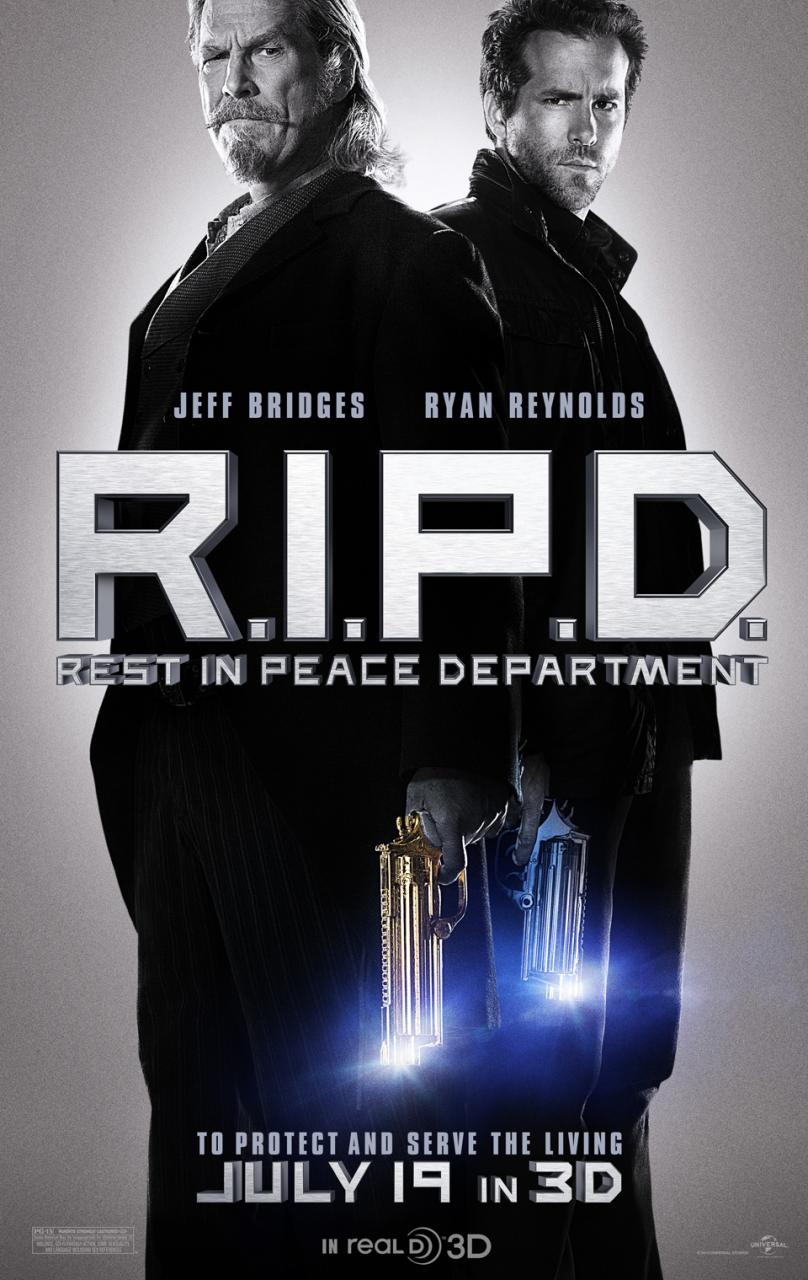
“RIPD”: “Men in Black” meets “Ghostbusters” meets lots of other things

RIPD (Rest in Peace Department) is where good cops go when they die. Their job? To track down escaped demons from Hell and return them or terminate them altogether. Ryan Reynolds plays Nick with one-note aplomb. His partner, Hayes (played by Kevin Bacon with similar gutsto), kills him over parts of a golden talisman they recover from bad guys. In the afterlife, Nick is drafted into the RIPD without ceremony and partnered with old west lawman Roy (Jeff Bridges) for training. On the first day out they happen upon the same case Nick was working when he was killed. They follow the trail to recover the rest of the talisman, failing to catch the demon when he is revealed. When the demon goes on a rampage in the city and Nick and Hayes are threatened with termination (which means meeting their final death), they take matters into their own hands.

I firmly believe there is nothing new under the sun; everybody works to put new spins on the same old archetypes. ABC’s Once Upon A Time, which puts a new spin on old fairy tales–especially on old Disney fairy tale properties–is case in point. The fun comes not in watching something new, but in watching a new spin on what must be an ages old concept. Many writers, I’m sure, set out to write something one of a kind and alternately cringe and scream when they see their original ideas manifested elsewhere (this was a regular occurrence while watching Fringe and working on Phase Shift). Other writers take someone else’s idea as a start and go from there (as is the case with every vampire property I’ve ever seen or read and The Revenant or The Time Traveler’s Wife and my untitled Alice piece).  RIPD has the typical old-timer-trains-newbie framework present in Men in Black or Lethal Weapon series. Unlike those movies, the old-timer is the strange-duck, while the newbie plays straight man.   Like Men in Black, the beings the cops hunt can hide in plain sight, appearing somewhat quirky, but for the most part normal. As is the case with Ghostbusters and television’s Reaper, RIPD detectives have a device to quickly dispatch the spirit back to the underworld before they wreak havoc on the living. Similar to Buffy the Vampire Slayer, there is a Hellmouth that is in danger of opening if the detectives don’t thwart the bad guys in time. Similar to Ghost, Nick’s love for his wife transcends death. Also similar to Ghost, his best friend/partner is the bad guy and his wife is ultimately put into jeopardy. Nick and his wife also have a brief reunion scene near the end, as do Sam and Molly at the end of Ghost.

RIPD is lots of fun. In addition to it being a police procedural, it is a love story, and involves superheroes of a sort. There is a lot of comic book violence as well as interesting villains. Jeff Bridges steals the scene in the role of talkative, cynical Roy, and much of the comedy comes from his deadpan responses and odd behaviour (such as driving the car facing sideways with his right leg up on the seat, or the way he is more concerned that he loses his hat than that he loses the demon). Though it borders on the cliché, RIPD is a light-hearted romp worth a look-see.

Did you see RIPD? Leave me a comment to let me know what you thought about it.

5 reasons why revenants are not vampires

revenant-child

Revenants are kissing cousins to vampires, and while some sources consider them one and the same, there are significant differences between the two. Seeing as there isn’t a lot of supernatural lore out there where revenants are concerned, it’s time to set the record straight as to the differences between the two.

1. Revenants and vampires are created differently.

While both revenants and vampires are resurrected from the dead, the reason for their return differs. Revenants were thought to have died under violent circumstances and return as animated corpses due to unfinished business, such as exacting revenge for their deaths (Wiki Revenants). Vampires must be bitten by another vampire in order to return. Most legends need there to be vampire blood in the newly dead’s system for successful turning.

2. Revenants can go out in the daytime.

It is well-known that ultra-violet light can incinerate vampires beyond the point of no return, but there are some exceptions to this rule. Vampires on HBO’s True Blood are able to bask in the sun for brief intervals after drinking fairy blood, while the Salvatore brothers on CW’s Vampire Diaries can withstand sunlight so long as they’re wearing enchanted rings. On Being Human and some other shows, vampires have only a sensitivity to UV light and either burn or sparkle when exposed. Revenants, on the other hand, have no problem with light. They are able to walk about freely in the daytime and are immune to sunburn.

3. Revenants are teetotalers.

Vampires are notorious drinkers. On Vampire Diaries, for example, alcohol keeps vampire blood pumping. Vampires in Buffy the Vampire Slayer may feel their senses dulled after drinking copious amounts of alcohol. Revenants cannot drink alcohol (or ingest any food or drink for that matter), as it would only ferment inside their bodies.

4. Revenants can enter a home without being invited.

When they try to enter a private residence without invitation, Vampires hit a force-field-like wall preventing them from entering. While revenants can enter private residences without first being invited, they begin to smoke when they try, so they prefer to wait for the invite.

5. Revenants don’t drink blood.

The legend of the vampire first got started because people used to blame the spirits of the newly dead for their misfortunes. When they dug up the corpses, they were bloated as if they’d just fed. Some of them had blood on their lips. Because the process of decomposition was not well-known, people believed the corpses to have risen to wreak havoc and feed on unsuspecting villagers by night, and hide in their coffins by day. This is probably where the whole blood-sucking myth was born. Unlike vampires, revenants don’t need blood to survive. They are driven by the need to right the wrong they left behind by dying. Combine that with the mojo from a powerful necromancer, and revenants can live indefinitely.

Because they both developed from people’s unfamiliarity of the decomposition process, there are quite a few similarities between revenants and vampires as well.

Look for my next blog post to read what revenants and vampires have in common.

Guest Blog Post Announcement!

20 May 2013


I am proud to announce the publication of a guest blog post on TheWritePractice.com website.

Showing, not telling, is the mantra I use with my students in the first months of teaching Writer’s Craft. I tell them they must paint a word picture, using sensory information from all five senses. The trick is in finding balance between when to show and when to tell.

The post’s direct link is http://thewritepractice.com/word-pictures Please feel free to visit the site and post in the comments. I will make every effort to get back to you after posting.

2 May 2013

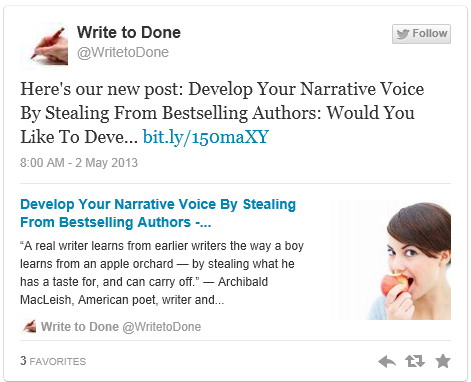
I am proud to announce the publication of my first guest blog post on the WriteToDone.com website.

Modelling expert text is something I learned about in teachers’ college and have used many times over the years, both as a tool with which to develop my own writing voice (as I discuss in the article) as well as with my students as a writing exercise.

The post’s direct link is http://writetodone.com/2013/05/02/develo-your-narrative-voice-by-stealing-from-bestselling-authors/. Please feel free to visit the site and post in the comments. I will make every effort to get back to you within 24 hours of posting.

Stephen P. Kiernan’s THE CURIOSITY is Part “Encino Man”, Part “Blast from the Past”

In 1991, two German tourists discovered the body of Otzi, the now infamous Ice Man, believed to have died and been encased in ice near 5,000 years ago. Though well-preserved, Otzi’s body more resembles traditional mummies than living, breathing tissue. But what if it didn’t? What if Otzi were flash-frozen, so to speak, encased in ice in perfect preservation and scientists had the reanimation technology? This is the question tackled by Stephen P. Kiernan in The Curiosity.

After joining an Arctic expedition in 1906, Judge Jeremiah Rice fell overboard into the Arctic Ocean and was perfectly preserved in ice. Dr. Kate Philo is a member of a modern-day scientific team working on a process to reanimate small ocean animals. Her team travels to the Arctic to harvest the creatures from the ice when they find and recover Rice’s body. They take him back to the lab where they reanimate him. When he awakens, he is thrown into a world completely different from the one he remembers. Kate takes it upon herself to help acclimatize him, and finds herself falling in love with the judge, who is so different than the men she is used to. It isn’t long before Kate realizes Rice is about to suffer the same fate as the reanimated shrimp and krill—his metabolism is speeding, burning up his energy, and he will soon die. At first, Erastus Carthage, the director of the project, attempts to control media coverage of the event, but it soon snowballs out of control, and Rice and Kate are on the run from both the media and the authorities.

The Curiosity is written from the points of view of four characters: Kate Philo, Jeremiah Rice, Erastus Carthage, and Daniel Dixon, the reporter Carthage initially hires as exclusive teller of the expedition’s tale.  While Kate, Rice and Dixon are written in first person point of view, Carthage is written in second person, and I’m not sure why. I’m also not sure why the two points of view I most dislike are third person omniscient and second person, perhaps because so few modern stories are told well this way. Kate is perhaps the most realistic character of the four. I found Carthage to be the stereotypical megalomaniac, better than thou academic type, and in spite of the point of using second person narrative—to put the reader into the role of the character—I neither liked him, nor identified with him. Dixon is portrayed as the hard-boiled, unimpressed, unfazed reporter who has seen it all, objectifies women (particularly Kate), and winds up portraying the team as a fraud. Somehow, it works. Dixon’s parts were quite amusing to read. Though Rice is interesting as a concept, I found his attraction to Kate a little two convenient plot-wise. The last thing he remembers is leaving his wife and daughter, and while they are long dead, they are not to him. Rice doesn’t seem to grieve much for them, making his attraction to Kate and his easy-going adaptation to the present somewhat questionable.

Part Encino Man, part Blast from the Past, and yes, per other reviewers, part Michael Crichton and Time Traveler’s Wife, The Curiosity is well-written with interesting characters. I found myself drawn into Kate’s romance with Rice and amused at the way the media is portrayed with the ability to spin information hundreds of ways. Kiernan juxtaposes the nostalgia of an idyllic and integrity-rich lifestyle of only a century ago with the fast-paced, technology and tabloid-integrity of the modern world. Though the story is predictable at times (Who didn’t see Kate’s hook-up with Rice from their first scene together? Or know that Rice would wake-up and surpass the expectations for post-animation life span?), and sometimes weighed down with scientific jargon, The Curiosity is an entertaining and interesting story that documents our fascination with pushing the boundaries of scientific knowledge, and then holding science’s successes up for vilification in the media.

Graphic from http://www.goodreads.com/book/show/16248197-the-curiosity

 About the Author

Elise Abram, English teacher and former archaeologist, has been writing for as long as she can remember, but it wasn’t until she was asked to teach Writer’s Craft in 2001 that she began to seriously write. Her first novel, THE GUARDIAN, was partially published as a Twitter novel a few summers back (and may be accessed at @RKLOGYprof). Nearly ten years after its inception Abram decided it was time to stop shopping around with traditional publication houses and publish PHASE SHIFT on her own.

Movie Review – Disney’s TEEN BEACH MOVIE


I have to admit—I was excited when I heard about Disney’s Teen Beach Movie. Though corny by today’s standards (or any standards, for that matter), I used to watch the Frankie Avalon and Annette Funicello movies as a kid. Born in the sixties, I loved the costumes, dance and music of my parents’ teenaged years. I also watched Annette on the old Mickey Mouse Club black and white re-runs, so it was cool to see what she did afterward. The last beach movie released was 1987’s Back to the Beach, which I loved, because in addition to being a blast from the past, Lori Laughlin played Frankie and Annette’s daughter. Back to the Beach was campy and silly and featured Pee Wee Herman singing “Bird is the Word”; what more could you ask?

When my eight year old daughters started extreme fangirling on High School Musical, I thought I should see what it was all about. I was pleasantly surprised. I even went to the theatre to see the third one with them and really enjoyed it. While the storylines left something to be desired, the music and dance scenes were impressive. My daughters didn’t have to twist my arm to get me to watch Camp Rock, or Lemonade Mouth either. So when I read about Teen Beach Movie I was interested. My daughter insisted it was like Grease and she was all “been there, done that”. Even though I insisted it was more like Beach Blanket Bingo than Grease, she remains steadfast in her claim, refusing to take even a peek at Beach Blanket Bingo, headstrong almost-fourteen-year-old that she is, which is frustrating as this means I am unable to educate her on the finer points of popular culture on which I thrive.

Teen Beach Movie is surprisingly entertaining to watch. In the movie, Brady and Mac (short for Mackenzie) are in love. Mac lives with her grandfather on the beach, but she must go back to the city with her stuck-up aunt to attend private school for the rest of her education. Because Mac’s deceased mother wanted her to be the best she could be, Mac feels a duty to go with her aunt, even if it means breaking up with Brady to do so. Mac is a surfer, better than most of the boy-surfers out there, and she has been looking forward to surfing the forty-foot waves brought on by the coming storm, but surfing them would mean missing her plane. She awakes on the day she is to leave to see that her grandfather’s surfboard, the one always hanging from the rafters, is propped against the wall instead, and she decides to go for one last surf. Worried she may drown, Brady takes a Jet Ski out to save her. They both get pulled down by the waves and come up for air in the sixties, and soon realize they are actually in the beach movie, West Side Story, that Brady idolizes and knows by heart. The movie is about the love story between a surfer boy and biker girl who fall in love and unite the two gangs against stereotypical bad guys to save the day, but when the surfer boy falls for Mac and the biker girl falls for Brady instead of each other, they have a problem.

The music in Teen Beach Movie is pop-based with a retro flavour, and I’m not embarrassed to admit that there are a few I wouldn’t be above adding to my playlist. The acting is okay, but it’s what you would expect from an old time beach movie, that is to say, over the top. Ross Lynch as Brady is perfect as the lovelorn puppy dog who would be lost without his girl. Maia Mitchell is cute as Mac, but her character suffers from a case of she-doth-protest-too-much until she gets acquainted with Grace Phipps’ character, the girl biker, Lela and they become besties. Garrett Clayton plays the role of Tanner with vapid charm, though he looks a little too much like Zac Efron for comfort. The final surprise in this movie was seeing Kent Boyd of So You Think You Can Dance fame as Rascal, and while his acting is overblown (again, as you would expect from a beach movie), he was one of my favourites from the show and it was great to see him post SYTYCD, though I would have liked for his part to be a little bigger. He might have been good in either male lead. For sure he has the legs for it.

While Teen Beach Movie is not one of those movies I could watch again and again (like I do Men in Black, Legally Blonde, or Kate and Leopold, for example), it is quite enjoyable as a parody of the original movies. The song and dance numbers—though they may occur randomly as Mac points out—are entertaining, and the jokes—like how everyone goes surfing and emerges with dry hair—are kind of funny. There are some laugh-out-loud moments, and some borrowing from similar movies (Brady’s lifejacket fades from existence like Marty McFly’s siblings from the photograph in Back to the Future, and there’s a baby-doll sleepover scene like the “Sandra Dee” number in Grease, that comes off as a sort of mashup between “Sandra Dee” and “Summer Loving”), though I did miss watching my daughters try to dance along with the cast when they teach the moves during commercial breaks. Nevertheless, Teen Beach Movie is great entertainment for the kids as an introduction to a long-extinct genre, and memorable nostalgia for their parents. The hour and forty-five minutes I invested in watching the movie was time well spent.

Grapic from: http://www.mouseinfo.com/gallery/files/4/1/2/7/teen-beach-movie.jpg

About the Author

Elise Abram, English teacher and former archaeologist, has been writing for as long as she can remember, but it wasn’t until she was asked to teach Writer’s Craft in 2001 that she began to seriously write. Her first novel, THE GUARDIAN, was partially published as a Twitter novel a few summers back (and may be accessed at @RKLOGYprof). Nearly ten years after its inception Abram decided it was time to stop shopping around with traditional publication houses and publish PHASE SHIFT on her own.

Download PHASE SHIFT for the price of a tweet. Visit http://www.eliseabram.com, click on the button, tweet or Facebook about my novel and download it for FREE!

We Are All Completely Beside Ourselves – Book Review

In We Are All Completely Beside Ourselves by Karen Joy Fowler, Rosemary Cooke begins her story in the middle. She is in college in a cafeteria where she meets Harlow who is angry at her boyfriend and having a tantrum. Rosemary defends Harlow during her arrest and gets arrested herself. We soon learn Rosemary is broken, in a way. She is not close with her parents and estranged from her brother and sister. It is the mystery of Rosemary’s relationship with her parents and how her brother, Lowell, and sister, Fern go missing that drives the story forward. When Rosemary’s narrative circles back to the beginning of the story, we learn that her “sister”, Fern, is a chimpanzee brought into the home to be raised as her “twin” for an experiment her scientist father was conducting in the seventies.

We Are All Completely Beside Ourselves is a wonderful coming of age novel that is interesting both in the style of the narrative and in the story, containing a powerful message. The title refers to the fact that, when placed beside humans, animals—particularly apes—are not that different. Growing up, Rosemary’s father’s lab assistants endlessly compare Fern’s progress with her own. While Fern reaches certain landmarks before Rosemary—such as walking and “talking” (really signing)—Rosemary’s growth soon outperforms Ferns with little fanfare and she grows jealous of Fern’s attention which leads to Fern’s removal from the family. In doing this, Rosemary asserts her alpha role in her family pack, not unlike how later, Fern becomes the alpha animal in her lab “family”. When Rosemary tells us the end of her story, we learn the reason for her brother’s disappearance. Everything, from Rosemary’s inability to fit in with her peers to her brother’s absence, her mother’s emotional distance, and her father’s depression traces back to Fern’s removal from the family and Rosemary spends the remainder of the book trying to set it right.

Fowler has penned a page-turner here. Her prose is artful and easy to read, something to which, as an author, I aspire. The narrator is so candid in her guilt, the story reads like a written confession, which is where the interest lies.  We Are All Completely Beside Ourselves is a book with social conscience, prompting us to think about the connection between people and animals and how, when we compare them side-by-side with ourselves, we are not so essentially different.

Graphic from: http://www.nytimes.com/imagepages/2013/06/09/books/review/0609-bks-KINGSOLVER-cover.html

About the Author

Elise Abram, English teacher and former archaeologist, has been writing for as long as she can remember, but it wasn’t until she was asked to teach Writer’s Craft in 2001 that she began to write seriously. Her first novel, THE GUARDIAN was partially published as a Twitter novel a few summers back (and may be accessed at @RKLOGYprof). Nearly ten years after its inception Abram decided it was time to stop shopping around with traditional publication houses and publish PHASE SHIFT on her own.

Download PHASE SHIFT for the price of a tweet. Visit http://www.eliseabram.com, click on the button, tweet or Facebook about my novel and download it for FREE!

We’re the Millers – Movie Review

In We’re the Millers, Jason Sudeikis plays David, a drug dealer who is robbed and must smuggle a large shipment of marijuana in from Mexico to repay his supplier. After seeing how the police react to a family in an RV, David decides the best way to get the job done is to hire people to play his family as cover. Getting the drugs into the States proves to be the least of David’s problems. It’s not until they arrive stateside that his troubles begin. Little does he know, he’s been sent on a suicide mission. He doesn’t so much as pick up the drugs as steal them and spends the rest of the movie on the run from the actual smuggler and supplier and trying to avoid capture by the DEA agent the “family” has befriended along the way.

We’re the Millers is an okay movie, once you get past the vulgar language and graphic grossness (I think I may have scarred my 14 year old girls with the full-on deformed male frontal shots). While there’s no overt sex, there is a sort of comedic scene between 18 year old Kenny (played by Will Poulter), his teenaged “sister” Casey (played by Emma Roberts) and his “mother” Rose/Sarah (played by Jennifer Aniston), that is as uncomfortable (watching it as a parent with her children) as it is funny. We’re the Millers is on par with Grown-ups and Bridesmaids in its bawdy humour—remember the blue pee scene in Grown-ups and the diarrhea attack in Bridesmaids?—that is to say, unrefined. While a tarantula bite on the testicles is nothing to laugh about, Millers milks it for all its worth. Equally disturbing is the scene in which the a Mexican policeman’s expectation of a bribe is confused with the expectation of oral sex, compounded by the discussion in which David convinces Kenny that he must take one for the team and satisfy the officer.

Jason Sudeikis plays the part of David with initial cool detachment, but, as you might expect, he mellows toward the end and realizes that he does, in fact, have some responsibility for his adopted family. Jennifer Aniston is more believable as the caring matriarch than the down and out stripper. Emma Roberts and Will Poulter play their parts—the battle-worn street kid with a heart of gold and the virgin ingénue—with stereotypical demeanour. It was nice to see Kathryn Hahn and Molly Quinn in the parts of the DEA agent’s wife and daughter. I’ve liked Kathryn Hahn since her Crossing Jordan days and enjoyed the way she plays the sexually frustrated prim-and-proper wife. I also really like Molly Quinn in her role as Alexis Castle, but her talent was underutilized in this movie, where she’s asked to do nothing but look as innocent as Poulter’s character, which she does, but it’s not enough for her to shine.

I went to see We’re the Millers because it was either that or The Butler playing at my local theatre and neither my husband or kids were interested in a heavy, historical docu-pic, but I wasn’t disappointed. We’re the Millers is a lighthearted, funny movie that had me laughing out loud at times and squirming at others. It’s mostly potty humour with a little quick and clever repartee mixed in, but it’s a movie that shouldn’t disappoint. 

Graphic from: http://www.bringthenoiseuk.com/201305/music/news/film-news-new-red-band-trailer-for-were-the-millers

About the Author

Elise Abram, English teacher and former archaeologist, has been writing for as long as she can remember, but it wasn’t until she was asked to teach Writer’s Craft in 2001 that she began to write seriously. Her first novel, THE GUARDIAN was partially published as a Twitter novel a few summers back (and may be accessed at @RKLOGYprof). Nearly ten years after its inception Abram decided it was time to stop shopping around with traditional publication houses and publish PHASE SHIFT on her own.

Download PHASE SHIFT for the price of a tweet. Visit http://www.eliseabram.com, click on the button, tweet or Facebook about my novel and download it for FREE!