Tag Archives: toronto

Re-issues of Police Procedural Mystery Fiction Books

In 2012 I published my first book, Phase Shift, the adventures of Molly McBride and Palmer Richardson. Phase Shift was actually the second book I wrote with these characters, the (still) unpublished The Guardian being the first. Since then, I’ve written a number of short stories and novellas with these characters including Aliens’ Waltz–featuring Josef Schliemann; The Nexus–featuring Molly, Palmer, and Josef (both of which have now been published in The Nexus and Other Stories); The Mummy Wore Combat Boots–featuring Palmer and Michael Crestwood; and Throwaway Child-featuring Molly, Palmer, and Josef, with a nod to Clinton Johns from The Guardian.

This month, I’ve re-issued Throwaway Child and The Mummy Wore Combat Boots. Here’s what the two books are about, both of them reissues of police procedural mystery fictions involving forensic anthropology to solve the case:

Throwaway Child

A recent report written after a six-year investigation into residential schools for Canadian First Nations people stated that at least 3,201 student deaths occurred in these schools, with many more going unrecorded.

The report goes on to state that “many students who went to residential school never returned. They were lost to their families…No one took care to count how many died or to record where they were buried.”

Prime Minister Justin Trudeau, in a 2016 speech to the Assembly of First Nations Special Chiefs Assembly said, “We know all too well how residential schools and other decisions by governments were used as a deliberate tool to eliminate Indigenous languages and cultures.”

 Throwaway Child is the story of one of these children.

The skeleton of a young girl is found beneath the cement basement floor in an abandoned Victorian in Toronto. On duty is Detective Constable Michael Crestwood who contacts forensic anthropologist Dr. Palmer Richardson to assist in the investigation. What they uncover is the story of a six-year-old Cree girl, stolen from her family, warehoused in a government run facility and then forgotten.

In a story with ties to current headlines, Throwaway Child explores the injustice experienced by two girls imprisoned in a mid-twentieth century residential school, their families, and the tragedy that results from one girl’s need to find a home.

Buy Throwaway Child on Amazon and wherever eBooks are sold. 


mummy, archaeology, police procedural, toronto, gaming

The Mummy Wore Combat Boots

The Sandy Hook School shooting, the Colorado movie theatre massacre…was online gaming to blame?

Psychologists believe that engaging in violent virtual gaming desensitizes the player and dehumanizes opponents. When the division between what is real and what is virtual becomes unclear, the results can be catastrophic.

When forensic anthropologist Palmer Richardson is called to investigate an uncatalogued sarcophagus found in storage at the Royal Ontario Museum, he has his work cut out for him. Upon investigation, he discovers the mummy inside is that of a teenage boy and involves Detective Constable Michael Crestwood of the Metropolitan Toronto Police.

Their investigation delves into the world of online gaming, where losing health points in a skirmish could have serious implications for a player’s life in the real world.

Inspired by real-life headlines, The Mummy Wore Combat Boots highlights the growing divide between children who live their lives immersed in a digital culture and the adults tasked with raising them who live in the real world.

Buy The Mummy Wore Combat Boots on Amazon and wherever eBooks are sold. 

Throwback Thursday: What are Coles Notes?

coles-notes

There’s a scene in The Revenant where Father Paul discusses a case with Toronto’s coroner. So far, two bodies have been brought into the morgue in a state of decomposition indicating they’d died more than a week ago. In both cases, there are witnesses claiming they were alive only minutes or hours ago.  The discussion goes something like this:

“What’s this?” Paul asked.
“Autopsy file,” the coroner said.
“They didn’t teach Science at the Seminary. How’s about you give me the Coles Notes’ version?”

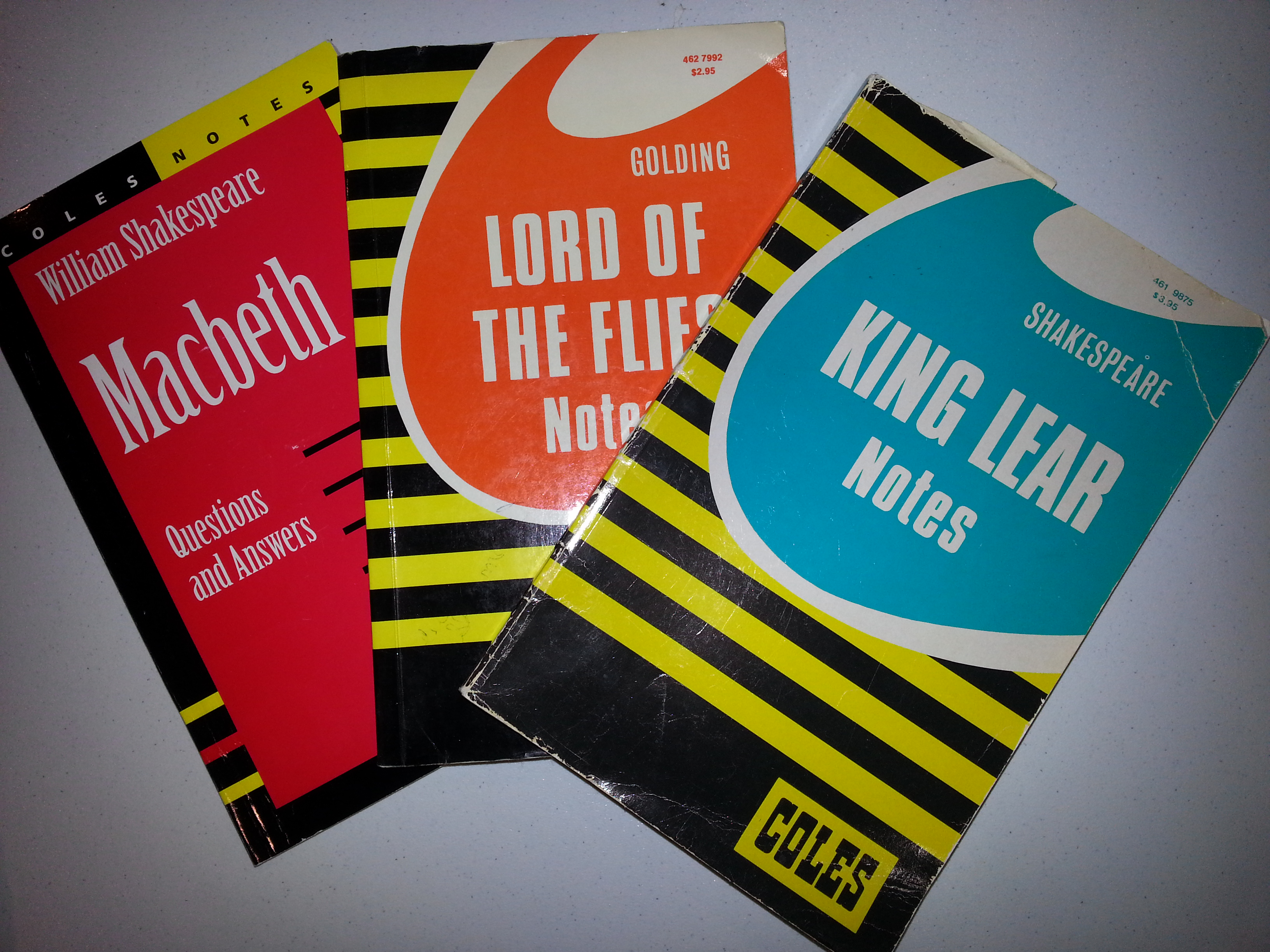
Coles Notes are the printed version of web sites like Spark Notes or Grade Saver. In the days before the Internet, we bought Coles Notes in Canada and Cliffs Notes in the U.S., on everything from literature to writing resumes. The author for the books is “The Coles Editorial Board” which was rumoured to be university students. Like the web pages of today that serve the same function, they were not infallible. While studying Richard III before teaching it, I found a discrepancy between their interpretation and mine, and no matter how hard I tried, I could not see how their interpretation was valid.

Though there are no Coles Notes for The Revenant, a study guide is available upon request, which would make an excellent tool for a teacher, student, or book club wishing to study the novel. Let me know if you’d like your PDF study guide by leaving me a note in the comments below or emailing me at info @ eliseabram . com.

Literary Devices from A to Z – Brought to you by the letter V


is for Verisimilitude


Verisimilitude is the appearance of reality in a work of fiction.

I have written before about how all narrative is a construct of reality. This means that it is supposed to seem real, but it’s not really reality, it’s just constructed to appear that way.

My soon to be released novel, The Revenant, is case in point. Revenants as described in my novel do not exist in reality. And though they are believed to exist in certain circles of belief, the jury is still out as to whether seers, aura readers, empaths and possessed spirits actually exist. As a writer, that is none of my concern. As a writer, my job is to make you, the reader, believe my story could be real, that these creatures could–and in fact do–exist.

I recently had a verisimilitude shocker. I set out to travel the downtown core taking pictures of places documented in The Revenant. When I arrived at Yonge-Eglinton Square, I was surprised to see that the square was under construction. By the looks of it, they were extending the shopping plaza there out and into the square! My heart sunk at the thought of the size of the re-write–I’d have to relocate the scenes there to Dundas Square if I wanted to maintain the verisimilitude of the scene. That is, if I wanted people to believe the scene was real based on the scenery I described.

How important is verisimilitude in a piece of literature to you? If you read about a scene and there are errors in the location or the science being described does it spoil the story for you? Post your comments below.

Review of Mount Pleasant by Don Gillmor

I first heard about Mount Pleasant by Don Gillmor on CBC Radio One. The reviewer said he couldn’t read the novel in public because he was embarrassed by the laugh-out-loud moments. I could use a good laugh, I thought to myself, and went home, downloaded and read the preview, and liked it enough to buy the ebook. The premise of Mount Pleasant is simple enough—a middle-aged man faces the realization that life is not what he’d expected.

When Harry Salter’s father dies leaving much less by way of inheritance than Harry thought, he hires a forensic accountant to find out what has happened to his father’s money. On the way he has an affair with his father’s younger second wife, learns his own wife had an affair decades earlier, comes to terms with his son’s new girlfriend, and his ailing mother. In his quest, Harry discovers his father was cheated out of his money by colleagues involved in a ponzi investment scheme. Now, in addition to the fact that he’s barely staying financially afloat, he must pay the forensic accountant for his services and convince his wife to sell the house in order to ease their financial burden. He must also come to grips with a sense of his own mortality after a colonoscopy yields a number of polyps.

Mount Pleasant—named after the cemetery in which Harry’s father is buried—is beautifully written. It is funny in a way, but the tone is more dark and ironic than laugh-out-loud funny.  The novel paints a detailed picture of Harry and his disenfranchisement from both his family and society. Though he teaches and still has contact with youth, there is the sense that the world has passed Harry by, and Harry doesn’t quite know what to make of it. While reading the novel, White Noise by Don DeLillo came to mind as both Gillmor and DeLillo write about coming to terms with a changing, postmodern society. In White Noise, fear of the future comes in the form of airborne toxins and invisible technological miasma. In Mount Pleasant, it is in the form of growing old alone (both literally and figuratively), and finding oneself unable to maintain accustomed lifestyles in a rapidly approaching retirement.

Mount Pleasant is worth the read. Gillmor’s prose is literary, his descriptions—whether on point or on tangent—superb. Gillmor’s storytelling is even paced, though anti-climactic. Mount Pleasant is a slice-of-life parable with which many aging baby boomers will identify.

About the Author

Elise Abram, English teacher and former archaeologist, has been writing for as long as she can remember, but it wasn’t until she was asked to teach Writer’s Craft in 2001 that she began to write seriously. Her first novel, THE GUARDIAN was partially published as a Twitter novel a few summers back (and may be accessed at @RKLOGYprof). Nearly ten years after its inception Abram decided it was time to stop shopping around with traditional publication houses and publish PHASE SHIFT on her own.

Download PHASE SHIFT for the price of a tweet. Visit http://www.eliseabram.com, click on the button, tweet or Facebook about my novel and download it for FREE!

Graphic from: http://www.dongillmor.ca/

Rob Ford needs a speech writer

I was never one to go out for politics. As a young adult, I never voted, primarily because I had no idea what was going on. Politics were boring and I never cared to pay attention. Politics—Canadian politics in particular—w ere, quite frankly, never worth following.

Until recently.

Before I continue, it must be said that I don’t live in Toronto. As a citizen of Vaughan—and by extension, Ontario—and as Toronto is the capital of Ontario, Toronto politics nevertheless affect me. In addition, all of the local media I monitor is Toronto based. And the Toronto-based media (as well as some American-based) has recently been abuzz with the antics of Toronto mayor Rob Ford. Has, in fact, been saturated with it this past week.

For those of you who are unaware, Rob Ford has been the centre of much controversy in the past year, with accusations ranging from misappropriating a Toronto Transit Commission bus on the city dollar to shelter the high school football team he coached, to inappropriate use of funds in his campaign, to appearing in public drunk and disorderly, making inappropriate and unwanted sexual passes at partygoers. As the icing on this week’s cake, a video has surfaced, purporting to document Mr. Ford smoking crack cocaine with drug dealers. The owners of the video want $200,000 for the file. They showed it to The Toronto Star who declined to purchase it as they do not pay for news stories. The gossip tabloid website Gawker.com is currently in the process of raising the money for the purchase.

After spending a week in which he remained mum to the media, Mr. Ford finally spoke today in a forty-some-odd second speech in which he made the following statements: “I do not use crack cocaine, nor am I an addict of crack cocaine…I cannot comment on a video that I have never seen or that does not exist. It is most unfortunate, very unfortunate, that my colleagues and the great people of this city have been exposed to the fact that I have been judged by the media without evidence” (Gillis).

Within a half an hour after broadcasting Mayor Ford’s speech on CBC Radio One, a spokesperson from Gawker was interviewed in which he argued that Mr. Ford did not deny any of the allegations. He accused him of pussyfooting around the accusations. His reasoning goes something like this:

1.       “I do not use crack cocaine” means he does not currently use crack cocaine. It does not address his use of the substance in the past six months.

2.       “nor am I an addict of crack cocaine” means he is not currently an addict because  he does not currently use it. Heavy emphasis on the word “currently”.

3.       “I cannot comment on a video that I have never seen” does not refute the existence of such a video.

4.       “or that does not exist” leaves the possibility open that a video may exist, but not one that Mr. Ford has ever seen.

The spokesperson went on to insist both he and two Toronto Star reporters confirmed the identification of Mr. Ford as the subject of the video.

I did some research on Mr. Ford. Wikipedia reports he completed one year of post-secondary education at Carleton University (Rob). Because I know there is a question about the validity of Wikipedia, I searched other sources as well. The Star reports he quit two credits short of a degree (Rider). Macleans reports the only thing known for sure about Mr. Ford’s post-secondary education is that he attended Carleton between 1989 and 1990 and later attended York University, taking  courses through distance education from 1990 to 1991 (Jerema). The implication in all online sources is that he listed his years in attendance at a post-secondary institution on his mayoral application as if to gloss over the fact that he didn’t graduate.  

I mention this because I don’t think Mayor Ford’s speech today was a way for him to dance around the subject of whether or not he had a drug problem, or whether, as his recently fired chief of staff, Mark Towhey apparently suggested, he needed to “go away and get help” (Strashin). I think his speech was a denial of accusations written by a man under a great deal of stress who, pressed by the media and his staff to make a statement, neglected to hire himself a proof-reader before reading his statement.

Speaking as a teacher of English who just came from a half-hour discussion in which she tried to explain to a student the nuances between explaining evidence and giving its significance, many people, untrained in writing a series of cohesive paragraphs, neglect to proofread to ensure a connection is made between the point they are trying to prove and their thesis. Consider the following statements:

1.       “I do not use crack cocaine nor am I an addict of crack cocaine” – how can you be an addict of crack cocaine if you do not use crack cocaine? This statement suffers from redundant phrases bordering on circular reasoning. “I am not an addict of crack cocaine, nor have I ever used crack cocaine” would put an immediate end to the speculation.

2.       “I cannot comment on a video that I have never seen or that does not exist” should have been worded “I cannot comment on a video that I have never seen and that does not exist.” The use of “or” instead of “and”, confusion of conjunctions, is a common mistake in writers who have not studied the English language.

3.       “It is most unfortunate, very unfortunate, that my colleagues and the great people of this city have been exposed to the fact that I have been judged by the media without evidence.” This, to me, is further proof that the only thing Mr. Ford is guilty of is scribbling out his assignment the night before it is due without leaving himself enough time to proofread it. What he means, I think, is “It is most unfortunate that my colleagues and the people of this great city have been forced to endure my being judged in the media, considering the media’s lack of evidence.”

Mr. Ford is not trying to hem and haw his way through this accusation as the media contends he did when reporting his educational background. Instead, he rushed his speech, writing it himself without stopping to give it to a professional for editing, and wound up striking the blow that broke the lock on his personal Pandora’s box.

Works Cited

Jerema, Carson. Rob Ford dropped out of university. How dare he? Macleans On Campus. 22 December 2010. <oncampus.macleans.ca/education/2010/12/22/rob-ford-dropped-out-of-university-how-dare-he/> 24 May 2013.

Rider, David. Rob Ford’s confusing university life. The Star. 21 December 2010. <www.thestar.com/news/city_hall/2010/12/21/rob_fords_confusing_university_life.html> 24 May 2013.

Rob Ford. Wikipedia. 22 May 2013. <en.m.wikipedia.org/wiki/Rob_Ford> 24 May 2013.

Strashin, Jamie. Rob Ford fired chief of staff for telling mayor to ‘get help’. CBC News: Toronto. 23 May 2013. <www.cbc.ca/news/canada/toronto/story/2013/05/23/toronto-ford-towhey.html> 24 May 2013.

Gillis, Wendy, Paul Moloney, Daniel Dale. Rob Ford’s video scandal: ‘I do not use crack cocaine,’ mayor says. 24 May 2013. <read.thestar/#!/article/519f793e8e492dd36c1a1-rob-ford-s-video-scandal-i-do-not-use-crack-cocaine-mayor-says> 24 May 2013.

Graphic from http://hcp2010.physics.utoronto.ca/toronto_night_skyline.jpg

About the Author

Elise Abram, English teacher and former archaeologist, has been writing for as long as she can remember, but it wasn’t until she was asked to teach Writer’s Craft in 2001 that she began to write seriously. Her first novel, THE GUARDIAN was partially published as a Twitter novel a few summers back (and may be accessed at @RKLOGYprof). Nearly ten years after its inception Abram decided it was time to stop shopping around with traditional publication houses and publish PHASE SHIFT on her own.

Download PHASE SHIFT for the price of a tweet. Visit http://www.eliseabram.com, click on the button, tweet or Facebook about my novel and download it for FREE!

Variations Under Domestication

I love Orphan Black. (I’ve gotten past the inconsistency issue I blogged about earlier.) “Variations Under Domestication,” last night’s episode, was a brilliant comedy of errors, in which Sarah’s, Allison’s and Beth’s lives come together in “Scarberia”, aka Scarborough.

When subplots collide, there can only be two kinds of results – explosive or comedic. “Variations Under Domestication” followed the latter with genius results. Suspecting all clones—or genetic identicals—have watchers, soccer mom Allison is convinced it is her husband. She knocks him out with a golf club to the head and then ties him up in her craft room and tortures him by dropping hot glue onto his chest. Sarah comes to the rescue, switching places with a drunken and self-medicated Allison. She calls Felix in to bartend. If that weren’t bad enough, who should show up but Vic and Paul. The comedy ensues watching Paul brutalize Vic and seeing Sarah try to keep the neighbours—at Allison’s for a block party—out of the basement where Allison is unconscious and Donny is tied up, eyes covered with a pink sleeping mask and pink fuzzy earmuffs. With Allison’s neighbours convinced she is having an affair with Paul, Sarah and Paul sneak out to the garage where Vic has taken a nail through the hand. Sarah gets rid of Vic and she’s left to deal with Paul, who seems to be as in the dark as Sarah and her duplicates. Canadian Eric Johnson (whom I miss from his prior Rookie Blue gig), plays a randy neighbourhood husband. Hilarity, some slapstick (as in the torturing of Donny), some darker (as in what poor—yes, poor—Vic has gone through  with respect to the loss of fingers, beatings and now nailings, since the start of the series.

In the mean time, Cosima is at university, getting to know a blonde woman whom she suspects is her watcher. The blonde has ties to a scientist who preaches taking control of your own, personal evolution (played with gusto by Matt Frewer) and you just know he figures into the story behind Sarah and her “sisters’” cloning.

The episode begs the question of whether the clones really do have assigned watchers. If Paul was Beth’s watcher, Allison suspects Donny of being hers, and Cosima suspects her new friend of being hers, who is Sarah’s watcher? Maybe it’s Vic and that’s why he refuses to leave her alone. I’m voting for Felix in the role. Think about it…they’ve known each other since they were kids and he knows exactly what’s going on. Felix’s primary role is as Sarah’s confidant and fixer, but other than that, he’s comedic relief on his own. Aside from fencing stolen drugs and prostituting himself, Felix has to have a larger role. Wouldn’t it be great if he were simply playing the fool when instead he was the mastermind of the whole affair, or at least in league with the masterminds?

One more thought occurs. Allison adopted her kids because she couldn’t have any on her own. All of the sisters were surprised that Kira was Sarah’s natural-born child. What if that’s because Kira is another clone? Sarah could carry her to term because Kira’s DNA would have been genetically identical to her own. Keep in mind that other than the fact that Kira’s father isn’t Vic, we have no idea who the father really is. What if that’s because there is no father because Kira is yet another Sarah clone?

Time will tell, I guess, and we have a lot of that, considering that it’s been reported Orphan Black has been renewed for another season.

Graphic from thunderclam.wordpress.com

About the Author

Elise Abram, English teacher and former archaeologist, has been writing for as long as she can remember, but it wasn’t until she was asked to teach Writer’s Craft in 2001 that she began to write seriously. Her first novel, THE GUARDIAN was partially published as a Twitter novel a few summers back (and may be accessed at @RKLOGYprof). Nearly ten years after its inception Abram decided it was time to stop shopping around with traditional publication houses and publish PHASE SHIFT on her own.

Download PHASE SHIFT for the price of a tweet. Visit http://www.eliseabram.com, click on the button, tweet or Facebook about my novel and download it for FREE!

Inconsitencies I have known.

Consistency.

It’s something writers strive for in their work, especially with respect to setting and character descriptions. For many, an error in consistency can break the narrative flow, reminding the reader s/he is immersed in a construct of reality and not the real thing.

On film, errors in consistency are typically referred to as bloopers. And though they can be fun to spot, if you’re like me, and the gaffes are serious enough, they can also be maddening. Minor consistency problems are artifacts of the way television and movies are filmed, a result of the final product being an amalgam of various takes and camera angles.  This is the shirt that mysteriously buttons and unbuttons or the strand of hair that magically tucks and untucks itself from behind an actress’ ear as the scene plays out. In a recent episode of Cult, it was the level of water in Skye’s bottle that randomly rises and falls.

Errors like these are more amusing than annoying.  The inconsistencies prompting me to write this blog are much more serious than that. The ones I’m talking about are due to errors in the writing and/or interpretation of the script, errors that should have been caught and edited out long before production began. Take, for example, the Once Upon A Time episode in which Mr. Gold/Rumplestiltskin is led to believe August is his son. This correlates with an hour of my yelling at the screen that August couldn’t possibility be Baelfire because August has blue eyes and Bae has brown. And while it turned out August wasn’t Bae, I don’t know how I noticed this and the boy’s own father didn’t.

Another issue arose watching this week’s Hannibal.  The police assert that their murderer was killing girls of the same age, height, weight and with the same hair and eye colour as his daughter. They show a series of victim photos, and I swear the last girl has brown eyes. Trouble is, when they show the daughter in the next scene, her eyes are decidedly blue.

Perhaps the biggest gaffe I’ve noticed was in this week’s Orphan Black. I remember being told via subtitle in the premiere episode that the story takes place in New York. Wikipedia observes the police used NYPD coffee mugs and drove NYPD cars in that episode. But this week they drove to a building I recognize as being on the U of T campus driving cars with Ontario plates. To make matters worse, Sarah/Beth drove through Chinatown to get to a Kensington Avenue address and walked into The Waverly Hotel (it said so on the door as she entered). While I love that shows (like Rookie Blue or Bomb Girls) use Toronto as a backdrop for stories told in Toronto, I need a show to pick a location and stick to it so that I forget I’m watching a construct and not actual people’s lives.

In other words, do the viewers a favour and make the effort to remain consistent.

graphic from:http://escapepod.org/2013/04/02/tv-review-orphan-black/

About the Author

Elise Abram, English teacher and former archaeologist, has been writing for as long as she can remember, but it wasn’t until she was asked to teach Writer’s Craft in 2001 that she began to write seriously. Her first novel, THE GUARDIAN was partially published as a Twitter novel a few summers back (and may be accessed at @RKLOGYprof). Nearly ten years after its inception Abram decided it was time to stop shopping around with traditional publication houses and publish PHASE SHIFT on her own.

Download PHASE SHIFT for the price of a tweet. Visit http://www.eliseabram.com, click on the button, tweet or Facebook about my novel and download it for FREE!

Macbeth and World Without End

Teaching grade 10 Academic English in a GTA school has been a challenging task to say the least. Right now, I am struggling with how to teach students to write a “3R Journal” for the Independent Study Projects (ISPs) which are worth 15% of their marks for the semester. The “3Rs” stand for “Retell”, “Relate”, and “Reflect”. Students are given a long list of questions they can choose to answer in each category based on a novel they selected for the ISPs, but they have difficulty using critical thought to produce a deep analysis. The Retell section does not use literary terminology (i.e., protagonist, antagonist, setting, mood/atmosphere, etc.) nor does it include a discussion of theme; the Retell does not take literature, television and movies into account to do a thoughtful comparison, and the Relate does not look at the real world and evaluate the author’s portrayal of teen issues, given the state of the world in which we live. In spite of the list of question, in spite of my preaching, and, yes, in spite of providing exemplars.
To remedy this, I have developed a labour intensive (for me) activity in which students write a 3R journal of Macbeth over 3 nights and I take it in and give them feedback so they know they are on the right track in preparation for the second of two journals. This means setting everything aside, including other marking and planning, in favour of providing detailed feedback that most of them will never read. And I get mostly drek in return for my troubles. Maddening.

I have a pretty good exemplar for the Retell portion of Macbeth which I share with the students when I give the assignment back after assessment. I sat down to provide them with a Relate, but found it difficult. I could talk about matters involving the current political climate in Ontario in which the Education Minister has used her power to subjugate, first teachers and then the rest of the public sector, ignoring their right to strike in strict defiance of the labour relations act. In this case, she relates to Macbeth because she is using her power for personal gain, possibly so she can say she single-handedly fixed what is wrong with paying public sector workers their due, and mending the broken budget, while ignoring the fact that she and her colleagues, public sector workers all, earn more than double teachers et al, but we are not supposed to discuss union matters with our students.

I could talk about the recent political upheaval in the Middle East and how many dictators in that part of the world have recently earned their dues, but that may potentially offend the student population, the majority of which are Muslims and may prefer to call these main saints rather than dictators. If I ask them to be politically correct and not refer to Macbeth as “a Hitler”, then I must, too, be equally PC and steer clear of Muslim politics.

I decided to scrap the Retell exemplar, resolved that, as long as the students gave me apples-to-apples comparisons (i.e., friends peer-pressuring one into smoking a cigarette does not equal Lady Macbeth “peer-pressuring” Macbeth into killing Duncan, primarily because a woman was not considered to be the peer of a man and the offenses do not compare in their severity), and gave me examples from the text to back up their assertions—in other words, as long as they tried—they would earn their “E” for excellent. Then I saw last week’s episode of World Without End.

World Without End, based on Ken Follett’s novel, takes place in the 1300s (300 years before Shakespeare wrote Macbeth) mostly in the town of Kingsbridge in which Petranilla (played by Cynthia Nixon) is a character to rival Lady Macbeth in the throes of PMS. Driven to secure her safety and security she schemes, lies, poisons, commits treason and murder to get her son, Godwyn, successfully elected prior. Her son takes the role of Macbeth, allowing himself to be persuaded by her plan for him, eventually driven near mad by his lust for his cousin, Caris, and The Black Death as it ravages his body and mind. He temporarily loses the title of prior—to Caris—due to his illness. With Godwyn incapacitated, Petranilla goes after a new target, this one a son born out of wedlock and given to a town couple to raise. Having poisoned her illegitimate son’s father, Roland, the Earl of Shiring, she convinces Queen Isabella (Aure Atika) to give the priori back to Godwyn, and to give Ralph (played by Oliver Jackson-Cohen) the Earl of Shiring title, so he can rule Kingsbridge and take Phillippa, the girl of his dreams, and Roland’s daughter as his wife (nevermind the fact that this makes Ralph and Phillippa half-siblings). So far, in his “new gloss” as Earl of Shiring, Ralph has fared about as well as Macbeth. His peasants revolt, killing his men, and Phillippa commits suicide rather than allow him to touch her on their wedding night.

Another link to Macbeth is talk of witches. If you remember your high school English, Macbeth meets three witches who prophesy his future. Driven by what they say, he and his wife kill the current king. With that done, Macbeth continues to kill anyone who threatens his crown, including innocent women and children. At one time, Lady Macbeth prays to dark forces to give her more manly attributes which links her to the witches as well. In school, I discuss, at length, Elizabethan beliefs which include religion, superstition and witchcraft. This year I was able to use World Without End as a parallel, as both Caris and her mentor are accused of being witches for their practice of “the healing arts”. First Caris’s mentor is hanged for being a witch when she insists on amputating a man’s arm rather than healing it with a poultice of dung. Later, having pissed off the Prior (before Godwyn assumes the position), she, too is accused of witchcraft, and sentenced to death. It is only by agreeing to be a sister of the priori that she is able to remain alive. The notion of religion versus superstition and a belief in witchcraft, the supernatural and the afterlife are themes that are prevalent, not only in medieval literature, but contemporary literature as well.

Next semester, when it is time for the practice 3R journal, I will be able to provide them with a Relate exemplar, a modification of this blog entry. Hopefully that will help students to understand how they can relate their novels to themes and characters in other literature and/or popular culture.

Download PHASE SHIFT for the price of a tweet. Visit http://www.eliseabram.com, click on the button, tweet or Facebook about my novel and download it for FREE!

PHASE SHIFT – Prelude

Here is the Prelude, the first chapter of my  novel PHASE SHIFT.

Enjoy.

I am laying in the dark listening to my husband’s raspy almost-snore, unable to sleep.  To keep myself occupied, I try to remember when I first knew I wanted to be an archaeologist. 

After seeing the first Indiana Jones movie as a teenager, perhaps? No, Indy merely served to bolster my interest in the field.  The real turning point came while watching a documentary called “In Search of Noah’s Ark” when I was no more than twelve, back in the time before the super cinemas.  It was then, I knew.  Wood decomposed to nothing but dark shadows in the soil, aerial photographs of well-fed vegetation, and measurements approximating those in The Bible—I still shudder in awe at the thought of it. 

My first real taste of archaeology was in the middle of a conservation area  almost an hour’s drive north of the city: dark soil dampening trouser knees and buttocks, dirt rammed under fingernails, blowing out a peppering of dust mixed with snot on the Kleenex—man!  I was hooked. 

A few years later I was near graduation and looking toward grad school.  Dr. Richardson, the head of the Archaeology department, offered to be my faculty advisor and I accepted without hesitation. He assigned me a site, the remains of a carriage house behind a restored clapboard house, built nearly two centuries ago.  The planning, supervision, excavation and analysis of the site over two years’ time would earn me my Master’s degree. 

My assistants and I arrived at the house, to find Dr. Richardson sitting on the stoop reading Scientific American, anissue featuring an article about a cache of Peruvian mummies. Dr. Richardson is a forensic anthropologist. That means he gets off on dead people and figuring out how they died.  He works extensively with the police, to give them clues as to what decomposed bodies and skeletons might have looked like while they were still living and breathing. 

We approached the stoop and he stood to greet us.  I had to crane my neck and shield my eyes from the sun in order to meet his gaze.  He smiled at me, said hello and squeezed my shoulder.  My stomach lurched.  Dr. Richardson is what we used to call “a hunk”.  The first time my mother met him she called him “a dreamboat” and said she wouldn’t throw him out of her bed for eating crackers.  The way things turned out, that comment was so many different levels of wrong. 

The house was converted to a living museum sometime in the late eighties.  The side entrance, added on around the same time, smelled of new carpet and fresh paint.  Pictures of the house in various stages of disrepair and renovation hung on the walls like windows into the past.  Dr. Richardson gave us the grand tour:  men’s parlor, women’s sitting room, dining room, upstairs ballroom, and nurseries.  A narrow staircase took us up to the third floor servants’ quarters. 

Back downstairs, Dr. Richardson showed us the kitchen.  The walls were of unfinished wood made dark by soot.  At the centre of one wall was the original hearth, complete with bake ovens.  A single wooden table stood in the middle of the room, deeply scarred through use and over time, and in the far corner, the kitchen pantry, converted to a small storage-cum-utility closet after the restorations.  Near the ceiling Dr. Richardson pointed to a series of wallpaper layers.  He recited each occupation and era by rote and I was in awe of him. 

He finished his lecture and ushered us out of our cramped quarters.  I chanced a glance up at him and he smiled at me.  A perfect three-toed crow’s foot appeared to frame the outer edge of each of his eyes.  The solitary, unshaded light bulb that dimly lit the room shone in his dark eyes—a girl could get lost in those eyes.  I blushed, embarrassed at the lust I felt for him at that moment, chastising myself for falling for my faculty advisor.  But then I reminded myself that Dr. Richardson was a good sixteen years’ my senior, and everyone knew he was seeing Suzanne Pascoe, the Egyptologist.  Dr. Richardson was safe, like a movie star.  Like a movie star, he was unattainable, and consequently, not entirely real. I told myself the crush would pass, and it eventually did.


Palmer’s snoring again. I nudge him, tell him to roll over, then roll over myself, wedging one hand between his rib cage and the mattress and one foot arch-deep between his thighs. He doesn’t protest. 

Sleep has eluded me this evening.  Pretty soon my bedside alarm will begin to shriek at me, signifying the start of yet another day.  I need a drink.  Tea would go down good right about now.  Hot tea with honey and lemon. 

In the kitchen I fill the kettle and plug it in. While I wait for the water to boil, I stroll into the living room and take a peek out the front window.  Two black sedans are parked on the road, each facing opposite directions, waiting for me in case I decide to take it on the lam.  Inside each car sits a pair of officers—which officers are out there tonight is anybody’s guess. The possibilities read like a who’s who for law enforcement:  CIA, CSIS, OPP… It’s funny how quickly things spiral out of your control:  yesterday I was an archaeology professor considering earning my doctoral degree. Today I am the prime suspect in a murder investigation.

The kettle begins to boil.  I unplug it.  Sometime between eying the sedans and thinking about the death I may have expedited, I’ve lost my appetite for tea.

I return to bed, drawing my body close to Palmer’s, more for security than warmth.  I find solace in the fact I was right about one thing when I was struggling with that crush on my faculty advisor all those years ago:  Palmer Richardson is safe.

My Biography

English teacher and former archaeologist Elise Abram is proud to announce the release of PHASE SHIFT, her first fiction publication. Abram has been writing ever since she can remember, but it wasn’t until she was asked to teach Writer’s Craft in 2001 that she began to write seriously. Having to research writing and the writing process gave her the confidence she needed to actually put proverbial pen to paper. Her first novel, THE GUARDIAN was partially published as a Twitter novel a few summers back. Nearly ten years after its inception Abram decided it was time to stop shopping around with traditional publication houses and try to publish PHASE SHIFT on her own.

PHASE SHIFT documents the adventures of archaeologists Molly McBride and her husband, Dr. Palmer Richardson after they are given an unusual artifact with the ability to take them to a doppelganger Earth. Palmer Richardson, forensic anthropologist and head of the Archaeology department at the University of Toronto, is a character Abram first conceived in 1987 when taking a Science Fiction English course at The University of Waterloo (Clinton Johns, co-star of THE GUARDIAN was also conceived at that time). Writing a short story as the final assignment for that course was the first time she’d melded her passion for archaeology with storytelling.

Abram continues to write, no easy task, given the demands of teaching three English courses each semester, and raising three teenagers simultaneously. Currently, she is working on another Molly McBride adventure, tentatively called THE NEXT COMING RACE, and inspired by Edward Bullwer-Lytton’s classic “The Coming Race”, which melds known pseudo-scientific and paranormal phenomenon in a race to save the world from certain destruction after a device left behind by aliens in the future is activated by construction in the present. Also in the works is THE REVENANT, a take on the current young adult vampire craze, and CHICKEN OR EGG: A LOVE STORY, revolving around a time travel love triangle.

Look for the publication of eBook novellas THE MUMMY WORE COMBAT BOOTS, which follows Palmer Richardson in a case in which he consults for the Metropolitan Toronto Police Department to figure out the origins of an errant mummy found in the Royal Ontario Museum’s holdings, and THROWAWAY CHILD, in which Molly joins with Police Constable Michael Crestwood (also starring in THE MUMMY WORE COMBAT BOOTS and THE NEXT COMING RACE) to investigate a child’s skeleton found beneath a historic house.

Amazon author’s site: http://www.amazon.com/author/eliseabram