Tag Archives: theme

Same plot, different setting

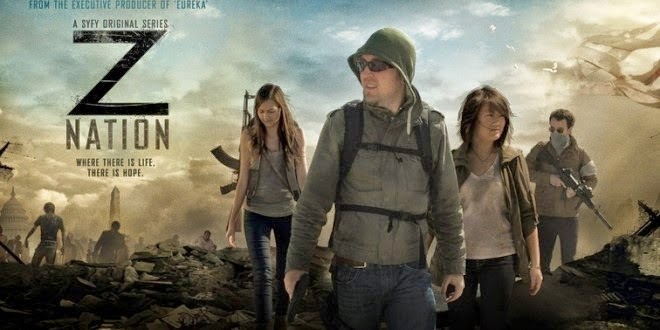
I watched last week’s premiere of Z Nation with some trepidation. I mean, did the world really need another post-apocalyptic television show featuring zombies? I already watch The Walking Dead–need I say anything more?  I was left with mixed feelings after watching, unsure if I liked it. Turning a baby, though reminiscent of Chucky, was a nice touch, but there was something that didn’t sit right about it (the show, not the zombified infant).

It took a few more days and a bout of in-class free association with respect to themes in literature for it to hit me.

Z Nation and The Last Ship are essentially one and the same.

[Tweet “#ZNation and #TheLastShip are essentially the same #tv show. Here’s how…”]

Let me explain…

The Last Ship is about a navy ship sent on a top secret mission to gather the primordial strain of a flu virus that is killing off most of the world’s population. They engage in war-lord-type power struggles including one with a Russian ship before finding a girl who is immune to the virus. They synthesize a cure for the virus from her blood and must rush the girl and the cure to a lab somewhere in the U.S.

Z Nation is about a group of people on a secretive mission to take a prison inmate to a lab in California. After being bit by zombies, the prisoner is seemingly immune to whatever it is that turns people into zombies. They need to take him to the lab so they can synthesize a cure for the zombie virus from his blood. So far there have been no war-lord-type power struggles, but you can bet they are sure to be on the near horizon.

I will be watching more of Z Nation, if only to compare it to The Walking Dead (in which, coincidentally, the characters are also sort of on a quest to take a scientist who claims to have a cure to a lab somewhere in the U.S. to create a vaccine) and other similar post-apocalyptic tales.

Did you watch Z Nation? Do you watch The Last Ship? Do you see a connection? Let me know what you think in the comments below.

Literary Devices from A to Z – Brought to you by the letter Y


is for Young Adult


Young adult (YA) novels are novels that appeal to adolescents and teenagers. In YA the main character is usually a pre-teen or teen and theme is often emphasized over the more traditional elements of storytelling such as plot and character. I’ve recently begun my foray into YA novel writing, with the soon to be released The Revenant and next year’s release (hopefully) of I am, Was, Will be Alice.

YA novels are usually subdivided into 3 genres, middle-grade (10 – 13ish), true YA (14ish to 18 or so) and new adult (19+). Most of the time the main character is the same age as the target audience.

The actual target audience of YA is hard to gauge as, quite often, adults enjoy these novels, too. This accounts for the popularity of such blockbuster series as Twilight or Harry Potter.

Do you read YA? Do you purposely seek out YA or do you read a book if it appeals to you regardless of it’s intended audience. Post your opinion of YA novels in the comments below.


Literary Devices from A to Z – Brought to you by the letter T


is for Theme


A theme is a recurring idea that is alluded to throughout a piece of literature. It is almost like a hidden message about people and the human condition buried deep inside a story that you must read between the lines to figure out. Theme may be expressed in the form of a thematic statement as follows:

The novel Phase Shift is about the environment and reveals that if people continue to choose economy over ecology then our planet is doomed.

The novella Throwaway Child is about the injustice of the residential school system and reveals how one’s culture and family are inseparable from one’s identity.

The novella The Mummy Wore Combat Boots is about online video gaming and suggests that too much gaming may cause one to lose reality as a priority of life.

The novel The Revenant is about good vs. evil and reveals that these distinctions are not mutually exclusive.

You try it! Pick a story, decipher the theme of the work and write a thematic statement about it. Post your thematic statements in the comments below.


Literary Devices from A to Z – Brought to you by the letter J


is for Juxtaposition


Juxtaposition is when two opposing and parallel characters, plot lines, images or themes are compared for the purpose of “etching out a character in detail, creating suspense or lending a rhetorical effect” (Literary Devices).

In The Revenant, Zulu fancies himself a modern-day superhero. The narrator draws this comparison using juxtaposition. Here’s an example:

Zulu used his super sense of sight to hone in on the man’s eyes, forehead, and nose bridge…Faster than a speeding bullet—and Zulu would have to be faster, given his distance from the man in the suit and the man’s distance from the advancing projectile—Zulu knocked the man from his feet…More powerful than a locomotive, he pulled the weapon from the man’s grip, bowed the shaft, and used the butt to shatter the window.

In this example, words from the opening narrative of the old “Superman” television series are used (“faster than a speeding bullet…more powerful than a locomotive”) to draw the comparison between Zulu’s powers and those of Superman. The comparison to Superman’s sense of sight, while not in the traditional narrative, are nevertheless well-known traits of the Superman archetype.

In a recent episode of “Revolution”, Sebastian Monroe was engaged in hand-to-hand combat with Tom Neville. Scenes of this were interspersed with a simultaneous hand-to-hand combat scene between their sons, Connor and Jason. This is juxtaposed against a similar scene between “Bass” and Connor when they were pitted against each other in a fight to the death the week before.

Can you think of any juxtapositions that stand out in your mind? What were they? Did you make the connection between the two events? Did they bring another level of meaning to the story? Share your thoughts on juxtaposition below.

Literary Devices from A to Z – Brought to you by the letter I


is for Imagery


Imagery refers either to vivid, sensory description in writing or a recurring image linked to themes or symbols.

One example of the latter occurs in Macbeth when Shakespeare uses clothing imagery to show Macbeth is not up to the kingship he has stolen. When Macbeth learns he has earned the title thane of Cawdor he asks,

Why do you dress me in borrow’d robes? (I.ii)

because he has yet to learn of the former thane’s execution. Later in the play, Angus says of Macbeth,

Now does he feel his title hang loose about him, like a giant’s robe upon a dwarfish thief (V.ii)

to say Macbeth is not worthy of his title, alluding to his suspicion that he stole the title rather than come by it honestly.

New writers are often told to show and not tell, don’t tell your reader when a character has smiled–describe her face, the curl of her lips, the gleam of her eye, the wrinkles that form around her mouth and eyes.

In Chicken or Egg: A Love Story, Nigel learns of Paula’s death and rushes to the scene. He finds her zipped into a body bag and loaded into an ambulance. He’s told she’s in rough shape by one of the EMTs, but he’s so overcome with regret that he’d never told her of his feelings for her that he climbs into the ambulance and unzips the body bag.

The ambulance’s interior smelled of disinfectant and alcohol, an odour that began to turn Nigel’s stomach before long,..He brushed away a blood-soaked lock of hair from her forehead. It left behind a copper trail. Her skin was pale, her lips and cheeks inordinately red where her makeup had clung in spite of the blood that had left her.

In this example, the reader can recall the medicinal smell of a doctor’s office or hospital emergency room, imagine Paula lying on the stretcher, pale and bloody, hair taking on a reddish hue as the result of a fatal head wound. Nigel’s feelings for Paula are exposed when he ignores the blood caked in her hair to perform one last tender gesture.

What images do you remember reading that stuck out in your mind as a brilliant, sensory-filled description? Have you written any passages containing imagery of which you are particularly proud? Share your thoughts and comments below!