Category Archives: Uncategorized

A to Z Blog Challenge – Brought to you by the letter H


is for Hyperbole


A hyperbole is an exaggeration used to emphasize a point.

In the tentatively titled,  I Am, Have Been, and Will Be Alice, Alice is depressed and has taken to her bed for comfort when her mother comes into the room:

She digs my head out from under the blankets, brushes my hair from my forehead and brings her cool lips to them. “You’re cool as a cucumber,” she says for about the millionth time in my lifetime.

The hyperbole in this excerpt is Alice insisting her mother has used this phrase about a million times over the past 14 or so years. While it’s theoretically possible for someone to achieve this goal, it’s not very likely, which is what makes it a hyperbole.

When Suzanne leans over Palmer during a sarcophagus examination in The Mummy Wore Combat Boots, he says,

As she spoke I was enveloped in a haze of her perfume. Her scent was sweet and distantly floral.  It brought back a slew of memories—not all of them disagreeable—in a dizzying flood.

While Palmer’s memories make him neither physically dizzy, and his memories would not carry the same force as a flooding tsunami, I’m sure it would feel as if they did to poor Palmer who can’t escape Suzanne’s unwanted advances in such close quarters.

Do you use hyperbole in either speech or writing? Which ones do you use most often? Which ones have you written that you’re most proud of? Whatever they are, share them in the comments below.

“The Curse of Oak Island” is must see TV!

A curse. Pirates. A treasure. Booby traps.

It has all the trappings of the next “Indiana Jones” or “National Treasure” movie. The main difference? This is for real.

Oak Island, Nova Scotia. Three boys discover a pit (“the Money Pit”) on and begin to dig. As they get deeper, strange artifacts begin to pop up. Flagstones. Wooden platforms. Small metal artifacts. And then, at around 27 metres (that’s more than 80 feet), they find a stone cipher that when translated says, “Forty feet below, two million pounds are buried.” The boys dig a little more, and then leave for the night. When they return, the shaft is underwater. They conclude a booby trap has been triggered by their digging, which flooded the shaft to protect the treasure from plunderers (oakislandtreasure).

In modern times, Dan Blankenship and his associates dig a shaft parallel to the Money Pit (called 10X), fortifying it with steel. He takes some video in which he insists he can see a body, a treasure chest, and other buried  items. 10X eventually floods as well. Due to disagreements over land ownership, digging on the island ceases until brothers Rick and Marty Lagina buy a controlling stake in the island’s tourism company and are able to resume excavations.

I saw the first episode of History’s “The Curse of Oak Island” yesterday; I haven’t been that excited since seeing “In Search of Noah’s Ark” when I was a kid. The premiere episode explains the history of the Money Pit and 10X and documents the Lagina brothers’ excavation of the pits as they search for the fabled treasure. Viewers get to see the Blankenship video and meet Dan Blankenship (now 80 and just as obsessed as ever) and his son who are active members of the Laginas’ team. The first thing they do is send a camera into the Money Pit, but the footage comes back inconclusive and the files mysteriously disappear from the computer midway through the viewing. Perhaps this is part of the curse, they wonder.

Next, the team drills into the hole while one of the brothers searches the fill. They find bits of blue transfer ceramic, but not much else. Lastly, air is pumped into the shaft in an effort to remove the water. They jerry-rig a sediment holding tank and use a shovel to start mucking about, but turn up only a single metal artifact. Later, the team takes a boat ride to see the island from the water. They hypothesize the presence of five box-drains, used to draw sea water into the shafts and plan to dive at a later date to confirm or debunk their existence.

In “The Curse of Oak Island,” the Laginas and the Blankenships document their real-life adventure as they search for pirate treasure. The curse promises that seven will die before the secret of the Money Pit is revealed, which only serves to bolster the excitement which makes this an hour of tv worth watching. What I like about “The Curse of Oak Island” is that, unlike other salvaging shows, the Laginas do things legally. They let us know the credentials of the team members, as well as the permits needed and the legalities and cost of the dig and that the task they have undertaken is dangerous, with the implicit message not to try this at home.

“The Curse of Oak Island” is not only exciting television, it’s also responsible television. And that’s good archaeology.

Did you see “The Curse of Oak Island”? What did you think?

Beautifully written and compelling

My biggest regret? Not being able to say goodbye to my father before he passed away.

It all happened so quickly. One minute he was going to be okay and I needn’t have to rush to the hospital and the next it didn’t look like he’d make it home. He died while I was stuck on Highway Seven in rush hour traffic, just as I went through an underpass. I know because I had a feeling and I checked the time. When I got to the hospital I learned his time of death was within minutes of my “feeling.”

My second biggest regret? Not going with my mother to visit my grandmother in the convalescent home in the days before she died because it was boring.

I’ve often thought in the twelve years since my dad died and the thirty-five years or so since my grandmother died that I’d like to have that one last chance to say goodbye.

This is the exact sentiment Jason Mott explores in his novel The Returned.

In The Returned, eight year old Jacob returns to his parents, Lucille and Harold, almost fifty years after his death by drowning in the river behind their house. Lucille welcomes him with open arms. Harold is suspicious of his son’s return as he is of all those who have returned without explanation and seemingly without purpose. When the government begins arresting the returned and warehousing them in internment camps, Harold accompanies his son, grows closer to him, and discovers a kinship with those who have returned, as well as with their families.

Part “In the Flesh” (minus the zombies), part “The 4400”, The Returned is a beautifully written and compelling read, so long as you have willing suspension of disbelief enough to forget about why the dead have returned and simply accept the fact that they have. The overall theme of the book illustrates patterns in history, and that we are doomed to repeat ourselves. Case in point, warehousing millions of Jews in concentration camps during World War II and the establishment of Japanese internment camps later in the century. The comparison with these events in the novel is interesting but heavy handed at times, like when a Jewish couple attempts to hide a handful of returned German soldiers on their property. The soldiers are portrayed as innocents, caught up in something in which they have no say, acting as society demands of them, until they are taken outside and shot for their compliance in the war.

The Returned is being made into an American television series called “Resurrection” (the trailer is available on YouTube and it looks amazing), but given the track record of similar series, I don’t know how successful it will be. I know I’ll be watching it, for no other reason than I like the honesty and emotion of the novel and the ultimate message, how society treats “the other” with a combination of demonization and/or segregation and how one man, Harold, grows to overcome his prejudice of “the other” and learns no matter our stories of origin, we are all just people; we are all the same.

Dracula is a page turner

Bram Stoker’s Dracula is the gothic horror story that put down roots for modern day vampire lore.

In Dracula, lawyer Jonathan Harker is sent to Transylvania to close a deal on the sale of a house for Count Dracula in England. Confined to a limited number of rooms in Dracula’s castle, Harker goes  exploring where he discovers siren-like creatures and Dracula’s dark nature. Harker eventually escapes, goes nearly mad, and convalesces in a hospital where fiance Mina Murray retrieves him and marries him. They return to England to find Mina’s friend, Lucy, mysteriously ill from blood loss. Harker and Dr. Seward enlist a retired Van Helsing for help. They replenish Lucy’s blood nightly to no avail. Eventually Lucy dies, her body claimed by Dracula. It’s not long before Mina falls prey to the same “illness,” with one strange symptom–she has a connection with Count Dracula. Harker, Seward and Van Helsing use this connection to ambush Dracula and kill him for good at last.

Fan of vampire stories that I am, I had always meant to read the original Dracula, but never got around to it. But after watching NBC’s Dracula, I needed to go back to the archetype to see which characters and events were borrowed from the original and which were new.

In NBC’s Dracula, the count assumes the name Alexander Greyson and pretends to be an American newly arrived in England on business. In a grand spectacle opening, Greyson holds a party at his mansion where he introduces his guests to free, wireless power which sends the oil magnates into a tizzy. At this gala is socialite Lucy Westenra who has invited her friend and medical student Mina Murray and Mina’s boyfriend, reporter Jonathan Harker. When Dracula sees Mina he sees his wife’s doppelganger and is determined to have her, but not by force. To that end, he hires Harker as his assistant, puts him up in a mansion and pays him enough to marry Mina and live happily ever after. The idea is to keep Mina close and gradually insinuate himself into her life. Pursued by the Order of the Dragon, an ancient organization whose members are involved in (among other things I can’t figure out) maintaining a power monopoly and killing vampires, Greyson’s goal is to punish members of the Order for their role in making him what he is today.

Other than character names and the time in which the story takes place, there is little comparison between the original book and the television show. In the book, Dracula has no alter ego and there is no mention of Mina the doppelganger. TV’s Renfield is Dracula’s manservant, a far cry from Stoker’s raving, bug-eating lunatic and Stoker’s Van Helsing is out to kill Dracula, not form an unholy alliance with him in order to seek revenge on the Order of the Dragon. Reading the book  also shed some light on other supernatural works, including  an explanation as to why the brothers on Supernatural bear the last name Winchester and the origin of the title “Vampire Diaries”, adopted because most of Stoker’s novel is told in journal or diary format.

The novel is a page turner at times, boring at others, but worth the time to read.

The series picks up pace midway through episode two and becomes the television version of a page turner. I binge watched the first three episodes and regret not watching the fourth as well (but Once Upon a Time was about to begin and priorities must be set).

Are you watching NBC’s Dracula? What do you think?

Dr. Who’s A Christmas Carol

day of the doctor poster

image from skinnyglasses.deviantart.com

Imagine Alex Kingston in the guise of River Song saying, “Spoilers,” in that sing-songy way of hers.

In The Day of the Doctor, the very first Doctor (John Hurt), the one responsible for saving the universe and causing the destruction of Gallifrey in the process, meets his Kobayashi Maru. In priming the weapon to do this, a weapon so sophisticated it has developed a conscience (Billie Piper), the Doctor is connected through a time funnel with the tenth (David Tennant) and eleventh (Matt Smith) regenerations of himself. While engaged (literally) in trying to save Queen Elizabeth the First from shape-shifting Zygons, the three doctors realize that Gallifrey must perish in order to save the universe. In a nice parallel, UNIT agents realize they must destroy England to save the world from the Zygons. The solution to a win-win scenario is clear: all characters–UNIT and Zygon, and all Doctors–must come together to save themselves. Smith’s Doctor uses a memory wiping device in the bowels of UNIT’s storage vault to make both human and Zygon forget they are human and Zygon respecfully to keep them honest during negotiations. As for the Doctors, they enlist all iterations of previous Doctors and their TARDISes (TARDI?) to freeze Gallifrey in a moment in time. To the Daleks firing on the planet it will seem as if the planet were destroyed and they’ll wind up firing against themselves. In this way, the Doctor lifts a huge weight from his shoulders as he no longer regrets killing all of his kind, though he must live without knowing if what they did saved or destroyed them.

The Day of the Doctor might be better named “A Dr. Who Carol”, as the present Doctor meets two past iterations of himself and one future iteration. Like Dickens’s Carol, each iteration of the Doctor is held up for consideration by another. The very first Doctor–known as the “War Doctor”–realizes he has choices he didn’t know existed, barring the use of timey-wimey things he could only do with the other Doctors. The tenth and eleventh Doctors–cleverly dubbed “The One Who Regrets” and “The One Who Forgets”–learn they must accept their past, because at the time in question, there really was no other option. At the end, a previous (I think–I’m not up on my Who trivia) Doctor , number gives number eleven hope that his solution to the unwinnable scenario was the right one, and that Gallifrey lives on, but as more than a memory of a moment in time.

I have to admit–I’m a reluctant Dr. Who fan. I never cared for the series in the past, finding it too silly and fantastic for my sci-fi sensibilities. When my husband told me they’d revived the series, I had no interest to watch. When he insisted I watch I liked it, but not to fanatic proportions. I found the ninth Doctor, my first Doctor (Christopher Eccelston) rather arrogant. Then he regenerated into Tennant and I was hooked. The episodes are not consistently exciting, or even interesting, but The Day of the Doctor was one of the best, if not THE best, Who episode yet. William Hurt plays the War Doctor as the reluctant hero. Tennant and Smith are wonderful together playing parts more alike than not, Tennant channeling his inner Hamlet in contrast to Smith’s child-like, devil-may-care attitude. I liked the Torchwood nod, allowing Who companion Clara (Jenna-Louise Coleman) to escape from the Zygons with Captain Jack’s device, as well as the return of Rose (Piper), even if only as a facsimile of the original.

Though Tennant is still my favourite Doctor, I’m looking forward the Christmas special next month, though without Tennant and after this episode, it has a tough act to follow.

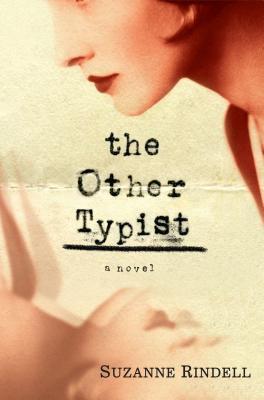
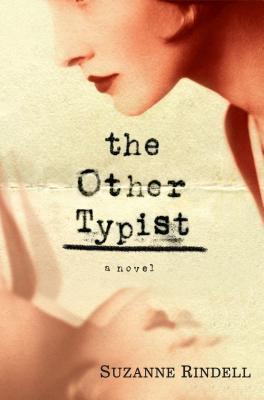
“The Other Typist” – Flappers gone wild

In her job as stenographer for the police department, The Other Typist‘s Rose Baker is forced to hear a number of graphic and sometimes gruesome confessions not suitable for a woman’s ears. Rose is a prim and proper young woman living in 1924 New York in an era of prohibition and waning morals. When Odalie joins the steno pool, Rose distains her at first, but then she becomes fascinated by her. It’s not long before Rose becomes Odalie’s friend and roommate and Odalie becomes her obsession. When Rose enters Odalie’s world, she is thrown into a world of lies, mistaken identity and murder.  It’s not long before Rose’s world begins to unravel. She fakes a police report, attends speakeasies, runs errands for bootleggers, and fights her feelings for the Lieutenant Detective and for Odalie.

I enjoyed the inherent suspense of Suzanne Rindell’s first publication, the likes of which I have not seen since S.J. Watson’s Before I Go To Sleep. In the beginning, the mystery revolves around Odalie. I wanted to know who she was, why someone of her stature and grace wanted to work in a dirty police station. When we are taken to her upscale apartment and learn she may have a sugar daddy, I wondered why, if she had someone to pay her bills, she would need to work at all, let alone with smelly drunks and underhanded murderers. After Rose attends her first club and finds out Odalie is both bootlegger and speakeasy organizer, the mystery shifts and the reader wonders how far buttoned-up Rose will go to be near the object of her obsession. Rose soon confides she is telling her story from a hospital and seeing a psychiatrist, adding another level of intrigue. Then Teddy appears to question Odalie’s identity, claiming she is not Odalie, but Ginevra instead, and that she has something to do with his cousin’s death. Later, when Teddy shows up at the police department, the page-turning reaches manic proportion. I think I missed most of Revolution in my haste to finish the novel. After all, Kobo told me I only had 1 hour left of reading to go. Having to re-watch parts of Revolution to fill in the blanks was a small price to pay for the punch line of this amazing book.

The Other Typist is an excellent example of the unreliable narrator. In most of what we read, we grow an affinity with the narrating character. Over the course of the novel, we learn to trust the narrator, identify with her, empathize with her, maybe even imagine ourselves in her position, but this is not always the case. By the end of The Other Typist, the reader is left questioning unsuspecting, mousey Rose’s culpability in the debacle. Did Odalie drug her fiancé and leave him to die in his car on the train tracks or was it Rose? Did Rose grow up in an orphanage or was it Odalie? Was Rose the one making changes to the confessions all along or was it Odalie? Did Odalie kill Teddy or was it Rose? What about Gib? Does Odalie really disappear to begin life anew at the end or does Rose kill her too? Is Ginevra Odalie’s alter ego, or is it Rose’s? Normally I like a story to tie all loose ends into a tidy bow at the end, but somehow, having these questions burn on in my psyche long after the novel is done is more satisfying.

As is the case with Single White Female and The Talented Mr. Ripley, the suspense of The Other Typist is in the build toward the climax, wanting to see how far the characters will go, waiting for the last thread to unravel.

Have you read The Other Typist? Who do you believe is Ginevra in disguise?

Stephen P. Kiernan’s THE CURIOSITY is Part “Encino Man”, Part “Blast from the Past”

In 1991, two German tourists discovered the body of Otzi, the now infamous Ice Man, believed to have died and been encased in ice near 5,000 years ago. Though well-preserved, Otzi’s body more resembles traditional mummies than living, breathing tissue. But what if it didn’t? What if Otzi were flash-frozen, so to speak, encased in ice in perfect preservation and scientists had the reanimation technology? This is the question tackled by Stephen P. Kiernan in The Curiosity.

After joining an Arctic expedition in 1906, Judge Jeremiah Rice fell overboard into the Arctic Ocean and was perfectly preserved in ice. Dr. Kate Philo is a member of a modern-day scientific team working on a process to reanimate small ocean animals. Her team travels to the Arctic to harvest the creatures from the ice when they find and recover Rice’s body. They take him back to the lab where they reanimate him. When he awakens, he is thrown into a world completely different from the one he remembers. Kate takes it upon herself to help acclimatize him, and finds herself falling in love with the judge, who is so different than the men she is used to. It isn’t long before Kate realizes Rice is about to suffer the same fate as the reanimated shrimp and krill—his metabolism is speeding, burning up his energy, and he will soon die. At first, Erastus Carthage, the director of the project, attempts to control media coverage of the event, but it soon snowballs out of control, and Rice and Kate are on the run from both the media and the authorities.

The Curiosity is written from the points of view of four characters: Kate Philo, Jeremiah Rice, Erastus Carthage, and Daniel Dixon, the reporter Carthage initially hires as exclusive teller of the expedition’s tale.  While Kate, Rice and Dixon are written in first person point of view, Carthage is written in second person, and I’m not sure why. I’m also not sure why the two points of view I most dislike are third person omniscient and second person, perhaps because so few modern stories are told well this way. Kate is perhaps the most realistic character of the four. I found Carthage to be the stereotypical megalomaniac, better than thou academic type, and in spite of the point of using second person narrative—to put the reader into the role of the character—I neither liked him, nor identified with him. Dixon is portrayed as the hard-boiled, unimpressed, unfazed reporter who has seen it all, objectifies women (particularly Kate), and winds up portraying the team as a fraud. Somehow, it works. Dixon’s parts were quite amusing to read. Though Rice is interesting as a concept, I found his attraction to Kate a little two convenient plot-wise. The last thing he remembers is leaving his wife and daughter, and while they are long dead, they are not to him. Rice doesn’t seem to grieve much for them, making his attraction to Kate and his easy-going adaptation to the present somewhat questionable.

Part Encino Man, part Blast from the Past, and yes, per other reviewers, part Michael Crichton and Time Traveler’s Wife, The Curiosity is well-written with interesting characters. I found myself drawn into Kate’s romance with Rice and amused at the way the media is portrayed with the ability to spin information hundreds of ways. Kiernan juxtaposes the nostalgia of an idyllic and integrity-rich lifestyle of only a century ago with the fast-paced, technology and tabloid-integrity of the modern world. Though the story is predictable at times (Who didn’t see Kate’s hook-up with Rice from their first scene together? Or know that Rice would wake-up and surpass the expectations for post-animation life span?), and sometimes weighed down with scientific jargon, The Curiosity is an entertaining and interesting story that documents our fascination with pushing the boundaries of scientific knowledge, and then holding science’s successes up for vilification in the media.

Graphic from http://www.goodreads.com/book/show/16248197-the-curiosity

 About the Author

Elise Abram, English teacher and former archaeologist, has been writing for as long as she can remember, but it wasn’t until she was asked to teach Writer’s Craft in 2001 that she began to seriously write. Her first novel, THE GUARDIAN, was partially published as a Twitter novel a few summers back (and may be accessed at @RKLOGYprof). Nearly ten years after its inception Abram decided it was time to stop shopping around with traditional publication houses and publish PHASE SHIFT on her own.

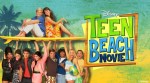
Movie Review – Disney’s TEEN BEACH MOVIE


I have to admit—I was excited when I heard about Disney’s Teen Beach Movie. Though corny by today’s standards (or any standards, for that matter), I used to watch the Frankie Avalon and Annette Funicello movies as a kid. Born in the sixties, I loved the costumes, dance and music of my parents’ teenaged years. I also watched Annette on the old Mickey Mouse Club black and white re-runs, so it was cool to see what she did afterward. The last beach movie released was 1987’s Back to the Beach, which I loved, because in addition to being a blast from the past, Lori Laughlin played Frankie and Annette’s daughter. Back to the Beach was campy and silly and featured Pee Wee Herman singing “Bird is the Word”; what more could you ask?

When my eight year old daughters started extreme fangirling on High School Musical, I thought I should see what it was all about. I was pleasantly surprised. I even went to the theatre to see the third one with them and really enjoyed it. While the storylines left something to be desired, the music and dance scenes were impressive. My daughters didn’t have to twist my arm to get me to watch Camp Rock, or Lemonade Mouth either. So when I read about Teen Beach Movie I was interested. My daughter insisted it was like Grease and she was all “been there, done that”. Even though I insisted it was more like Beach Blanket Bingo than Grease, she remains steadfast in her claim, refusing to take even a peek at Beach Blanket Bingo, headstrong almost-fourteen-year-old that she is, which is frustrating as this means I am unable to educate her on the finer points of popular culture on which I thrive.

Teen Beach Movie is surprisingly entertaining to watch. In the movie, Brady and Mac (short for Mackenzie) are in love. Mac lives with her grandfather on the beach, but she must go back to the city with her stuck-up aunt to attend private school for the rest of her education. Because Mac’s deceased mother wanted her to be the best she could be, Mac feels a duty to go with her aunt, even if it means breaking up with Brady to do so. Mac is a surfer, better than most of the boy-surfers out there, and she has been looking forward to surfing the forty-foot waves brought on by the coming storm, but surfing them would mean missing her plane. She awakes on the day she is to leave to see that her grandfather’s surfboard, the one always hanging from the rafters, is propped against the wall instead, and she decides to go for one last surf. Worried she may drown, Brady takes a Jet Ski out to save her. They both get pulled down by the waves and come up for air in the sixties, and soon realize they are actually in the beach movie, West Side Story, that Brady idolizes and knows by heart. The movie is about the love story between a surfer boy and biker girl who fall in love and unite the two gangs against stereotypical bad guys to save the day, but when the surfer boy falls for Mac and the biker girl falls for Brady instead of each other, they have a problem.

The music in Teen Beach Movie is pop-based with a retro flavour, and I’m not embarrassed to admit that there are a few I wouldn’t be above adding to my playlist. The acting is okay, but it’s what you would expect from an old time beach movie, that is to say, over the top. Ross Lynch as Brady is perfect as the lovelorn puppy dog who would be lost without his girl. Maia Mitchell is cute as Mac, but her character suffers from a case of she-doth-protest-too-much until she gets acquainted with Grace Phipps’ character, the girl biker, Lela and they become besties. Garrett Clayton plays the role of Tanner with vapid charm, though he looks a little too much like Zac Efron for comfort. The final surprise in this movie was seeing Kent Boyd of So You Think You Can Dance fame as Rascal, and while his acting is overblown (again, as you would expect from a beach movie), he was one of my favourites from the show and it was great to see him post SYTYCD, though I would have liked for his part to be a little bigger. He might have been good in either male lead. For sure he has the legs for it.

While Teen Beach Movie is not one of those movies I could watch again and again (like I do Men in Black, Legally Blonde, or Kate and Leopold, for example), it is quite enjoyable as a parody of the original movies. The song and dance numbers—though they may occur randomly as Mac points out—are entertaining, and the jokes—like how everyone goes surfing and emerges with dry hair—are kind of funny. There are some laugh-out-loud moments, and some borrowing from similar movies (Brady’s lifejacket fades from existence like Marty McFly’s siblings from the photograph in Back to the Future, and there’s a baby-doll sleepover scene like the “Sandra Dee” number in Grease, that comes off as a sort of mashup between “Sandra Dee” and “Summer Loving”), though I did miss watching my daughters try to dance along with the cast when they teach the moves during commercial breaks. Nevertheless, Teen Beach Movie is great entertainment for the kids as an introduction to a long-extinct genre, and memorable nostalgia for their parents. The hour and forty-five minutes I invested in watching the movie was time well spent.

Grapic from: http://www.mouseinfo.com/gallery/files/4/1/2/7/teen-beach-movie.jpg

About the Author

Elise Abram, English teacher and former archaeologist, has been writing for as long as she can remember, but it wasn’t until she was asked to teach Writer’s Craft in 2001 that she began to seriously write. Her first novel, THE GUARDIAN, was partially published as a Twitter novel a few summers back (and may be accessed at @RKLOGYprof). Nearly ten years after its inception Abram decided it was time to stop shopping around with traditional publication houses and publish PHASE SHIFT on her own.

Download PHASE SHIFT for the price of a tweet. Visit http://www.eliseabram.com, click on the button, tweet or Facebook about my novel and download it for FREE!

We Are All Completely Beside Ourselves – Book Review

In We Are All Completely Beside Ourselves by Karen Joy Fowler, Rosemary Cooke begins her story in the middle. She is in college in a cafeteria where she meets Harlow who is angry at her boyfriend and having a tantrum. Rosemary defends Harlow during her arrest and gets arrested herself. We soon learn Rosemary is broken, in a way. She is not close with her parents and estranged from her brother and sister. It is the mystery of Rosemary’s relationship with her parents and how her brother, Lowell, and sister, Fern go missing that drives the story forward. When Rosemary’s narrative circles back to the beginning of the story, we learn that her “sister”, Fern, is a chimpanzee brought into the home to be raised as her “twin” for an experiment her scientist father was conducting in the seventies.

We Are All Completely Beside Ourselves is a wonderful coming of age novel that is interesting both in the style of the narrative and in the story, containing a powerful message. The title refers to the fact that, when placed beside humans, animals—particularly apes—are not that different. Growing up, Rosemary’s father’s lab assistants endlessly compare Fern’s progress with her own. While Fern reaches certain landmarks before Rosemary—such as walking and “talking” (really signing)—Rosemary’s growth soon outperforms Ferns with little fanfare and she grows jealous of Fern’s attention which leads to Fern’s removal from the family. In doing this, Rosemary asserts her alpha role in her family pack, not unlike how later, Fern becomes the alpha animal in her lab “family”. When Rosemary tells us the end of her story, we learn the reason for her brother’s disappearance. Everything, from Rosemary’s inability to fit in with her peers to her brother’s absence, her mother’s emotional distance, and her father’s depression traces back to Fern’s removal from the family and Rosemary spends the remainder of the book trying to set it right.

Fowler has penned a page-turner here. Her prose is artful and easy to read, something to which, as an author, I aspire. The narrator is so candid in her guilt, the story reads like a written confession, which is where the interest lies.  We Are All Completely Beside Ourselves is a book with social conscience, prompting us to think about the connection between people and animals and how, when we compare them side-by-side with ourselves, we are not so essentially different.

Graphic from: http://www.nytimes.com/imagepages/2013/06/09/books/review/0609-bks-KINGSOLVER-cover.html

About the Author

Elise Abram, English teacher and former archaeologist, has been writing for as long as she can remember, but it wasn’t until she was asked to teach Writer’s Craft in 2001 that she began to write seriously. Her first novel, THE GUARDIAN was partially published as a Twitter novel a few summers back (and may be accessed at @RKLOGYprof). Nearly ten years after its inception Abram decided it was time to stop shopping around with traditional publication houses and publish PHASE SHIFT on her own.

Download PHASE SHIFT for the price of a tweet. Visit http://www.eliseabram.com, click on the button, tweet or Facebook about my novel and download it for FREE!

We’re the Millers – Movie Review

In We’re the Millers, Jason Sudeikis plays David, a drug dealer who is robbed and must smuggle a large shipment of marijuana in from Mexico to repay his supplier. After seeing how the police react to a family in an RV, David decides the best way to get the job done is to hire people to play his family as cover. Getting the drugs into the States proves to be the least of David’s problems. It’s not until they arrive stateside that his troubles begin. Little does he know, he’s been sent on a suicide mission. He doesn’t so much as pick up the drugs as steal them and spends the rest of the movie on the run from the actual smuggler and supplier and trying to avoid capture by the DEA agent the “family” has befriended along the way.

We’re the Millers is an okay movie, once you get past the vulgar language and graphic grossness (I think I may have scarred my 14 year old girls with the full-on deformed male frontal shots). While there’s no overt sex, there is a sort of comedic scene between 18 year old Kenny (played by Will Poulter), his teenaged “sister” Casey (played by Emma Roberts) and his “mother” Rose/Sarah (played by Jennifer Aniston), that is as uncomfortable (watching it as a parent with her children) as it is funny. We’re the Millers is on par with Grown-ups and Bridesmaids in its bawdy humour—remember the blue pee scene in Grown-ups and the diarrhea attack in Bridesmaids?—that is to say, unrefined. While a tarantula bite on the testicles is nothing to laugh about, Millers milks it for all its worth. Equally disturbing is the scene in which the a Mexican policeman’s expectation of a bribe is confused with the expectation of oral sex, compounded by the discussion in which David convinces Kenny that he must take one for the team and satisfy the officer.

Jason Sudeikis plays the part of David with initial cool detachment, but, as you might expect, he mellows toward the end and realizes that he does, in fact, have some responsibility for his adopted family. Jennifer Aniston is more believable as the caring matriarch than the down and out stripper. Emma Roberts and Will Poulter play their parts—the battle-worn street kid with a heart of gold and the virgin ingénue—with stereotypical demeanour. It was nice to see Kathryn Hahn and Molly Quinn in the parts of the DEA agent’s wife and daughter. I’ve liked Kathryn Hahn since her Crossing Jordan days and enjoyed the way she plays the sexually frustrated prim-and-proper wife. I also really like Molly Quinn in her role as Alexis Castle, but her talent was underutilized in this movie, where she’s asked to do nothing but look as innocent as Poulter’s character, which she does, but it’s not enough for her to shine.

I went to see We’re the Millers because it was either that or The Butler playing at my local theatre and neither my husband or kids were interested in a heavy, historical docu-pic, but I wasn’t disappointed. We’re the Millers is a lighthearted, funny movie that had me laughing out loud at times and squirming at others. It’s mostly potty humour with a little quick and clever repartee mixed in, but it’s a movie that shouldn’t disappoint. 

Graphic from: http://www.bringthenoiseuk.com/201305/music/news/film-news-new-red-band-trailer-for-were-the-millers

About the Author

Elise Abram, English teacher and former archaeologist, has been writing for as long as she can remember, but it wasn’t until she was asked to teach Writer’s Craft in 2001 that she began to write seriously. Her first novel, THE GUARDIAN was partially published as a Twitter novel a few summers back (and may be accessed at @RKLOGYprof). Nearly ten years after its inception Abram decided it was time to stop shopping around with traditional publication houses and publish PHASE SHIFT on her own.

Download PHASE SHIFT for the price of a tweet. Visit http://www.eliseabram.com, click on the button, tweet or Facebook about my novel and download it for FREE!